September 2, 2026

Joining More College Activities Does Not Necessarily Keep Improving Mental Health

A Full Schedule Is Not The Same As Belonging

The advice given to a lonely college student often sounds simple:

Get involved.

Join a club.

Go to campus events.

Volunteer.

Play an intramural sport.

Meet more people.

There is good reason behind that advice. Social connection and belonging matter for well-being, and student organizations can create places where friendships, routines and shared identities develop.

But there is an important difference between being connected and being constantly involved.

New U.S. research involving more than 78,000 college students at 125 institutions suggests that the relationship between student-organization participation and mental health is more complicated than “more is always better.”

Researchers Brandy Reeves-Doyle of Miami University in Oxford, Ohio, Olutosin Sanyaolu of Fort Lewis College in Durango, Colorado, and Karly Scott-Hillis Geller of Miami University analyzed data from the Spring 2023 American College Health Association-National College Health Assessment III.

Their study, accepted on August 19, 2026 and published in Frontiers in Education, examined student-organization involvement alongside belonging, loneliness and psychological distress.

Among the more than 78,000 students surveyed, 88.3% reported a sense of belonging, while 50.8% reported loneliness. More than half—52.4%—reported no student-organization involvement.

Greater involvement was generally associated with greater belonging and modestly lower loneliness. But the pattern for psychological distress was not simply linear. Distress was lower at low-to-moderate levels of involvement and increased slightly at the highest levels.

The finding does not establish that joining many organizations causes psychological distress. The researchers analyzed cross-sectional survey data, meaning participation and mental-health measures were assessed rather than experimentally assigned.

Still, the results support a more realistic message for students:

Connection can help. Turning connection into another achievement contest may not.

Belonging And Busyness Are Not The Same Thing

College campuses provide an extraordinary number of ways to participate.

Academic societies.

Student government.

Cultural organizations.

Volunteer groups.

Sports.

Faith communities.

Music and theater.

Professional associations.

Fraternities and sororities.

Identity-based organizations.

Political groups.

Outdoor clubs.

Campus media.

For a student struggling to make friends, that variety can be useful. An organization provides something that unstructured socializing often does not: a reason to be in the same place with the same people repeatedly.

Friendship does not have to begin with walking into a room and immediately finding someone fascinating.

It can develop because two people keep arriving at the same Tuesday-night meeting.

The new 2026 study supports the potential value of participation. Belonging generally increased as organization involvement increased, although the benefit plateaued at higher levels of participation.

That plateau matters.

It suggests that involvement and belonging should not be treated like points on a scoreboard.

A student does not necessarily become twice as connected by joining twice as many organizations.

More Than Half Of Students Reported Feeling Lonely

One of the most striking findings is that 50.8% of participants reported loneliness, even though 88.3% reported a sense of belonging.

At first glance, those numbers might appear contradictory.

They are not necessarily.

Belonging and loneliness measure related but different experiences.

A student can believe they belong at their university and still feel lonely on Friday night.

They can have classmates and teammates but lack someone they trust with personal problems.

They can participate in a club while wishing their relationships were deeper.

They can have close friends back home while feeling socially disconnected on campus.

They can be surrounded by people almost constantly and still experience loneliness.

The CDC describes loneliness as the feeling of being alone, disconnected or not close to others. Social connection, meanwhile, includes the size and diversity of someone’s social network, the roles those relationships serve and their positive or negative qualities. CDC social connection data emphasize that meaningful connection is an important component of mental and physical well-being.

That distinction helps explain why counting activities cannot tell us whether a student feels genuinely connected.

One Good Group May Matter More Than Five Memberships

Imagine two students.

The first belongs to one campus organization.

They attend most weeks. People know their name. Someone notices when they are absent. They have gradually become comfortable enough to ask two members to get dinner after meetings.

The second student belongs to five organizations.

They rush between meetings, arrive late, leave early and know dozens of people casually. Their calendar is full, but there is little time for relationships to deepen.

Which student is more socially connected?

We cannot know from the number of memberships.

That is the limitation of treating involvement as a quantity rather than an experience.

For someone who is lonely, the more useful question may not be:

How many activities should I join?

It may be:

Where am I likely to see the same people often enough for familiarity to grow?

One Good Group May Matter More Than Five Memberships

The Highest Level Of Involvement Had A Different Distress Pattern

The 2026 study found a curvilinear relationship between organization participation and psychological distress.

In plain language, psychological distress tended to be lower with low-to-moderate participation, but the pattern changed at the highest levels of involvement, where distress increased slightly.

That finding deserves restraint.

It does not prove overinvolvement caused distress.

Students experiencing distress might become more involved for reasons the study cannot determine.

Highly involved students may differ from less-involved students in other ways.

Leadership positions may also carry different responsibilities than ordinary membership.

Academic workload, employment, financial stress, caregiving, sleep, health conditions and numerous other factors could influence psychological well-being.

The researchers themselves identify the cross-sectional design as an important limitation.

So this study should not be turned into a formula such as:

Two clubs are healthy, but four clubs are unhealthy.

The evidence does not support that claim.

What it supports is questioning the assumption that increasing involvement indefinitely will necessarily keep improving well-being. Athlete Mental Health Should Be Monitored Before Performance Starts Falling Apart.

Activities Can Become Responsibilities

Joining a group sounds social.

Running one can feel like work.

A student who becomes highly involved may eventually be responsible for:

Budgets.

Meetings.

Event planning.

Recruitment.

Travel.

Fundraising.

Emails.

Social media.

Conflict between members.

Leadership transitions.

Late-night events.

Those responsibilities may be worthwhile.

Leadership can be meaningful. Students can gain experience, confidence, friendships and professional skills.

But meaningful work still consumes capacity.

The student who originally joined an organization because it was enjoyable may eventually become the person responsible for making the experience enjoyable for everyone else.

That is a different role.

College Students Already Have Competing Demands

Student activities do not occur in isolation.

The same person may also be taking five courses.

Working part time.

Playing a sport.

Managing a health condition.

Commuting.

Applying for internships.

Maintaining a long-distance relationship.

Helping family members.

Trying to sleep enough.

Managing financial stress.

One additional club meeting might be energizing for one student and exhausting for another.

The difference is not necessarily motivation.

It can be capacity.

This is why recommendations to “get involved” should leave room for the rest of someone’s life.

Connection Should Not Become Another Productivity Goal

College culture can turn almost anything into optimization.

Get good grades.

Exercise.

Network.

Build a résumé.

Find internships.

Volunteer.

Develop leadership experience.

Make friends.

Attend events.

Build a professional profile.

Have memorable experiences.

When social connection gets added to that list, students can start approaching friendship like another requirement.

I need to meet more people.

I should attend more events.

I need to say yes more often.

Everyone else seems more involved than I am.

At that point, an activity intended to reduce stress can become another source of pressure.

A student who skips an event because they need sleep has not failed at social connection.

Someone who leaves a club because it no longer fits their life has not failed at resilience.

A quieter social life is not automatically an unhealthy one.

Quality Of Connection Matters

A separate U.S. study using the 2023–2024 Healthy Minds Study adds useful context.

Researchers analyzed 27,965 students from 148 institutions and examined participation across 18 activity types grouped into academic or major-related, athletic or dance, service or identity, and social categories.

Students who participated in activities generally reported greater belonging than nonparticipants. Greater diversity of activity participation was also associated with greater belonging.

Again, this was an observational association rather than proof that activities directly caused greater belonging.

Together, the findings point toward something more nuanced than either “join everything” or “clubs do not matter.”

Participation can create opportunities for connection.

What happens inside those opportunities matters too.

Repetition Can Be More Useful Than Intensity

People often imagine making friends through a significant social moment.

A long conversation.

A party.

A weekend trip.

An immediate connection.

Many relationships develop more quietly.

You see someone every Wednesday.

Eventually you remember their name.

Then you sit near each other.

Then you talk before the meeting starts.

Weeks later, you know something about their life.

This is one reason recurring activities can be useful for students who find direct friend-making exhausting.

The activity provides structure.

Conversation does not have to carry the entire interaction.

There is something else to do.

That can lower the social stakes.

A running club can involve running.

A chess group can involve chess.

A volunteer project gives people a shared task.

A student does not have to enter every activity with the explicit goal of making friends.

Familiarity can develop first.

A Full Calendar Can Hide Loneliness

There is another reason activity counts should be interpreted carefully.

Being busy can disguise social needs.

A student may interact with people from morning until evening without feeling known by any of them.

Classmates are not automatically friends.

Teammates are not automatically confidants.

Club members are not automatically a support system.

Followers are not automatically relationships.

The difference often appears when something goes wrong.

Who could you call after receiving bad news?

Who would notice that you have been unusually quiet?

Who can you spend time with without performing competence?

Who knows something about you beyond your résumé, sport, major or campus role?

Those questions tell us something a crowded calendar cannot.

A Full Calendar Can Hide Loneliness

Rest Is Not Social Failure

A student who wants stronger connections still needs recovery.

That can create a difficult tension.

Someone may think:

If I stay home tonight, I might miss the chance to meet people.

Occasionally pushing beyond comfort can be worthwhile.

But consistently sacrificing sleep, study time or recovery to remain socially available can create another problem.

There is no universal amount of social activity that is psychologically ideal.

People differ in how much interaction they find restorative.

They also differ across circumstances.

A student might enjoy three social evenings during a relatively easy week and need much more quiet during exams.

The goal is not maximizing participation.

It is creating enough connection without eliminating the capacity needed for everything else.

Leadership Can Change The Mental Load

Universities should also distinguish participation from responsibility.

Attending a photography club once a week is not equivalent to being its president.

Playing recreational soccer is not equivalent to organizing the league.

Going to a cultural event is not equivalent to coordinating it.

Leadership can offer meaningful developmental benefits, but it may introduce administrative and interpersonal demands.

Universities encouraging involvement should therefore pay attention not only to whether students participate but also to what participation requires from them.

A student can be socially connected and overextended simultaneously.

Those experiences are not mutually exclusive.

Students Who Are Not Involved Should Not Be Shamed

The 2026 study found that 52.4% of participants reported no involvement in student organizations.

That number should not become a reason to portray uninvolved students as doing college incorrectly.

Students may have good reasons.

Some commute.

Some work.

Some care for relatives.

Some have disabilities or chronic health conditions that affect available energy.

Some participate in communities outside the university.

Some have close relationships that do not involve campus organizations.

Some simply have not found a group that fits.

Universities can make participation more accessible without assuming every student needs the same type of involvement.

That might include activities at different times, lower-commitment options, commuter-friendly programming, accessible spaces and events that do not require people to arrive with an established friend group.

Universities Should Build Conditions For Belonging

The new research has implications beyond individual student behavior.

If belonging matters, universities should not make students entirely responsible for manufacturing it themselves.

A student can make an effort to connect.

Institutions create the environment in which that effort occurs.

The CDC’s broader work on social connection emphasizes that organizations and communities can create conditions that promote meaningful relationships rather than treating loneliness solely as an individual problem. CDC approaches to social connection include community organizations and educational settings as places where stronger relationships can be supported.

For colleges, that can mean asking practical questions.

Are activities affordable?

Are they accessible?

Do commuter students have realistic opportunities to participate?

Can students join after the semester begins?

Are new members welcomed?

Do meeting times exclude students who work?

Are there low-pressure ways to participate without immediately taking on responsibilities?

Belonging is influenced by culture as much as programming.

Joining Something Is Not The Same As Belonging There

A student can technically belong to an organization and still feel peripheral.

They can attend meetings without speaking.

They can feel different from most members.

They can experience discrimination.

They can believe nobody would notice if they stopped attending.

They can be included administratively but excluded socially.

That is why membership numbers alone are an incomplete measure of campus connection.

The more useful outcome is whether students experience relationships characterized by some combination of familiarity, acceptance, support, reciprocity and trust.

A club can create the opportunity.

People create the relationship.

Leaving An Activity Can Sometimes Be A Healthy Decision

Students are frequently encouraged to persist.

That makes sense when discomfort reflects the normal awkwardness of entering a new environment.

The first meeting may feel strange.

People may already know each other.

Conversation may require effort.

A student might need several visits before deciding whether a group fits.

But persistence should not become an obligation to remain somewhere indefinitely.

An organization may consume too much time.

The culture may feel unhealthy.

The activity may no longer be enjoyable.

Academic demands may change.

A student may discover they prefer spending more time with two friends rather than attending four organized groups.

Reducing involvement is not necessarily withdrawal.

Sometimes it is prioritization.

Loneliness Deserves More Than A Busy Schedule

When loneliness is significant, the solution may require more than adding activities.

A student may need help with social anxiety.

They may be grieving.

They may have experienced rejection.

They may be depressed.

They may be struggling with a transition.

They may be dealing with discrimination or bullying.

They may simply not have found compatible people yet.

Persistent loneliness or psychological distress should not be dismissed as something a student can fix by joining another club.

Qualified campus counselors, mental-health professionals, healthcare providers or other appropriate support services may be useful when distress is persistent, worsening or interfering substantially with daily life.

If someone is in immediate danger or experiencing a mental-health crisis in the United States, the 988 Suicide & Crisis Lifeline provides free, confidential crisis support by calling or texting 988. 988 crisis support is available 24 hours a day.

A Better Question Than “How Involved Are You?”

The new 2026 study gives colleges and students an opportunity to ask a better set of questions.

Not only:

How many organizations have you joined?

But:

Do you feel like you belong anywhere?

Are there people who know you beyond your role in the group?

Do your activities leave enough room for sleep, school and recovery?

Are you participating because you enjoy it or because you feel you should?

Has something that used to restore you become another responsibility?

Would one deeper connection serve you better than another membership?

These questions acknowledge what the data suggest without turning an observational study into a prescription.

The Goal Is Connection, Not Maximum Involvement

The 2026 Frontiers in Education study offers both an encouraging and cautionary message.

Among more than 78,000 students from 125 U.S. institutions, greater student-organization participation was associated with stronger belonging, and loneliness declined modestly across participation levels.

That is meaningful.

Campus involvement can provide structure for relationships and create opportunities to become part of a community.

But the psychological-distress pattern was not a straight line toward ever-better outcomes. Distress was lower at low-to-moderate involvement and slightly higher at the greatest levels of participation.

The study cannot tell an individual student how many activities are right for them.

It should not be used that way.

Instead, it challenges a familiar assumption:

If some involvement is helpful, more involvement must be even healthier.

Human connection rarely works that neatly.

One recurring group where a student feels welcomed may be enormously valuable.

Five memberships that eliminate every unscheduled hour may not be.

Sometimes the healthier social goal is not becoming more involved.

It is finding enough connection to feel supported while leaving enough space to remain a person outside the calendar.

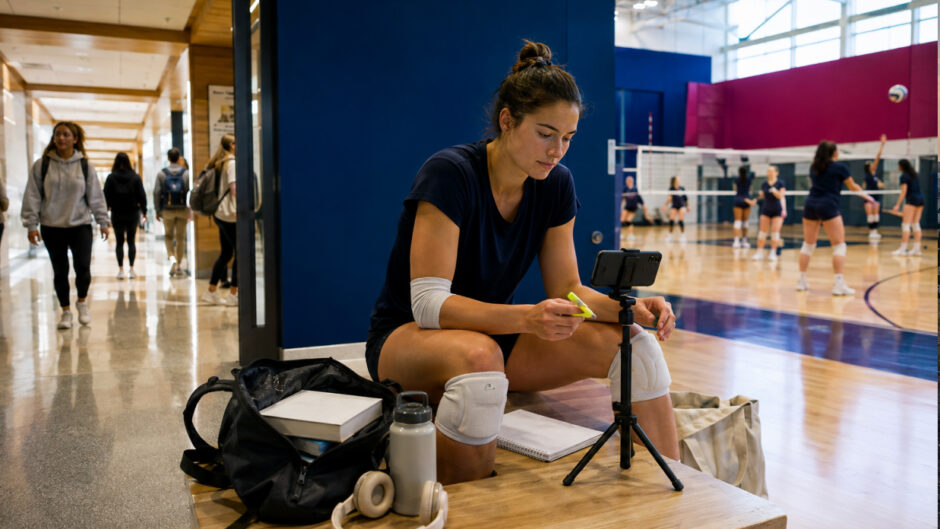
More Involvement Is Not Always Better

College Athletes May Be Managing Three Identities At Once: Student, Athlete And Influencer

college-athletes-student-athlete-influencer-nil

A college athlete can finish morning training, hurry to class, study for an exam, meet with an athletic trainer, return for team activities—and still have another job waiting on their phone.

Record a video.

Answer comments.

Send content to a sponsor.

Check whether a post performed well.

Negotiate an opportunity.

Maintain a public image.

Compare deals with teammates.

Make sure an agreement complies with current name, image and likeness rules.

For some college athletes, NIL has added a third identity to an already demanding combination: student, athlete, and influencer or brand representative.

That does not make NIL inherently harmful. The ability to earn money from one’s name, image and likeness can provide financial opportunities, professional experience, autonomy and motivation that previous generations of NCAA athletes did not have.

But new research published online on August 29, 2026 suggests that these opportunities can also create psychological demands worth recognizing.

Researchers Sarah Xuan Guo, Rose Chepyator-Thomson, Shelby N. Glasgow, James J. Zhang and Yi Zhang conducted semi-structured interviews with 14 Division I athletes—six men and eight women, with an average age of 22—about NIL and psychological well-being. The participants represented sports including basketball, diving, swimming, cheerleading, cross country, track, volleyball, football and golf.

Published in INQUIRY: The Journal of Health Care Organization, Provision, and Financing, the study describes what the researchers call a “triple identity”: student, athlete and influencer. NIL was associated with both motivation and psychological strain, with social-media demands, unequal access to opportunities and inconsistent institutional support emerging as important themes. The new NIL and athlete well-being study provides the complete research findings.

The study is small and qualitative. It does not establish how common these experiences are across NCAA sports, and its findings should not be generalized to every college athlete.

But it identifies a useful question for modern college sports:

What happens when being a student-athlete also means managing a public-facing business identity?

NIL Can Be An Opportunity And A Stressor At The Same Time

Discussions about NIL sometimes fall into two extremes.

One says athletes are finally receiving opportunities they deserve.

The other says money and commercialization are damaging college sports.

Psychological well-being does not require choosing between those positions.

Something can be valuable and demanding simultaneously.

An athlete might appreciate earning money from a sponsorship while finding the required content stressful.

They might enjoy developing a personal brand while becoming increasingly preoccupied with engagement statistics.

They might gain valuable business experience while feeling uncomfortable comparing their opportunities with teammates’.

They might appreciate visibility while disliking the expectation that they remain visible constantly.

The August 2026 study reflects this complexity. Researchers found that NIL could serve as a source of motivation while also creating psychological strain.

That is more useful than assuming the opportunity itself is either good or bad for mental health.

The practical issue is how the opportunity interacts with the athlete’s workload, identity, relationships, resources and support.

The Student Identity Already Has Demands

Before adding NIL, consider what the word student-athlete already contains.

There is the student.

Classes.

Assignments.

Exams.

Group projects.

Academic advising.

Choosing a major.

Maintaining eligibility.

Planning a career.

Then there is the athlete.

Training.

Competition.

Travel.

Strength and conditioning.

Film sessions.

Rehabilitation.

Team meetings.

Recovery.

Nutrition.

Media responsibilities.

Relationships with coaches and teammates.

The NCAA describes academic support, health and wellness, elite competition, career preparation, travel and NIL as different components of today’s student-athlete experience. NCAA student-athlete resources show just how many developmental areas can coexist during a college career.

For many athletes, those responsibilities already require careful time management.

NIL can add another layer.

The Influencer Identity Has Its Own Workload

“Influencer” can sound like someone simply posts photographs and gets paid.

The reality can involve much more.

A commercial social-media presence may require deciding what to publish, creating content, communicating with businesses, maintaining an audience, reviewing agreements, keeping financial records and responding to public reactions.

Current NCAA NIL guidance also creates administrative responsibilities.

For example, Division I athletes must report certain third-party NIL deals. The NCAA states that reportable third-party deals worth $600 or more generally must be entered through NIL Go, the College Sports Commission’s compliance platform, under applicable reporting requirements. The NCAA also advises athletes to understand campus policies and relevant state law and to keep accurate records because NIL income is generally taxable.

Those responsibilities are not necessarily unreasonable.

They are still responsibilities.

For an athlete already moving between classrooms, practices and competition, even small additional tasks consume time and attention.

Social Media Can Turn Identity Into A Performance

Sport already involves evaluation.

Statistics are recorded.

Times are measured.

Film is reviewed.

Coaches evaluate performance.

Fans react.

Rankings change.

Social media can introduce another scoreboard.

Followers.

Views.

Comments.

Shares.

Engagement.

An athlete may therefore experience two very different kinds of performance simultaneously.

How did I perform in competition?

And:

How did I perform online?

The August 2026 NIL study specifically identified social-media demands as one of the factors mediating NIL-related psychological strain. The researchers argue that the influencer role introduces audience management and impression management into the athlete’s identity.

That can matter because the online audience does not disappear when practice ends.

The Phone Can Make Work Feel Continuous

Traditional boundaries in sport are already imperfect.

Athletes think about competition outside practice.

Students study outside classrooms.

But social media creates the possibility of continuous public exposure.

A post can receive comments at midnight.

A sponsor request can arrive during study time.

The Phone Can Make Work Feel Continuous

A bad performance can continue generating reactions long after an athlete leaves the stadium.

A promotional obligation can appear during a recovery day.

The athlete may physically leave practice without psychologically leaving sport, school, business or public evaluation.

That does not mean athletes should stop using social media.

It means digital work deserves to be counted as work.

The NCAA’s Spring 2026 social-media and well-being guidance reported that about 20% of student-athletes said social-media engagement makes it difficult to sleep at night, while nearly 30% of female student-athletes said social media frequently makes them feel worse about their bodies. The NCAA recommends strategies including filtering negative words, limiting comments, blocking harmful accounts, setting boundaries around sharing and taking regular social-media breaks.

Those statistics describe student-athletes broadly rather than NIL participants specifically.

But they demonstrate why adding commercial incentives to online visibility deserves thoughtful attention.

More Visibility Can Mean More Exposure To Harassment

Visibility has another cost.

People can respond.

Sometimes aggressively.

The NCAA reported in February 2026 that its 2025 Growth, Opportunities, Aspirations and Learning of Students study included responses from more than 20,000 student-athletes across all three NCAA divisions.

Among Division I men’s basketball players, 51% reported receiving social-media abuse related to athletic performance. Another 46% reported negative or threatening messages from someone who had bet on their game.

Those findings are not evidence that NIL causes harassment.

They show that college athletes already operate in an online environment where public exposure can have psychological consequences.

For athletes whose commercial opportunities depend partly on maintaining an audience, simply “getting off social media” may not always feel straightforward.

The platform can simultaneously be a source of opportunity and a source of pressure.

More Visibility Can Mean More Exposure To Harassment

Comparing NIL Deals Can Change Team Dynamics

Money introduces comparison.

Who received a deal?

How much?

Why them?

Why not me?

Does follower count matter more than performance?

Does position matter?

Does appearance matter?

Does gender matter?

Does the sport matter?

Does the university matter?

The August study identified unequal access to NIL opportunities as one of the factors associated with psychological strain in participants.

That deserves careful interpretation.

The research does not show that unequal NIL opportunities necessarily create mental-health disorders.

But perceived inequality can become another form of comparison inside environments where athletes are already comparing playing time, scholarships, performance and status.

A teammate’s success can be genuinely celebrated while still prompting private questions about one’s own value.

Those reactions do not make someone selfish.

They make comparison psychologically complicated.

An Athlete’s Market Value Is Not Their Human Value

NIL creates a marketplace around attributes connected to an athlete’s public identity.

Markets rank things.

People do too.

The danger appears when commercial feedback becomes personal feedback.

A company choosing another athlete does not establish that the other person is more talented, more deserving or more valuable.

Having fewer followers does not make someone less important to their team.

Receiving fewer sponsorship opportunities does not measure character.

A campaign ending does not mean an athlete’s identity has failed.

These distinctions may sound obvious from the outside.

They can become harder to maintain when metrics are constantly visible.

Sport already gives athletes numerical representations of performance.

Social media gives them numerical representations of attention.

NIL can attach financial value to that attention.

Maintaining psychological separation between those metrics and personal worth becomes increasingly important.

Not Every Athlete Wants To Become A Personal Brand

One subtle pressure in modern college sports is the assumption that opportunity must always be maximized.

If NIL exists, why wouldn’t an athlete build a brand?

If brands want content, why not post more?

If followers create opportunities, why not pursue followers?

Because people differ.

One athlete may love entrepreneurship.

Another may want only occasional sponsorships.

Someone else may have no interest in turning private life into public content.

An athlete can be ambitious about sport without wanting to become an influencer.

They can value financial opportunities without wanting constant visibility.

They can decline an opportunity because the time requirement is not worth the return.

A healthy NIL environment should leave room for those differences.

Role Overload Is Not A Character Flaw

The concept of role overload is particularly useful here.

It describes situations where the demands attached to someone’s roles exceed the time or resources available to meet them comfortably.

For a student-athlete, the roles can multiply quickly.

Student.

Athlete.

Teammate.

Roommate.

Friend.

Partner.

Family member.

Employee or entrepreneur.

Brand ambassador.

Content creator.

Public figure.

Community representative.

None of those roles is inherently harmful.

The difficulty comes when several demand attention simultaneously.

An athlete who struggles to manage everything is not necessarily disorganized or insufficiently resilient.

There may simply be too much to manage.

Three Roles Can Compete For The Same Limited Capacity

More Efficient Time Management Cannot Create More Hours

College athletes frequently receive advice about organization.

Use a calendar.

Create routines.

Batch content.

Schedule posts.

Plan study time.

Protect sleep.

Prepare meals.

These strategies can be useful.

But productivity advice has a limit.

A calendar cannot create a 25th hour.

Sometimes the appropriate response to overload is not performing every role more efficiently.

It is reducing demands.

That might mean declining an NIL opportunity.

Posting less frequently.

Delegating business administration where appropriate and financially realistic.

Protecting periods when commercial communication is off.

Choosing fewer partnerships.

Separating study time from content creation.

Asking for help understanding contracts or compliance obligations.

The best solution depends on the individual athlete and the rules governing their situation.

Institutions Should Not Treat NIL Education As Only A Compliance Problem

The new study makes an especially useful recommendation for universities.

The researchers argue that athletic departments should integrate mental-health literacy into NIL orientation, helping athletes recognize stress responses and seek appropriate support before distress becomes more serious.

That would expand the definition of NIL preparation.

Athletes clearly need information about compliance.

They may need financial education.

They may need guidance on contracts, taxes, marketing and brand relationships.

But if NIL participation can also involve social-media pressure, comparison, role overload and identity strain, then education should acknowledge those experiences too.

The NCAA’s current Mental Health Best Practices already recognize NIL and social media as factors institutions should consider when creating environments that support student-athlete well-being. NCAA schools are required to make mental-health services and resources available consistent with those best practices. NCAA Mental Health Best Practices also emphasize referral pathways to qualified providers and licensed professionals for formal mental-health evaluation and treatment.

That creates an important boundary:

An NIL staff member can help with NIL.

A coach can support an athlete.

A teammate can listen.

But formal assessment and treatment of mental-health conditions belong with qualified licensed professionals.

Asking About NIL May Belong In Mental-Health Conversations

The August 2026 researchers make another practical recommendation.

Sports psychologists and counselors working with college athletes should consider NIL-related stressors as a distinct contemporary source of identity strain, role overload and social-media anxiety. They suggest that clinical assessment can include questions about NIL participation, social-media management burden and perceived inequalities between teammates.

That does not mean NIL should be blamed whenever an athlete experiences anxiety or burnout.

Mental health is more complicated than that.

It means clinicians may need to understand the athlete’s actual environment.

For today’s Division I athlete, asking only about training, academics and relationships may leave out an increasingly important part of daily life.

Families May Need To Update Their Questions Too

Parents and families often ask athletes familiar questions.

How is school?

How is practice?

Are you playing?

How is the injury?

NIL creates another useful area for conversation.

Not:

How much money are you making?

But:

How much time is this taking?

Do you still enjoy doing it?

Do you feel pressure to stay online?

Are you comfortable with what sponsors expect from you?

Do you have people helping you understand the business side?

Does it ever feel like too much?

Those questions focus on workload and well-being rather than commercial success.

They also give athletes permission to say that a valuable opportunity is becoming difficult.

Coaches Should Be Careful About Commercial Comparisons

Coaches can help establish culture even when they are not directly managing athletes’ NIL arrangements.

Team environments can avoid treating NIL earnings as another unofficial ranking system.

A highly compensated athlete should not automatically receive greater social status within the team.

An athlete without deals should not be portrayed as someone who failed to capitalize on an opportunity.

And athletes should not feel pressured to create public personas that do not fit them.

This becomes especially important when commercial visibility and athletic performance begin influencing one another socially, even when they are formally separate.

Teams function best when an athlete’s role as a teammate remains larger than their follower count.

International Athletes Can Face Different Circumstances

The August 2026 study also contains an important limitation.

The authors note that international athletes excluded from NIL participation under the regulatory circumstances represented in their sample were not included, and those athletes may have meaningfully different experiences. Division II and Division III athletes and athletes with little or no NIL access were also absent.

That matters because “college athlete NIL experience” is not one experience.

Sport.

Gender.

School.

Visibility.

Immigration status.

Market size.

Athletic performance.

Social-media following.

Institutional resources.

All can change the situation.

A qualitative study of 14 Division I athletes can identify themes.

It cannot tell us how every athlete experiences NIL.

The Research Should Not Be Used To Diagnose Athletes

The study’s limitations deserve emphasis.

Researchers conducted detailed interviews with 14 Division I athletes, and data collection began in July 2022, during the relatively early period after NCAA NIL policy changed in 2021. The authors explicitly state that the small qualitative sample limits generalization and that NIL policies, markets and athlete responses continue to evolve.

The study therefore does not demonstrate that NIL causes anxiety, depression or burnout.

It does not show that athletes participating in NIL are psychologically worse off than athletes who do not.

And it cannot establish prevalence.

Its value is different.

It provides detailed evidence that some athletes experience NIL as part of a complicated identity transition involving commercial opportunity, social media, comparison, institutional support and additional role demands.

Those themes can guide better questions and future research.

A Third Identity Can Make Recovery More Complicated

Recovery is usually discussed in athletic terms.

Rest days.

Sleep.

Nutrition.

Training load.

Physical rehabilitation.

But psychological recovery also requires periods when demands decrease.

For an athlete managing three major identities, those periods may become harder to find.

Leave practice, and school remains.

Finish schoolwork, and content remains.

Post the content, and the audience remains.

Finish the sponsorship, and tomorrow’s training remains.

This does not mean every athlete needs to disconnect completely.

It means programs and athletes should recognize that attention itself is a limited resource.

A recovery period filled with notifications, public evaluation and commercial obligations may not function like a genuine break.

College Athletes Need Places Where They Are Not Performing

The most protective part of an athlete’s week may sometimes be an environment where nothing is being measured.

Not their grade.

Not their time.

Not their shooting percentage.

Not their body.

Not their follower count.

Not their engagement.

Not their earning potential.

Just a place where they can exist without converting the experience into performance.

For some athletes, that may come from family.

For others, close friendships, hobbies, faith communities, time outdoors, creative activities or ordinary relationships away from sport.

That does not replace professional mental-health care when someone needs it.

It protects something different: an identity broader than achievement.

That distinction also matters during injury, when athletes can suddenly lose access to one of the roles around which they have organized daily life. CPCWA’s discussion of coping with depression after a sports injury explores why emotional support can matter when sport participation and athletic identity are disrupted.

Success Should Not Require Maximizing Every Identity

The NIL era has created genuine possibilities for college athletes.

A student can learn entrepreneurship.

An athlete can build relationships with businesses.

A public platform can support causes that matter to them.

Income can reduce some financial pressures.

A personal brand may continue creating opportunities after competitive sport ends.

None of those benefits needs to be minimized to take psychological strain seriously.

The August 29, 2026 study offers a more useful framework: NIL can be both an opportunity and another demanding social identity. Its 14 Division I participants described a world in which academic responsibility, athletic performance and commercial visibility can intersect rather than remain separate.

That means resilience should not be defined as successfully maximizing all three roles at all times.

Sometimes resilience means noticing that one role is consuming too much capacity.

Sometimes it means declining an opportunity.

Sometimes it means asking for help.

Sometimes it means letting a post perform badly and going to sleep.

And sometimes it means remembering that student, athlete and influencer are all roles a person can occupy. None of them is the whole person.

Behavioral Health Quality After HHS Pledge

behavioral health quality discussion with clinicians and community advocates

Behavioral health quality can sound like policy language, but it affects very practical questions: how quickly people can get help, whether care is based on evidence, and whether outcomes are measured in a way that supports accountability. On July 29, 2026, HHS Secretary Robert F. Kennedy Jr. hosted a roundtable with insurers, medical societies, providers, and other behavioral health experts who pledged to advance national quality and best practices in behavioral healthcare, according to the HHS announcement.

The pledge does not, by itself, tell any individual what kind of care they need. It also should not be treated as proof that access problems have been solved. Still, it offers a useful framework for patients, families, community organizations, and employers who are trying to understand what better behavioral healthcare might look like in everyday settings.

As with any health topic, this discussion is educational only. Mental health and substance use concerns deserve support from qualified professionals, and personal decisions about diagnosis, treatment, medication, therapy, or crisis care should be discussed with a clinician or appropriate emergency service.

What Behavioral Health Quality Means In Practice

Behavioral Health Quality Starts With Access

The HHS pledge named timely access to treatment as one of its six core commitments. That wording matters because quality is not only about what happens after a person reaches an appointment. If people face long delays, confusing referral paths, limited provider networks, or unaffordable options, then technically available care may still be out of reach for many families.

Timely access should be interpreted cautiously. It does not mean every concern requires the same response or the same level of urgency. A crisis, a new safety concern, a substance-related emergency, or severe functional impairment may require immediate professional support. A stable person seeking routine counseling may have a different time frame. The central idea is that systems should be able to sort needs responsibly and connect people to suitable care without unnecessary delay.

The pledge also emphasized evidence-based assessment, diagnosis, treatment, referral, and recovery support. For readers, that phrase can be translated into a basic consumer question: is the care plan being guided by recognized clinical standards rather than habit, convenience, stigma, or guesswork?

Quality Also Means Follow-Through

A one-time visit may be helpful for some people, but many behavioral health concerns require follow-up, adjustment, and coordination. The pledge’s focus on measuring quality and outcomes with accountability suggests that systems should pay attention to whether care is actually helping people function, stay engaged, and receive appropriate next steps.

Outcome measurement can be useful, but it should be handled with care. Numbers alone may not capture whether a person feels respected, whether cultural needs are being considered, or whether social pressures are making recovery harder. A balanced model should combine measurable indicators with patient-centered discussion and clinical judgment.

The Six Commitments Behind The HHS Pledge

From Assessment To Recovery Support

The July 2026 pledge included six broad commitments: ensuring timely access to treatment; promoting evidence-based assessment, diagnosis, treatment, referral, and recovery support; measuring quality and outcomes with accountability; offering patient-centered, recovery-focused care; applying clinical expertise with individualized treatment plans; and delivering whole-person care that also addresses chronic physical conditions such as HIV and hepatitis C.

Each of these commitments points to a different gap that people may encounter. Some people struggle to get an appointment. Others receive care that does not feel coordinated. Some may have mental health needs, substance use concerns, and chronic physical conditions at the same time. A system that treats those needs as separate problems may miss opportunities for safer communication and more coherent planning.

The phrase “individualized treatment plans” should not be read as a promise that every requested service will be appropriate or available. Rather, it suggests that clinical expertise and personal circumstances should both be considered. Age, pregnancy, disability, medication use, substance use history, trauma exposure, housing stability, and chronic illness can all affect what kinds of support may be suitable. Those decisions belong with qualified healthcare professionals.

Whole-Person Care Requires Coordination

Whole-person care is especially relevant because behavioral and physical health often influence one another. The HHS pledge specifically referred to chronic physical conditions including HIV and hepatitis C. That does not mean every behavioral health patient has those conditions. It means that better systems may need to coordinate mental health, substance use, infectious disease care, primary care, and social support when those needs overlap.

For families and community groups, the practical question is whether people are being helped to connect the pieces. Does the behavioral health provider know who handles primary care? Is there a referral plan? Are medication lists being reviewed by appropriate professionals? Are privacy rules explained clearly? These are not small details. They can affect whether care feels usable rather than fragmented.

Why The Data Still Calls For Caution

Youth Mental Health Remains A Public Concern

Public health data gives the pledge important context. The CDC reported that in 2023, 29% of U.S. high school students said their mental health was not good most or all of the time during the past 30 days, according to the CDC Mental Health Data Channel. That figure does not diagnose individual students, and it does not tell us why any one student was struggling. It does suggest that many young people report frequent distress, which makes access, quality, and school-community coordination especially relevant.

Data on student mental health should be interpreted carefully. A survey response is not the same as a clinical evaluation. Some young people may underreport distress because of fear, stigma, or lack of privacy. Others may describe distress that is real and painful but not linked to a formal diagnosis. Both points can be true at the same time.

Behavioral health quality therefore requires more than crisis response. Schools, pediatric practices, community clinics, families, and youth-serving organizations may all need clear pathways for support. Those pathways should not rely on a young person reaching a breaking point before adults respond.

Numbers Cannot Replace Relationships

Quality measures may help identify system problems, but behavioral healthcare is deeply relational. People are more likely to share concerns when they feel believed, respected, and safe from shame. This is particularly relevant for adolescents, older adults, people with disabilities, people who have experienced trauma, and communities that have faced discrimination in healthcare settings.

For that reason, behavioral health quality should include both technical standards and human experience. Evidence-based care matters. So does whether the person understands the plan, can ask questions, and has a realistic way to follow through.

Behavioral Health Quality And Community Resources

Community resource table with brochures and a welcoming seating area

Community Support Can Reduce Practical Barriers

Formal treatment is only one part of support. People may also need transportation, insurance literacy, housing assistance, peer support, school accommodations, workplace flexibility, or help understanding referrals. These services do not replace clinical care, but they may make it more possible for someone to use care consistently.

Community-based organizations can help by maintaining updated referral lists, explaining what services are and are not designed to do, and avoiding promises that any single program can fix a serious condition. Responsible wellness communication should be honest about uncertainty and should encourage professional evaluation when symptoms are persistent, worsening, or connected with safety concerns. People comparing broader healthcare access and coverage education resources may also find America’s Fair Healthcare useful as a related site in the same network. Coverage literacy does not replace care, but understanding basic options may help people ask more informed questions.

Stigma Can Interfere With Care

Even when services exist, stigma may keep people from using them. A person may worry that asking for help will affect employment, family trust, school standing, or personal identity. Families may also misread behavioral health symptoms as laziness, weakness, or defiance. Those reactions can delay support.

A cautious, evidence-aware approach avoids both extremes. It does not label every difficult emotion as a disorder. It also does not dismiss persistent distress, substance-related concerns, or major changes in sleep, functioning, mood, or behavior as something a person should simply endure.

How Patients And Families Can Read The Pledge

Use Policy Language As A Question List

The HHS pledge can become useful when translated into practical questions. Patients and families might ask whether an organization has a clear intake process, how referrals are handled, how outcomes are discussed, and whether care plans are reviewed over time. These questions do not require a patient to become a medical expert. They simply support informed participation.

For example, if a clinic says it offers recovery-focused care, a patient might ask what recovery means in that setting. Does it include symptom reduction, daily functioning, relationship stability, substance use goals, employment or school participation, or patient-defined priorities? Different programs may answer differently, and those differences can matter.

Individualized care is another phrase that deserves clarification. A patient can ask how personal history, health conditions, medications, cultural background, and preferences are considered. A family caregiver can ask what information can be shared legally and ethically, especially when supporting an adolescent or adult loved one.

Accountability Should Be Understandable

Accountability is stronger when people understand what is being measured. Some measures may track follow-up after hospitalization, engagement in treatment, symptom changes, or screening practices. Others may focus on patient experience or care coordination. Each measure has limits, but transparency can help people understand what a system values.

No measure can guarantee a result for an individual. Behavioral health outcomes can be affected by biology, trauma exposure, social support, housing, employment, medication response, coexisting health conditions, and many other factors. Quality improvement should respect that uncertainty while still asking systems to do better.

Behavioral Health Quality Pledge Questions To Ask

The HHS pledge is not a personal care plan. It is a public commitment that may help frame better expectations for access, evidence-based care, outcome tracking, individualized planning, and whole-person support. Its value will depend on how organizations apply it and whether people can see meaningful changes in real settings.

If you or someone you support is considering behavioral healthcare, it may help to discuss these questions with a qualified clinician, care coordinator, or appropriate health professional:

  • What type of evaluation is appropriate for these symptoms or concerns?
  • What care options are evidence-based for this situation, and what are their possible risks and limits?
  • How soon should follow-up occur, and what changes should prompt urgent help?
  • How will progress be reviewed, and what outcomes matter most for daily life?
  • How are physical health conditions, medications, substance use concerns, or pregnancy considered in the plan?
  • Who should be contacted if symptoms worsen, safety becomes a concern, or the current plan is not working?

For urgent safety concerns, people should contact local emergency services or a crisis resource right away. For non-emergency concerns, a primary care clinician, licensed mental health professional, school counselor, employee assistance program, or community clinic may be a reasonable place to start asking for help.