Let’s be brutally honest: while you’re crushing those 5 AM workouts, the real performance enhancer isn’t in your pre-workout shake—it’s between your sheets. The science doesn’t lie: athletes average 45 minutes less sleep than their civilian counterparts.
Nearly half of competitors experience sleep quality that would make a college student during finals week blush. The International Olympic Committee and NCAA have now recognized what your body’s been screaming all along.
Think of it this way: you wouldn’t show up to game day with one cleat untied. So why compete with a brain running on 60% capacity? From LeBron James’ legendary 8-10 hour nightly commitment to the proven physiological benefits for athletic performance, we’re diving into why proper rest isn’t just recovery—it’s your secret weapon.
Effects of Sleep Deprivation
Imagine trying to run a marathon with concrete shoes while blindfolded. That’s what sleep deprivation does to your athletic performance. The data shows it clearly.
Studies show one bad night of sleep can really hurt your explosive movements. Your quick reactions slow down. These small delays can cost you the game.
Physiological changes are alarming. Your heart rate gets erratic, and breathing gets less efficient. Your body starts fighting against you instead of working with you.
Perhaps most shocking: 60.9% of college athletes feel tired during the day at least three days a week. This is not just a bad week. It’s a big problem that affects recovery and performance.
| Performance Metric | With Adequate Sleep | With Sleep Deprivation | Impact Percentage |
|---|---|---|---|
| Anaerobic Power | Optimal output | Significantly reduced | 15-20% decrease |
| Reaction Time | Peak responsiveness | Noticeably slower | 10-15% slower |
| Injury Risk | Normal baseline | Substantially higher | 30-40% increase |
| Lactate Clearance | Efficient processing | Accumulation issues | 25% less efficient |
The risk of injury goes up a lot when you’re tired. Your coordination and judgment get worse. It’s like driving with bad brakes and a foggy windshield – you’ll crash.
This isn’t just about feeling tired. It’s about your body’s recovery failing. Your body can’t fix muscle damage, get rid of waste, or restore energy. The sleep deprivation cycle is hard to break.
Think of sleep as your body’s maintenance crew working at night. If you cut their hours, things don’t get fixed. Trash piles up. Repairs are delayed. Soon, everything starts to break down.
The solution is simple but hard for our always-on culture. We need to treat sleep as important as training and nutrition. Ignoring it is like sabotaging your own efforts.
Your body needs this recovery time to perform at its best. Ignoring it is like building a sculpture with broken marble. It looks good from far away but is flawed up close.
Crafting a Sleep Routine
Ever wonder why some athletes perform like well-oiled machines while others move like they’re running through molasses? The secret isn’t just in their training—it’s in their sheets. Crafting an elite sleep routine separates the champions from the chronic snooze-button addicts.
Your body operates on a biological clock more precise than Swiss engineering. This circadian rhythm doesn’t care about your late-night Twitter scrolling or Netflix binges. It follows patterns as reliable as tax season.
The 90-minute rule transforms sleep from chaotic exhaustion to strategic recovery. Each sleep cycle lasts about 90 minutes. Waking between cycles feels natural. Waking during deep sleep feels like emotional terrorism.
Professional athletes treat bedtime with the seriousness of game day preparation. Their sleep hygiene protocols include:
- Consistent bedtimes (even on weekends)
- Screen blackouts 60 minutes before sleep
- Cool, dark sleep environments
- Pre-sleep routines without digital anxiety
Think of your sleep routine as training your brain for optimal performance. The table below shows how small changes create massive impacts:
| Common Mistake | Athlete Solution | Performance Impact |
|---|---|---|
| Variable bedtimes | Consistent 10 PM lights out | +23% reaction time |
| Phone in bed | No screens after 9 PM | +17% sleep quality |
| Random wake times | 90-minute cycle alignment | +31% morning alertness |
| No wind-down routine | 20-minute reading ritual | +28% sleep efficiency |
This isn’t about becoming a sleep monk. It’s about working with your body’s natural rhythms instead of fighting them. Your circadian rhythm responds to consistency like a metronome responds to rhythm.
Top performers don’t achieve perfect sleep hygiene through willpower alone. They create systems that make good sleep inevitable. Their bedrooms become sanctuaries, not multipurpose entertainment centers.
The 90-minute rule serves as your biological cheat code. Plan your sleep in 90-minute blocks. Wake at the end of a cycle. You’ll feel more refreshed after 6 hours of cycle-complete sleep than 8 hours of interrupted rest.
Remember: patterns separate chaotic exhaustion from optimized performance. Your body craves predictability more than it craves late-night entertainment. Give it the consistency it deserves, and watch your performance transform.
Napping Tips
Strategic napping isn’t about being lazy. It’s about using your biology to perform better. Unlike toddlers, top performers nap because it boosts their performance.
NASA found that a 26-minute nap can make pilots 54% more alert and 34% better at remembering things. That’s a powerful way to improve your mind, not just a coffee break.
The best naps last 20-30 minutes. This length gives you big mental benefits without making you feel tired when you wake up. It’s like getting a quick energy boost, not crashing.
Companies like Google and Nike put nap pods in because they know rested employees do better. For athletes, napping is about smart recovery, not being lazy.
To get good at strategic napping, start with the right timing and place:
- Nap between 1-3 PM when you naturally feel tired
- Choose a quiet, dark spot to help your brain relax
- Use an alarm after 25 minutes to wake up feeling refreshed
- See napping as a way to improve your performance, not just a break
The right nap can make a big difference. Here’s how different lengths compare:
| Duration | Benefits | Drawbacks | Best For |
|---|---|---|---|
| 10-20 minutes | Quick alertness boost | Limited cognitive benefits | Pre-game preparation |
| 20-30 minutes | Maximum cognitive enhancement | Potential mild grogginess | Strategic performance |
| 30-60 minutes | Deep physical recovery | Significant sleep inertia | Post-competition rest |
| 60+ minutes | Complete system reboot | Night sleep disruption | Extreme recovery scenarios |
Think of napping as a quick way to recharge your brain and body. It’s not a replacement for nighttime sleep, but a way to add extra recovery time.
The real question is, can you afford not to nap when it improves your performance so much? In the quest for excellence, sometimes the best thing to do is nothing at all.
Overcoming Insomnia
Champions often struggle with sleep. Their drive to win can turn into a battle with insomnia. This is because the same mental focus that wins medals can also keep them awake at night.
Studies reveal 26% of athletes face serious insomnia. This turns their bedrooms into places of worry and stress. It’s a sad irony.
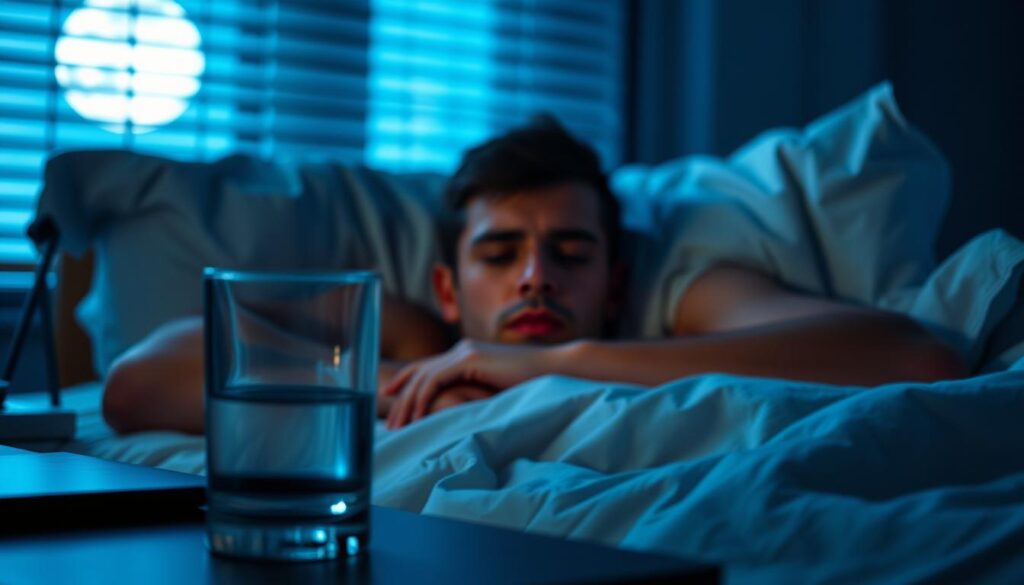
Pre-competition anxiety is intense. It’s not just a few nerves; it’s a full-blown storm of worries. Travel also disrupts their sleep patterns, making it hard to adjust.
Traditional ways to check for insomnia don’t work for athletes. They can’t just answer questions; they need to perform. So, these methods miss the mark.
Perfectionism is a big problem for athletes. It trains their minds to never give up. But this also makes it hard to relax and sleep.
Fixing sleep issues for athletes is more than just advice. It’s about understanding their unique challenges. It’s about the pressure they face in their sport.
The toughest workout might not be in the gym. It could be learning to quiet the mind. This is the biggest challenge for athletes.
Good solutions mix psychology with sleep science. They use cognitive therapy and sports psychology. They also include mindfulness for athletes.
Beating insomnia isn’t about working harder. It’s about finding smarter ways to rest. Even when it seems like you’re not doing anything, you’re working hard.
Tech & Sleep Trackers
We’ve become obsessed with tracking our lives, from heart rate to Netflix binge blinks. But is sleep tracking really helping us recover, or just adding to our stress?
The NCAA takes sleep tracking seriously, following strict privacy laws. Even college athletes’ sleep data is protected. It’s all about keeping your sleep secrets safe.
Wearable sleep trackers can offer real insights if used right. They show patterns, find sleep disruptions, and help improve your sleep space. But, we shouldn’t get too caught up in the numbers. The goal is to feel rested, not just track it.
The top athletes know how to use tech wisely. They might see poor sleep data, but trust their own restfulness more. It’s about finding a balance between tech and natural sleep.
When picking a sleep tracker, look for ones that give you useful info without info overload. The right tech should help your recovery, not stress you out at night.
Think of sleep trackers like a coach. They give feedback and advice, but you’re in charge. The data should guide you, not control you. Feeling good when you wake up is the best metric.
So, go ahead and track your sleep. Just remember, sometimes the best sleep tech is turning off all devices and sleeping.
Conclusion
Let’s get real: sleep isn’t the opposite of training. It’s actually a form of training. The science backs it up, showing how sleep boosts performance without needing extra gym time.
Sleep helps your body recover and your mind make better choices. It’s not just about being faster. It also helps you stay healthy, avoid injuries, and stay mentally strong.
Improving your sleep isn’t hard. Just stop seeing it as something you do when you’re tired. Treat it like your most important workout. By doing so, you’ll see athletes who sleep well perform better and win more.
Isn’t that what we’re all here for?