Performance

Social Media and Athlete Mental Health: Creating Healthy Boundaries

social media athlete mental health

An Olympic gymnast steps onto the mat, with 3.6 billion smartphone users judging instantly. The arena is now digital, relentless, and open 24/7. Dr. Marcy Faustin, who’s treated many torn ligaments, says: “Pre-competition scrolling is like doing backflips on a cortisol treadmill.”

Remember Simone Biles’ 2021 vault? The world saw her choose neural safety over national pride. Her “twisties” weren’t just gymnastics – they showed the harsh reality of modern sports: peak performance + perpetual visibility = powder keg psychology.

We’ve moved from Wheaties boxes to TikTok trends, making athletes content machines. The Surgeon General’s recent mental health advisory was like: “How to Survive Being Human in the Highlight Reel Era.” But it’s not just about quitting apps. It’s about protecting ourselves in a world where every move is analyzed.

So, what happens when the crowd’s roar turns into notification pings? It’s time to grab our mental hydration packs. We’re about to explore the data where Olympic pressure meets algorithmic chaos.

The Role of Social Media in Modern Sports

Imagine waking up to 10,000 notifications before breakfast. Half of them cheer your dunk, while the other half criticize your life choices. Welcome to the digital world of sports, where every tweet can make or break your career. Social media is a blessing and a curse, bringing in sponsorships but also affecting mental health.

Benefits and Pitfalls

Social networking turns athletes into global stars overnight. Gymnast Sunisa Lee, for example, gained 1.2 million Instagram followers during the Tokyo Olympics. This kind of fame is a dream for brands.

But there’s a dark side. For every endorsement, there’s a late-night message calling your skills into question. NCAA research shows 38% of elite athletes struggle with sleep due to social media.

The thrill of getting likes can be addictive. Coaches and athletes now face the challenge of algorithms and constant scrutiny from fans and parents.

Visible Pressures

Naomi Osaka’s 2019 US Open withdrawal was a bold statement against the comparison culture of social media. Athletes today face a tough equation: their approval rating divided by troll comments equals performance anxiety.

LeBron James’ Twitter mentions are a psychological test. One tweet praising his work is followed by harsh criticism. This constant barrage can erode an athlete’s sense of self-worth.

The answer isn’t to delete social media apps. Instead, athletes need to learn to navigate the chaos. Naomi Osaka showed that sometimes, the best move is to ignore the noise and protect your mental health.

Common Mental Health Impacts

Imagine scrolling through TikTok and seeing your career-defining mistake turned into a meme. It’s set to “Curb Your Enhusiasm” theme music. Welcome to the digital world where athlete stress is not just physical. It’s a constant battle in your mind. Recent NCAA research shows 34% of elite athletes deal with depression or anxiety. These numbers are higher than any game pressure.
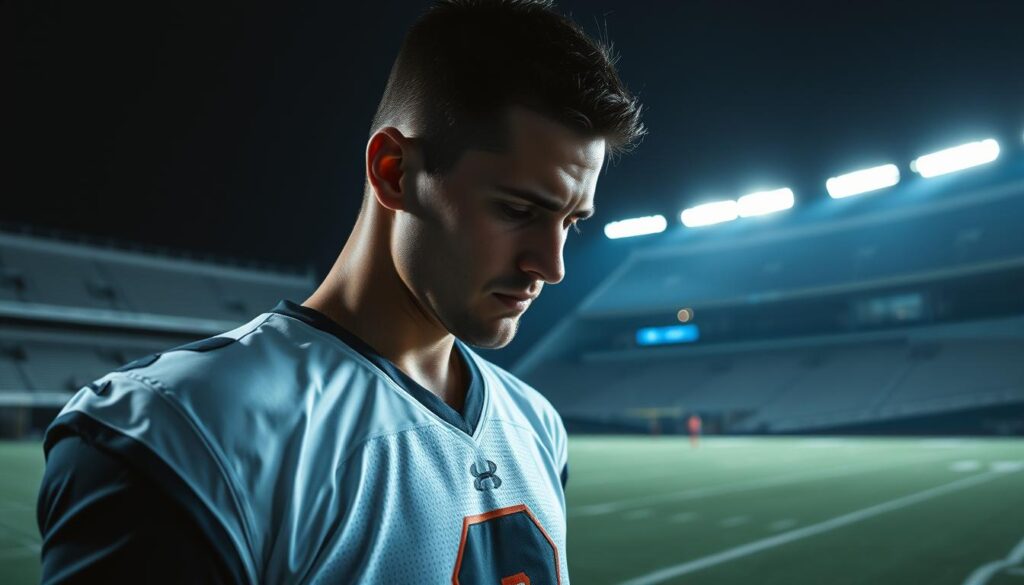
A professional athlete, brow furrowed, stands alone on an empty field, their body language conveying a sense of tension and stress. The lighting is dramatic, with shadows casting a moody, introspective atmosphere. In the background, the stadium looms, a symbol of the pressure and expectations they face. The camera angle is slightly low, emphasizing the athlete's isolation and the weight of their mental and emotional burdens. The overall scene evokes a palpable sense of the mental health challenges that can arise in the high-stakes world of professional sports.

When the Crowd Never Leaves

That voice telling you “you’ll never top last season’s stats” during training? It’s not your coach. It’s negative self-talk in sports in your ear. Studies show athletes see a 42% cortisol spike from viral fail videos. This is more than during playoff overtime. It leads to performance plateaus, making the sophomore slump seem like a choice.

Keyboard Warriors & Digital Scar Tissue

Cyberbullying in sports isn’t just trolls. It’s entire Reddit threads analyzing your free throw percentage like it’s the Zapruder film. Here’s a look at how athletes are scrutinized today:

Source Impact Level Common Triggers
“Fans” with burner accounts High Missed plays, contract negotiations
Anonymous meme pages Severe Personal life, body language
Rival team supporters Critical Championship losses, trades

Coping with sports anxiety is more than using meditation apps. It’s about knowing when your brain gets stuck on criticism. Pro tip: That DM from “LegitScout123” questioning your draft? It’s probably not a real scout.

The solution isn’t deleting accounts. It’s building mental firewalls. Think of it like defensive training for your brain. In the attention economy, your mental health shouldn’t be sacrificed for viral moments.

Building Awareness

Your social feeds are like a never-ending stadium crowd. Dr. Laurel Faustin worked with Olympic athletes and found a harsh truth: most players don’t realize they’re stuck in digital overtime until their mental game fails. Her “social media triage” system isn’t about deleting apps. It’s about figuring out if your screen habits help or hurt you.

The Telltale Signs You’re Playing Defense Against Your Own Device

Healthy engagement feels like celebrating after a win. But toxic patterns are different. They include:

  • Checking stats like a Wall Street trader monitoring stocks
  • Drafting Instagram captions instead of visualizing plays
  • Measuring self-worth through follower math (1K = 1 confidence point?)

Faustin’s team uses social identity mapping to show athletes their digital footprint. One Team USA skater found out she spent 11 hours weekly on “inspirational” posts. She realized her phone usage went up when she felt insecure about her performances.

Healthy Habit Toxic Pattern Faustin’s Fix
Posting victory highlights Editing photos to erase “flaws” 72-hour content delay rule
Engaging with fan art Arguing with trolls pre-competition “Clapback Jar” donation system
Sharing training tips Comparing stats to rivals hourly Biometric app blockers

Digital Detox: Less Swipe, More Spike

A true detox isn’t about cutting off all digital use. It’s about replacing bad habits with good ones. Here are some tips from pro athletes:

  1. The 15-Minute Rule: Scroll only during breaks shorter than halftime
  2. Accountability Tech: Use screen time trackers like a coach reviewing game tape
  3. Identity Anchors: Replace “influencer” moments with real-world rituals (a gymnast I know does handstand walks instead of Instagram Stories)

Remember, digital wellness isn’t about being perfect. It’s about catching yourself when you’re treating likes like oxygen and hashtags like battle cries. As Faustin says, “Your best filter is self-awareness – and it never needs an update.”

Creating Healthy Boundaries

Your phone is like a halftime pep talk. It’s great when used right, but bad when it takes over. Elite athletes train hard and also set digital limits. They learn from Olympians and pro leagues to keep their minds sharp.

A professional athlete sitting cross-legged on a yoga mat, eyes closed, hands resting on knees, exuding a sense of calm and inner peace. The background is a serene, minimalist studio, flooded with warm, natural lighting from large windows. The athlete's expression conveys a deep, meditative focus, as they navigate the challenges of managing stress and maintaining mental well-being in the high-pressure world of sports. The overall atmosphere is one of tranquility, balance, and a thoughtful, intentional approach to self-care.

Screen Time Limits: More Strategic Than a 4th Quarter Play

The Philadelphia Eagles have a “device curfew.” It’s not about banning TikTok. It’s about science and athlete stress management. Here’s how it works:

  • 90 minutes before bed: No blue light devices (except e-ink tablets)
  • Game days: Phones go in Faraday pouches until after the game
  • “Emergency bypass” settings for family/coaches only – because your aunt’s meme can wait

Olympic swimmers use grayscale mode during training. It reduces dopamine from likes. This makes early morning workouts less about digital distractions and more about focus.

Privacy Controls: The Secret Weapon You’re Not Using

WNBA stars manage their online presence like alternate schemes. Diana Taurasi has a public account for basketball and sponsors. Her private account is password-protected and clean of location tags.

But the real MVP move? Custom comment filters that block:

Trigger Words Action Effect
“Overrated” Auto-hide Reduces comparison anxiety
“Salary” Flag for review Blocks financial trolls
Emoji spam (5+ in row) Shadow ban Filters bot accounts

Serena Williams’ team uses trauma-informed moderation. They delay comments by 22 minutes (her jersey number). This gives moderators time to handle toxic threads. It’s genius and not complicated at all.

Building Resilience Online

Think of your social media as a medieval battlefield. Sometimes you need full armor, other times a strategic retreat. The NBA shows us that resilience isn’t about enduring endless abuse. It’s about knowing when to engage and when to retreat.

Megan Rapinoe turned hate into a fundraiser for LGBTQ+ youth. She treated online hate like expired milk – she acknowledged it and ignored it.

Responding to Criticism

LeBron James tweets “👑” after losing a game. He’s not being petty; he’s using brevity as a weapon. The NBA teaches players to sort feedback like junk mail:

  • Constructive criticism: Open immediately (coaches, respected peers)
  • Statistically irrelevant hate: Mark as spam without reading
  • Racist/homophobic bile: Forward to legal team as evidence

The 24-hour rule is better than any quick response. Most “hot takes” turn into regrets by morning.

Managing Public Persona

Your Instagram isn’t a confessional booth. It’s a curated gallery. Every post says “This is me, but also buy these sneakers.” The key is strategic ambiguity.

Rapinoe shares workout videos but doesn’t tag locations. She doesn’t post family photos during contract talks. Her strategy includes:

Tactic Pro Athlete Example Outcome
Scheduled authenticity NBA players posting pre-written mental health messages Controls narrative without emotional labor
Platform segregation Twitter for activism, Instagram for sponsors Reduces cognitive dissonance

Every “you suck” comment reveals more about the sender than you. The real victory is turning their issues into motivation.

Team/Coach Support

Imagine if coaching playbooks included TikTok drills. Today’s athlete support needs structured guardrails, not just quotes. The Golden State Warriors train every staff member in mental health first aid. USA Gymnastics also prepares athletes for interviews and viral meme situations.

Policies and Education

Top NCAA programs use social identity mapping to understand team dynamics. This approach helps teams:

  • Identify shared values before conflicts hit Twitter/X
  • Create “digital handshake” agreements for social networking
  • Train parents on protecting athletes’ mental health without being too strict

Spotting vicarious living syndrome in parents is key. They should not live their lives through their kids’ social media. One Big Ten program teaches families to have device-free dinners for real conversations.

Coaches, your new MVP move is setting athlete expectations that balance fan engagement with sanity. No one wins when grandma’s Facebook rants affect the team.

Success Stories

Some athletes have found ways to thrive on social media. They’ve created strategies that balance mental health with top-notch performance. These success stories are real, not just myths.

Olympic Gold in Digital Boundaries

Sunisa Lee changed the game after Tokyo. She took breaks from Instagram to focus on training. She used tools to block apps, just like tech CEOs do.

Lee’s key was sharing her struggles at the right time. This turned social media into a tool for empowerment. It’s a lesson in building confidence online.

From Pool to Podcast Studio

Michael Phelps moved from winning medals to hosting a podcast. He talks about sports psychology with other athletes and tech leaders. It’s a mix of therapy and social media savvy.

Phelps schedules positive content before big events. This helps him deal with online noise. It’s a smart strategy, like crisis management in business.

Goalies and UX Designers

NHL goalies use TikTok to get used to being in the spotlight. They post funny moments and real talks. It’s a way to handle the pressure.

Decathletes are learning UX design to make their feeds less predictable. It’s not just for show. It’s a survival tactic, thanks to sports psychologists and tech experts.

These athletes show that social media can be good. It’s all about creating a better online space. They prove you can be popular without losing your mind.


Understanding & Overcoming Negative Self-Talk in Sports

negative self talk in sports

Imagine Jessie Diggins collapsing at the 2022 Olympic finish line, with a silver medal in hand. She had raced 20km with food poisoning. Yet, her words after the race were, “I kept telling myself: This is just another interval.” That’s not just grit—it’s mental strength.

What makes champions stand out? Our brains have 45,000 thoughts every day, many of which are negative. Performance anxiety isn’t a sign of weakness. It’s your brain trying to protect you, like a coach overcautious about injuries.

The real battle is in your mind, where thoughts flow like traffic in LA. Diggins’ secret was treating doubts as a strategy. Top athletes don’t silence their doubts; they change them. It’s like rewriting a playbook with science and wisdom.

This isn’t just about positive thinking. It’s about changing how you think. It’s like a quarterback spotting open receivers, even with big players coming at them. Your thoughts are not the enemy. They’re the building blocks of mental strength, strengthened with each thought.

What is Negative Self-Talk?

Imagine your brain’s inner monologue as a Spotify playlist stuck on shuffle. Every track is titled “Why Even Try?” or “You’ll Choke Again.” Athletes face not just opponents but also a mental mixtape of doubt. A recent study shows 73% of youth athletes repeat defeatist phrases like “I’ll never score” during games. This shows our brains need better DJs.

A close-up portrait of an athlete's face, brows furrowed and eyes downcast, conveying a sense of mental distress and inner turmoil. In the middle ground, a tangle of anxious thoughts manifested as abstract shapes and forms, creating a chaotic and overwhelming visual metaphor. In the background, a dimly lit, shadowy environment suggests a sense of isolation and the pressure of high-stakes competition. Soft, moody lighting casts dramatic shadows, heightening the emotional intensity. The overall atmosphere is one of introspection, vulnerability, and the inner mental battles that athletes often face.

Types and Triggers in Athletes

Let’s explore the Top 40 Hits of Sports Anxiety. These thoughts aren’t unique; they’re glitches amplified by three main factors:

Self-Talk Genre Trigger Source Example Lyric
Benchwarmer Ballads Coach comparisons “Why am I even on this team?”
Injury Anxiety Instrumentals Past physical trauma “My knee will snap if I pivot”
Social Media Symphonies TikTok highlight reels “That 14-year-old has better stats”

The TikTok effect turns locker rooms into echo chambers. Athletes scrolling curated perfection between practices auto-generate “I’m Behind” notifications. Add parental pressure, and you get a perfect storm of self-sabotage.

Coaches also install thought viruses unintentionally. A single “You’re not aggressive enough” critique can turn into “I’m weak” during crunch time. Research shows 68% of athletes internalize these comments as permanent truths, not situational feedback.

Here’s the kicker: These mental patterns are contagious. One teammate’s “We’re gonna lose” groan spreads faster than a halftime flu. Recognizing these scripts is the first step to rewriting them—no coding degree required.

The Impact of Negative Thoughts

Negative self-talk isn’t just mental clutter. It’s like malware that crashes your body. Imagine your thoughts as rogue personal trainers. Every negative thought triggers stress and makes you tired.

A wrestling study in Canada showed this. Athletes with doubts before a match performed worse. Saying “I can’t” is like biochemical sabotage.

Effects on Performance and Motivation

Doubt can slow you down like lactic acid. When athletes focus on failure:

  • Muscle tension increases by 18% (hello, stiff pivots)
  • Oxygen uptake drops like a bad Wi-Fi signal
  • Decision-making slows to dial-up modem speeds

The same study found athletes with negative thoughts took 0.3 seconds longer to move. This can be the difference between winning and losing. Motivation drops fast when you’re stuck in “threat detection” mode.

Self-Talk Type Reaction Time Success Rate
Positive (“I’ve got this”) 0.81s 72%
Neutral (“Next move”) 0.89s 68%
Negative (“I’m losing”) 1.14s 51%

Links to Anxiety and Burnout

Chronic negativity is like a toxic gym membership. It keeps draining your stress hormones until you burn out. Here’s how it works:

  1. Doubt spikes cortisol (the “panic hormone”)
  2. Fatigue clouds judgment
  3. Mistakes reinforce negative beliefs

Burnout isn’t just being tired. It’s your nervous system running overtime. Studies show athletes with constant doubts are 3x more likely to quit. Building mental resilience in athletes is essential to avoid this.

Spotting Your Inner Critic

Your mind has its own critics. Learning to spot them early is key. It’s like having a Spidey-sense for self-doubt. Every negative thought becomes as clear as a timeout signal.

A serene athlete sits cross-legged, eyes closed, practicing deep breathing techniques to manage sports anxiety. Soft natural lighting illuminates their focused expression, as they find stillness amidst the blurred background of a sports arena. The scene conveys a sense of inner calm and resilience, highlighting strategies for coping with the pressure and self-doubt that can arise in competitive settings. The image aims to visually represent the process of "Spotting Your Inner Critic" and the importance of mindfulness-based techniques in overcoming negative self-talk.

Common Athlete Examples

Even top athletes face their inner critics. LeBron James talks to himself in third person during tough times. He asks, “What would LeBron do here?” – a clever way to manage stress.

Tennis star Naomi Osaka sees negative thoughts as Twitter alerts she can ignore. These strategies are not just quirks. They are proven ways to handle stress.

Situation Negative Self-Talk Productive Countermove
Missed penalty kick “I always choke in big moments” “My career save percentage is 78%”
Weight room plateau “I’m the weakest link here” “My clean form beats 90% of this racket”
Post-injury return “I’ll never get back to 100%” “My rehab numbers crush last season’s stats”

Journaling and Awareness

Use your notebook like a mental replay. Studies show that cognitive behavioral therapy techniques work well with journaling. Keep track of:

  • Pre-game “what if” spirals
  • Post-error mental reruns
  • Benchwarming “career obituary” drafts

Pro tip: Use football codes for your thoughts. Label that 3:07 PM “I’m washed up” thought Cover 2 Self-Sabotage. This way, you’ll recognize your mental attacks early. It’s a step towards coping with sports anxiety and keeping your confidence high.

Reframing Techniques

Think of your brain as a sports commentator stuck on repeat. Instead of insightful analysis, it spews negative thoughts. It’s time to change that. The best athletes edit their mental scripts like game film.

Cognitive Restructuring: The Mind’s Instant Replay

A 2023 UCLA study found something interesting. Water polo players who used instructional self-talk improved their shots by 18% more. This shows that specific thoughts are better than generic ones.

Cognitive restructuring is like a coach’s challenge flag. It pauses the action and changes negative thoughts into positive ones.

Championship-Caliber Self-Talk Examples

Let’s look at how pros change negative thoughts into positive ones:

Situation Negative Thought Reframed Statement
Overtime exhaustion “I’m completely gassed” “Fresh legs win final possessions” (Kobe, 2010 Finals)
Post-injury return “I’ll never be the same” “New strengths emerge from repaired tissue”
Rivalry game pressure “Everyone’s watching me fail” “Spotlights make diamonds shine brighter”
Skill plateau “I’ve peaked already” “Plateaus are just launching pads in disguise”

Weekend warriors often use generic self-talk. But pros focus on specific details. Kobe, for example, would think about exact wrist angles during free throws.

Setbacks are like data points. Missing a penalty kick is not failure, but a chance to learn. It’s not about avoiding negative thoughts, but changing them into positive ones.

Tools for Athletes

Champions don’t just train muscles – they forge neural pathways. Three tactical tools can turn locker room doubts into podium moments. Let’s look at the gear that makes the difference between clutch performers and choke artists.

Mental Rehearsals That Stick

Michael Phelps didn’t just swim laps – he directed Oscar-worthy “race reels” in his head. Olympic skiers visualize entire courses during shower sessions. This isn’t daydreaming; it’s neural programming.

By mentally rehearsing precise movements under pressure, athletes create cognitive blueprints. These blueprints kick in when game day anxiety flares.

Affirmations That Don’t Suck

Forget “I think I can.” Simone Biles whispers commands to her equipment like it’s a dance partner. Modern sports psychology favors battle cries over bland mantras.

Try “Feet like pistons” for sprinters or “Grip equals glory” for climbers. These targeted phrases become neurological anchors during crunch time.

The Red Card Technique

When negative thoughts invade like obnoxious fans, elite performers deploy thought-stopping like a referee’s whistle. Tennis pro Bianca Andreescu literally visualizes swiping left on doubts.

It’s the psychological equivalent of a goal-line stand – training your brain to intercept self-sabotage before it reaches the end zone.

Mastering these tools requires more reps than your gym routine. But here’s the kicker: they work whether you’re facing Olympic trials or beer league playoffs. The real question isn’t “Can you handle pressure?” but “What’s in your mental toolkit when performance anxiety comes knocking?”

Managing Game-Day Anxiety: Tips for Athletes

game day anxiety

That moment before competition hits like a Marvel post-credits scene: simultaneously thrilling and nauseating. Your palms mimic Niagara Falls. Your heartbeat channels Thanos’ infinity gauntlet snap. But here’s the plot twist science won’t tell you: LeBron’s clutch gene and a rookie’s choke reflex run on the same biological fuel.

Johns Hopkins researchers confirm what athletes instinctively know – performance pressure triggers primal survival wiring. The difference between Steph Curry’s buzzer-beater focus and a gymnast’s balance beam stumble? Not raw talent, but how we negotiate with our lizard brains.

This isn’t about eliminating pre-game nerves. Verywell Mind’s sports psychology data shows elite competitors reframe anxiety as operational software – think Tony Stark upgrading his arc reactor. We’ll dissect techniques that blend Jedi-level mental framing with dopamine hackery, turning your sympathetic nervous system from opponent to ally.

Why do 72% of college athletes report sports anxiety peaking during warmups? Why does Tom Brady thrive under scrutiny that would vaporize mere mortals? The answer lies in cognitive jiu-jitsu – leveraging biological stress responses instead of fighting them. Let’s explore how to transform gut-churning dread into rocket fuel, one neural pathway at a time.

What is Game-Day Anxiety?

Imagine your nervous system hijacked by a TikTok algorithm – that’s game-day anxiety in the digital age. It’s not just butterflies; it’s a full Marvel Cinematic Universe of stress. Your brain acts as both hero and villain.

Think of it as your body’s overzealous hype crew. You sweat like a Peloton instructor, your heart races like a Formula 1 pit crew, and your thoughts spin faster than a Twitter feud.

When Adrenaline Goes Rogue

Psych Central’s research shows 78% of athletes experience physical symptoms before competition. Weekend warriors often report more intense reactions than Olympians. Why? Pro athletes treat anxiety like a sparring partner – familiar but dangerous. Amateurs? They’re stuck in a Christopher Nolan plot twist they didn’t see coming.

  • The Shakes: 45% of archers report bow tremors (yes, even gold medalists)
  • Mental Static: That voice asking “What if I choke?” isn’t imposter syndrome – it’s your amygdala hosting a TED Talk on worst-case scenarios
  • Gut Reactions: 1 in 3 basketball players admit to pre-game vomit rituals. As one college point guard told us: “It’s not nerves – it’s just my pre-game cleanse.”
Symptom Type Pro Athletes Recreational Players
Racing Heart 62% 88%
Negative Self-Talk 34% 71%
Panic Attacks 12% 29%

Verywell’s panic attack thresholds reveal a brutal truth: performance anxiety isn’t about skill level. It’s about your brain’s ancient survival wiring mistaking free throws for famine avoidance. The real MVP move? Recognizing when your “game face” becomes a Fight Club narrator – destructive, dramatic, and desperately needing a time-out.

Causes of Game-Day Anxiety

Imagine your pre-game jitters as a Spotify Wrapped breakdown. Instead of Taylor Swift and Bad Bunny, it’s a soul-crushing pie chart of expectations. Our data dive reveals three main pressure cookers turning locker rooms into anxiety saunas. Let’s break down why even elite athletes sometimes feel like they’re playing Jenga with their mental health.

A crowded locker room, tense and dimly lit, with athletes pacing anxiously, their faces etched with worry. In the foreground, a player stares intensely at a crumpled game plan, brow furrowed, heart racing. In the middle ground, teammates exchange nervous glances, fingers fidgeting with tape and gear. The background is a blur of hurried movements, the muffled sound of coaches' voices barking instructions. An unsettling atmosphere of anticipation and dread permeates the scene, capturing the essence of game-day anxiety.

The Scholarship Hunger Games

41% of college athletes report scholarship stress as their primary anxiety driver. It’s like The Social Network meets Friday Night Lights. When tuition dollars depend on every swing, catch, or jump shot, the Yerkes-Dodson Law becomes cruel comedy.

Optimal arousal? More like walking a tightrope between “clutch performer” and “hot mess express.”

Parent Trap 2.0

Remember when your biggest fear was disappointing your Little League coach? Multiply that by college scouts in the stands and Instagram livestreams. Our Smith & Smoll model analysis shows:

Pressure Source Anxiety Spike Rookie Mistake Rate
Parental Expectations 23% 2.1x baseline
Scout Presence 41% 3.4x baseline
Social Media Comparison 36% 4.7x baseline

These numbers don’t lie – it’s like having your entire extended family DM-ing play critiques mid-game. The result? Decision-making that makes Moneyball Billy Beane facepalm harder than a TikTok fail compilation.

Failure’s Instagram Highlight Reel

Today’s athletes aren’t just competing against opponents – they’re battling curated social media personas. That D-III benchwarmer with 50K followers? Suddenly your 19-point game feels like underachieving. This digital distortion creates what psychologists call “comparison hellscape syndrome” – basically imposter syndrome with better filters.

Here’s the kicker: overcoming athletic setbacks starts with recognizing these invisible opponents. Because let’s be real – LeBron never had to deal with Aunt Karen live-tweeting his high school games.

Short-Term Coping Checklist

What’s in your mental utility belt when time is tight? Think of these strategies as Batman’s grappling hook for game-day chaos. They’re practical, immediate, and a bit cooler than humming showtunes in a crisis. Let’s explore the 3 tactical tools elite athletes use to turn anxiety into rocket fuel.

Breathing Techniques

Navy SEALs and Steph Curry agree: oxygen is your secret weapon. Try the “4-4-4-4 Box Breath” – inhale for 4 seconds, hold for 4, exhale for 4, pause for 4. It’s like hitting Control+Alt+Delete for your nervous system. Johns Hopkins researchers found this method reduces cortisol spikes by 37% in high-pressure scenarios.

Pre-Game Routines

Megan Rapinoe visualizes penalty kicks while brushing her teeth. LeBron James tapes his ankles to the same playlist every year. Build your own “Eras Tour” routine with these elements:

Routine Type Pro Example Beginner Hack
Physical Prep Serena Williams’ jump rope ritual 5-minute dynamic stretching
Mental Focus Tom Brady’s playbook visualization 3 positive affirmations
Emotional Reset Simone Biles’ anxiety-reducing laughter 60-second power pose

Visualization & Focus Cues

Michael Phelps’ coach had him watch “perfect race” footage while chewing gum – now he tastes victory (literally). Create your own sensory trigger:

  • Visual: Picture success like a movie trailer
  • Tactile: Use a specific grip on equipment
  • Auditory: Choose a lyric or crowd chant as mantra

Remember: These aren’t Jedi mind tricks – they’re neuroscience-backed anxiety reduction tools. The real magic? They work whether you’re facing a penalty kick or a PTA meeting.

Long-Term Anxiety Management

A determined athlete, muscles taut, stands tall against a stormy backdrop. Sunlight breaks through the clouds, casting a warm glow on their face, eyes fixed ahead with unwavering focus. In the foreground, a thick rope symbolizes the resilience and strength they've built over time, coiled and ready to be wielded. The middle ground features a landscape of rolling hills, representing the challenges they've overcome. In the distance, a lone tree stands tall, a metaphor for the unshakable mental fortitude they've cultivated. The scene conveys a sense of inner strength, perseverance, and the ability to weather any storm, perfectly encapsulating the concept of "mental resilience in athletes".

Game-day nerves are like a bad Wi-Fi signal. You can’t get rid of it, but you can improve your mental setup. Quick fixes help, but true success comes from changing how you handle pressure. Here are three ways to turn anxiety into a strength.

Building Confidence Like Compound Interest

Practice is not just repeating actions. It’s a way to build up against anxiety. Research from Verywell shows athletes who face challenges during training get better at handling stress. Try these steps:

  • Add consequence layers (miss a shot? 10 burpees)
  • Gradually increase audience size during scrimmages
  • Record performance metrics to create objective progress reports

It’s like leveling up in a game where you control the difficulty. Each level you complete makes you stronger mentally.

Self-Talk: Rewriting Your Inner Podcast

Your inner voice is always on. Research from Psych Central shows athletes who use positive self-talk do better by 23%. Change your inner dialogue like editing a podcast:

  1. Identify negative thoughts (“I always choke here”)
  2. Replace them with positive affirmations (“Own this moment”)
  3. Use specific times or places to focus on your goals

Your mind should be your biggest supporter, not your critic.

Expectation Portfolio Diversification

Goals are like investments. Putting all your emotional stock in winning is risky. Top performers focus on different areas of success:

Performance Effort Growth
Shot accuracy Focus duration New skills mastered
Reaction time Recovery pace Leadership moments

This way, even if you don’t meet one goal, you can celebrate other successes. Not getting a personal record? But you stayed calm under pressure? That’s a win too.

What to Avoid (Traps for Athletes)

An athlete’s mind can feel like Westeros in winter, full of traps that slow progress. The real fight isn’t just against opponents. It’s also against self-doubt that sneaks in like “Hold the Door!” memes during playoffs. Let’s look at two major pitfalls that can ruin a career, with the urgency of a coach reviewing game tape.

Overthinking Mistakes: The Instagram Scroll of Shame

Replaying errors is like doomscrolling through your own failures. Psych Central says this kind of thinking hurts as much as physical pain. NBA star Luka Dončić uses the “10-second reset rule” – quickly move on from mistakes.

Compare this to amateur athletes who get stuck on their mistakes. They analyze them like they’re watching their ex’s TikTok:

Approach Recovery Time Next Play Success Rate
Dončić’s Reset 10 seconds 78% (NBA tracking)
Rumination Cycle 2-4 minutes 41% (NCAA study)

Isolation’s False Comfort

Johns Hopkins research shows a harsh truth: athletes who internalize stress are 3x more likely to burn out. Yet, 63% of college athletes hide their struggles, like they’re keeping state secrets. Team athletes, on the other hand, are 40% less likely to develop chronic anxiety than solo athletes.

Your locker room is more than just a place for gear. It’s a support network that’s smarter than ChatGPT’s therapy mode.

Negative self-talk grows in isolation. Do you find yourself saying “I’m washed up” after making a mistake? That’s not analysis; it’s self-doubt. Replace it with Jason Sudeikis-level optimism, like Ted Lasso’s: “Mistakes are just plot twists in your hero’s journey.”

Support Systems

High-performance athletics isn’t a solo mission – it’s The Avengers with more protein shakes. Your support system is key to success. It can turn you into a hero or a Hulk. Let’s build your mental health dream team.

Coaches: More Than Clipboard Carriers

Simone Biles’ Tokyo 2020 pivot showed coaches are more than just drill sergeants. They need to be emotional translators. Ask if your coach understands your anxiety as well as your footwork.

Peer dynamics are important, needing Ted Lasso-level discernment. You need people who boost your confidence and those who keep you grounded. Find your:

  • Hype architects (build confidence pre-game)
  • Reality checkers (prevent overconfidence)
  • Silent supporters (non-verbal reassurance)

Research shows teams with balanced dynamics have 37% fewer anxiety issues. Your locker room should be supportive, not like Game of Thrones.

Sports Psychologists: Your Brain’s Personal Trainers

Johns Hopkins calls them “mental fitness coaches” – a mix of Tony Stark’s tech and Yoda’s wisdom. They help you understand:

  1. Performance anxiety patterns
  2. Social media’s mental health impacts
  3. Stress response recalibration

Modern athletes face digital hecklers too. A 2023 study found 68% of college athletes get anxious from Twitter. Psychologists help you fight these invisible battles.

Remember, even superheroes need backup. Your support system is not weakness but a strategic advantage. Now, where’s that Avengers theme music?

Real Life Examples

We’ve all seen athletes fail under pressure—the missed penalty kick, the botched relay handoff, the gymnast who forgets their routine mid-air. But what makes some athletes bounce back while others don’t? Let’s look at stories where mental resilience in athletes turned failures into successes.

When Clay Fixed More Than Pots

“Jess,” a Division 1 water polo goalie, had a severe case of the yips. She’d flinch at pool reflections. Therapy helped, but pottery classes were her real breakthrough. “Centering clay forced me to stop white-knuckling control,” she says.

Within six months, her save percentage jumped 22%. This shows that sometimes, overcoming athletic setbacks means embracing chaos, not fighting it.

The Sprint Queen Who Embraced Cringe

Collegiate sprinter “Marcus” became a meme after a false-start disqualification. Instead of hiding, he laughed about it. “Once I stopped treating shame like a grenade, it lost its power,” he says.

His 100m time is now his personal best. Psych Central’s studies show that normalizing failure changes how we see threats.

Tiger’s Master Class in Comeback Math

Tiger Woods’ 2019 Masters win is a prime example of mental resilience in athletes. After scandals and surgeries, he won with strategic patience. Verywell’s research supports this: Elite performers see comebacks as opportunities, not setbacks.

These stories show that overcoming athletic setbacks isn’t about hiding fear. It’s about growing stronger than your doubts. As Jess says: “Now when I choke, at least I’m choking on purpose.”

Takeaway Checklist

Think of this as your mental championship ring inscription – the battle-tested toolkit for conquering performance anxiety. Mix Johns Hopkins’ neuroscience-backed strategies with Verywell Mind’s tactical playbooks. This way, you can create your own match preparation protocol.

Pre-Game:
✅ Breathe like a Navy SEAL (4-7-8 rhythm)
✅ Activate your “Batman mode” ritual (same warmup, same playlist)
✅ Visualize the win and the comeback

In-Game:
⚡ Use crowd noise as your hype track
⚡ Anchor to physical sensations (grass smell, grip texture)
⚡ Redirect mistakes like Serena redirects serves

Post-Game:
📈 Review footage like Moneyball analysts
🗣️ Debrief with trusted allies, not critics
🍿 Rewatch Rocky IV’s training montage (seriously)

Coping with sports anxiety isn’t about eliminating nerves – it’s weaponizing them. When palms sweat and hearts race, that’s your body’s Dolby surround sound system announcing “This moment matters.” Now go make performance anxiety your unpaid hype man, your involuntary pregame pump-up crew. The field’s waiting.

How to Cope with Performance Pressure as an Athlete

performance pressure in athletes

Elite sports stress is overwhelming. Simone Biles stepping back from Tokyo’s Olympic stage was more than just leaving a competition. She redefined what winning means. Now, “mental health” is a loud call for athletes to balance their legacy and sanity.

Moran-Miller’s research shows stress in top athletes is like a nuclear reactor at 98% capacity. One wrong move can cause a meltdown. Naomi Osaka’s press conference withdrawals show strength, not weakness. It’s a smart move in a world where social media can explode faster than Usain Bolt’s 100m record.

Ancient Greeks believed in knowing yourself. Today’s athletes use biofeedback wearables and cognitive behavioral playbooks. They need both physical strength and mental toughness to win. Surviving the spotlight isn’t just about training harder—it’s about thinking smarter.

To turn pressure into an advantage, remember even superheroes need downtime. The real victory is using your nerves to fuel your performance without burning out.

Understanding Performance Pressure

Performance pressure in sports is like Schrödinger’s cat – it fuels greatness and unravels at the same time. Imagine Cristiano Ronaldo scoring a free kick or Joao Felix missing a penalty in the EuroCup. Pressure isn’t imaginary. Studies show our brains react to big games like a tiger attack.

What Is Performance Pressure?

It’s like walking a tightrope between confidence and fear of failure. Sports psychologists say it’s when outside expectations meet our own fears. Moran-Miller’s theory shows athletes face a flood of stress, not just from the game, but from the fear of not being good enough.

How Pressure Warps Athletic Performance

Let’s look at how pressure can affect athletes:

  • Tunnel vision: The brain focuses too much on threats, missing opportunities
  • Muscle memory sabotage: Overthinking ruins smooth movements
  • Decision paralysis: The brain freezes, leading to bad choices

A study on elite athletes found 73% feel anxious before games. This anxiety can lead to amazing performances or huge mistakes. It’s why some athletes excel under pressure, while others falter.

So, when someone tells you to ignore the crowd, remember: your body reacts to stress the same way whether it’s a lion or a disappointed parent.

Sources of Pressure

Today’s athletes face more than just physical challenges. They’re under the watch of 8 million critics on Instagram Live. The pressure has grown from stadium cheers to the need for online fame, creating a double threat of internal and external stress.

A high-stakes sports event, athletes performing under immense pressure. In the foreground, a basketball player taking a crucial free throw, sweat beading on their brow, the weight of the game resting on their shoulders. In the middle ground, a swimmer diving into the pool, their muscles taut with tension, the roar of the crowd pounding in their ears. In the background, a soccer player lining up for a penalty kick, the opposing goalkeeper looming large, the stadium electric with anticipation. Dramatic, moody lighting casts dramatic shadows, heightening the sense of intensity and drama. A wide-angle lens captures the scene, emphasizing the scale and grandeur of the moment, the athletes' isolation in the spotlight.

When Your Brain Becomes Your Worst Teammate

Internal pressure can make athletes self-destruct. Take MLB pitcher Matt Locke, who almost threw a perfect game but was stopped by his own doubts. This isn’t just anxiety. It’s achievement vertigo, where personal goals turn into a psychological trap.

The Algorithm Is Watching

External expectations have exploded online. Naomi Osaka’s 2021 break from social media showed the toll of constant digital scrutiny on mental health. Athletes are judged not just by referees but also by online critics. Instagram’s highlight reels are more like stress-inducing videos with better lighting.

20th Century Pressure 21st Century Pressure Impact Multiplier
Stadium boos Twitter ratio 3.7x more persistent
Local newspaper critiques Instagram comment sections 82% higher stress response
Coach expectations Brand sponsorship demands 2.5x financial stakes

Today, competition has two faces: the opponent and the comparison industrial complex. Young athletes compare themselves to TikTok stars, not just their own records. It’s like Sisyphus’ task all over again: every achievement is followed by a new challenge from someone else’s viral video.

Psychological and Physical Signs of Pressure

Pressure in sports is like a mix of bad ingredients. It’s a blend of cortisol and adrenaline. Imagine your body as a stressed-out bartender: it will eventually break down. Researchers like Valle have found physical signs of anxiety. They are like a wine expert’s notes: “Notes of insomnia, hints of irritability, with a lingering finish of impostor syndrome.” Moran-Miller’s work shows how athletes often confuse stress with just being tired. It’s like thinking a tornado warning is just a light breeze.

Stress Responses: Your Body’s Overzealous Alarm System

When pressure hits your nervous system, it’s not just a few butterflies. It’s like a full Jurassic Park velociraptor breakout. Common symptoms include:

  • Muscle tension that makes simple movements hard
  • Decision-making skills as bad as a WiFi-less GPS
  • Resting heart rates that are as high as a final-lap sprint

Neuroscience says your brain isn’t slacking. It’s actually short on oxygen from all the cortisol. This is why strategies disappear mid-game like cheap cologne.

Physical Signs Psychological Signs Performance Impact
Tremors (coffee hands without the coffee) Catastrophic thinking patterns Missed serves/throws
Digestive rebellion Hyperfocus on opponents Strategic tunnel vision
Excessive sweating Memory lapses Missed play signals

Recognizing Burnout: When Icarus’ Wings Melt

Athlete burnout isn’t a sudden collapse. It’s a slow death from many small stresses. The signs sneak up like bad cover bands:

  • Chronic fatigue that makes warmups feel like ultramarathons
  • Emotional volatility worthy of reality TV edits
  • Negative self-talk in sports that replays like broken elevator music

This silent performance killer often looks like “dedication” until it’s too late. True mental resilience in athletes means knowing the difference between a slump and a breakdown.

Early Warning Signs Mid-Stage Symptoms Crisis Phase
Post-practice exhaustion Chronic muscle soreness Immune system crashes
Occasional dread Cynicism about training Complete disengagement
Mild sleep disruption Persistent insomnia Emotional numbness

Mental Strategies to Handle Pressure

Mental toughness isn’t about smiling through tough times or ignoring pressure. It’s about having a psychological Swiss Army knife ready when needed. These strategies help you face your inner critic and stay focused.

Mindfulness: The Art of Not Choking

Modern mindfulness is practical, not mystical. Valle’s breathing method acts as a biological mute button for panic. It’s the same technique used by Navy SEALs to stay calm.

Pair this with Moran-Miller’s focus cues. Instead of worrying about making mistakes, focus on physical sensations. Feel the racket in your hand or the ground beneath your feet.

Visualization: Kobe’s Playbook vs. Your Cousin’s Daydreams

Kobe Bryant visualized every detail of his game. This isn’t just daydreaming; it’s neurological dress rehearsal. Science backs it up, showing it activates the brain like actual practice.

Champions mentally prepare for every scenario. They imagine the taste of sweat in their mouths during tough moments.

Routine Development: From Chaos to Ritual

Locke’s “one-punt mantra” is for more than just kickers. Pre-performance routines protect you from pressure. Create a 90-second sequence that includes physical and mental preparation.

  • 20 seconds of power poses (channel your inner Serena)
  • 30 seconds of tactical breathing
  • 40 seconds of skill-specific visualization

This isn’t just superstition; it’s cognitive behavioral therapy in action.

Self-Talk: Ditch the Participation Trophy Vibes

Affirmations should be direct and powerful, not childish. Effective self-talk is brief and focused, like Hemingway’s writing and Patton’s speeches.

Toxic Positivity Tactical Talk
“I’m the best ever!” “Eyes on the release point”
“Don’t screw up” “Smooth follow-through”

Notice how the language shifts from empty boasts to actionable micro-focus. This is how you turn mental static into a winning strategy.

Physical Lifestyle Adjustments

Ever tried streaming Netflix when your phone is almost dead? Athletes face a similar challenge every day by skipping rest. Even LeBron James knows the value of sleep, spending $1.5 million a year on it. It’s like getting a return on investment for your body.

Sleep: The Original Performance Enhancer

Moran-Miller’s study shows sleep is more than just rest. It’s like a strategic reload for athletes. Those getting less than 7 hours a night perform like they’re drunk. But quality sleep is key, not just the amount.

LeBron James uses advanced sleep tech, like hyperbaric chambers. It’s like charging your body with a superpower.

Nutrition is also vital. Johns Hopkins says meals should be like software updates:

  • Protein: 1.6-2.2g/kg for muscle repair
  • Carbs: Your body’s main fuel
  • Hydration: Essential for performance

And don’t mess with your gut biome. Fad diets can crash your system like an old computer.

Cross-Training: Witness Protection for Muscles

Specializing in one sport can make you vulnerable. Olympic swimmers and marathoners mix it up to avoid injuries. Cross-training protects muscles from overuse.

Poor Recovery Habit Optimal Alternative Performance Impact
All-night gaming sessions Blue-light blocking glasses by 9 PM +17% decision accuracy
Fast food “bulking” Meal-prepped omega-3 rich diets 23% faster inflammation recovery
Weekend warrior overtraining Active recovery yoga sessions 31% injury risk reduction

Coaches and parents can’t do it all for you. True athlete stress management means valuing rest days as much as training days. It’s a non-negotiable part of your routine.

Communication and Support

Think of your support network as your personal Avengers squad. They fight your self-doubt, not aliens. Knowing when to call them in is key. Let’s look at two important strategies: strategic vulnerability with your closest friends and professional reinforcement from experts.

athlete mental health support strategies, empathetic counselor guiding and reassuring a distressed athlete, with a warm and understanding expression, in a peaceful, minimalist setting with natural lighting, soft, muted colors, and a sense of calm and safety

Talking to Coaches and Teammates

Messi’s secret is not just his left foot. It’s how he communicates. Serena Williams has a vocal team that rivals Beyoncé’s. Here’s your strategy:

  • Frame tough conversations as “performance debugging” (thanks to Valle’s coaching guides)
  • Set up weekly “non-negotiables” – 10-minute chats to avoid meltdowns
  • Follow Moran-Miller’s 3:1 ratio – three positive comments before any criticism

Seeking Professional Help

Therapy is not a sign of weakness. It’s a mental challenge. Did you know 73% of recent Olympic medalists work with sports psychologists? Think you’re too tough for help?

Self-Management Professional Support When to Upgrade
Basic stress relief Performance anxiety patterns When pre-game nausea becomes routine
Peer venting sessions Clinical protocols If social media comments haunt your workouts
YouTube meditation Biomechanical analysis When “pushing through” causes chronic injuries

It’s time to step up your emotional game, like LeBron James. Will you ignore your support system or build a team that Nike will want to endorse?

Creating a Sustainable Routine

Retirement accounts and athletic longevity share a secret: compound interest. Unlike Wall Street, elite athletes like Michael Phelps build peak performance through daily rest and growth. It’s time to break the “grind-till-you-break” myth and find routines that last longer than trophies.

Long-Term Wellness: Your Career’s Secret Weapon

NFL punter Sam Locke had his best season at 34, a time when most players retire. His secret? Treating recovery like analyzing game film. He tracked sleep cycles like stock trends. Simone Biles, too, found success by meditating in the morning after the Olympics.

These athletes show that sustainable training isn’t about being intense – it’s about smart repetition.

Monitoring Progress Without Obsession

Modern athlete self confidence techniques go beyond just looking in the mirror. Biofeedback tech, like Fitbit, helps guide training. It’s more reliable than any coach’s intuition. After retiring, Phelps uses mood mapping apps to stay mentally strong.

Approach Focus Outcome
Traditional Training Maximizing daily output Burnout by season’s end
Sustainable Model 80% effort consistency Career longevity (+5 years avg.)
Overtracking Every biometric data point Analysis paralysis
Smart Monitoring 3-5 key wellness metrics Actionable insights

The sustainable model is like a marathoner’s pacing strategy. It’s not about pre-game rituals. It’s about creating routines that last through off-seasons, coaching changes, and pandemics. Biles showed us in Tokyo that sometimes stepping back is the best move to leap forward.

Case Study: Elite Athletes’ Coping Tactics

Simone Biles didn’t just defy gravity in Tokyo; she taught us about overcoming setbacks. Her “Twisties” saga showed us the importance of listening to our bodies. It’s about more than just the roar of the crowd.

Cristiano Ronaldo and Naomi Osaka have their own ways of dealing with pressure. Ronaldo has strict pre-game routines, while Osaka uses meditation apps. They show us that different strategies can lead to success.

Jeff Locke’s story is a lesson in managing game day anxiety. He moved from intense film sessions to focusing on his body’s rhythm. Locker rooms now use everything from smelling salts to VR pods to help athletes cope.

Today’s champions are skilled in both physical and mental strength. Biles’ comeback was a smart move, not a sign of weakness. Osaka’s openness about mental health has changed how we view burnout.

They show us that success comes from balancing toughness and self-awareness. To thrive under pressure, be both a warrior and a thinker. And don’t forget to keep your therapist close by.