Healthy aging is often discussed as if it begins at retirement, but the Office of Disease Prevention and Health Promotion frames it as a lifelong public health concern. That framing matters because aging well is not only about individual habits. It is also shaped by access to safe movement, nutritious food, preventive services, social connection, and communities that make participation possible for people with different abilities and needs.
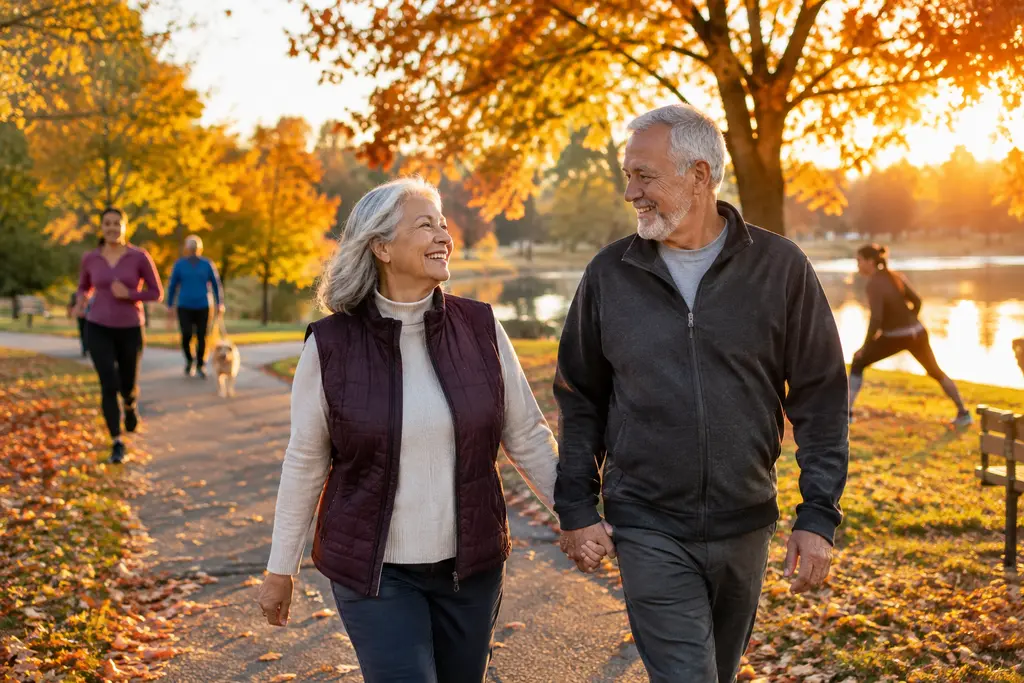
For older adults, active engagement can mean many things. It may include paid work, volunteering, education, caregiving, civic life, walking groups, faith communities, senior centers, or simply being able to remain connected to neighbors and family. None of those activities replaces medical care, and no public health resource can determine what is safe for one person. Still, national initiatives can help communities ask better questions about how people remain included as they age.
What Healthy Aging Means In ODPHP’s Work
Healthy Aging Begins Before Later Life
ODPHP identifies Healthy Aging as one of its National Health Initiatives, within a broader federal effort to improve health and prevent disease through public health planning and communication National Health Initiatives. In the research provided, ODPHP describes aging well as something that begins early in life, not as a concern that suddenly appears after age 65.
This framing makes healthy aging less about blaming older adults for health status and more about recognizing the accumulated effects of opportunity, environment, and access. Health disparities experienced earlier in life may carry through the lifespan. That does not mean later-life change is useless. It means public health planning should account for the fact that people arrive at older adulthood with different resources, risks, disabilities, caregiving responsibilities, and community supports.
Engagement Is Broader Than Exercise
ODPHP’s approach, as described in the research, includes the idea that older adults should be able to fully engage in employment, education, and community life. That is a broader goal than simply telling people to move more or eat differently. It asks whether public systems and local partners are helping people remain visible and included.
Physical activity, food access, health information, and preventive care can all influence engagement. So can transportation, social trust, technology access, and the design of local programs. Public health agencies cannot solve every barrier on their own, but they can help organize goals, language, and partnerships so that aging is treated as a community issue rather than a private problem.
National Tools That Support Older Adults
Healthy People 2030 Sets Public Goals
ODPHP supports Healthy People 2030, a decade-long plan launched in August 2020. According to the research provided, the initiative includes measurable objectives for health and well-being, with 20 objectives specifically focused on older adults. The value of this type of framework is not that it guarantees better outcomes. It gives public agencies, researchers, and community partners a shared set of priorities to monitor.
Measurable objectives may help identify whether progress is reaching older adults across different communities. They may also reveal where gaps persist. For example, a public health objective can draw attention to preventive services, social participation, chronic disease risk, injury prevention, or access barriers without implying that every older adult has the same goals or health circumstances.
Move Your Way And MyHealthfinder
The research also notes that ODPHP promotes Move Your Way, which communicates physical activity information across the lifespan, including resources for older adults. Public health messaging in this area needs caution. Activity may support mobility, mood, balance, and independence for some people, but individual safety can depend on health conditions, medications, pain, disability, surgery history, and fall risk.
MyHealthfinder is another ODPHP-supported tool described in the research. It offers plain-language health information designed to be easier to use. That matters because a resource is only useful if people can understand it and act on it in realistic ways. For related community wellness reading, CPCWA’s article on lifelong wellness habits discusses activity, food access, social ties, vaccines, and clinician conversations in a similar public health context.
For those looking to enhance their understanding of wellness in one’s routine, consider comparing resources at a related site in the same network, Ekko Naturals. As with any wellness content, general information should be separated from personal medical decisions.
Why Public Health Data Still Matter
Fair Or Poor Health Is Common
Population data can help explain why ODPHP and partner agencies continue to focus on older adult health. CDC FastStats reported that, in 2024, 24.3% of non-institutionalized adults age 65 and older reported being in fair or poor health CDC FastStats. This statistic does not describe every older adult’s experience, and it should not be used to stereotype aging as decline. Many older adults remain active, engaged, and independent.
At the same time, the figure suggests that a sizable share of older adults may be living with health concerns that affect daily life. Public health planning should be realistic about that. Programs that assume everyone can access the same activities, read the same materials, prepare the same meals, or travel to the same services may leave some people out.
Data Can Point To Gaps, Not Personal Failure
Health statistics are most useful when they point toward systems, not shame. If an older adult is not meeting a public health benchmark, there may be many reasons: limited transportation, unsafe walking routes, caregiving demands, cost, pain, disability, social isolation, food access, or lack of clear information. A cautious interpretation avoids turning population goals into personal judgments.
For communities, the better question is practical: what would make participation more possible? That may mean accessible exercise options, nutrition support, trusted health communication, fall risk education, or partnerships between health departments, aging services, libraries, parks, and local organizations. The evidence base can guide planning, but local context affects what people can actually use.
Community Partnerships For Healthy Aging

States Need Practical Starting Points
The research notes that ODPHP released a Quick-Start Guide to Partnering on Healthy Aging around mid-2024, based on input from nine state health departments about goals, partnerships, and barriers. That detail is useful because it shows that national messaging is only one part of the work. State and local agencies often need practical ways to begin, especially when staff, funding, and community needs differ.
A guide based on state input may help public health teams identify realistic partners and anticipate barriers. It may also encourage agencies to look beyond traditional healthcare settings. Aging-related supports often involve housing, transportation, food systems, recreation, emergency preparedness, and social services. Public health departments may be well positioned to convene those conversations, even when they do not directly run every program.
Age-Friendly Systems Depend On Local Context
The research also describes ODPHP partnerships connected to Age-Friendly Public Health Systems. The concept is straightforward: public health departments can adopt frameworks that support older adult health at state and local levels. In practice, the details can vary widely. A rural county may have different transportation barriers than a dense urban neighborhood. A community with many multilingual households may need different communication strategies than one with fewer language-access needs.
For individuals and families, this means national resources are a starting point rather than a full plan. A handout about movement, nutrition, or preventive services may be useful, but personal decisions should reflect medical history, mobility, finances, culture, household responsibilities, and clinician input. Public health can make options easier to see. It cannot decide what is appropriate for every person.
Healthy Aging And Questions To Raise With A Clinician
Questions For A Preventive Visit
Educational resources can support preparation for care, but they do not replace professional evaluation. Older adults and caregivers may want to bring public health topics into preventive visits, especially if activity, nutrition, sleep, falls, mood, medications, or social connection are affecting daily routines.
- What types of physical activity may be reasonable for my current health status?
- Are there fall risks, medication effects, or symptoms I should discuss before changing activity habits?
- Are my preventive screenings and vaccines up to date for my age and health history?
- Could food access, appetite changes, dental issues, or swallowing concerns affect my nutrition?
- Are there community programs that fit my mobility, transportation, language, or caregiving needs?
Questions About Daily Participation
Active engagement should not be treated as a single ideal lifestyle. For one person, participation may mean returning to a walking routine. For another, it may mean finding transportation to a senior center, adapting volunteer work, managing caregiving strain, or asking about balance concerns after a fall. A person living with disability or chronic illness may still have meaningful ways to participate, but those options should be realistic and respectful.
ODPHP’s work points toward a wider view of aging: health information, measurable goals, accessible communication, nutrition guidance, physical activity messaging, and partnerships that support community life. The safest use of these resources is to treat them as conversation starters. Older adults, caregivers, and community workers can use them to ask what supports are available, what barriers remain, and what should be discussed with a qualified clinician before making personal health changes.