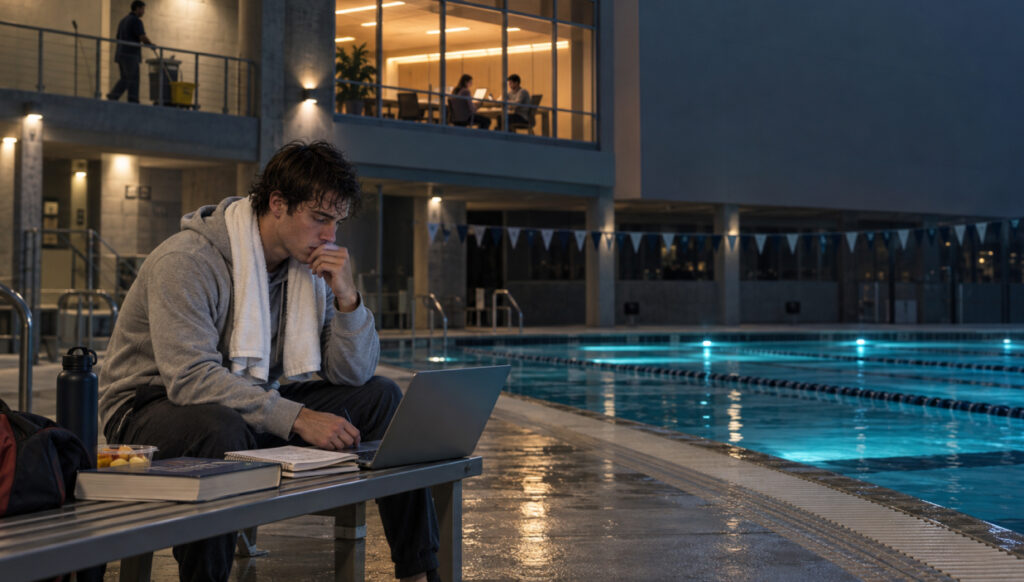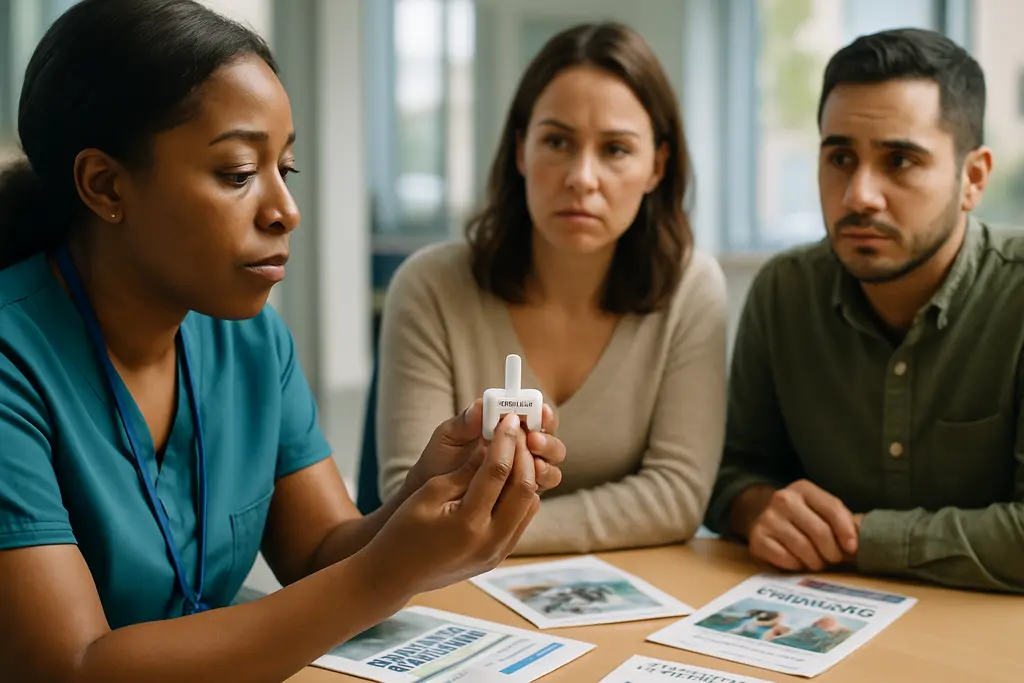
Extreme heat and polluted air affect more than outdoor comfort. They can disrupt sleep, limit exercise, cancel practices, isolate people indoors, increase physical fatigue, and make ordinary decisions feel harder.
An athlete may become unusually irritable after several hot practices. A student may struggle to concentrate in a warm apartment. A parent may spend the day managing air-quality alerts, childcare changes, and worries about an older relative. An outdoor worker may finish a shift with no energy left for family responsibilities.
These reactions do not automatically indicate a mental health condition. They may reflect the combined effects of heat, smoke, poor sleep, physical strain, disrupted routines, and uncertainty.
A mental-health plan for hot or polluted days is not a treatment program. It is a practical way to reduce avoidable stress, preserve important routines, stay connected, and recognize when someone needs medical or mental health support.
What The Utah Heat And Air-Pollution Study Found
A 2026 study led by researchers at the University of Utah examined whether heat stress and air pollution were associated with short-term changes in suicide risk.
The study’s senior author was Amanda Bakian, PhD, a research associate professor of psychiatry at University of Utah Health and an investigator at Huntsman Mental Health Institute. Dirga Lamichhane, PhD, was the first author. The research was published in Environment International in February 2026 and summarized by University of Utah Health on March 12, 2026.
Researchers analyzed more than 7,500 suicide deaths in Utah from 2000 through 2016. They compared the timing and approximate location of each death with heat stress, nitrogen dioxide, and fine-particle pollution near the person’s address.
Instead of using temperature alone, the researchers used wet-bulb globe temperature, which considers heat alongside factors such as humidity, wind, and cloud cover.
For every 9°F increase in wet-bulb globe temperature, suicide risk was approximately 5% higher during the following six days. The association was stronger during the warmer part of the year, from late March through late September.
During the warm season, high nitrogen-dioxide levels appeared to strengthen the association. When nitrogen dioxide was high, each 9°F increase in heat stress was associated with a nearly 50% increase in suicide risk. Nitrogen dioxide is commonly produced by traffic and fossil-fuel combustion.
These are population-level associations. The study does not show that one hot day causes a particular person to experience suicidal thoughts, nor can weather data predict an individual crisis. The researchers specifically noted that they could not establish direct causation.
The study also used data collected before wildfire smoke became as seasonally prominent in Utah as it is today. Bakian said that changing smoke patterns raise new questions about how heat and multiple pollutants may interact.
Why Hot And Smoky Days Can Feel Mentally Harder
Heat and pollution can add several kinds of stress at the same time.
The body must work harder to regulate temperature. Sleep may become lighter or shorter, especially when nighttime temperatures remain high. Outdoor exercise, team practices, errands, and social plans may need to change. Smoke can keep people indoors for days or weeks and may remind them of previous fires, evacuations, or frightening experiences.
The U.S. Environmental Protection Agency’s updated wildfire-smoke stress guidance, released in 2026, identifies possible reactions including worry, anger, fatigue, trouble concentrating, sleep disruption, appetite changes, headaches, and increased use of alcohol, tobacco, or other substances. EPA also notes that smoke can create isolation by limiting outdoor activities and disrupting normal routines.
Those reactions can be misunderstood.
A student may be labeled unmotivated when poor sleep and heat are affecting attention. An athlete may interpret lower energy as a loss of fitness. A parent may feel guilty for relying more heavily on screens while children are unable to play outside. A worker may criticize themselves for being less productive after a physically demanding commute or shift.
A safer interpretation begins with context:
What changed in the environment, routine, sleep, activity level, or physical condition before the change in mood or functioning appeared?
Environmental context does not explain every mental health symptom. It can help people respond more accurately instead of treating every difficult day as a personal failure.
Check The Conditions Before Judging Your Coping
People often wait until they feel terrible before checking the heat index or air quality. A plan works better when environmental information is treated like any other practical input.
The AirNow Fire and Smoke Map provides current fine-particle pollution data, fire locations, smoke plumes, and locally available smoke outlooks. Conditions can change quickly throughout the day, so yesterday’s air quality may not describe the conditions during today’s practice, commute, or outdoor event.
EPA recommends monitoring current conditions, reducing outdoor exertion when smoke levels are elevated, and moving exercise indoors when indoor air is cleaner. Its 2026 guidance also recommends planning ahead for cool, cleaner indoor spaces because heat and smoke can occur together.

Checking conditions is not about becoming afraid of every alert. It helps answer practical questions:
- Should today’s workout be moved, shortened, or reduced in intensity?
- Does a child need an indoor social option?
- Should an outdoor task be completed earlier or postponed?
- Is there a cooler, cleaner place available if the home becomes uncomfortable?
- Does someone in the household need an extra check-in?
The goal is to reduce unnecessary physical and mental load before the day becomes unmanageable.
A Low-Energy Plan For Hot Or Polluted Days
A useful plan should still work when energy and concentration are already limited.
| Planning Area | Before Conditions Worsen | During A Difficult Day |
|---|---|---|
| Information | Bookmark AirNow and local heat alerts | Check updates at set times instead of monitoring continuously |
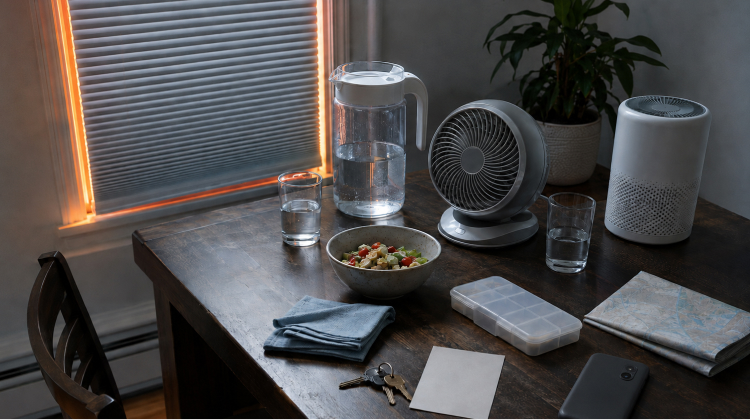
| Physical Needs | Keep water, easy meals, and necessary supplies available | Maintain meals, hydration, and usual medication routines as directed |
| Indoor Space | Identify the coolest, cleanest available room or public location | Move essential activities there when appropriate |
| Schedule | Identify tasks that can be moved or simplified | Complete the most necessary task and postpone lower-priority demands |
| Movement | Prepare an indoor or lower-intensity alternative | Avoid forcing a normal outdoor routine in abnormal conditions |
| Connection | Choose one person who can check in | Send a simple update rather than becoming completely isolated |
| Recovery | Protect sleep and evening cooling where possible | Reduce late-day stimulation and unnecessary decisions |
| Professional Support | Know which clinician, counselor, trainer, or workplace contact to call | Reach out when symptoms persist, worsen, or affect basic functioning |
This plan is intentionally basic. The purpose is not to optimize every part of the day. It is to preserve safety, reduce decision fatigue, and make the next action clearer.
Reduce The Information Load Without Ignoring Alerts
Environmental emergencies can create a cycle of repeated checking.
A person may refresh the air-quality map, fire news, weather forecast, neighborhood group, and social media throughout the day. Staying informed is important, but continuous exposure can intensify worry without changing the available choices.
A more manageable approach is to choose reliable sources and check them at specific times—for example, before leaving home, before an outdoor practice, and again if conditions visibly change.
For families, adults can give children simple, concrete information:
“The air is smoky today, so we are staying inside. We have a place with cleaner air, and we will check the conditions again this afternoon.”
EPA recommends answering children’s questions honestly, limiting excessive media exposure, maintaining normal activities where possible, and helping children connect with friends in places with cleaner indoor air.
The same principle applies to adults. Information should support a decision, not become a second source of exposure.
Protect Connection When Outdoor Life Is Cancelled
Heat and smoke can remove the routines that normally support mental well-being.
A runner may lose their usual route. A student may miss outdoor club activities. A recreational team may cancel practices. Parents may keep children home from parks. Older adults and people with health conditions may avoid errands or community events.
After several days, the loss of routine can become socially isolating.
Connection does not have to require a large gathering. It may mean moving a team meeting online, studying with someone in a library, calling a relative during the time normally used for a walk, or arranging a brief indoor visit in a cleaner-air space.
Athletes dealing with an injury or disrupted training may already be vulnerable to isolation and identity changes. CPCWA’s guide to coping with the emotional impact of a sports injury explains why maintaining team contact and support can matter even when normal participation is not possible.
A changed plan is not a failed plan. Preserving connection may be more important than preserving the exact activity.
Adjust Expectations For Athletes And Outdoor Workers
Hot, polluted days are not the time to prove toughness.
EPA advises people to reduce outdoor activity when smoke is present and to choose lower-intensity options because heavier breathing increases the amount of smoke inhaled. Air quality can also improve or worsen during the same day, making flexible scheduling more useful than a fixed plan.
For athletes, a mental-health plan can include permission to report headaches, dizziness, unusual fatigue, concentration problems, or irritability without assuming those reactions are a motivation problem. Coaches should coordinate physical-safety decisions with qualified athletic trainers, medical staff, and local air-quality guidance.
For outdoor workers, personal coping tools cannot replace heat protections, clean-air access, reasonable breaks, appropriate scheduling, or employer responsibility. A breathing exercise may help someone manage a stressful moment, but it cannot make unsafe exposure acceptable.
Resilience means adapting to conditions—not pretending the conditions do not matter.
Medication And Heat Need A Professional Plan
Some prescription and over-the-counter medications can affect thirst, sweating, temperature regulation, blood pressure, alertness, or hydration. Heat can also affect medication storage.
The CDC’s heat and medication guidance identifies several medication categories that may require additional planning, including certain psychotropic medications, stimulants, antihistamines, diuretics, and other commonly used drugs. The effect depends on the medication, dose, health condition, environment, and individual.
People should not stop, skip, or change medication because the weather is hot or smoky. The CDC advises discussing a hot-day medication plan with a qualified clinician and following professional guidance about storage, hydration, and warning signs.
This is especially important for people who already have difficulty regulating temperature, live alone, work outdoors, or lack reliable air conditioning.
Self-Help Cannot Replace Cleaner Air Or Safer Conditions
An individual plan can reduce some stress. It cannot solve pollution, housing problems, lack of air conditioning, unsafe work requirements, inaccessible public spaces, or the cost of filtration.
EPA’s 2026 wildfire guidance recommends planning a cleaner-air room, using appropriate filtration when available, and identifying public cleaner-air locations. It also acknowledges that access to these protections is unequal.
Community and organizational responses may include:
- Opening cooling and cleaner-air spaces
- Adjusting outdoor work, school, and athletic schedules
- Providing transportation to safe indoor locations
- Communicating conditions in accessible languages and formats
- Checking on people who live alone
- Maintaining social and educational activities indoors
- Helping households access filtration and cooling resources
Mental-health planning should never become a way to blame people for struggling under unhealthy conditions.
Sometimes the most resilient response is not better self-regulation. It is asking for a schedule change, leaving an unsafe environment, using community resources, or advocating for better protections.
When The Plan Is Not Enough
Temporary irritability, tiredness, disrupted sleep, or reduced concentration can occur during unusually hot or smoky periods. These reactions often improve when conditions and routines stabilize.
Professional support may be appropriate when distress continues for several days, becomes more intense, substantially affects sleep or appetite, interferes with normal responsibilities, or leads to increasing use of alcohol or other substances. EPA specifically advises contacting a healthcare professional when stress reactions interfere with daily activities for several days.
Medical evaluation is also important when someone develops symptoms that could reflect heat-related illness, smoke exposure, medication effects, or another physical health problem.
Friends, coaches, parents, and managers do not need to determine whether the cause is physical, psychological, or environmental. They can notice the change, reduce immediate demands, and help the person connect with appropriate care.
When someone may be unable to remain safe, a self-help plan is not enough. Contact local emergency services or an appropriate crisis service immediately.
Make The Plan Before The Alert Arrives
Hot and polluted days become harder when every decision has to be made after someone is already tired, isolated, or physically uncomfortable.
A simple plan answers a few questions in advance:
Where will we check conditions?
Which activities can change?
Where can we go for cooler, cleaner air?
Who needs a check-in?
What basic routines should we protect?
Who will we contact if functioning or safety changes?
The Utah research does not mean that weather determines anyone’s mental health. It shows that heat and pollution belong in the larger picture of short-term risk and community prevention.
For athletes, students, parents, professionals, and caregivers, the most practical message is straightforward:
When the air and temperature place extra demands on the body, the day may need fewer demands—not more pressure to function normally.