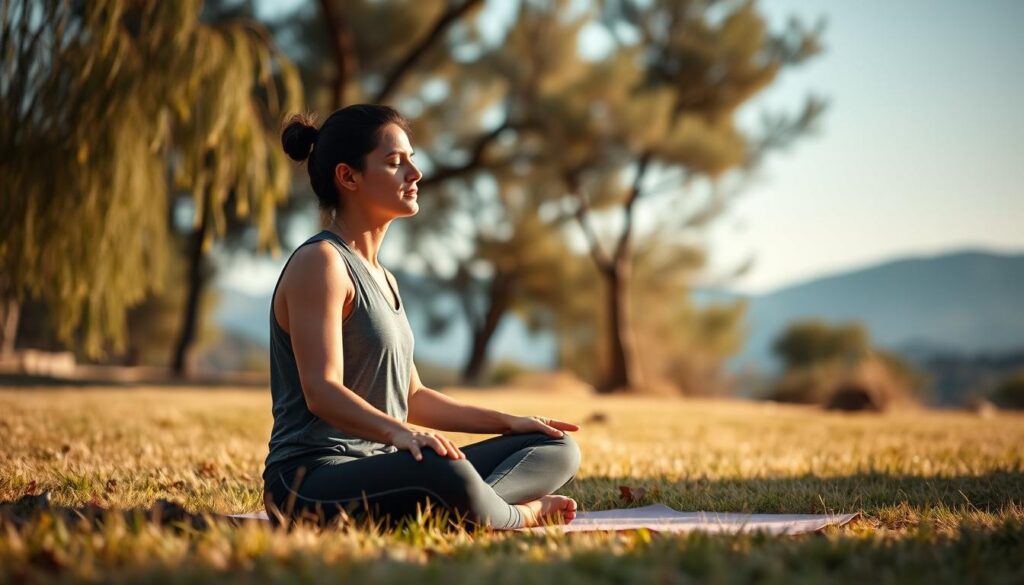
In today’s fast world, athletes look for ways to get better. Mindfulness techniques are becoming popular. They help athletes stay in the moment and notice their thoughts and feelings better.
Using these techniques can make athletes more focused and mentally strong. This leads to better choices during games and a deeper connection with their bodies.
Also, mindfulness can lower stress and anxiety. This lets athletes do their best even when it’s tough. By quieting their minds, they can reach their full ability, making every workout and game more successful.
In this article, we’ll look at mindfulness techniques for athletes. By learning and using these methods, you can improve your performance and mental clarity.
Understanding Mindfulness in Sports
In sports, mindfulness is a key tool for athletes to improve their focus and performance. It’s about being aware of the present moment without judgment. This is different from just controlling thoughts.
Studies show that mindfulness can really help athletes do better. A review found that mindfulness exercises boosted performance by 0.50. This means athletes can perform at their best with mental clarity.
Also, mindfulness helps athletes develop important skills. These include:
- Sharpened Focus: Athletes can focus better and ignore distractions.
- Balanced Emotions: Mindfulness helps athletes manage their emotions, staying calm under pressure.
- Resilience Boost: Athletes can recover faster from setbacks.
A seasoned athlete once said, “The athlete who is in championship form has a quiet place in himself. And it’s out of that that his action comes.” This shows the importance of mindfulness in sports. For more on mindfulness, check out this resource and see how it can improve your training.
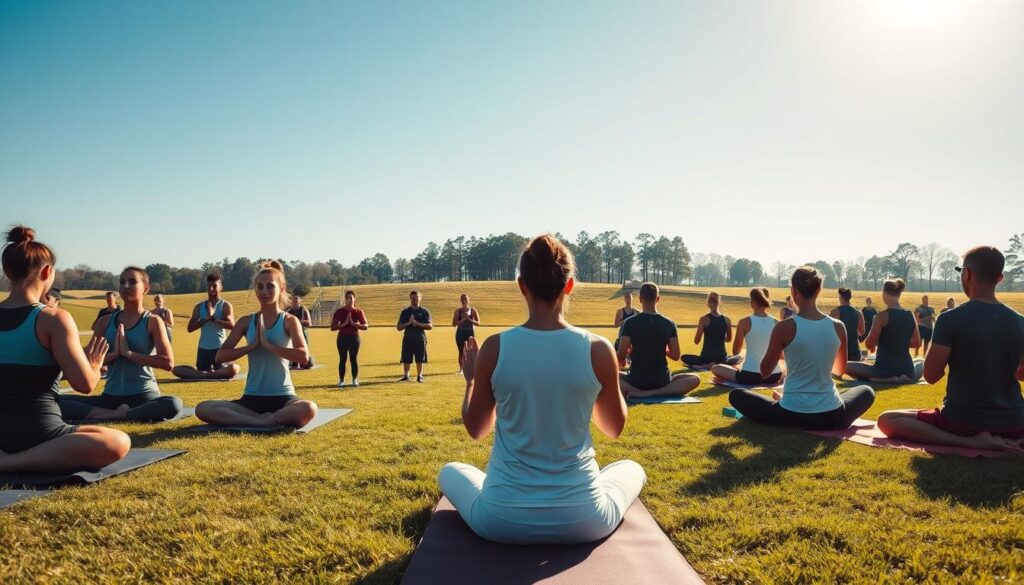
Daily Mindfulness Exercises for Athletes
Mindfulness can greatly improve an athlete’s performance. It helps athletes focus better, feel less anxious, and get into a flow state during games.
Here are some mindfulness exercises athletes can add to their daily routine:
- Body Scan: This exercise helps athletes notice and release body tension. By scanning from head to toe, they can feel more relaxed and aware of their body.
- Focused Breathing: Athletes can improve their concentration by focusing on their breath. This makes it easier to stay present during training and games.
- Walking Meditation: This exercise combines movement with mindfulness. Athletes become aware of each step, promoting calm and a clear mind.
- Visualization: Athletes can mentally rehearse their performance. Visualizing success boosts confidence and prepares them mentally for games.
- Mindful Stretching: This practice combines mindfulness with physical warm-ups. Athletes focus on their movements and breath, improving flexibility and mental clarity.
- Gratitude Journal: Keeping a journal helps athletes reflect positively. Writing down things they’re grateful for shifts their focus from anxiety to appreciation.
Each exercise helps improve focus and can be adjusted to fit individual needs. Athletes should try different techniques to find what works best for them.
For more tips on managing sports anxiety, check out this helpful resource.
Incorporating Mindfulness into Training
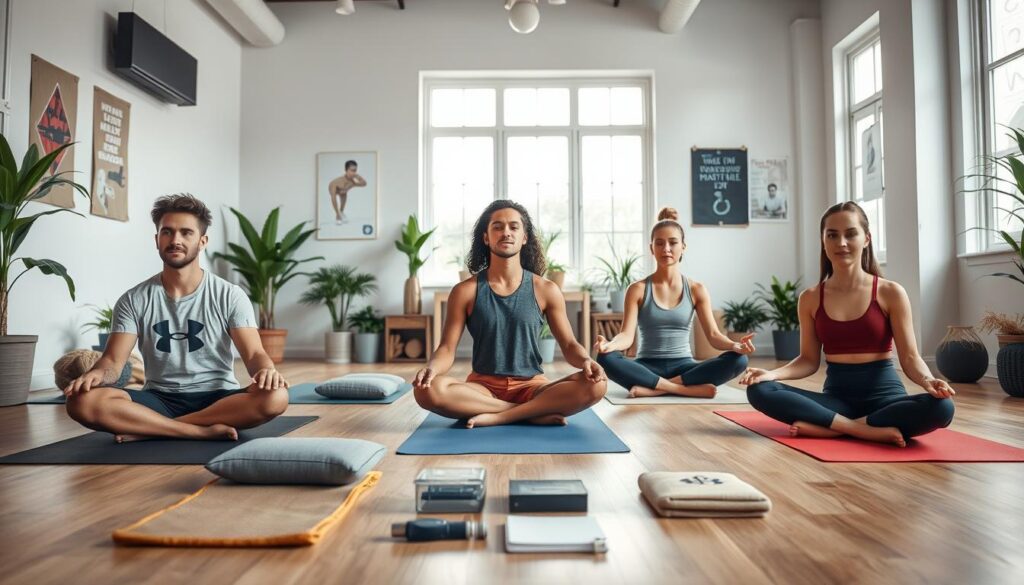
Mindfulness can easily fit into an athlete’s training. It doesn’t mean changing everything. Just a few minutes each day can make a big difference in focus and performance.
Using apps is a great way to start. There are many apps made for athletes. They offer guided meditations that fit into a busy schedule. These apps are perfect for beginners.
Hiring a mindfulness coach is another good choice. A coach can help athletes create a mindfulness plan that matches their goals. This makes mindfulness more effective.
It’s also possible to add mindfulness to current training. For example, short mindfulness sessions during warm-ups or cool-downs can improve focus. This helps both before and after training.
Mindfulness is becoming more popular in sports. It’s seen as a valuable addition, not an extra task. Athletes and coaches see its benefits in improving physical training.
Benefits of Meditation Practices
Meditation offers many benefits for athletes looking to up their game. It can improve focus, speed up recovery, and enhance sleep quality.
One major perk is achieving a flow state. This is like being “in the zone,” where athletes perform at their best. Studies show that athletes who stay present are more likely to reach this state, boosting their performance.
Meditation also helps athletes recover faster from injuries. They heal not just physically but also mentally, reducing anxiety and stress. This is key for coming back stronger than ever.
Another benefit is better sleep. Mindfulness exercises calm the mind, leading to deeper, more restorative sleep. Athletes who meditate feel more refreshed and ready for their training.
Lastly, meditation sharpens decision-making during games. A present mind leads to clearer thinking and quicker responses. This can be the difference between winning and losing. Athletes with these mental skills make better game decisions, improving their performance.
| Benefit | Description | Impact on Performance |
|---|---|---|
| Flow State | Enhanced focus and presence in the moment | Improved performance levels |
| Faster Recovery | Quicker healing both physically and mentally | Reduced downtime from injuries |
| Restorative Sleep | Deeper sleep cycles for better rest | Increased energy and readiness |
| Elevated Game Decisions | Sharper thinking and quicker responses | Better outcomes in competitions |
Creating a Mindfulness-Based Routine
Building a mindfulness routine is key for athletes wanting to improve focus and performance. Start with small goals, like five minutes of mindfulness each day. As you get better, increase the time. It’s important to be consistent, as studies show a 6.3-week average practice period.
Make daily exercises like focused breathing and body scans part of your routine. These help you stay present during training. Weekly meditation sessions can also deepen your practice. You can find guided sessions on Insight Timer or Calm.
Think of mindfulness as a way to improve overall well-being, not just performance. This approach helps build resilience and emotional stability. Reflect on what mindful success means to you. Notice when your mind wanders or goes on autopilot. These moments can help you grow.
Try different methods to find what works best for you. Mindfulness is a personal journey. For more tips on building a lasting mindfulness practice, check out this resource. Use this chance to boost your athletic skills and care for your mental health.