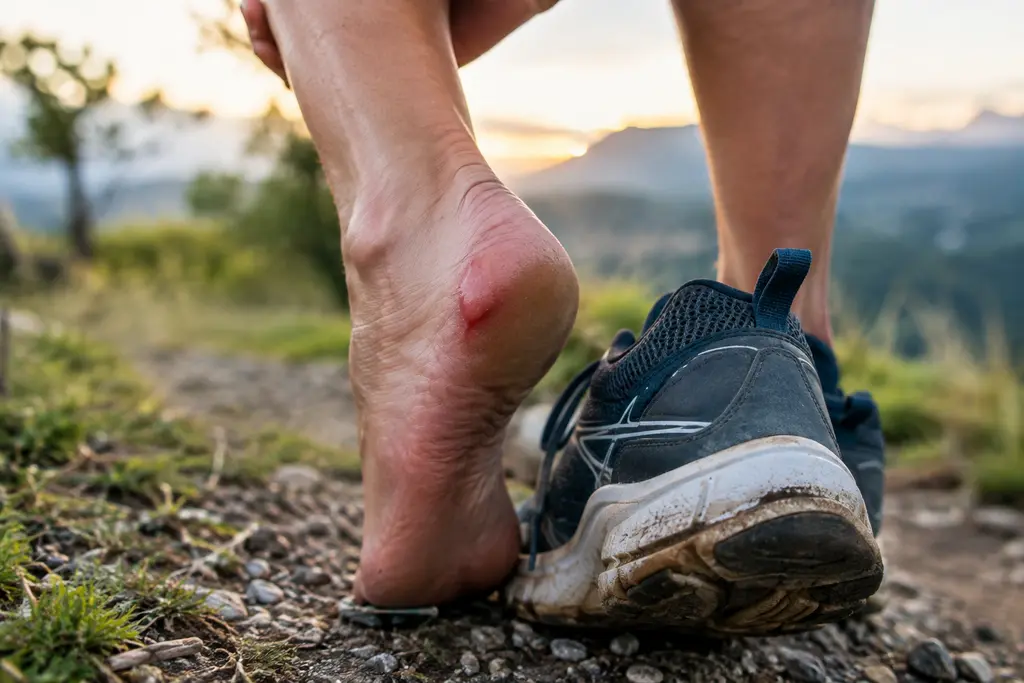
Running shoe injuries are often discussed as if the right model can reliably protect every runner. The recent evidence is more cautious. Shoe design may influence loading patterns, comfort, and where discomfort appears, but available research does not support one universal footwear answer for all recreational runners.
As an injury-prevention professional, I tend to read footwear studies through a practical lens: does the evidence help runners make safer decisions without turning shoe choice into a diagnosis? At this point, the strongest message is not that one shoe category is clearly best. It is that footwear should be considered alongside prior injury history, training volume, running experience, progression, and how the shoe feels during actual use.
What Recent Trials Say About Running Shoe Injuries
Why Running Shoe Injuries Did Not Rise In One Trial
A 2026 randomized controlled trial followed 140 rearfoot-striking recreational endurance runners for one year. The study compared minimalist footwear, running retraining, and a control group. The retraining approach included a softer technique, non-rearfoot strike, and a 7.5% increase in step rate. The trial found no significant difference in running-related injury incidence between the groups, though injury location differed: hip injuries were more frequent in controls, while foot injuries were more frequent in the retraining group, according to the PubMed abstract.
That finding matters because it pushes back against a simple claim that changing shoes or changing strike pattern necessarily lowers injury risk. The intervention may have shifted stress to different tissues. That does not make the strategy useless, but it does suggest runners should be careful about rapid changes, especially if they are moving toward less cushioning, a different strike pattern, or a higher cadence at the same time.
Location May Matter As Much As Incidence
For running shoe injuries, the question is not only whether an injury happens. It is also where symptoms develop and whether a runner has been prepared for the mechanical demands of the new setup. A runner who changes to minimalist shoes may experience a different loading pattern than a runner staying in a familiar cushioned model. The 2026 trial does not prove that minimalist footwear is unsafe, but it does suggest that injury risk should be viewed by body region, transition plan, and individual response rather than by shoe label alone.
Comfort Signals Deserve Attention
Perceived Cushioning And Overall Appreciation
A large prospective study of leisure-time runners followed roughly 800 participants for six months and found that greater perceived cushioning and better overall appreciation of the shoe were associated with lower injury risk. The authors discussed this in relation to the “comfort filter” idea, where a runner’s perception of comfort may help identify a shoe that fits their movement needs better than a purely technical category, as reported in the PMC full text.
This does not mean comfort is a clinical screening tool or that the most comfortable shoe will prevent injury. Comfort is subjective. It can be influenced by expectations, brand familiarity, running surface, sock choice, fit, and fatigue. Still, the study supports the practical idea that runners should not ignore repeated discomfort simply because a shoe was marketed for their foot type.
Comfort Is Not The Same As Protection
The comfort finding is useful, but it should be handled with restraint. A comfortable shoe may reduce irritation or feel more natural during training, yet it cannot account for sudden mileage increases, inadequate recovery, strength deficits, prior injury, or running through worsening symptoms. In other words, comfort may support better decision-making, but it should not be treated as proof that a runner is protected.
Why Shoe Categories Can Mislead Runners
Labels Do Not Capture The Whole Runner
Minimalist, neutral, stability, motion-control, super-cushioned, and advanced-technology shoes are broad labels. Two shoes in the same category can feel very different because of stack height, foam stiffness, heel-to-toe drop, rocker shape, width, upper construction, and outsole geometry. Two runners can also respond differently to the same shoe because of training history, body size, pace, terrain, strength, mobility, and prior injuries.
That is why broad claims about running shoe injuries should be treated cautiously. A shoe that feels smooth for one runner may feel unstable to another. A firmer shoe may feel predictable for a runner who prefers ground feedback, while another runner may tolerate a softer platform better. Current evidence supports individualized decision-making more than universal footwear rules.
Transitions Are A Common Weak Point
Many runners get into trouble not because a shoe type is inherently harmful, but because the transition is abrupt. A sudden change in heel drop, cushioning, stiffness, or strike pattern may ask the calf, Achilles tendon, foot, knee, hip, or back to absorb load differently. The research described above suggests that even when total injury rates do not change, the affected body region can shift.
A safer approach is to treat a major shoe change like a training change. That means observing how the body responds over time rather than assuming the shoe will solve a problem. This is general education, not medical advice, and runners with pain or medical concerns should use a qualified clinician rather than an article to decide what is safe.
Practical Footwear Principles For Recreational Runners

Questions Before Buying Or Switching
The evidence does not give runners a perfect formula, but it does support a more disciplined way to think. Before changing shoes, runners can consider whether they are changing only the shoe or also changing mileage, speed work, hills, terrain, or running form. When several variables change together, it becomes much harder to know what caused a new symptom.
- Choose a shoe that feels comfortable during running, not only while standing in a store.
- Be cautious with large changes in cushioning, heel drop, stiffness, or strike pattern.
- Avoid assuming that a shoe category alone can offset poor training progression.
- Track new symptoms by location, timing, and training context.
- Seek professional evaluation for pain that is severe, worsening, recurrent, or affecting normal movement.
Runners exploring broader health and wellness topics within this network might enjoy related stories at Daily California. For footwear decisions, however, the most trustworthy guide remains individual response paired with reliable evidence rather than following fleeting trends.
What Coaches And Clinicians May Want To Know
For running shoe injuries, a coach or clinician may ask about current shoes, previous shoes, training changes, surfaces, weekly volume, recent races, strength work, sleep, and prior injury. That broader context matters because footwear is rarely the only variable. A runner who changes shoes during a mileage build or while returning from injury may need a different discussion than a runner who is healthy and simply replacing a worn pair.
Running Shoe Injuries And Clinical Questions
When The Evidence Should Prompt A Conversation
Running shoe injuries should not be self-diagnosed from shoe wear patterns, online opinions, or marketing categories. Research can guide better questions, but personal medical decisions belong with qualified healthcare professionals. This is especially relevant when symptoms persist, spread, alter gait, or recur whenever training increases.
The recent studies suggest a cautious message: footwear can influence comfort and may shift mechanical demands, but no single shoe type has been shown to reliably protect every runner. Comfort appears worth considering. Transitions deserve respect. Training progression still matters. The runner’s history matters. A shoe should be evaluated as one part of a wider loading pattern, not as an isolated fix.
If you are a runner dealing with pain or repeated setbacks, consider discussing these points with a clinician: whether your current symptoms need evaluation, whether your footwear change was too abrupt, whether training load is progressing appropriately, whether prior injuries affect your current risk, and what signs should lead you to stop a workout and seek care.