Making friends sounds simple when it is reduced to advice.
Join a group. Start a conversation. Go to an event. Introduce yourself. Put yourself out there.
Those suggestions can feel very different when someone is already stressed, burned out, socially rusty, new to a city, working long hours, caring for children, studying under pressure, or simply exhausted by the expectation that every social interaction needs to become something meaningful.
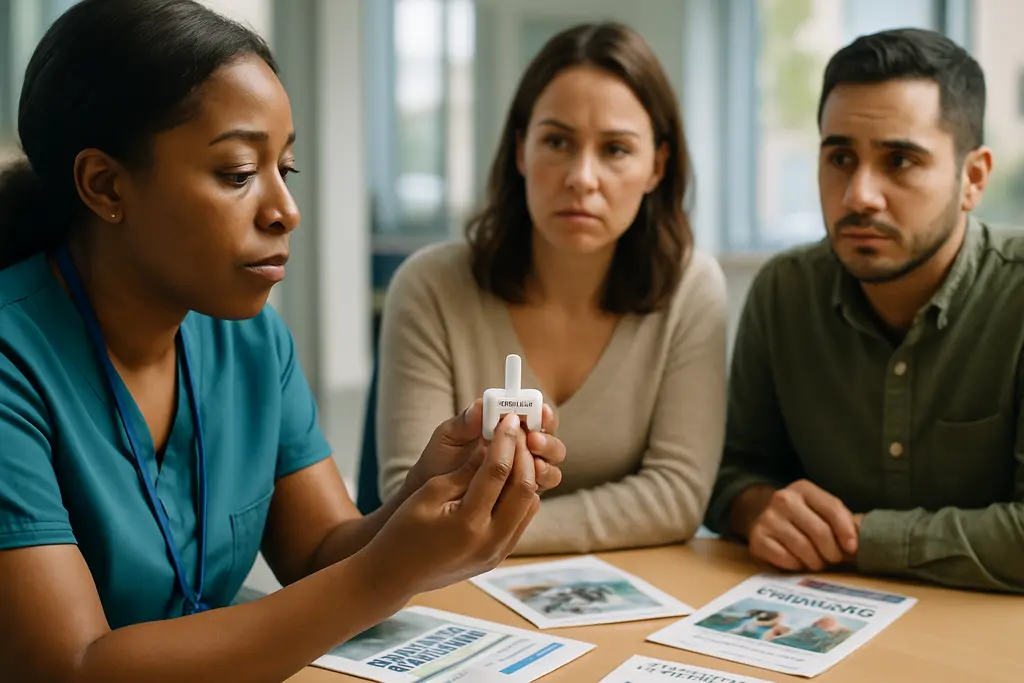
A growing U.S. trend offers another possibility: spend time around people without making friendship the immediate assignment.
On August 17, 2026, Axios reported that younger Americans, particularly Gen Z adults and millennials, are increasingly gathering around activities such as chess, birdwatching, silent reading, puzzles, crafts, and dinner events. The report described the trend as “soft socializing”—low-pressure situations in which an activity gives people a reason to share physical space without requiring constant conversation. Eventbrite data cited in the report showed that puzzle competitions increased 151% from August 2024 through July 2025 compared with the previous year.
The trend is showing up locally too. Axios reported on August 20 that Raleigh, North Carolina, has become one example of the broader meetup boom, particularly among younger adults and people who have relocated and are looking for community.
This is not a clinically established treatment called “soft socializing,” and attending a chess club or silent reading group should not be presented as a cure for loneliness, anxiety, depression, or another mental-health condition.
The useful idea is much simpler:
Connection does not always have to begin with intense connection.
Sometimes the first useful step is merely finding a place where other people will reliably be.
Americans Are Spending Less Time Together
The meetup trend is happening against a larger change in American social life.
New American Time Use Survey data from the U.S. Bureau of Labor Statistics showed that Americans are spending less time socializing than they did two decades ago. Axios reported in July 2026 that average daily socializing had fallen from approximately 45 minutes to 35 minutes over that period. Among people ages 15 to 24, the decline was considerably larger—from roughly an hour per day to about 35 minutes.
At the same time, public-health agencies increasingly recognize social connection as part of health rather than merely an optional lifestyle extra.
The CDC distinguishes loneliness from social isolation. Loneliness is the subjective feeling of being alone, disconnected, or lacking the closeness someone wants. Social isolation refers more directly to having limited relationships, contact, or support. A person can therefore have relatively few social contacts without feeling lonely—or spend substantial time around people and still feel deeply disconnected. CDC guidance on social connection also emphasizes that relationships vary in their size, diversity, function, and quality.
That distinction helps explain why simply telling someone to “meet more people” may not solve the problem.
The number of people in a room is not the same thing as belonging.
Why Traditional Socializing Can Feel Like Work
Imagine someone already stretched thin by school or work.
Friday arrives.
A friend suggests a party.
Going means getting ready, traveling somewhere, introducing yourself repeatedly, remembering names, maintaining conversations, reading social cues, answering questions about yourself, deciding when to leave, and wondering whether you seemed interesting enough.
For someone energized by parties, that may sound enjoyable.
For someone already depleted, it can sound like another assignment.
This does not necessarily mean the person has social anxiety, depression, or another mental-health condition. Personality, stress level, caregiving demands, physical health, unfamiliar environments, financial constraints, and ordinary fatigue can all influence how demanding social interaction feels.
Burnout can complicate things further.
When someone has spent all day responding to colleagues, customers, classmates, children, patients, teammates, or notifications, the thought of generating another two hours of conversation may not feel restorative.
The result can become a frustrating contradiction:
I want more connection, but I do not have the energy required to go looking for it.
Soft socializing may help because it changes the task. The Practical Guide to Stress, Anxiety & Burnout Recovery
The Activity Can Carry Some Of The Social Load
A traditional networking event makes interaction the activity.
A chess club does not.
The chess game provides structure.
At a birding group, people can look for birds.
At a silent book club, participants can read.
At a puzzle competition, everyone has something physical to do.
At a community garden, hands can remain occupied even when conversation stops.
This distinction can reduce several small pressures.
You do not have to continually invent topics.
Silence does not automatically indicate that the interaction failed.
Attention can move between the activity and other people.
There is a natural reason to return next week.
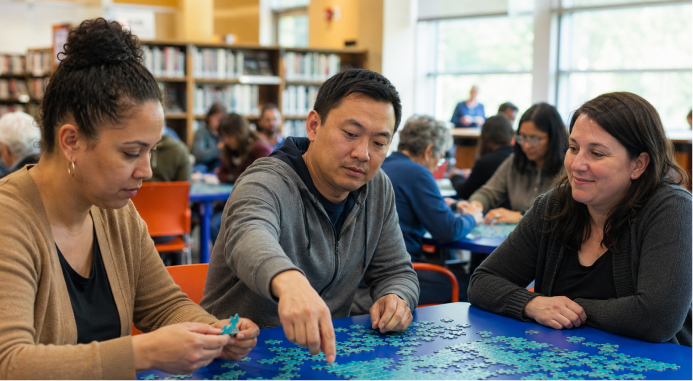
And conversation can emerge from something immediately shared rather than from the abstract command to make friends.
The CDC’s recommendations for improving social connectedness fit surprisingly well with this model. The agency notes that small acts of connection can be meaningful and specifically suggests finding ways to share activities people already do, such as exercising or cooking, with others. CDC social connection strategies also include volunteering, community involvement, spending time with others outdoors, and participating in community gardens.
The point is not that one activity is best.
It is that connection can be built around something that already has a purpose.
You Do Not Need To Turn Every Stranger Into A Friend
One reason socializing becomes exhausting is that people sometimes evaluate every interaction too quickly.
Did we click?
Could this become a friendship?
Should I ask for their number?
Do they like me?
Was that awkward?
Will I ever see them again?
That puts considerable weight on a five-minute conversation.
A lower-pressure approach allows weaker connections to exist.
You can know the person who always attends Wednesday trivia without becoming close friends.
You can recognize three people at the Saturday run club.
You can talk with another parent during a child’s practice.
You can exchange recommendations with someone at a library event.
You can have a familiar face at the climbing gym.
Those relationships are not failed friendships.
They are social connections with different levels of closeness.
The CDC describes social connectedness as a continuum involving the number, quality, and variety of relationships someone wants—not a requirement that every relationship become intimate.
That makes room for acquaintances.
Familiarity Can Come Before Friendship
Many adult friendships do not begin with an extraordinary conversation.
They begin with repetition.
The same person is there again.
And again.
Eventually you know their name.
Then you know where they work.
Then they remember something you mentioned last week.
Nothing dramatic happened.
The relationship simply accumulated.
Activity-based groups can create this kind of repeated exposure naturally because attendance has a reason independent of friendship.
You return because you like running.
Or books.
Or pottery.
Or gardening.
The social opportunity comes attached to something else.
That can be especially useful for someone who dislikes walking into an event whose explicit purpose is “come here and make friends.”
There is less pressure to prove that the evening was socially successful.
Parallel Activity Still Counts As Being Around People
Silent reading is an interesting example.
From the outside, it can appear almost antisocial.
People travel somewhere specifically to sit near strangers and then…read.
But that may be precisely why the format appeals to some people.
The social demand is low.
You do not have to perform enthusiasm.
You do not need a conversation ready.
You can participate fully while being quiet.
Before or after reading, brief conversations may happen naturally.
Or they may not.
Either outcome can still provide an experience very different from spending the evening alone at home.
The important boundary is that being around people should not be oversold as automatically eliminating loneliness.
Loneliness concerns the quality and adequacy of the connection a person experiences, not simply physical proximity.
Still, repeated low-pressure contact can create opportunities from which stronger relationships may eventually grow.
“Low Pressure” Is Different For Different People
A run club may feel effortless to one person and intimidating to another.
A book club may feel comfortable for someone who loves reading but stressful for someone worried about discussing literature in front of strangers.
A dinner with unfamiliar people may feel exciting to one participant and exhausting to another.
There is no universal soft-socializing activity.
A useful question is:
Where would I still have something to do if I did not talk very much?
Possibilities might include:
- walking or running groups, library programs, community gardens, recreational sports, volunteering, crafting groups, puzzles, birding, board games, photography walks, or quiet reading events;
- recurring environments already built into life, such as a neighborhood park, campus organization, faith community, parents’ group, community center, gym class, or workplace interest group.
The activity matters less than the combination of manageable social demand + repeated opportunity for contact.
You Are Allowed To Leave Before You Are Exhausted
Another reason social activities become difficult is all-or-nothing thinking.
If I go, I have to stay.
If I leave after 30 minutes, everyone will notice.
If I do not talk to anyone new, going was pointless.
Those assumptions can make the threshold for participation unnecessarily high.
A smaller experiment might be:
Go for 30 minutes.
Talk to one person if an opportunity appears.
Participate in the activity.
Leave when your available social energy is running low.
Then decide afterward whether the experience was tolerable enough to repeat.
The goal does not need to be:
Make a friend tonight.
A more realistic goal could be:
Become slightly more familiar with one place.
That is a much smaller psychological assignment.
Repetition May Matter More Than One Big Social Push
Someone who feels lonely may understandably want rapid change.
That can encourage a burst of activity:
Attend three events.
Join five apps.
Message ten people.
Agree to everything.
Then exhaustion arrives and the person withdraws again.
A smaller recurring activity may be easier to sustain.
One Tuesday evening chess group.
One Saturday morning walk.
One monthly volunteer shift.
One regular library event.
This does not guarantee friendship.
It does create something friendship often needs:
another encounter.
Repeated attendance also removes one of the hardest parts of meeting people—the first arrival.
The second visit is not entirely unfamiliar.
By the fifth visit, someone may recognize you.
The environment slowly becomes less socially expensive.
Burnout Can Make Connection Harder At Exactly The Wrong Time
Stress creates another complication.
When life becomes overwhelming, social contact is often one of the first things people reduce.
It makes sense.
Canceling dinner creates two free hours.
Skipping the gym class saves travel.
Ignoring messages removes another task.
Sometimes temporary solitude is exactly what someone needs.
The difficulty comes when short-term recovery gradually becomes prolonged withdrawal.
The U.S. Surgeon General’s social-connection framework notes that social connection can influence health through psychological, biological, and behavioral pathways, including stress responses, meaning, resilience, physical activity, and sleep. It also emphasizes creating accessible spaces and opportunities for people to connect. U.S. Surgeon General social connection resources frame connection as a public-health issue rather than simply a matter of individual sociability.
That does not mean a burned-out person should force themselves into constant social activity.
It suggests that complete isolation is not necessarily the only form of recovery.
Sometimes rest can happen around other people.
Quiet Company Can Be Different From Isolation
Picture two possibilities.
In the first, someone spends Saturday afternoon alone at home scrolling through social media while wishing they had somewhere to go.
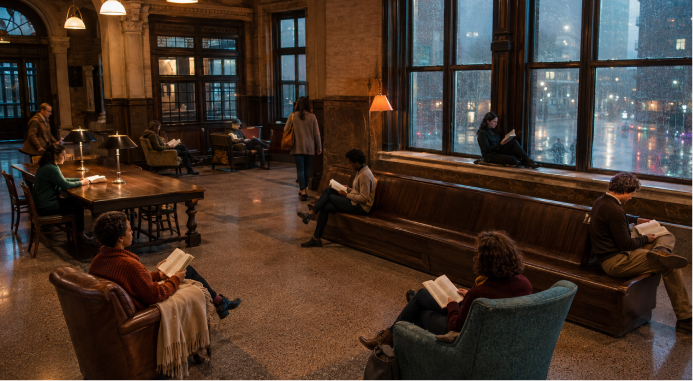
In the second, that person spends an hour reading quietly in a library room with 15 other people and has one short conversation afterward.
Neither situation automatically tells us whether the person is lonely.
But the second creates possibilities the first does not.
Recognition.
Routine.
A shared place.
Another visit.
A future conversation.
The CDC notes that environments themselves can influence connection. Access to parks, libraries, community programs, recreation centers, transportation, and other public spaces can affect people’s opportunities to interact.
This is important because loneliness is not simply an individual failure to socialize correctly.
Sometimes people need better places to be together.
Soft Socializing Can Work For Athletes Too
The concept also applies to athletes.
Sport can provide an unusually strong built-in social environment.
There are teammates.
Practices.
Travel.
Shared goals.
Locker rooms.
Repeated contact.
That network can change abruptly after an injury, retirement, transfer, graduation, roster cut, or move.
Someone accustomed to receiving social contact automatically through sport may suddenly have to create it deliberately.
That transition can be surprisingly difficult.
A recreational league, walking group, coaching role, gym class, outdoor club, or another shared activity can provide contact without demanding that the former or injured athlete immediately construct an entirely new friendship network.
The new activity does not need to replace the old team.
It can simply provide somewhere to regularly show up.
For readers navigating isolation after sport, CPCWA’s guide on loneliness beyond older adulthood explores why younger adults can experience disconnection too and why loneliness should not be reduced to an aging issue.
Parents Do Not Need Every Social Activity To Become A Playdate
The same pressure can appear with children and teenagers.
Parents understandably want socially isolated young people to make friends.
But repeated questioning can make every activity feel like an evaluation.
Who did you talk to?
Did you make a friend?
Why didn’t you get their number?
Are you going to hang out?
A lower-pressure question may be:
Did anything there feel comfortable enough that you would go again?
That focuses on repeatability rather than immediate friendship.
For some young people, especially those adjusting to a new school, team, neighborhood, or community, familiarity may need to develop before closeness.
Parents should also pay attention when withdrawal is substantial or accompanied by persistent changes in sleep, energy, mood, functioning, or relationships. The CDC recommends seeking professional guidance when there are concerns about significant changes in a child’s social behavior or connection.
Soft Socializing Is Not Exposure Therapy
This boundary deserves emphasis.
Someone experiencing significant social anxiety may encounter recommendations in professional treatment that involve gradually approaching feared social situations.
That is not what this article is prescribing.
A chess club is not therapy.
A run group is not treatment for anxiety.
A silent book club does not treat depression.
And telling someone with a mental-health condition to “just get out more” can minimize what they are experiencing.
Low-pressure social activities may be useful parts of ordinary life. They may also complement professional care when appropriate.
They should not be presented as replacements for individualized assessment or evidence-based treatment.
Loneliness Is Not Proof That You Are Bad At Relationships
There is another reason the soft-socializing idea fits CPCWA’s approach to resilience.
Loneliness can become self-critical.
Everyone else already has friends.
I should be better at this.
I waited too long.
People must find me boring.
Something is wrong with me.
The CDC estimates that roughly one in three U.S. adults reports feeling lonely, while approximately one in four reports lacking social and emotional support.
Those numbers do not make loneliness harmless.
They do show that experiencing it is not evidence of a unique personal defect.
Work schedules change.
People move.
Relationships end.
Friends become parents.
Students graduate.
Athletes leave teams.
Remote work changes everyday contact.
Health problems limit mobility.
Caregiving consumes time.
Financial constraints reduce options.
Sometimes a social network becomes smaller without anyone intentionally choosing isolation.
Rebuilding it can take time.
Try Making The Goal Smaller
If “make new friends” feels exhausting, reduce the assignment.
Not:
Find my people.
Try:
Find one place I would not mind visiting twice.
Not:
Become more outgoing.
Try:
Spend an hour somewhere that includes other people and an activity I already enjoy.
Not:
Have a meaningful conversation.
Try:
Say hello to one familiar face.
Not:
Stop being lonely.
Try:
Create one additional opportunity for connection this week.
These are not clinical prescriptions, and there is no evidence-based requirement that someone follow a particular number of steps or attend a particular type of gathering.
They are ways to lower the stakes.
When More Support Makes Sense
Low-pressure socializing is not sufficient for every situation.
Someone who experiences persistent loneliness, substantial withdrawal, severe anxiety around social contact, prolonged low mood, major sleep or appetite changes, increasing substance use, or significant difficulty functioning may benefit from speaking with a qualified healthcare or mental-health professional.
The CDC specifically recommends talking with a professional when someone feels disconnected, lonely, or stressed and needs help identifying appropriate support.
Practical barriers matter too.
Transportation, disability, chronic illness, discrimination, language barriers, finances, caregiving, and neighborhood conditions can all affect opportunities for connection. Telling someone simply to attend more events ignores those realities.
Support should fit the actual problem.
Friendship Does Not Have To Start With Friendship
The interesting part of America’s current meetup boom is not that puzzles or birdwatching have suddenly discovered a cure for loneliness.
They have not.
It is that people appear to be experimenting with different conditions for being together.
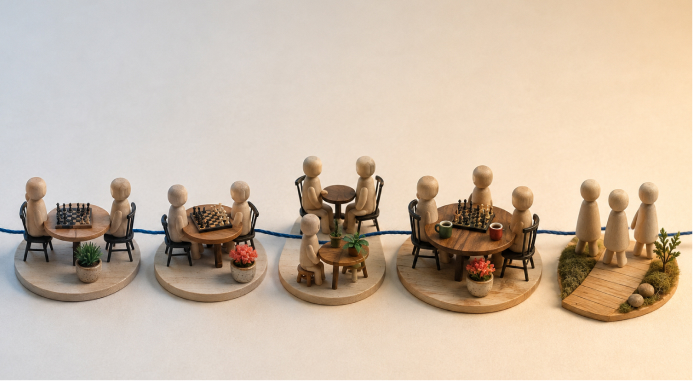
A chessboard gives two strangers somewhere to look.
A bird gives a group something to notice.
A book makes silence acceptable.
A puzzle gives hands something to do.
A walking group eliminates the awkwardness of sitting face-to-face.
These activities lower the requirement that connection begin with instant intimacy.
For someone who is stressed, burned out, lonely, or simply tired of treating social life like another performance metric, that can matter.
You do not have to walk into a room and leave with a best friend.
You can become a regular.
Then a familiar face.
Then someone people say hello to.
Perhaps eventually a friend.
Connection is allowed to develop slowly.