
Working-Age Uninsured data can help communities see where access to care may be less stable for adults ages 18 to 64. The recent numbers do not support a simple story of coverage collapsing across every measure. They do suggest that public coverage changes, state policy differences, and employment-based coverage patterns deserve close attention from public health planners, clinics, local nonprofits, and families.
This is educational information, not medical, legal, or insurance advice. Coverage choices, eligibility, and care needs vary by state, income, job status, immigration status, age, disability status, pregnancy, and household circumstances. People with personal questions should speak with a qualified benefits assister, insurer, community health center, or clinician.
What The Working-Age Uninsured Data Shows
Why The Recent Trend Needs Careful Reading
The CDC’s National Health Interview Survey early release, published on May 28, 2026, reported that 11.6% of adults ages 18 to 64 were uninsured in 2025. The CDC described that rate as unchanged from 2024, while still significantly lower than the 13.5% reported for 2021 CDC uninsured rate release. That matters because the phrase “decline in coverage” can mean different things depending on the comparison year, population, and type of insurance being measured.
The Census Bureau’s report published on September 15, 2026, found that 26.7 million people, or 7.9% of the U.S. population, were uninsured for the entire year 2025. The same report found that employment-based insurance remained the largest source of coverage for people under 65, covering about 53.5% of people for some or all of the year. It also reported that public coverage declined among adults ages 19 to 64, with Medicaid contributing to that decline Census coverage report.
Taken together, these figures suggest a mixed picture. The overall working-age uninsured rate did not increase from 2024 to 2025 in the CDC release. At the same time, Census data point to a decline in public coverage for adults ages 19 to 64. Those two statements can both be true because surveys differ in methods, age group definitions, time periods, and coverage categories.
Why Working-Age Uninsured Rates Differ By State
State policy differences appear to be one major dividing line in the CDC data. In 2025, working-age adults in states that had not expanded Medicaid were reported to be almost twice as likely to be uninsured as those in expansion states: 18.1% compared with 9.0%. This does not prove that Medicaid policy is the only cause of the difference, but it does show that place can shape insurance access in ways that communities may need to plan around.
For community wellness, that geographic divide matters. A county with more uninsured adults may see higher demand for safety-net clinics, charity care, sliding-fee services, prescription assistance programs, and enrollment support. Those needs may not appear evenly. Rural areas, low-wage labor markets, and communities with fewer local healthcare access points may experience coverage gaps differently than better-resourced communities.
Why Coverage Loss Can Strain Community Wellness
Access Is More Than Having A Card
Insurance coverage is not the same as timely, affordable, culturally respectful care. Some insured people still face deductibles, transportation barriers, language barriers, limited appointment availability, or difficulty finding clinicians who accept their plan. Still, being uninsured may increase the chance that routine care, preventive services, mental health support, or follow-up visits are delayed because the cost is uncertain or unaffordable.
That delay can affect more than one household. Community wellness depends on shared access points: primary care offices, pharmacies, public health departments, food support programs, behavioral health services, and trusted local organizations. When adults do not have stable coverage, these systems may carry more pressure. Clinics may spend more time connecting patients to financial assistance. Families may postpone care until symptoms feel harder to ignore. Employers may see workers struggling with untreated health concerns or stress related to bills.
None of this means uninsured people are less responsible or less committed to their health. Coverage gaps often reflect eligibility rules, job conditions, income volatility, administrative renewal requirements, or plan affordability. A cautious public health response should avoid blame and focus on reducing friction where communities have the ability to act.
Financial Stress Can Become A Wellness Issue
Health insurance is often discussed as a payment mechanism, but the effects can be broader. Uncertainty about medical bills may add stress to rent, food, transportation, childcare, and debt decisions. For working-age adults who support children, aging parents, partners, or extended family, one uninsured episode may affect the household budget far beyond a single appointment.
Community groups do not need to provide medical advice to be useful. They can help people find reputable enrollment assistance, prepare documents for eligibility checks, understand renewal notices, and connect with local clinics that explain payment policies before visits. Related wellness resources, such as those found on HealthScope, can also be useful when readers are seeking general health literacy content, though personal decisions should be checked with qualified professionals.
Practical Support Without Medical Advice
What Local Organizations Can Do
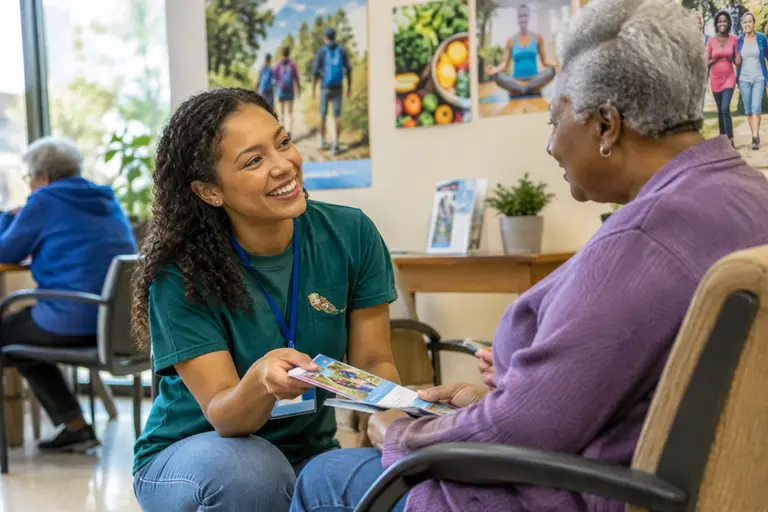
Organizations that serve working-age adults can respond to coverage gaps without crossing into clinical guidance. The most useful steps are often practical and repeatable. They help people identify legitimate resources, reduce paperwork confusion, and avoid missing renewal windows or enrollment opportunities.
- Offer plain-language reminders about open enrollment periods, Medicaid renewal notices, and documentation deadlines.
- Refer people to trained benefits assisters, community health centers, state insurance programs, or employer human resources contacts.
- Use multilingual materials where needed and avoid assuming that one notice format works for every household.
- Keep lists of local clinics that publish sliding-fee or financial assistance information.
- Build privacy-respecting referral processes so people do not have to disclose sensitive health details to get insurance help.
These steps may sound basic, but basic systems can prevent confusion from becoming loss of coverage. They also respect boundaries. A food pantry, library, school, workplace, or faith group does not need to tell someone which plan to choose or what care to seek. It can create a warmer path to people who are trained to answer those questions.
How Individuals Can Prepare For Coverage Questions
People who are uninsured, recently lost coverage, or are worried about renewal can reduce some confusion by gathering key information before seeking help. Useful items may include recent pay stubs, household size, immigration or residency documents if relevant, employer coverage offers, current prescriptions, preferred clinicians, and notices from Medicaid, the marketplace, or an insurer. Not every program requires the same documents, and eligibility rules vary.
For health concerns, the safest step is to discuss symptoms, medication access, pregnancy-related care, chronic conditions, preventive screenings, and mental health needs with a qualified clinician or clinic staff member. An article can explain coverage trends, but it cannot determine urgency, diagnose a condition, or decide whether a particular plan meets a person’s medical needs.
Working-Age Uninsured And Community Wellness
For Working-Age Uninsured adults, the practical question is not only whether national coverage statistics moved up or down. The question is whether people can reach care early enough, understand their options, and avoid being pushed into crisis decisions by cost or paperwork. The CDC and Census figures suggest that public coverage shifts and state differences are key places to watch.
A cautious reading of Working-Age Uninsured data points toward community-level action: clearer enrollment support, better referral networks, stronger communication between clinics and social service organizations, and less stigma around asking for help. These steps cannot guarantee better health outcomes, and they do not replace medical care. They may, however, reduce barriers that keep people from using available services.
Anyone concerned about losing coverage or delaying care can ask a clinician, clinic social worker, benefits assister, or insurer about available coverage options, medication affordability programs, preventive care costs, financial assistance policies, and what symptoms should prompt urgent medical evaluation.