October 13, 2026

Weekend Warrior Injuries: Safer Fall Activity

Weekend Warrior Injuries risk during a fall run on a leaf-covered path

Weekend Warrior Injuries often appear when people return to soccer leagues, pickup basketball, trail running, cycling, yard work, or gym classes after weeks or months of lighter activity. The problem is not enthusiasm. Movement can support physical and mental well-being for many people. The concern is the gap between what the body was recently prepared to do and what the person suddenly asks it to tolerate.

Fall can make that gap wider. Cooler mornings, wet surfaces, shorter daylight, and packed schedules may change how people move, warm up, recover, and notice early symptoms. A cautious plan does not need to be complicated. It should be realistic, gradual, and honest about pain, fatigue, and prior injuries.

Why Weekend Warrior Injuries Rise In Fall

Weekend Warrior Injuries And Sudden Load

The most common pattern is simple: a person resumes the same intensity they remember from a previous season, even though their current conditioning may not match that memory. A September 23, 2026 UTMB health blog warned that jumping into high-intensity activity without gradual conditioning may increase the risk of strains, sprains, rotator cuff injuries, and lower-body overuse problems; it also emphasized dynamic warm-ups, weekday consistency, fall surface awareness, and medical evaluation for persistent or worsening pain UTMB fall activity guidance.

That message is especially relevant for people who are active only on Saturdays and Sundays. A two-hour game or long hike may feel like a normal recreation choice, yet tissues adapt over time. Muscles, tendons, balance reactions, and coordination may not respond well to a sudden spike in intensity or duration. A cautious return may mean starting with shorter sessions, easier routes, lighter resistance, or fewer competitive minutes than pride would prefer.

Fall Conditions Change The Risk Picture

Fall activity brings practical changes that are easy to overlook. Grass can be slick. Leaves can hide uneven pavement. Early darkness can reduce visibility for runners and cyclists. Cooler weather may also make some people feel stiff at the start of activity. These conditions do not mean outdoor exercise should be avoided. They suggest that the plan should fit the conditions rather than the calendar.

Footwear, lighting, route choice, and surface checks are basic risk-reduction tools. A trail run after rain is different from a dry treadmill session. A neighborhood walk at dusk is different from the same route at noon. People returning after a break may benefit from choosing familiar terrain before adding speed, competition, or technical surfaces.

A Smarter Return To Activity

Start Below Your Old Baseline

Many adults judge readiness by memory: “I used to run this loop,” or “I played this league last fall.” A safer reference point is recent activity, not past ability. If the previous few months included mostly sitting, light walking, or irregular workouts, the first sessions back may need to feel almost too easy. That is not failure. It is a way to give the body better information.

Small increases in frequency, duration, or intensity may support adaptation better than large jumps. Rather than adding longer workouts and harder workouts in the same week, consider changing one variable at a time. For example, a person might keep the pace comfortable while adding a few minutes, or keep the route the same while adding one weekday practice session. Needs can vary by age, health status, medication use, pregnancy, prior injury, and current fitness, so fixed rules should be treated as rough guardrails rather than personal medical instructions.

Use Warm-Ups For Movement, Stretching For Flexibility

Warm-ups and stretching are often treated as the same thing, but they serve different purposes. Before activity, dynamic movement may be more useful than holding long static stretches. Examples include easy jogging, leg swings, arm circles, bodyweight squats, and sport-specific drills performed at low intensity. The goal is to prepare movement patterns, not to test maximum range.

Static stretching may fit better after activity or as part of a separate flexibility routine. Mayo Clinic describes stretching as a flexibility practice and advises holding stretches for about 30 seconds, avoiding bouncing, and stretching after warming up rather than stretching cold muscles Mayo Clinic stretching guidance. That does not mean every person needs the same stretching routine. It means flexibility work should be performed thoughtfully, not rushed as a token step before sprinting.

Recovery, Equipment, And Community Support

Walking group on a park path in cool fall weather

Strength, Balance, And Weekday Consistency

Weekend activity can feel less risky when the rest of the week includes some movement. Short weekday sessions may help maintain coordination, strength, and confidence between more demanding recreational events. This does not require intense training every day. Walking, easy cycling, mobility work, light strength training, balance drills, and gentle practice of sport-specific skills may all help keep the body familiar with movement demands.

Strength and balance work may be especially useful for activities that require cutting, jumping, lifting, reaching, or reacting quickly. Core, hip, and lower-body strength can support control during many recreational sports. Balance and agility practice may help people respond to uneven ground or quick direction changes. The goal is not to become an elite athlete; it is to reduce the mismatch between weekend demands and weekday preparation.

Community resources can make consistency easier. Parks departments, community centers, walking groups, and beginner-friendly fitness classes may offer lower-pressure ways to stay active between larger weekend efforts. For those interested in weight-related health education, exploring resources through Trinity Bariatric Institute might be beneficial while discussing personal exercise limits with a qualified clinician.

Pain Signals Deserve Respect

Discomfort can be part of returning to activity, but not every symptom should be treated as ordinary soreness. Persistent or worsening pain, swelling, instability, locking, catching, numbness, or a change in normal function should not be ignored. Those signs do not diagnose a specific injury, and an article cannot determine whether participation is safe. They do suggest that a qualified healthcare professional should be involved.

Sports culture often praises pushing through. That message can become risky when it discourages people from reporting symptoms early. CPCWA has also discussed why injury resilience is not about rushing back, a principle that applies well beyond competitive athletics. A slower return may feel frustrating, but it can create space for better decisions.

  • Check whether shoes, bike fit, protective gear, or braces are still appropriate for the activity and surface.
  • Plan rest between hard sessions, especially after long gaps in conditioning.
  • Use visible clothing or lights when daylight is limited.
  • Stop and seek appropriate evaluation if symptoms worsen or function changes.

Weekend Warrior Injuries And Clinician Questions

Questions To Bring To A Healthcare Professional

Reducing Weekend Warrior Injuries is not about fear. It is about matching activity to current capacity, then building from there. For some people, especially those with previous injuries, chronic health conditions, balance concerns, recent surgery, pregnancy, or long periods of inactivity, a clinician or physical therapist may help clarify reasonable limits. This information is educational and does not replace medical advice, diagnosis, or treatment.

Before resuming harder activity, it may be useful to ask a healthcare professional: What symptoms should make me stop and get evaluated? Are there movements I should temporarily avoid? How should I progress duration, intensity, or frequency? Would strength, balance, or mobility work be appropriate for my goals? Do my medications or health conditions affect hydration, heat tolerance, balance, or recovery? If I feel pain during activity, what kind of follow-up is appropriate?

Those questions keep the focus where it belongs: informed decisions, realistic activity, and support from people qualified to assess individual health needs. Fall recreation can be enjoyable, social, and motivating. A gradual plan simply gives the body a better chance to participate without asking one weekend to carry the work of an entire season.
Individualized Strength Conditioning For Recovery

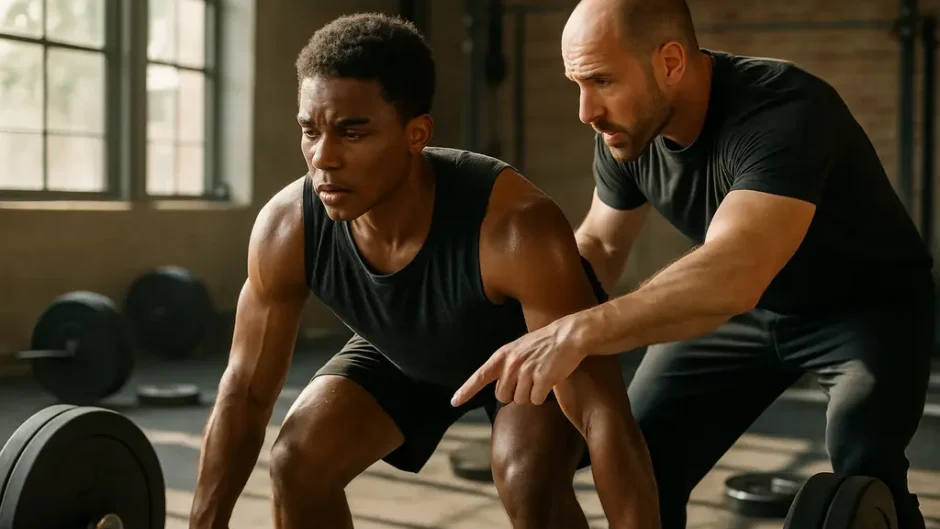
Individualized Strength Conditioning session with a coach observing a young athlete

Individualized Strength Conditioning can sound like a performance slogan, but for young athletes it is better understood as a cautious planning process. The central question is not how much training a motivated teenager can tolerate. It is how strength work, recovery time, sport exposure, maturation, prior symptoms, and access to qualified evaluation fit together.

Youth sport often rewards consistency and toughness. Those qualities can be useful, yet they can also hide fatigue, pain, or pressure to keep participating. Evidence from youth sport research suggests that injury patterns vary by age, training exposure, sex, sport demands, and specialization patterns. That does not mean every athlete needs a highly technical program. It does mean generic conditioning plans may miss factors that matter during recovery.

This article is educational and does not replace medical advice. A young athlete with pain, swelling, weakness, dizziness, changing symptoms, or concern after injury should be evaluated by a qualified healthcare professional rather than relying on a training article.

Why Individualized Strength Conditioning Needs Context

Individualized Strength Conditioning Starts With Exposure

Individualized Strength Conditioning begins with a practical reality: athletes do not all arrive at a session with the same physical history. A 13-year-old who plays one seasonal sport, a 16-year-old in a year-round academy, and a 17-year-old returning after time-loss injury may need different discussions about load, rest, and progression.

A four-season prospective study of male youth football players in an elite national academy in Qatar followed U13 to U18 players from 2016–17 through 2019–20. The study reported 301 players across 591 player-seasons, an overall injury incidence of 12.0 injuries per 1,000 hours, and an injury burden of 255 days lost per 1,000 hours. The U16 group had the highest injury burden, at about 425 days lost per 1,000 hours, according to the published abstract in PubMed.

Those numbers should not be applied to every youth athlete, since the study involved elite male football academy players. Still, the findings help explain why age group and exposure matter. A recovery plan for a younger athlete cannot simply copy the plan used by an older academy player, and a recreational athlete may not need the same monitoring structure as a highly exposed competitor.

Specialization Can Change The Recovery Conversation

A three-year clinical case-control study of young athletes aged 7 to 18 found that several training patterns were associated with greater likelihood of overuse injury. These included early single-sport specialization, weekly training hours exceeding the athlete’s age, and organized sport hours that were more than twice the hours spent in free play. The study also reported higher risk for all injuries and overuse injuries among female athletes in that cohort, as described in the full text available through PMC.

This does not prove that specialization is harmful for every child in every setting. It does suggest that recovery planning should include questions about the full week, not just one strength session. If an athlete is already doing many hours of organized sport, more conditioning is not automatically better. The better question may be whether the athlete has enough recovery, variety, and professional oversight for the total workload.

Recovery Is More Than A Workout Template

Fatigue Is Not Always Visible

Recovery is often discussed as if it were a single missing ingredient: stretch more, sleep more, lift differently, or add a warm-up. In practice, recovery is affected by many moving parts. A young athlete may look energetic at practice but still be carrying soreness, academic stress, reduced sleep, or worry about losing a team role.

Individualized Strength Conditioning should therefore be viewed less as a special set of exercises and more as a decision process. Coaches and families can ask whether the athlete has recently increased training volume, changed teams, returned from injury, entered a growth spurt, or started playing more competitive matches. None of those observations diagnose a problem. They do help adults decide when a healthcare professional, athletic trainer, or qualified strength and conditioning specialist should be involved.

The mental side matters as well. Young athletes may connect sport participation with identity, friendships, and confidence. If recovery means reduced practice time, the athlete may feel isolated or fearful. CPCWA has discussed this broader issue in relation to athletic identity and burnout, and the same theme can appear earlier in sport development.

Using Individualized Strength Conditioning Without Overclaiming

Individualized Strength Conditioning may support clearer decisions, but it should not be presented as a guarantee against injury. No conditioning model can remove all risk from sport. Contact, growth-related changes, previous injury, sleep, training volume, competition intensity, and access to care may all influence outcomes.

A cautious approach avoids two extremes. One extreme is pushing every young athlete through the same program because it is convenient. The other is treating every ache as proof that sport is unsafe. A more balanced approach asks what is changing, whether symptoms are improving or worsening, and whether the athlete has been assessed by someone qualified to make return-to-activity decisions.

Families looking for broader wellness education may also find related community health resources through Trinity Bariatric Institute, although youth sport recovery questions still belong with professionals who know the athlete’s age, sport, medical history, and current symptoms.

What Families And Coaches Can Track

Parent and coach discussing a youth athlete training calendar

Useful Signals Are Often Simple

Tracking does not need to become a surveillance project. For many families, the most useful information is basic: training days, rest days, soreness that lasts longer than expected, changes in mood, sleep disruption, repeated pain in the same area, or a sudden jump in organized sport hours. These details can make conversations with clinicians and trainers more specific.

Because the research on specialization and training volume suggests that exposure patterns may matter, a weekly calendar can be helpful. It can show whether a young athlete is getting any true rest, whether free play has disappeared, or whether multiple teams are creating more total load than any single coach realizes.

  • How many organized sport hours occurred this week?
  • How many days included intense practice, competition, or conditioning?
  • Did soreness, pain, or fatigue change after a specific session?
  • Has the athlete recently moved to a higher age group, stronger team, or longer season?
  • Does the athlete feel able to report symptoms without fear of punishment?

These questions are not diagnostic. They are a way to organize observations so that adults can respond earlier and communicate better with qualified professionals.

The Coach’s Boundary

Coaches can support safer recovery without practicing medicine. They can avoid praising athletes for hiding symptoms, make room for rest when medical restrictions exist, and ask whether an athlete has been evaluated when complaints persist. They can also avoid framing recovery as a lack of commitment.

For strength work, the coach’s role is to match training demands to demonstrated readiness as much as possible. That may mean reducing complexity, changing volume, pausing a progression, or referring the athlete for evaluation. The safest decision is not always the most aggressive one.

Individualized Strength Conditioning For Young Athletes

Individualized Strength Conditioning for young athletes is most defensible when it stays modest in its claims. It may help organize training around age, exposure, recovery status, and observed readiness. It may also help coaches and families notice when a young athlete is doing too much organized sport with too little recovery. It does not guarantee performance gains, prevent every injury, or replace clinical judgment.

The most useful recovery plan is usually shared. The athlete can report symptoms honestly. Parents can watch total workload across teams and seasons. Coaches can respect medical boundaries. Clinicians and qualified sport professionals can help interpret pain, fatigue, prior injury, and return-to-activity decisions in context.

Before changing a young athlete’s training after injury, families may want to ask a clinician: What symptoms should prompt reevaluation? What activities are appropriate right now? What signs suggest the athlete is not recovering as expected? How should strength work progress, and who should supervise it? What workload limits make sense for this athlete’s age, sport, and health history?