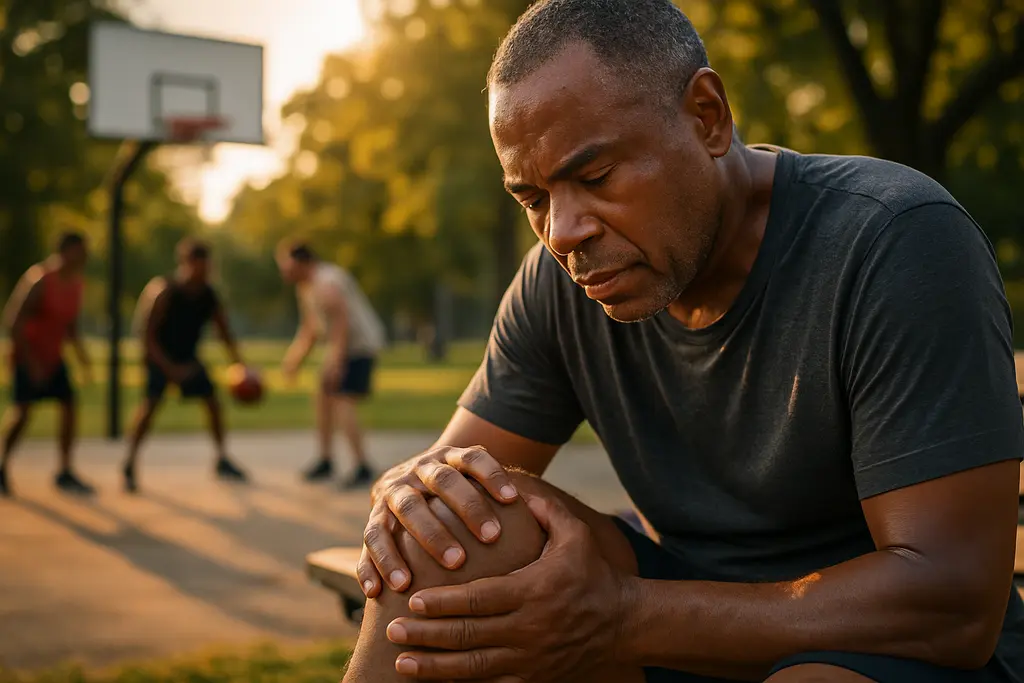
Weekend Warrior Injuries often appear when people return to soccer leagues, pickup basketball, trail running, cycling, yard work, or gym classes after weeks or months of lighter activity. The problem is not enthusiasm. Movement can support physical and mental well-being for many people. The concern is the gap between what the body was recently prepared to do and what the person suddenly asks it to tolerate.
Fall can make that gap wider. Cooler mornings, wet surfaces, shorter daylight, and packed schedules may change how people move, warm up, recover, and notice early symptoms. A cautious plan does not need to be complicated. It should be realistic, gradual, and honest about pain, fatigue, and prior injuries.
Why Weekend Warrior Injuries Rise In Fall
Weekend Warrior Injuries And Sudden Load
The most common pattern is simple: a person resumes the same intensity they remember from a previous season, even though their current conditioning may not match that memory. A September 23, 2026 UTMB health blog warned that jumping into high-intensity activity without gradual conditioning may increase the risk of strains, sprains, rotator cuff injuries, and lower-body overuse problems; it also emphasized dynamic warm-ups, weekday consistency, fall surface awareness, and medical evaluation for persistent or worsening pain UTMB fall activity guidance.
That message is especially relevant for people who are active only on Saturdays and Sundays. A two-hour game or long hike may feel like a normal recreation choice, yet tissues adapt over time. Muscles, tendons, balance reactions, and coordination may not respond well to a sudden spike in intensity or duration. A cautious return may mean starting with shorter sessions, easier routes, lighter resistance, or fewer competitive minutes than pride would prefer.
Fall Conditions Change The Risk Picture
Fall activity brings practical changes that are easy to overlook. Grass can be slick. Leaves can hide uneven pavement. Early darkness can reduce visibility for runners and cyclists. Cooler weather may also make some people feel stiff at the start of activity. These conditions do not mean outdoor exercise should be avoided. They suggest that the plan should fit the conditions rather than the calendar.
Footwear, lighting, route choice, and surface checks are basic risk-reduction tools. A trail run after rain is different from a dry treadmill session. A neighborhood walk at dusk is different from the same route at noon. People returning after a break may benefit from choosing familiar terrain before adding speed, competition, or technical surfaces.
A Smarter Return To Activity
Start Below Your Old Baseline
Many adults judge readiness by memory: “I used to run this loop,” or “I played this league last fall.” A safer reference point is recent activity, not past ability. If the previous few months included mostly sitting, light walking, or irregular workouts, the first sessions back may need to feel almost too easy. That is not failure. It is a way to give the body better information.
Small increases in frequency, duration, or intensity may support adaptation better than large jumps. Rather than adding longer workouts and harder workouts in the same week, consider changing one variable at a time. For example, a person might keep the pace comfortable while adding a few minutes, or keep the route the same while adding one weekday practice session. Needs can vary by age, health status, medication use, pregnancy, prior injury, and current fitness, so fixed rules should be treated as rough guardrails rather than personal medical instructions.
Use Warm-Ups For Movement, Stretching For Flexibility
Warm-ups and stretching are often treated as the same thing, but they serve different purposes. Before activity, dynamic movement may be more useful than holding long static stretches. Examples include easy jogging, leg swings, arm circles, bodyweight squats, and sport-specific drills performed at low intensity. The goal is to prepare movement patterns, not to test maximum range.
Static stretching may fit better after activity or as part of a separate flexibility routine. Mayo Clinic describes stretching as a flexibility practice and advises holding stretches for about 30 seconds, avoiding bouncing, and stretching after warming up rather than stretching cold muscles Mayo Clinic stretching guidance. That does not mean every person needs the same stretching routine. It means flexibility work should be performed thoughtfully, not rushed as a token step before sprinting.
Recovery, Equipment, And Community Support

Strength, Balance, And Weekday Consistency
Weekend activity can feel less risky when the rest of the week includes some movement. Short weekday sessions may help maintain coordination, strength, and confidence between more demanding recreational events. This does not require intense training every day. Walking, easy cycling, mobility work, light strength training, balance drills, and gentle practice of sport-specific skills may all help keep the body familiar with movement demands.
Strength and balance work may be especially useful for activities that require cutting, jumping, lifting, reaching, or reacting quickly. Core, hip, and lower-body strength can support control during many recreational sports. Balance and agility practice may help people respond to uneven ground or quick direction changes. The goal is not to become an elite athlete; it is to reduce the mismatch between weekend demands and weekday preparation.
Community resources can make consistency easier. Parks departments, community centers, walking groups, and beginner-friendly fitness classes may offer lower-pressure ways to stay active between larger weekend efforts. For those interested in weight-related health education, exploring resources through Trinity Bariatric Institute might be beneficial while discussing personal exercise limits with a qualified clinician.
Pain Signals Deserve Respect
Discomfort can be part of returning to activity, but not every symptom should be treated as ordinary soreness. Persistent or worsening pain, swelling, instability, locking, catching, numbness, or a change in normal function should not be ignored. Those signs do not diagnose a specific injury, and an article cannot determine whether participation is safe. They do suggest that a qualified healthcare professional should be involved.
Sports culture often praises pushing through. That message can become risky when it discourages people from reporting symptoms early. CPCWA has also discussed why injury resilience is not about rushing back, a principle that applies well beyond competitive athletics. A slower return may feel frustrating, but it can create space for better decisions.
- Check whether shoes, bike fit, protective gear, or braces are still appropriate for the activity and surface.
- Plan rest between hard sessions, especially after long gaps in conditioning.
- Use visible clothing or lights when daylight is limited.
- Stop and seek appropriate evaluation if symptoms worsen or function changes.
Weekend Warrior Injuries And Clinician Questions
Questions To Bring To A Healthcare Professional
Reducing Weekend Warrior Injuries is not about fear. It is about matching activity to current capacity, then building from there. For some people, especially those with previous injuries, chronic health conditions, balance concerns, recent surgery, pregnancy, or long periods of inactivity, a clinician or physical therapist may help clarify reasonable limits. This information is educational and does not replace medical advice, diagnosis, or treatment.
Before resuming harder activity, it may be useful to ask a healthcare professional: What symptoms should make me stop and get evaluated? Are there movements I should temporarily avoid? How should I progress duration, intensity, or frequency? Would strength, balance, or mobility work be appropriate for my goals? Do my medications or health conditions affect hydration, heat tolerance, balance, or recovery? If I feel pain during activity, what kind of follow-up is appropriate?
Those questions keep the focus where it belongs: informed decisions, realistic activity, and support from people qualified to assess individual health needs. Fall recreation can be enjoyable, social, and motivating. A gradual plan simply gives the body a better chance to participate without asking one weekend to carry the work of an entire season.