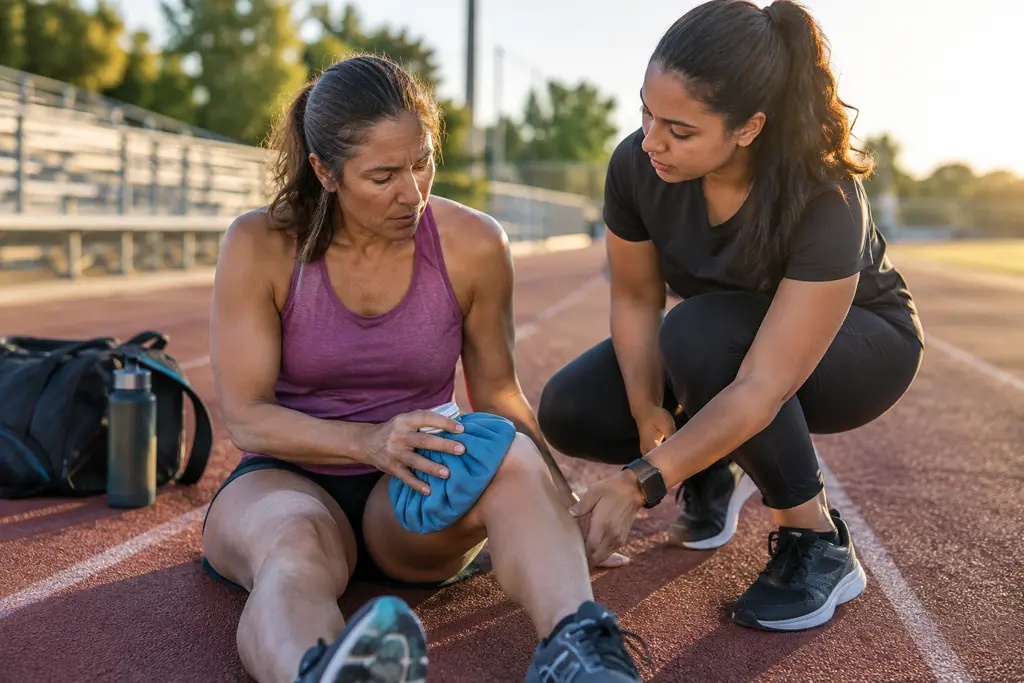
Older Female Athletes are not simply younger athletes with more birthdays behind them. Emergency department data suggest their injury patterns may differ by mechanism, body region, diagnosis, sport type, and age group. That matters for coaches, training partners, families, and athletes who want participation to remain meaningful without treating avoidable risk as the price of staying active.
The research available here should be read carefully. Much of it reflects emergency department visits, which means it likely captures injuries serious enough to need urgent evaluation rather than every ache, overuse complaint, or clinic-managed problem. It also cannot tell any individual athlete what activity is safe for her body. Still, these data offer useful signals for safer planning.
What ED Data Show For Older Female Athletes
Patterns By Body Region And Diagnosis
A 2014-2023 national analysis of U.S. women aged 65 and older estimated about 247,695 emergency department visits for sports- and exercise-related injuries. Fitness training, wheeled sports, and walking or running accounted for the largest shares. In the same study, trunk injuries and head or neck injuries were the most common body regions, fractures made up 30.8% of diagnoses, falls were reported as the mechanism in 60.9% of cases, and 18.4% required hospitalization national analysis of older female athletes.
Those numbers do not mean exercise is unsafe. They do suggest that injury prevention discussions for active older women should not focus only on knees, ankles, or muscle strains. The trunk, head and neck, and fracture risk deserve attention because they appeared prominently in emergency department data. A fall during a walk, a tumble during wheeled activity, or a misstep during group fitness may carry different consequences at age 70 than it might have carried decades earlier.
Older Female Athletes And Falls
Older Female Athletes may benefit from viewing fall risk as a performance issue, not a sign of frailty. The study above found falls were the leading reported mechanism in this emergency department sample. That finding is consistent with the practical experience of many injury-prevention professionals: the issue is often not the sport alone, but the interaction between speed, surface, vision, balance demand, fatigue, footwear, reaction time, and the athlete’s medical background.
For readers thinking about daily independence as well as sport, CPCWA has related education on fall injury prevention and independence. The same theme applies to recreational athletics: reducing fall exposure may support continued participation, but personal risk can vary widely.
Why Mechanism Matters
Fracture Risk Is Not Distributed Evenly
A separate 2014-2023 analysis of orthopaedic injuries in U.S. adults aged 55-99 across 12 popular sports reported an average age of about 67.3 years. Women had higher odds of fracture than men, and fracture odds rose with age; adults aged 85 and older had about 2.6 times the odds of fracture compared with those aged 55-59. The same analysis reported that hospitalization odds also rose with age, with adults 85 and older having about 5.1 times the odds of hospitalization compared with the 55-59 group older athlete orthopaedic injury analysis.
This distinction is relevant because many athletes and coaches still use pain severity as the main decision point. Pain is real, but it is not the only signal. A fall mechanism, inability to continue normal movement, a suspected fracture, head or neck impact, or rapidly changing function should push decision-making toward qualified evaluation rather than sideline guessing.
None of this supports fear-based avoidance of sport. It supports better matching between activity demands and an athlete’s current capacity. The goal is not to remove challenge. The goal is to avoid assuming that every “low-contact” activity is low-consequence for every participant.
What The ED Setting Leaves Out
Emergency department studies can identify injuries that reached urgent care settings, but they may miss soreness, early tendon symptoms, gradual strength loss, balance changes, and overuse problems managed elsewhere. That creates a partial picture. It is useful for recognizing severe patterns, yet it should not be used to claim precise risk for every class, league, or athlete.
That limitation matters for training choices. If an athlete has repeated near-falls during drills, that issue may never appear in a national injury estimate unless a fall leads to an ED visit. Safe participation depends on noticing these smaller warning signs before they become larger events.
Sport Type And Injury Severity
Low-Contact Does Not Mean No Risk
Sports often labeled as low-contact or limited-contact can still involve sudden stops, rapid direction changes, reaching, backpedaling, and reactions to unpredictable ball placement. The older-adult orthopaedic analysis reported that sports such as pickleball and tennis contributed meaningfully to severe injuries among older athletes, and it noted a sharp rise in pickleball injury incidence among older adults from 2014 to 2023.
This does not mean pickleball, tennis, golf, fitness training, walking, running, or wheeled activities should be discouraged across the board. It means the safety conversation should match the actual movement demands. Quick pivots, backward steps, uneven courts, crowding, fatigue, and unfamiliar equipment can change the risk profile even in sports that feel social and accessible.
Upper Body And Trunk Injuries Deserve Attention
The research notes that upper extremity injuries account for about 40% and lower extremity injuries about 30% among older athletes in the orthopaedic dataset. That pattern makes sense in fall-related events, where the arm, wrist, shoulder, trunk, or head may absorb force. For Older Female Athletes, safe participation planning should therefore include more than ankle support or knee conditioning.
Strength, mobility, balance, recovery time, and sport-specific skill all interact. So do medications, vision, prior injury, bone health history, and chronic conditions. Those are personal factors, and they are best discussed with a clinician or qualified healthcare professional rather than decided from population data alone.
Practical Safety Questions For Training
Questions Before Participation
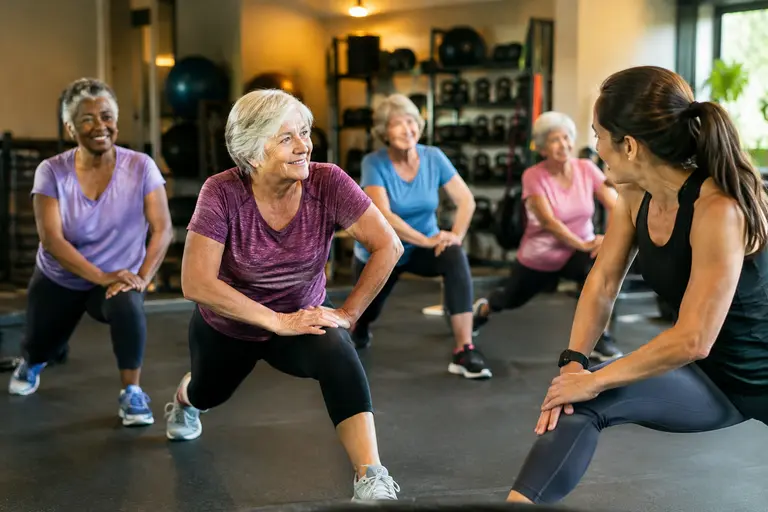
Good injury prevention starts before a fall, fracture, or emergency department visit. Athletes, coaches, and class leaders can use structured questions to reduce guesswork without trying to diagnose anyone.
- Has the athlete had a recent fall, near-fall, fracture, dizziness episode, or head impact?
- Does the activity involve quick direction changes, backward movement, wheels, uneven surfaces, or crowded space?
- Are footwear, eyewear, protective gear, and equipment appropriate for the setting?
- Can intensity be increased gradually rather than all at once after a break?
- Does the athlete know whom to contact if pain, balance, or function changes?
- Has she discussed bone health, fall history, or activity restrictions with a healthcare professional when relevant?
These questions do not replace clinical judgment. They help direct the right issues to the right people. A coach can modify drills, slow progression, manage space, and encourage evaluation. A clinician can assess health status, symptoms, medications, bone health concerns, or return-to-activity questions.
Recovery Is Part Of Risk Management
Recovery planning should be treated as part of participation, not as an afterthought. Older athletes may still train hard and adapt well, but tissue recovery, sleep, nutrition, life stress, and prior injury history may affect readiness. A cautious approach uses gradual progression, symptom reporting, rest when needed, and reassessment after falls or new pain.
For more insight into sports and safety, readers are encouraged to explore related content on Up Offshore. Any general resource should be used as education, not as a substitute for individualized care.
Injury Patterns Among Older Female Athletes
The most useful lesson from these data is not that sport is too dangerous. It is that injury patterns among active older women appear to cluster around falls, fractures, trunk and head or neck regions, and activities that may not always be perceived as high risk. That should lead to smarter preparation, not less respect for athletic identity.
Older Female Athletes deserve training environments where reporting pain, instability, a fall, or a near-fall is treated as useful information rather than weakness. Coaches and peers can support that culture by avoiding pressure to continue after a concerning event and by directing medical questions to qualified professionals.
Before starting a new activity, returning after injury, or increasing intensity, discuss personal factors with a clinician. Useful topics may include fall history, fracture history, bone health, vision, medications, balance concerns, prior joint injury, and what symptoms should prompt urgent evaluation. Population data can guide better questions, but individual safety decisions belong in a healthcare conversation.