Wellness

speech loss tools: What NIH Research Shows

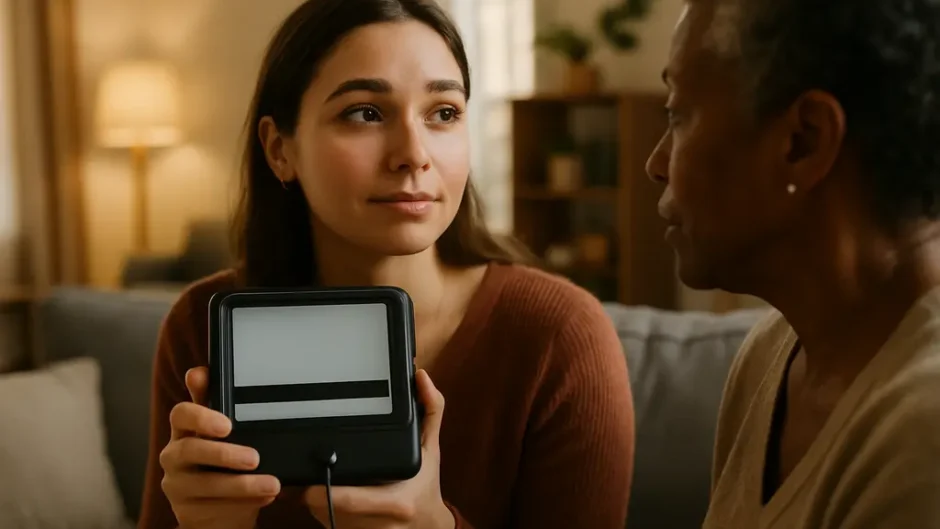
speech loss tools beside a tablet used for assistive communication

speech loss tools are changing because researchers are learning more about how the brain plans, organizes, and attempts speech. For people living with communication loss after paralysis, ALS, stroke, traumatic injury, or other conditions, these developments may sound hopeful. They also deserve careful interpretation. Most brain-computer interface systems discussed in recent NIH-funded work were studied in small research settings, often with implanted devices, specialized teams, and extensive calibration.

That does not reduce the scientific value of the work. It does mean readers should separate promising research from everyday availability. A person or family facing speech loss still needs individualized guidance from speech-language pathologists, neurologists, rehabilitation clinicians, and other qualified professionals. Articles like this can support understanding, but they do not replace medical advice.

What Speech Loss Tools Are Trying To Do

Why Speech Loss Tools Matter After Communication Changes

Speech is not only a way to exchange information. It can support identity, relationships, independence, humor, emotional expression, and participation in community life. When someone loses the ability to speak clearly, the effects can reach far beyond the mechanics of sound production.

Traditional assistive communication approaches remain central in care. Depending on a person’s abilities and goals, clinicians may consider low-tech tools, digital speech-generating devices, eye-gaze systems, switches, or other augmentative and alternative communication options. These approaches can be meaningful even as newer neurotechnology receives public attention.

Brain-computer interfaces, often called BCIs, are being studied as one possible path for restoring more natural communication in selected cases. A BCI does not simply “read thoughts.” In the studies described by NIH, researchers attempted to decode brain activity linked to intended speech or speech planning, then translate that activity into text, sound, or avatar movement. That distinction matters because the technology depends on specific signals, training, algorithms, and hardware.

What Makes The NIH Work Different From Standard Devices

Many current communication aids rely on movement the user can still control, such as eye motion, head motion, finger movement, or breath-based activation. Some people cannot use those pathways reliably. NIH-funded BCI research has focused partly on whether brain signals related to attempted speech might provide another route for expression.

On June 17, 2026, NIH reported that funded researchers had identified single-cell brain activity involved in human speech during conversation. Using machine learning with human single-cell brain recordings, the team found neurons associated with grammar, meaning, and context, findings that NIH said may inform future technology that translates neural activity into speech for people with communication disorders, according to the NIH report on speech neurons.

This type of discovery is foundational. It does not mean a consumer device was created on that date. Rather, it suggests researchers are gaining a more detailed picture of the neural patterns that may need to be decoded if future systems are to support communication more naturally.

What Recent BCI Research Has Shown

A Brain-To-Voice Study In Paralysis

One of the most discussed examples involved a streaming brain-to-voice neuroprosthesis. NIH described a study published on April 29, 2025, in which researchers developed a system for a 47-year-old woman with paralysis. The system translated intended speech from brain signals into audible voice at about 47.5 words per minute for a large vocabulary, and about 90.9 words per minute with a limited 50-word set, with over 99% decoding accuracy in the reported setting, according to NIH Research Matters.

Those numbers are striking, but they should be read in context. A highly controlled research system is not the same as a widely available clinical tool. Performance may vary by participant, condition, implant location, training process, speech history, signal quality, fatigue, and the setting where the system is used. The study still provides evidence that attempted speech signals can, in some circumstances, be translated into voice-like output faster than many older methods.

Speed, Accuracy, And Human Communication

Communication quality cannot be judged only by speed. Accuracy matters, but so do repair strategies, emotional tone, privacy, fatigue, user comfort, caregiver burden, and access to technical support. A system that performs well in a lab may still be hard to use every day if setup is difficult or if errors create frustration during personal conversations.

For that reason, speech loss tools should be evaluated through both engineering and human experience. Researchers can measure words per minute and decoding accuracy. Users and families may also care about whether communication feels more spontaneous, whether the person can participate in family decisions, and whether the system supports dignity rather than making every exchange feel clinical.

Why Caution Is Still Needed

Invasive Systems Raise Practical And Ethical Questions

Some BCI systems involve implanted electrodes or other surgical procedures. That can raise questions about risk, long-term maintenance, infection, device failure, privacy, cost, caregiver setup, and equitable access. These are not reasons to dismiss the research. They are reasons to avoid overstating what the research can offer right now.

People with severe communication loss may be highly motivated to consider experimental options, especially when standard methods feel slow or limited. That understandable hope should be met with clear information, not marketing language. Research participation, device implantation, rehabilitation planning, and long-term support all require careful discussion with qualified clinical and research teams.

Community and spiritual support can also matter for some families as they adjust to changes in communication and identity. Readers who value reflective wellness resources may find related material through Spiritual Endeavors, while still relying on licensed professionals for healthcare decisions.

Access May Not Be Equal

Even if BCI systems continue to improve, access may depend on research eligibility, geography, insurance coverage, surgical candidacy, caregiver support, and the availability of specialists. These barriers are not minor details. They shape who benefits first from new technology and who may continue to rely on older but still valuable communication systems.

Public health discussions should include people who use assistive communication every day. Engineers and clinicians bring essential expertise, but users can identify practical needs that may not appear in laboratory performance metrics. Comfort, portability, training time, repair support, and social acceptance may strongly influence whether a tool helps in daily life.

How Families Can Read The Research Carefully

Family reviewing health information together at a kitchen table

Questions That Can Clarify A New Claim

Headlines about neuroprosthetics can make early-stage research sound closer to routine care than it is. Families may find it helpful to ask structured questions before assuming a device is available or suitable.

  • Was the study done in one person, a small group, or a larger trial?
  • Did the system require brain surgery or specialized equipment?
  • Was it used in a lab, clinic, home, or multiple settings?
  • How much training and technical support were needed?
  • Were accuracy and speed measured during natural conversation or controlled tasks?
  • What risks, burdens, and alternatives were discussed?

These questions do not determine whether a technology is right for any one person. They can help families have more informed conversations with clinicians and researchers.

Why Standard Care Still Matters

New neurotechnology does not replace the need for speech-language evaluation, rehabilitation planning, mental health support, caregiver education, and practical communication strategies. Many people benefit from layered support: one method for quick needs, another for longer messages, and another for social or emergency situations.

That layered approach may be especially useful because health status and communication ability can change over time. A tool that works well during one stage may become less useful later, while another option may become more appropriate. Those decisions belong in a care plan shaped by the person’s goals, abilities, medical history, and support network.

Understanding NIH Speech Loss Tools

The NIH-funded work on speech decoding and brain-computer interfaces suggests real scientific progress. Researchers have reported detailed brain recordings related to speech, and at least one brain-to-voice study showed fast and accurate decoding in a person with paralysis under research conditions. These findings may help future systems become more natural, expressive, and usable.

Still, speech loss tools are not a single solution, and no article can determine which option is appropriate for a specific person. Current choices may include standard augmentative communication, speech-generating technology, rehabilitation support, research participation, or a combination of approaches. Each path has benefits, limits, and practical demands.

If speech loss affects you or someone you support, consider asking a clinician what communication options are appropriate now, whether a speech-language pathologist should be involved, what assistive devices are realistic, whether any research trials are suitable, and how risks, training needs, and long-term support would be handled.


SNAP Sugary Foods Ruling And Wellness Stakes

SNAP Sugary Foods policy discussion at a grocery checkout counter

SNAP Sugary Foods became a national policy flashpoint after a federal court blocked several state waiver plans that would have limited how Supplemental Nutrition Assistance Program benefits could be used for candy, soda, energy drinks, and related items.

The wellness question is not as simple as whether sugary drinks and candy are nutritious choices. Many public health professionals would likely agree that regular reliance on sugar-sweetened products is not an ideal foundation for health. The legal question, though, was different: whether the U.S. Department of Agriculture had authority to approve state waivers that narrowed what counts as allowable food under SNAP.

That distinction matters for families, retailers, health educators, and state agencies. A policy can have a legitimate nutrition goal and still raise legal, practical, and equity concerns. For community wellness work, the ruling is a reminder that food policy often sits at the intersection of health goals, statutory limits, household autonomy, and lived experience at the grocery register.

The SNAP Sugary Foods Ruling And The Law

What The Court Decided

On June 22, 2026, U.S. District Judge Amy Berman Jackson issued a 68-page decision in Aragon et al. v. Rollins et al. that blocked USDA-approved waivers for five states: Colorado, Iowa, Nebraska, Tennessee, and West Virginia. Those waivers would have allowed the states to ban SNAP benefit purchases of candy, soda, energy drinks, and other sugary items. The judge found that USDA lacked legal authority to approve the restrictions and that the agency failed to provide a required public notice period, according to a New York Times report.

The ruling vacated the approvals for those five states, which meant the restrictions could not be implemented there based on those waivers. The decision did not say that nutrition concerns are irrelevant. Rather, it found that the waiver pathway used by USDA did not authorize states to redefine eligible foods in that way when the SNAP statute already defines food broadly.

The case also affected a larger policy debate. The blocked waivers were among 23 state waivers approved by USDA since 2025 to limit SNAP purchases of foods and beverages viewed by state officials as less healthy, including candy, soft drinks, sweetened drinks, energy drinks, prepared desserts, and in some cases fountain drinks.

Why Legal Authority Matters For Wellness Policy

Health advocates sometimes focus on outcomes first: fewer sugary drinks, more nutrient-dense foods, or improved dietary patterns. Those are understandable goals. Yet public programs are governed by statutes, and agencies must act within those statutes. If an agency lacks authority, a court may block the policy even if the policy aim has public health appeal.

For wellness advocates, that can feel frustrating. Still, process is part of public health credibility. Notice periods, statutory authority, and clear definitions help people understand what rules apply to them. They also give families, retailers, clinicians, and community organizations a chance to identify unintended effects before a policy reaches checkout lanes.

Checkout Confusion, Stigma, And Daily Food Choices

What SNAP Sugary Foods Means At Checkout

One concern raised by critics was that restrictions could create confusion at the register. A household might not know whether a sweetened drink, prepared dessert, or mixed product was covered by a ban. Retail staff might have to enforce rules that vary by state and product category. That kind of uncertainty can make a routine food purchase feel more stressful, especially for people trying to stretch limited benefits.

The stigma concern is also significant. If a SNAP participant is told in a checkout line that a product cannot be purchased with benefits, the experience may feel public and embarrassing. Stigma can discourage program use, reduce trust in agencies, and make nutrition conversations feel punitive rather than supportive.

There is also a health-management concern. Critics argued that broad restrictions could unintentionally affect people managing conditions such as diabetes if rules captured items that contain sugar but do not fit a simple candy-or-soda category. That does not mean candy or soda should be treated as health-promoting foods. It means policy design has to account for how complicated real food labels, household needs, and shopping patterns can be.

Household Autonomy And Practical Tradeoffs

SNAP households make food decisions within budgets, transportation limits, family preferences, store availability, cultural habits, work schedules, and health needs. A single rule about a product category may not address those constraints. Community wellness efforts may be more useful when they pair nutrition education with food access, clear labeling, cooking support, and respectful conversations.

That is why the SNAP Sugary Foods debate should not be reduced to a moral judgment about individual shoppers. Sugary products can be part of a broader dietary pattern that public health educators may want to reduce. At the same time, SNAP participants should not be treated as less capable of making decisions than other shoppers. A respectful policy discussion can hold both ideas at once.

State Responses After The June 2026 Decision

Arkansas And The Continuing Dispute

The June 2026 ruling did not end state efforts to restrict certain purchases. Arkansas indicated that it would move forward with a ban on using SNAP benefits for candy and soda despite the recent federal court ruling, according to Associated Press reporting. That response suggests that the legal and administrative dispute remained active after the court’s decision.

For families, that creates a practical problem: rules may be proposed, blocked, appealed, delayed, or implemented depending on state actions and court orders. People who receive benefits need accurate information from official program notices and local agencies. Retailers also need clear guidance so that checkout systems do not apply rules inconsistently.

For health communicators, caution is necessary. A headline about a court ruling may not tell a shopper what will happen in their state, at their store, on a specific date. The most responsible message is that the June 22, 2026 decision blocked the five identified waivers, while some states continued to pursue restrictions and legal challenges continued after the ruling.

Why Clear Communication Is A Health Issue

Food policy communication affects stress, trust, and access. If households do not understand which items are eligible, they may avoid certain purchases unnecessarily or worry that benefits will fail at checkout. If retailers do not receive clear instructions, implementation can become uneven. If health educators frame the issue with shame, people may tune out nutrition guidance even when that guidance is evidence-informed.

Clear communication should answer practical questions without judging families. Which rule applies? When did it begin? Which products are affected? What happens if a purchase is denied? Where can a participant ask for help? Those questions are not secondary details; they shape whether a policy is workable in daily life.

Wellness Policy Without Shame

Community nutrition educator speaking with adults at a table

Food Access And Nutrition Goals Can Coexist

Nutrition goals and food access goals do not have to be treated as enemies. Public programs can encourage more nourishing choices while still respecting dignity. For example, policy discussions may consider incentives for fruits and vegetables, retailer access in underserved areas, nutrition education, and benefit adequacy. The research provided for this topic does not establish which approach is most effective, so it would be inappropriate to claim that one specific policy would improve health outcomes for every household.

What can be said with more confidence is that any SNAP policy affecting food choice should be legally grounded, clearly explained, and evaluated for unintended harms. That is especially true when the policy affects people with limited income, people in rural areas with fewer store options, older adults, caregivers, and people managing health conditions.

Readers following federal nutrition policy may also find related context in CPCWA’s discussion of food policy reforms, which reviews how agency actions can shape labels, ingredients, and public understanding.

A Community Wellness Lens

A community wellness lens asks more than whether a product is healthy. It asks whether the policy is fair, understandable, feasible, and supportive of long-term health. It also asks whether the people most affected had a meaningful chance to raise concerns before a rule changed their grocery experience.

Sites in the broader wellness education network, including Healthscope, often stress that health information is most useful when it is practical and respectful. That principle fits here. People may benefit from information about limiting sugary drinks, but they are less likely to benefit from public embarrassment, unclear rules, or sudden denials at checkout.

  • Ask whether a proposed restriction has clear legal authority and public notice.
  • Ask how retailers will identify affected products without creating checkout delays.
  • Ask whether the rule could affect people managing diabetes or other health needs.
  • Ask how agencies will measure outcomes beyond whether purchases were blocked.
  • Ask whether incentives and access supports could achieve nutrition goals with less stigma.

SNAP Sugary Foods Ruling And Community Wellness

The SNAP Sugary Foods ruling should be read as both a legal decision and a public health lesson. The court blocked specific waiver approvals because of statutory and procedural limits. It did not resolve the broader nutrition debate over sugar-sweetened beverages, candy, and public benefit programs.

For wellness advocates, the careful path is to avoid overstating what the ruling proves. It does not prove that sugary products are healthful. It does not prove that purchase restrictions can never be considered through lawful channels. It does show that public health aims must be pursued through legally sound processes that account for notice, definitions, implementation, and dignity.

For individuals and families, the most useful next step is practical: rely on official SNAP notices in your state for benefit rules, and seek individualized nutrition guidance from qualified professionals when health conditions, medications, pregnancy, age, or other personal factors affect food choices. People managing diabetes or other health concerns can ask a clinician or registered dietitian how to plan meals, manage occasional sugary items, and interpret food labels in a way that fits their medical needs and household realities.

Life After College Sports May Need To Be Part Of Athlete Wellness Before The Final Season

Returning To Learn Is Part Of Concussion Recovery

College athletes spend years preparing for what comes next in competition. There is always another practice, another season, another performance goal or another opportunity to improve.

Eventually, however, most college sports careers end.

A new September 25, 2026, NCAA feature about the Big Ten Conference is drawing attention to a different part of athlete development: preparing student-athletes for the careers, communities and identities they will have after organized college competition.

The issue is particularly relevant to athlete wellness because leaving college sports can involve more than replacing practices with a job. Athletes may simultaneously experience changes in daily structure, teammates, social networks, physical activity, goals and the role sport has played in their identity.

That does not mean finishing a college sports career inevitably produces depression, anxiety or an identity crisis. Research on former collegiate athletes remains limited, and transitions vary substantially from person to person.

What the evidence does support is a more practical idea: preparing for life beyond sport does not have to wait until the final game.

The Big Ten Is Treating Life After Sport As Part Of Athlete Development

The current conversation has a significant U.S. example.

On September 25, the NCAA highlighted the work of the Big Ten Conference’s Community & Impact team. The Big Ten now includes 18 universities and more than 14,000 student-athletes, making transition planning relevant to a large population of athletes across the country.

Big Ten Senior Vice President of Community & Impact Omar Brown described an approach that extends athlete development beyond accomplishments on the field. Brown told the NCAA that the conference has heard from former athletes who felt lost after their college or professional careers ended.

Rather than treating that transition as a problem that begins after graduation, the conference has developed experiences while athletes are still competing.

Its programs include career exposure, leadership development and opportunities that place athletes in environments outside their normal competition routines.

The Big Ten life-after-sport initiative includes a CBS Sports Immersion Program in which groups of approximately 12 to 14 student-athletes interested in journalism, broadcasting and media production shadow CBS employees at Big Ten events.

The conference also operates a Student-Athlete Leadership Retreat. Five athletes from each Big Ten university gather at the conference office in Chicago, with programming addressing their future, current and past selves.

Those activities are career-development programs, not mental-health treatment.

But they illustrate an important wellness principle: an athlete can begin building meaningful roles outside competition while sport is still part of everyday life.

Most College Athletes Know Competition Will Eventually End

For some athletes, the transition out of college sports is planned.

A senior knows the final season is approaching, completes the schedule and gradually moves toward a career or graduate school.

For others, the ending may be less predictable. Injury, eligibility, roster changes, changing interests or competitive opportunities can alter the timeline.

Even an expected transition can represent a major lifestyle change.

College athletics provides unusually strong structure. Practices, strength sessions, competition, treatment, meetings, travel and academic responsibilities can organize much of an athlete’s week.

Teammates can also become a central social network.

When competition ends, several of those structures may change at once.

A 2026 systematic review led by Madison L. Reese at the Oklahoma State University College of Osteopathic Medicine at the Cherokee Nation examined the research on anxiety and depression among former college athletes. Researchers initially identified 169 articles, screened 61 full texts and ultimately included only nine studies that met their criteria.

That small evidence base is itself important.

It means sweeping statements about what happens psychologically to every athlete after college are not justified.

The systematic review of former college athletes concluded that research specifically examining this population remains limited and called for longitudinal studies following athletes through the transition out of sport.

Career Readiness Is Already Improving For Many Student-Athletes

The current evidence is not simply a story about athletes being unprepared.

In June 2026, the NCAA released findings from its GOALS and Student-Athlete Needs, Aspirations and Perspectives, or SNAP, studies examining career preparation and postcollege plans.

Nearly two-thirds of SNAP respondents said they felt positive or very positive about their career prospects in the changing economy.

More than 90% of athletes in the GOALS study said college athletics had a positive or very positive effect on career-applicable qualities including responsibility, teamwork and work ethic.

The NCAA career-readiness findings therefore provide an important counterweight to narratives that depict student-athletes as universally lost once sport ends.

Many athletes believe sport has helped prepare them for their future.

The more useful question is how colleges can build on those strengths while also recognizing that confidence about employment does not necessarily address every aspect of leaving competition.

Getting a job and adapting to life after sport are related, but they are not identical experiences.

Athletic Transition Is Not Automatically A Mental-Health Crisis

Language matters when discussing retirement from sport.

Finishing an athletic career should not automatically be described as traumatic, depressing or psychologically damaging.

Some athletes may feel relief.

Others may be excited about careers, relationships, travel, graduate education or finally having greater control over their schedules.

Some may continue competing recreationally.

Others may remain involved as coaches, administrators, broadcasters, trainers or volunteers.

Still others may want distance from sport.

Research suggests there is substantial variation.

A systematic review of psychological distress among retired elite athletes found that overall psychological distress was broadly similar to that observed in the general population, although some subgroups—including athletes dealing with pain, medical conditions, concussion history, limited social support or other adverse psychosocial factors—could face greater difficulty.

That distinction helps avoid turning a normal life transition into a diagnosis.

Leaving sport can be challenging without being a mental disorder.

At the same time, athletes experiencing persistent distress, anxiety, depression, major sleep disruption, substance-related concerns or difficulty functioning should have access to qualified mental-health professionals rather than being told that their experience is simply a normal part of retirement.

The Final Season May Be Too Late To Start Building A Second Identity

One of the strongest themes in sport-transition research is identity.

Athletic identity can be valuable.

Being an athlete can provide purpose, confidence, community, routine and belonging. Strong identification with sport is not inherently unhealthy.

The difficulty can arise when almost every meaningful role in a person’s life depends on continued participation.

College athletes can therefore benefit from opportunities to explore who they are alongside being athletes rather than being asked to suddenly answer that question after competition disappears.

That might involve academic interests, internships, friendships outside the team, community service, creative work, professional development or hobbies with no connection to performance.

None of those activities needs to compete with athletic ambition.

They can coexist with it.

The Big Ten’s approach is interesting for precisely this reason. Its Community & Impact programming includes career experiences but also cultural and community activities designed to expose athletes to environments beyond their teams.

The conference’s Big Life Series has taken groups of roughly 150 student-athletes per series to places including Montgomery and Selma, Alabama; Portland, Oregon; and rural Iowa for experiences involving civil rights history, Indigenous culture, regional history and agriculture.

Those experiences are not clinical interventions.

They are examples of athlete development becoming broader than sport performance.

Career Preparation Can Also Be Wellness Preparation

Career development is usually discussed in economic terms.

Can the athlete write a résumé?

Do they know how to interview?

Have they completed an internship?

Can they translate athletic experiences into skills employers understand?

Those questions matter.

But early career exploration may have another practical benefit: it gives athletes opportunities to imagine a future before their competitive identity disappears.

A student-athlete who has already discovered an interest in media, engineering, education, medicine, design or business is not beginning that exploration from zero after the final season.

That does not guarantee an easy transition.

It simply means another meaningful role has already started developing.

The 2026 review of former college athletes specifically identified a need for better research on university programs that support athletes transitioning out of sport. The authors noted that existing literature often emphasizes helping athletes apply skills developed through athletics to life after competition.

This makes transition planning relevant to both career development and broader athlete well-being.

Losing The Team Can Matter As Much As Losing Competition

Sport retirement is also social.

For years, athletes may spend hours every day around teammates, coaches, athletic trainers and other members of an athletic department.

Those relationships do not necessarily disappear after the final game.

But their structure changes.

There may no longer be a locker room conversation every afternoon, a team meal after practice or a bus full of teammates traveling to competition.

A broad scoping review of adaptation to life after sport identified changes in identity and social networks, along with career uncertainty and potential physical and mental-health considerations, among recurring themes in the literature.

That makes social transition worth planning for too.

Schools can encourage graduating athletes to maintain relationships while also building communities beyond athletics.

Athletes themselves may benefit from recognizing that missing teammates after graduation does not mean they made the wrong decision about leaving sport.

It may simply reflect the loss of an unusually structured social environment.

Losing The Team Can Also Mean Losing A Daily Social Structure

Physical Activity May Need A New Purpose After Competition

Another change can involve exercise itself.

For a college athlete, physical activity is rarely just movement.

Training has a purpose.

Distances, weights, repetitions, times, recovery and performance are often measured. Coaches decide what happens next. Competition provides a reason for the entire system.

After sport, physical activity can become much less structured.

Some former athletes may enjoy that freedom.

Others may initially struggle to determine what exercise looks like when there is no coach, competition or performance standard attached to it.

There is no universal post-athlete training plan.

A former distance runner may want to continue running. A football player may prefer recreational cycling. A swimmer may discover hiking. Another athlete may temporarily want much less structured exercise.

The appropriate amount and type of activity can also depend on injuries, health conditions and individual circumstances.

Persistent pain, injury limitations or other medical concerns should be discussed with qualified healthcare professionals rather than managed according to what the athlete used to tolerate during competition.

Injury Can Make The Transition Arrive Earlier Than Expected

Career-transition planning becomes particularly important when an athlete does not choose when competition ends.

A musculoskeletal injury can sometimes contribute to involuntary retirement.

A systematic review led by researchers at the University of California, San Francisco found that involuntary retirement following musculoskeletal injury was a recurring theme associated with psychological distress in the literature it examined. The authors also emphasized limitations in intervention research.

This does not mean injury-related retirement inevitably causes depression or anxiety.

It does mean that an unexpected ending can combine several changes at once: rehabilitation, loss of competition, changes in routine, uncertainty about identity and concern about the future.

CPCWA has previously discussed how these issues can overlap in coping with depression after a sports injury, particularly when an injury changes more than physical participation.

For an athlete facing an involuntary transition, professional mental-health support may be appropriate when emotional symptoms are persistent, severe or interfering with daily functioning.

Coaches Do Not Need To Become Career Counselors Or Therapists

Supporting athletes through transition does not mean asking coaches to provide services outside their expertise.

A coach can normalize conversations about life after sport.

An athletic department can connect athletes with career services.

Academic advisers can help students understand graduate education and professional pathways.

Alumni can provide mentorship.

Qualified mental-health professionals can address psychological concerns.

Athletic trainers and physicians can help when injury or health issues are involved.

The strength of a transition system comes partly from having different people perform appropriate roles rather than expecting one trusted coach to solve every problem.

This also helps protect athletes from the assumption that needing support means they were insufficiently prepared.

Career uncertainty is common among college students.

Identity changes are part of adulthood.

Missing teammates is understandable.

Professional mental-health care becomes relevant when distress goes beyond what an athlete can comfortably manage or begins disrupting sleep, relationships, work, school or everyday functioning.

The Athlete Can Prepare For A Future Without Rejecting The Present

There can be resistance to talking about retirement while an athlete is still competing.

For a freshman or sophomore, the end may feel distant.

For a senior pursuing a championship, conversations about what happens afterward might seem distracting.

But transition planning does not have to communicate doubt about an athlete’s commitment.

A student can want to win a championship and prepare for an internship.

An athlete can pursue professional opportunities in sport while developing another career.

Someone can love their team while building friendships elsewhere.

Planning for another stage of life does not require emotionally retiring before the season ends.

In fact, the NCAA’s 2026 career data suggest athletes already recognize many transferable benefits of competition. Work ethic, teamwork and responsibility do not disappear when eligibility expires.

The challenge is helping athletes understand where those abilities can go next.

Colleges Can Start Transition Support Before Senior Year

Waiting until the final semester creates an unnecessarily narrow window.

Transition preparation can happen throughout college without turning every year into career training.

Early in college, athletes can be encouraged to explore academic and professional interests.

Later, mentorship, internships and networking can become more concrete.

As the end of eligibility approaches, programs can address practical changes in routine, physical activity, social connection and access to resources after graduation.

Support may also need to extend beyond the moment athletes leave campus.

The 2026 systematic review from Oklahoma State researchers concluded that the literature specifically addressing former college athletes remains thin. Of the 169 records initially identified, only nine studies ultimately met the review criteria.

That is a reason for caution rather than alarm.

There is not enough evidence to prescribe one transition program for every athlete.

But there is enough evidence to question a system that prepares athletes intensively for competition and only begins discussing life afterward when the final season is already ending.

Athlete Transition Works Better When Several Parts Of Life Are Already Growing

Life After Sport Can Be Part Of Athlete Wellness Now

The September 2026 Big Ten initiative provides a useful model for thinking differently about athlete development.

Its most important feature may not be any individual program.

It is the timing.

Career exposure, leadership experiences, community involvement and conversations about future identity are happening while athletes are still athletes.

That allows the future to develop gradually rather than appearing as an empty space after the final competition.

For CPCWA readers, the practical message should remain measured.

Athletic retirement is not automatically a mental-health problem. A strong athletic identity is not a diagnosis. Career preparation cannot guarantee psychological well-being. And a student-athlete who is uncertain about life after sport has not necessarily failed to prepare.

But college athletics eventually ends for nearly everyone.

Preparing for that reality can include more than writing a résumé during senior year. It can mean maintaining relationships outside the team, exploring interests beyond competition, understanding transferable skills, developing realistic career options and knowing where professional support is available if the transition becomes difficult.

Athletes spend years preparing themselves for the next season.

There is room within athlete wellness to prepare them for the season of life that comes after the last one, too.

Microbiome Transplants for Peanut Allergy

Microbiome transplants are being studied as a possible way to change immune responses in peanut allergy, but the evidence remains early and should be interpreted carefully. The most recent human findings came from a small Phase I trial in adults, not from a large confirmatory study. That matters because food allergy research can generate hope quickly, while real-world clinical use usually requires stronger evidence on safety, durability, dosing, and who is most likely to benefit.

Peanut allergy can be serious, and people with diagnosed food allergies should continue following the plans they have made with qualified healthcare professionals. The research discussed here is educational only. It should not be used to self-treat, alter emergency plans, intentionally eat allergens, or seek unregulated procedures.

Why Microbiome Transplants Are Being Studied

Microbiome Transplants And Oral Tolerance

The basic idea behind this research is that the gut microbiome may influence immune tolerance. In food allergy, the immune system reacts to specific food proteins in a way that can lead to symptoms after exposure. Researchers are asking whether changing the gut microbial community could shift immune signals toward greater tolerance in some people.

In the trial described in the research notes, investigators evaluated oral encapsulated fecal microbiome transplantation, often abbreviated as FMT. The intervention used capsules rather than an invasive delivery route. The study was published on August 5, 2026, in Science Translational Medicine and enrolled 15 adults with peanut allergy; the PubMed record describes the work as involving humans and mice and identifies bile acid metabolites as a possible part of the tolerance signal PubMed trial record.

That design makes the results interesting, but limited. A Phase I open-label study can provide early safety and biological signals. It is not the same as a large, blinded study designed to establish effectiveness across a broad population. The participants were adults, so the findings should not be assumed to apply to children, teenagers, or people with different allergy histories.

For those interested in broader wellness topics like mind-body connections, nutrition, and education, Spiritual Endeavors offers reflective resources that might be insightful. However, when it comes to allergy care, it’s important for decisions to be made alongside licensed clinicians since peanut allergy can cause severe reactions.

What The Phase I Trial Found

Small Numbers Require Caution

The Phase I trial included 15 adults with peanut allergy. Six of those 15 participants, or 40%, had an increased peanut reactivity threshold. In plain language, they could tolerate more peanut protein before reacting during the study assessment. That does not mean the allergy was eliminated, and it does not show that participants could safely eat peanuts outside a controlled medical research setting.

The trial included two groups. Ten participants did not receive antibiotics before the transplant, and three of those 10 showed increased tolerance at four months to at least 300 milligrams of peanut protein without reacting. Five participants did receive antibiotic pretreatment, and three of those five raised their tolerance threshold beyond 300 milligrams at four months. One participant in that antibiotic-pretreated group reached approximately 600 milligrams.

Those figures are notable because they suggest that the gut environment before transplantation may matter. Still, the antibiotic-pretreated group included only five people. With a number that small, percentages can look more persuasive than the evidence can support. A difference between three of five and three of 10 may be meaningful, or it may shift with larger enrollment. That uncertainty is one reason the ongoing Phase II work is important.

The report also stated that no serious adverse events tied to the FMT procedure were reported during the trial, and participants tolerated the intervention well. That is reassuring as an early signal. It should not be read as proof that the approach is risk-free, especially outside carefully monitored research protocols.

Biology Signals From Responders

Immune Cells And Bile Acid Metabolites

The study did more than measure how much peanut protein participants tolerated. It also looked at immune and microbial changes among people who responded. Responders showed increased levels of RORγt+ regulatory T cells, a subset associated with immune tolerance, and decreased levels of T helper 2 cells, which are often elevated in allergic responses. According to the research summary, those immune-cell changes were maintained over time in responders.

The animal findings added another layer. Mice that received gut microbiomes from human responders were protected from developing peanut allergy in the parallel studies. Those mice showed similar immune changes and increased colonization by Bacteroides species in the gut. Animal results can help explain possible mechanisms, but they do not guarantee that the same effect will occur predictably in humans.

One of the more specific biological signals involved bile acid metabolites. The effectiveness of FMT was associated with increased levels of these metabolites in both human and mouse responders. In one protective Bacteroides strain, deleting bile salt hydrolase, an enzyme involved in bile acid processing, reversed the protective effect in mice.

This is where the science becomes promising but still early. The findings suggest a possible pathway linking gut bacteria, bile acid metabolism, and immune tolerance. They do not yet identify a clinical protocol that patients should seek outside a trial. Microbiome transplants remain a research intervention for peanut allergy rather than a standard allergy treatment based on the evidence provided here.

What The Ongoing Phase II Trial May Clarify

Clinical trial planning documents with calendar and study materials

Safety, Tolerability, And Efficacy Questions

A Phase II trial is underway to evaluate oral encapsulated microbial transplantation therapy, or MTT, with or without antibiotic pretreatment. The ClinicalTrials.gov record for NCT05695261 lists the study as beginning in June 2023, with estimated primary completion on January 11, 2027, and estimated full study completion on March 1, 2027 ClinicalTrials.gov study record.

Because today is September 28, 2026, those listed completion dates had not yet occurred. It would be premature to describe the Phase II trial as settled or to assume that its results will confirm the Phase I pattern. The larger study may help clarify how often participants respond, whether antibiotic pretreatment changes outcomes, and whether safety findings remain acceptable with more participants.

Several questions remain open. The research summary does not establish how long any increased tolerance lasts. It does not show whether repeated dosing would be needed. It does not determine whether the response differs by age, allergy severity, baseline microbiome, medication exposure, or other health factors. It also does not show whether the approach would reduce day-to-day anxiety, accidental reaction risk, or the need for standard allergy precautions.

For public health communication, those gaps are not minor. They are the difference between an encouraging signal and a treatment pathway. Microbiome transplants may eventually become one part of food allergy research, but responsible interpretation requires waiting for larger, more controlled evidence.

How To Read Microbiome Transplants For Peanut Allergy

Practical Questions For A Clinician

For individuals and families affected by peanut allergy, early research can feel personal. A shift from reacting at a lower dose to tolerating 300 milligrams or more under study conditions may sound meaningful. It may be meaningful for some participants. Yet it should not be converted into self-directed exposure, home experimentation, or a belief that a reaction threshold is predictable outside medical supervision.

Microbiome-based treatments also raise practical safety questions. Donor material, microbial screening, processing, dosing, and monitoring all matter. The research described here involved structured clinical investigation. That is very different from unregulated products, informal donor approaches, or clinics that market broad claims before evidence is mature.

A cautious reading supports interest, not overconfidence. The Phase I results suggest that some adults had improved peanut reactivity thresholds after oral encapsulated FMT, and biological findings pointed toward immune and bile acid pathways that deserve further study. The Phase II trial may provide a clearer estimate of benefit and risk after its planned 2027 milestones.

  • Ask whether any microbiome-based allergy option is available only through a regulated clinical trial.
  • Ask how peanut allergy action plans, avoidance strategies, and emergency medications should be handled while research continues.
  • Ask what endpoints matter most: reaction threshold, quality of life, safety, durability, or reduced risk from accidental exposure.
  • Ask whether age, pregnancy status, other health conditions, medication use, or prior reactions could affect trial eligibility or risk.

For now, microbiome transplants should be viewed as an early-stage research direction in peanut allergy, not a proven substitute for individualized allergy care. Anyone considering research participation or wondering how these findings relate to their situation should discuss the evidence, uncertainties, and safety planning with an allergist or another qualified healthcare professional.

Outdoor Physical Activity May Support College Wellness, But The Evidence Is More Nuanced Than “Exercise Outside”

Outdoor Activity Can Support Wellness Without Becoming Another Rule

“Get outside and exercise” sounds like straightforward wellness advice.

For college students, however, the evidence is more complicated than that phrase suggests.

A new systematic review published September 15, 2026, in Frontiers in Psychology examined research on outdoor physical activity and the physical and mental health of university students. Researchers Jianfeng Fu, Yanchao Zhang, and Zeng Cheng, from the Guangxi University of Finance and Economics in Nanning, China, reviewed 32 studies involving a combined 7,274 university students.

The researchers found generally favorable results for several outcomes, including stress, depressive symptoms, emotional state, vitality, self-esteem, well-being, and academic burnout. But they also found inconsistent results for anxiety and attention, while evidence concerning physical-health outcomes remained comparatively limited.

Those qualifications matter.

The review does not establish that exercising outside is a treatment for a mental-health condition. It does not show that every outdoor activity produces the same result. And it does not mean a student struggling psychologically should replace professional support with a walk, run, or workout outdoors.

Instead, the 2026 systematic review of outdoor physical activity provides a more useful message: physical activity, environment, activity type, individual circumstances, and mental health interact in ways that are still being studied.

Researchers Reviewed 32 Studies Involving More Than 7,000 Students

Fu, Zhang, and Cheng searched PubMed, EBSCO, and Web of Science for relevant English-language research available through March 23, 2026.

The initial search produced 37,210 records. After duplicates were removed, 27,947 records underwent title and abstract screening. Researchers assessed 146 full-text articles and ultimately included 32 studies involving 7,274 university students.

Importantly, the review did not simply examine whether students had access to parks or green spaces.

Eligible studies needed to involve physical activity performed outdoors and examine physical and/or mental-health outcomes.

That distinction separates two related but different questions:

Does being in a natural environment matter?

And does being physically active in an outdoor environment matter?

The new review focused on the second.

The Mental-Health Findings Were Promising, But Not Uniform

Across the studies reviewed, outdoor physical activity was associated with favorable findings involving several psychological outcomes.

The researchers reported positive effects involving depressive symptoms, stress, emotional state, vitality, self-esteem, well-being, and academic burnout.

That does not mean every study showed improvement in every category.

The review found that results for anxiety and attention were inconsistent.

That is exactly the kind of detail that can disappear when health research becomes a social-media headline.

“Outdoor exercise improves mental health” sounds definitive.

The actual evidence says something closer to:

Different forms of outdoor physical activity appear promising for several aspects of college student well-being, but results vary by outcome and the evidence base still has important limitations.

For students, coaches, trainers, and campus wellness professionals, the second interpretation is far more responsible.

Physical Activity Already Has Established Health Benefits

The new review sits within a much broader body of evidence supporting regular physical activity.

The CDC reports that physical activity can provide immediate and long-term health benefits for adults. A single session of moderate-to-vigorous physical activity can improve sleep quality and reduce short-term feelings of anxiety, while regular activity is associated with benefits involving cardiovascular health, bone health, brain health, and chronic-disease risk.

The CDC health benefits of physical activity also notes that regular physical activity is associated with a reduced risk of depression.

But this established evidence raises a different question from the one examined by Fu and colleagues.

If exercise is already beneficial, does moving the activity outdoors provide something additional?

That is much harder to answer.

“Outdoor Exercise” Is Not One Activity

One reason the evidence is complicated is that outdoor physical activity can describe radically different experiences.

Walking through a campus garden is outdoor physical activity.

So is jogging.

So is an outdoor strength-training session.

So is recreational cycling.

So is hiking.

So is an organized team practice.

The physical intensity, duration, environment, social setting, competitive pressure, and reason for participating can be completely different.

The 2026 review found that outdoor walking, outdoor physical activity, and outdoor strength training were among activities associated with reductions in depressive symptoms and stress in included studies. It also reported that outdoor exercise increased physical activity levels in some research, whereas forest walking did not produce the same finding for physical activity levels.

Those differences argue against treating “outside” as the active ingredient in every situation.

The activity itself still matters.

A Walk Across Campus Is Not The Same As A Hard Training Session

This distinction is especially relevant for athletes.

Imagine two students spending 45 minutes outside.

One takes a relaxed walk through campus after class.

The other completes an intense conditioning session in preparation for competition.

Technically, both participated in outdoor physical activity.

Physiologically and psychologically, their experiences may be very different.

The first activity may provide movement, environmental change, and an opportunity to decompress.

The second may add substantial training stress to an already demanding schedule.

For an athlete, therefore, “more outdoor exercise” is not automatically equivalent to “more recovery.”

Training load, sleep, nutrition, injury status, competition schedules, academic demands, and existing health conditions all affect what kind of activity is appropriate.

Students with medical conditions, injuries, or concerns about exercise should follow guidance from qualified healthcare or sports-medicine professionals rather than treating general wellness research as an individualized training prescription.

A Walk And A Hard Workout Are Not The Same Wellness Experience

Outdoor Activity Should Not Become Another Performance Requirement

College wellness advice often creates an unintended problem.

Students are already told to:

sleep enough,

exercise regularly,

eat well,

maintain friendships,

manage stress,

limit screen time,

study efficiently,

and stay involved on campus.

Adding another requirement—“make sure your exercise happens outside”—can transform a potentially enjoyable behavior into another metric students feel they are failing to meet.

The research does not justify that approach.

A student who enjoys an indoor strength session is not doing wellness incorrectly.

An athlete who trains indoors because of weather, accessibility, safety, or sport-specific requirements is not missing some guaranteed mental-health benefit.

Outdoor activity is an option with promising evidence behind it.

It is not a moral standard.

Current Physical Activity Guidelines Do Not Require Exercise To Happen Outdoors

Federal physical activity recommendations provide useful context.

The CDC recommends that adults get at least 150 minutes of moderate-intensity aerobic physical activity per week, or 75 minutes of vigorous activity or an equivalent combination, along with muscle-strengthening activity on at least two days each week.

The guidelines do not say those minutes must occur outdoors.

The CDC adult physical activity guidelines emphasize total activity and intensity rather than requiring a particular environment.

That distinction prevents the new research from being interpreted too broadly.

Outdoor physical activity may offer particular experiences worth studying.

But established physical-activity recommendations remain centered on moving regularly, not finding the supposedly perfect setting in which to move.

College Students Face Practical Barriers To Outdoor Activity

Even when someone wants to exercise outside, access is not equal.

Weather matters.

Extreme heat matters.

Cold matters.

Air quality matters.

Personal safety matters.

Disability access matters.

Transportation matters.

Available green space matters.

Class schedules matter.

Work schedules matter.

A commuter student working long hours may not have the same opportunities as someone living beside a large residential campus.

An athlete with an injury may need controlled rehabilitation equipment indoors.

A student who does not feel safe walking alone after evening classes may reasonably prefer an indoor recreation center.

A campus wellness strategy that ignores those differences can accidentally turn a health recommendation into another inequity.

The practical question is therefore not simply:

Why aren’t students exercising outside?

It can also be:

What makes safe and enjoyable outdoor activity realistic for different students?

Access Determines Whether Outdoor Activity Is Realistic

Campus Design Can Influence Whether Outdoor Movement Happens Naturally

Universities can approach the issue structurally rather than placing every responsibility on individual students.

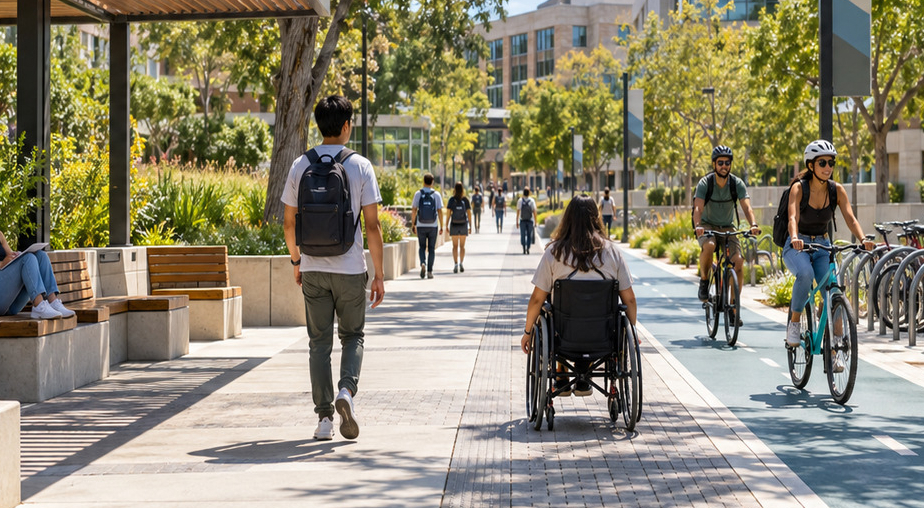
A campus with connected pedestrian routes makes walking easier.

Shade can make outdoor spaces more usable during hot weather.

Accessible paths can expand participation.

Bike infrastructure can support active transportation.

Outdoor recreation areas can make informal movement possible without requiring membership in a competitive sport.

Seating and green spaces can also allow students to combine light movement with social interaction and recovery.

This is relevant because the systematic review’s authors specifically suggest their findings could help inform campus physical-activity programs and health interventions.

That does not mean universities need to transform every outdoor space into a fitness facility.

Sometimes making everyday movement convenient may be more useful than creating another formal exercise program.

Outdoor Activity Can Also Be Social

Physical activity rarely occurs in a vacuum.

A student may walk alone.

Two friends may jog together.

A club may hike as a group.

Athletes may complete recovery walks with teammates.

Students may play recreational sports outdoors.

The social context can influence whether an activity feels restorative, competitive, supportive, awkward, or enjoyable.

That fits with other recent research showing that college students’ experiences in natural environments may differ depending on whether nature time is solitary or social.

For CPCWA readers, the useful point is not that group activity is automatically healthier.

Some students find social exercise energizing.

Others prefer solitude.

Athletes who spend most of their day around teammates may especially appreciate quiet time alone.

Wellness strategies work better when they leave room for those differences.

Outdoor Activity Is A Menu Of Options, Not One Perfect Prescription

Athletes May Need Recovery More Than Additional Exercise

Student-athletes deserve particular caution around the phrase “exercise for mental health.”

A non-athlete who is largely sedentary may benefit from finding enjoyable ways to move more.

A collegiate athlete may already be completing hours of structured physical activity.

Those are very different starting points.

For someone carrying a high training load, adding another workout simply because exercise is associated with mental-health benefits may be counterproductive.

An easy outdoor walk could fit within recovery for some athletes.

For another person, complete rest may be more appropriate.

For someone recovering from injury, activity may need to follow a rehabilitation plan.

CPCWA’s guidance on coping with depression after a sports injury similarly emphasizes that physical recovery and emotional well-being can interact and that athletes should not feel pressured to treat psychological difficulty as something they simply need to push through.

The broader lesson applies here too: more activity is not automatically better activity.

Exercise Should Not Become A Substitute For Mental-Health Care

The mental-health findings in the new review require another important boundary.

Physical activity can support well-being.

That does not make exercise a replacement for professional mental-health care.

A student experiencing persistent low mood, substantial anxiety, significant changes in everyday functioning, or other concerning symptoms should not be told that the solution is simply to exercise outside.

Mental-health conditions require appropriate evaluation when indicated.

Likewise, a coach or teammate should not use outdoor exercise as an informal treatment plan.

Inviting someone for a walk can be supportive.

Telling someone that a walk should fix their depression is something very different.

The Physical-Health Evidence Was Less Developed

The title of the new review includes both physical and mental health.

However, the researchers specifically caution that evidence concerning physical-health outcomes and physical activity levels remains comparatively limited.

The authors noted that their search strategy provided more comprehensive coverage of mental-health outcomes than some physical-health outcomes.

They also acknowledged that relevant research involving areas such as cardiorespiratory health, body composition, sleep, fatigue, physiological indicators, and health behaviors might not have been fully captured.

That means readers should be careful with claims that outdoor exercise has been proven superior for overall physical health among college students.

The review does not establish that.

Anxiety And Attention Remain Important Areas Of Uncertainty

Two findings deserve particular emphasis because they resist a simple wellness narrative.

The review found inconsistent evidence for anxiety and attention.

That does not mean outdoor activity has no relationship with either outcome.

It means the available college-student research did not produce a sufficiently consistent pattern for the authors to reach the same kind of conclusion they reported for several other outcomes.

Future research may clarify those relationships.

Until then, headlines should not outrun the evidence.

The Review Has Other Important Limitations

Fu, Zhang, and Cheng describe their paper as the first systematic review specifically integrating evidence about outdoor physical activity and both physical and mental health among university students.

That makes it useful.

It does not make the evidence final.

The review included studies with different activities, environments, intervention designs, durations, intensities, and outcome measures.

The authors also call for more rigorous randomized controlled research, better reporting of exercise intensity, frequency, duration, and outdoor environmental characteristics, objective as well as subjective measurements, and longer follow-up periods.

Those recommendations reveal how many unanswered questions remain.

Researchers still need to understand not merely whether outdoor activity can help, but which activity, in which environment, at what dose, for which students, and for which outcome.

Enjoyment May Matter More Than Finding The “Perfect” Exercise Setting

Health advice becomes difficult to sustain when people dislike the behavior they are being told to perform.

A student who loves walking outside may find it easy to continue.

Someone who prefers swimming indoors may be more consistent with that.

An athlete may enjoy an unstructured bike ride but dislike additional running because running already forms part of conditioning.

Another student may prefer recreational basketball with friends.

The best practical use of the research may therefore be to expand possibilities rather than narrow them.

Outdoor physical activity can be one option within a larger menu of ways to move.

It does not need to become the universal answer.

Some Movement Is Better Than Treating Wellness As All Or Nothing

Current CDC guidance emphasizes that adults do not need to complete all recommended physical activity at once and that some physical activity is better than none.

That principle can be particularly helpful in college.

A student may not have time for a 60-minute outdoor workout.

They may have time to walk between buildings.

They might cycle to class.

They might spend part of a study break moving outside.

These behaviors do not need to be optimized into a perfect wellness routine before they have value.

For many students, sustainability may matter more than complexity.

Outdoor Exercise Is Not A Test Of Mental Toughness

There is also a cultural issue worth addressing.

Exercise is sometimes presented as proof of discipline.

Outdoor exercise can add another layer:

run despite the weather,

push through discomfort,

choose the harder route,

prove resilience.

That framing is not what this research supports.

There is a meaningful difference between healthy challenge and ignoring warning signs.

Heat illness, poor air quality, storms, injury, inadequate recovery, and unsafe environments are legitimate reasons to change or stop an outdoor activity.

For athletes, listening to the body is part of responsible training.

It is not evidence of weakness.

College Wellness Works Better When Students Have Options

The September 2026 systematic review provides useful evidence that outdoor physical activity may contribute positively to several dimensions of college student health and well-being.

Across 32 studies and 7,274 university students, the researchers identified favorable findings involving depressive symptoms, stress, mood, vitality, self-esteem, well-being, academic burnout, physical activity levels, and some measures of physical health.

But the same review also identified inconsistent findings for anxiety and attention, limited evidence around physical-health outcomes, methodological variation, and a need for stronger future research.

That is why “exercise outside” is too simple a summary.

A better message is:

Regular movement matters. Environment may matter too. The type of activity matters. Individual circumstances matter. And no single wellness behavior works identically for everyone.

For one college student, that might mean a walk through campus.

For another, an outdoor recreational game.

For an athlete already carrying a demanding training schedule, it may mean gentle movement—or recognizing that recovery rather than additional exercise is what the body needs.

Outdoor physical activity can be a useful part of college wellness without becoming another rule students are expected to follow perfectly.

Teen Sports Mental Health: Evidence For Parents

Teen sports mental health is a topic that deserves careful attention because the evidence is encouraging, but not simple. Recent research suggests that sports participation is often associated with better mental health indicators among adolescents, especially when participation is frequent, socially supportive, and sustained.

That does not mean sports should be treated as a stand-alone answer for depression, anxiety, stress, or distress. A team can offer structure, movement, belonging, and routine. It can also create pressure if the environment is harsh, exclusionary, or focused only on performance. The question is not whether every teen should play a sport. The better question is what conditions make sport more likely to support well-being.

Teen Sports Mental Health And Team Participation

What The Longitudinal Study Found

A 2026 longitudinal study of 2,766 U.S. adolescents and young adults, with a mean age of 22.3 years, found that frequent participation in sports teams during high school was associated with substantially lower depression and anxiety symptoms compared with never participating. The same study reported that 33% of the sample had frequent high school team sports participation, and that sustained participation in adolescence was linked with lower likelihood of depression in young adulthood, although that sustained effect was statistically significant only for young adult males according to the PubMed record.

For teen sports mental health, that distinction matters. The finding is not a promise that joining a team will prevent or resolve symptoms. It is an association observed in a large sample over time. It suggests that school-age team sports may be one setting where social connection, physical activity, identity, and routine can cluster in ways that are often favorable for mental well-being.

Why Association Is Not Proof

Research on sports participation is difficult to interpret because teens do not enter sports randomly. A young person who has access to transportation, safe facilities, supportive adults, and enough time after school may be more likely to participate. A teen who is already struggling socially, physically, financially, or emotionally may have fewer chances to join or stay involved.

That means sports participation may be part of the explanation, but it may also reflect broader support around the teen. Families, schools, clinicians, and coaches should be cautious about reading these findings as a prescription. The evidence can support better youth programs, but it should not be used to blame teens who do not play sports or who do not feel better because they joined a team.

How Sports Settings May Support Well-Being

How Teen Sports Mental Health May Be Helped

A 2026 systematic review updating the “Mental Health through Sport” model included 121 cross-sectional studies, 50 longitudinal studies, and 18 experimental studies, with adolescent samples mostly ages 13 to 17. It found consistent evidence that sports participation is associated with lower depressive and anxiety symptoms, improved self-esteem, life satisfaction, and quality of life. The review also reported that team sports tended to have stronger positive associations than individual sports in the systematic review.

Those findings point toward several plausible pathways. Team sports can place teens in regular contact with peers. They can create predictable weekly routines. They can give adolescents practice with shared goals, communication, role flexibility, and effort that is not limited to grades or social media feedback. For some teens, that structure may reduce isolation and strengthen a sense of belonging.

Social Support Beyond The Scoreboard

The social side of sport may be especially relevant. A teen who feels known by teammates and adults may have more chances to be noticed when mood, sleep, motivation, or behavior changes. That does not make coaches mental health professionals. It does suggest that sports settings can become useful points of connection when adults are trained to respond with care and referral rather than judgment.

Some families also draw support from values, reflection, faith communities, or quiet practices outside organized athletics. A related resource in the same network, Spiritual Endeavors, may be of interest for readers thinking about meaning, community, and personal reflection alongside general wellness. These supports should complement, not replace, appropriate mental health care when a teen is struggling.

Equity, Pressure, And Safe Participation

Diverse teens carrying sports bags while walking toward a community field

Access Is Part Of The Health Question

Any discussion of teen sports mental health should include access. The 2026 longitudinal study examined sports participation in relation to sex, race and ethnicity, and socioeconomic status. The research notes also indicate that females have often reported lower participation rates and higher depression and anxiety levels than males in several studies, including the 2026 team sports study.

That does not mean every girl, low-income teen, or teen from an underrepresented community has the same experience. It does mean that participation cannot be separated from cost, transportation, coaching quality, family schedules, physical safety, and whether a teen feels welcome. If sports are discussed as a public health asset, access must be part of the discussion.

When Sport Does Not Feel Supportive

A positive average association does not mean every sport environment is healthy for every teen. A young person may feel stress about playing time, injury, body image, peer conflict, or disappointing adults. A teen may also perform well while quietly struggling. That is why performance alone should not be treated as a mental health screen.

CPCWA has also discussed why athlete mental health monitoring should not wait until performance declines. That idea applies to adolescents as well as elite athletes. A teen can be scoring, starting, competing, and still need support.

Teen Sports Mental Health In Practice

Questions For Families And Schools

A teen sports mental health conversation should be practical and low-pressure. The goal is not to push every adolescent into athletics. The goal is to help families and schools think clearly about whether sport is adding connection, confidence, and routine, or whether it is adding strain without enough support.

  • Does the teen feel safe and respected by coaches and teammates?
  • Is participation realistic given sleep, schoolwork, transportation, and family responsibilities?
  • Are adults watching for changes in mood, withdrawal, irritability, or loss of interest?
  • Does the program have a clear process for injury concerns and mental health referrals?
  • Can the teen step back, change roles, or ask for help without being shamed?

These questions do not diagnose a problem. They help adults notice whether the environment around a teen is supportive enough to make sports participation more likely to be beneficial.

What To Discuss With A Clinician

If a teen is experiencing persistent sadness, anxiety, panic symptoms, major sleep changes, self-harm thoughts, or any immediate safety concern, families should seek help from qualified healthcare or mental health professionals, or emergency services when safety is at risk. Sports participation should not be used as a substitute for evaluation.

Families may want to ask a clinician how physical activity fits with the teen’s current health, stress level, injuries, sleep, medications, and mental health history. They can also ask what warning signs should prompt follow-up, whether a sport schedule is contributing to overload, and how coaches can support the teen without receiving private medical details. Teen sports mental health is strongest as a shared conversation among the young person, family, school, coach, and clinician.

Fall Vaccine Guidelines For Flu And COVID-19

Fall Vaccine Guidelines can feel simple at first: flu vaccination is generally discussed every year, and COVID-19 vaccine formulas continue to be updated as the virus changes. The harder part is applying broad public-health recommendations to real households, especially when age, pregnancy, immune status, medication use, prior vaccination, insurance coverage, work exposure, and caregiving responsibilities differ from person to person.

This is general wellness education, not personal medical advice. Vaccine decisions can carry different considerations for infants, older adults, people with immune compromise, people with prior allergic reactions, and those with chronic health conditions. A clinician or pharmacist can help interpret which recommendations apply to a specific person.

Fall Vaccine Guidelines For COVID-19

Fall Vaccine Guidelines And The COVID-19 Formula

For the 2026-2027 COVID-19 vaccine formula used in the United States beginning in fall 2026, the U.S. Food and Drug Administration selected the JN.1-lineage XFG variant strain. The FDA described the goal as better matching currently circulating SARS-CoV-2 viruses, a process that reflects how respiratory virus vaccines may be updated as variants change over time (FDA COVID-19 formula update).

The practical meaning of Fall Vaccine Guidelines is not that every person has the same risk or the same timing needs. It means vaccine conversations are being reset for the respiratory-virus period that includes autumn and winter. Research notes for September 21, 2026, indicate that professional guidance issued on September 2, 2026, recommended updated COVID-19 vaccination for adults 19 years and older, with special priority for adults 65 and older, people at increased risk, and those who have never been vaccinated. That guidance also described a second updated COVID-19 dose 6 months after the first dose for adults 65 and older.

Those recommendations should be discussed in context. People may have different clinical considerations based on prior doses, recent infection, immune status, medication use, pregnancy, or a history of vaccine reaction. A cautious reading is that the updated formula provides a basis for the available 2026-2027 products, while personal timing and eligibility questions belong with a qualified healthcare professional.

Who May Need A More Detailed Discussion

Adults 65 and older are repeatedly identified in the research notes as a group with stronger potential benefit from updated COVID-19 vaccination because risk from severe respiratory illness tends to rise with age. People with certain chronic health conditions or immune compromise may also need more individualized planning. That does not mean a person should self-sort into a risk category based only on an online article. It means the conversation may need more detail than a quick yes-or-no answer.

For households with mixed ages, the discussion can become practical. A caregiver for an older adult may have different concerns than a healthy young adult who works remotely. A parent may need to ask separate questions for an infant, a school-age child, and a grandparent living in the same home. Clear records of prior COVID-19 vaccines, recent infections, and previous side effects can help clinicians give more specific guidance.

Flu Shot Timing And Vaccine Type

What CDC Says About Annual Flu Vaccination

The Centers for Disease Control and Prevention recommends annual flu vaccination for everyone 6 months and older who does not have a contraindication. CDC materials for the 2025-2026 flu season also describe U.S. flu vaccines as trivalent, meaning they target two influenza A viruses, H1N1 and H3N2, and one influenza B/Victoria lineage virus (CDC flu season guidance).

Timing matters, but it is not a race to be first in line. Research notes from CDC guidance describe September or October as the ideal timing for most people. Vaccination may still continue later while flu viruses are circulating and vaccine supply remains available. Early July or August vaccination is generally not recommended for most adults because protection may wane before later parts of the flu season, although special circumstances can differ.

That timing framework may support planning, especially for people who rely on workplace clinics, school-based reminders, transportation help, or community pharmacies. It should not be used to shame someone who missed an early window. A later flu shot may still be relevant if flu activity continues and a clinician or pharmacist confirms it is appropriate.

Older Adults And Enhanced Flu Vaccines

For adults 65 years and older, the research notes describe CDC preferential recommendations for enhanced flu vaccines: high-dose inactivated, adjuvanted inactivated, or recombinant flu vaccines. The reason this distinction matters is that immune response can change with age, and public-health agencies often make age-specific recommendations to account for that difference.

Still, availability can vary by location. If a preferred product is not immediately available, older adults should ask a clinician or pharmacist how to weigh timing against waiting for a specific product. That is not a question an article can answer for an individual, especially if there are past reactions, medication concerns, or other health factors.

Planning With Fall Vaccine Guidelines

Family health records and appointment cards arranged on a kitchen table

Same Visit Or Separate Visits

Research notes indicate that flu and COVID-19 vaccines may be given at the same visit, and RSV vaccination may also be discussed for eligible people. Notes also indicate that there is no required interval between flu and COVID-19 vaccination, while side effects may be slightly increased and are generally mild. This can make scheduling easier for some people, but convenience is only one part of the decision.

Some people prefer one visit because transportation, time off work, childcare, or pharmacy access are difficult. Others may prefer separate appointments so they can track how they feel after each vaccine. Either approach may be reasonable depending on eligibility, risk, local access, and clinician guidance.

For families, a written plan can reduce confusion. It may help to list each person’s age, prior vaccination history, known allergies, pregnancy status if relevant, and the name of the clinician or pharmacy to contact with questions. This is especially useful for children aged 6 months through 8 years, since research notes state that some children in that age range may need two flu vaccine doses depending on prior vaccine history.

Community Supports For Follow-Through

Vaccine planning is not only a medical issue. It can also be a transportation, scheduling, communication, and trust issue. Community clinics, local health departments, pharmacies, schools, senior centers, faith communities, and family caregivers may all help people get accurate information and keep appointments. For readers interested in broader well-being and community connection, community wellness resources can be one place to reflect on the social side of health decisions.

Coverage questions may also affect follow-through. People may want to ask whether a vaccine is covered at a specific pharmacy or clinic before making an appointment. Those with changing insurance, Medicare questions, or no regular source of care may need extra time to identify an accessible site.

CPCWA has a related 2026 update on fall vaccine recommendations that discusses timing and shared decision-making in a similar cautious style.

Flu And COVID-19 Shots Questions For Your Clinician

Questions About Timing

Bring the Fall Vaccine Guidelines into a clinician conversation as a starting point, not as a script. Useful timing questions may include: Is September or October appropriate for me? Should I separate flu and COVID-19 shots or receive them together? If I recently had COVID-19, does that affect timing? If I am 65 or older, should we discuss a second updated COVID-19 dose 6 months after the first? If a preferred flu vaccine is unavailable, what is the safest next step for my situation?

Questions About Personal Risk

Risk questions may be even more personal. Ask whether age, pregnancy, immune status, chronic conditions, medication use, prior reactions, workplace exposure, caregiving duties, or household members at higher risk change the recommendation. Parents can ask whether a child needs one or two flu doses. Older adults can ask which flu vaccine product is preferred and what to do if it is not stocked nearby.

It is also reasonable to ask what side effects are expected, what symptoms should prompt follow-up, and whom to contact after vaccination if concerns arise. These questions do not replace professional judgment. They help make the appointment more useful.

The key wellness habit is not memorizing every vaccine schedule. It is keeping reliable records, using credible public-health sources, and having timely conversations with clinicians or pharmacists who can account for personal health history.

Nutrient-Dense Eating for Healthy Aging

Nutrient-dense eating is a practical way to think about food quality during midlife and older adulthood without reducing health to a single diet rule. The idea is simple: emphasize foods that provide vitamins, minerals, fiber, protein, and other beneficial components while keeping added sugars, saturated fat, and sodium relatively low. That does not mean every meal has to be ideal, and it does not mean food choices can guarantee a specific health outcome. Evidence suggests, however, that long-term dietary patterns may be associated with healthier aging trajectories.

For older adults, this topic deserves a cautious lens. Calorie needs may decrease with age, while needs for some nutrients can remain steady or rise. Appetite, dental health, chewing or swallowing changes, food access, medications, cultural food traditions, and budget all shape what is realistic. A useful approach should respect those realities rather than promoting perfection.

Why Nutrient-Dense Eating Matters With Age

Nutrient-Dense Eating And Quality, Not Volume

Nutrient-dense eating can be especially relevant for adults in later life because eating more food is not always comfortable or necessary. The research notes describe nutrient-dense foods as those that provide meaningful amounts of vitamins, minerals, and other beneficial components with little added sugars, saturated fat, and sodium. Examples include vegetables, fruits, whole grains, seafood, eggs, legumes, unsalted nuts and seeds, fat-free or low-fat dairy, and lean meats or poultry.

This framing may help shift attention away from restrictive thinking. The goal is not to label foods as morally good or bad. It is to ask whether a usual pattern includes enough foods that help cover nutrient needs. For someone with a smaller appetite, that may mean choosing yogurt, beans, eggs, fish, fortified dairy alternatives, whole grains, fruit, or vegetables in portions they can manage. For someone with limited cooking capacity, it may mean using canned beans, frozen vegetables, or simple mixed meals when available and tolerated.

Key Nutrients Deserve Attention

The research notes report that older adults often fall short on fiber, vitamin D, calcium, and potassium while often exceeding suggested limits for saturated fat, sodium, and added sugars. Those patterns do not diagnose an individual diet, but they point to common gaps that may be worth discussing with a healthcare professional or registered dietitian.

Protein also deserves careful attention in older adulthood. The notes indicate that older adults may need to prioritize protein-rich foods along with vitamin B12, vitamin D, and calcium. Needs can differ by health status, kidney function, medications, activity level, and other factors, so personal targets should come from qualified clinicians rather than a general article.

What The Healthy Aging Evidence Suggests

Plant-Forward Patterns In Long-Term Research

A large U.S. cohort study followed more than 105,000 adults for about 30 years and found that people with stronger adherence to the Alternative Healthy Eating Index were more likely to reach older ages in good health. That pattern emphasized fruits, vegetables, whole grains, nuts, legumes, healthy fats, and lower intake of red and processed meat and sugar. Harvard Health summarized the finding as an association, not proof that one diet alone caused healthy aging outcomes Harvard Health report.

This distinction matters. People who follow healthier eating patterns may also differ in physical activity, healthcare access, income, smoking history, sleep, stress, and other factors. Researchers can adjust for some of these differences, but observational studies cannot remove every source of uncertainty. Still, the consistency of plant-forward, minimally processed food patterns across aging research gives nutrient-dense eating a reasonable evidence base as a general wellness concept.

Cognitive Health Patterns

The 2025 Dietary Guidelines Advisory Committee’s systematic review examined evidence from March 2020 through January 2024 and reported that dietary patterns higher in vegetables, fruits, legumes, nuts, fish or seafood, and unsaturated fats, and lower in red or processed meat and sugar-sweetened beverages, were moderately associated with lower risk of cognitive decline, mild cognitive impairment, dementia, and Alzheimer’s disease in older adults USDA evidence review.

Moderate association is not the same as certainty. No food pattern can guarantee preserved memory or cognitive function. Cognitive health is influenced by many factors, including genetics, cardiovascular health, sleep, social connection, hearing, medications, education, and other exposures. Even so, a dietary pattern that includes vegetables, fruits, legumes, nuts, seafood, and unsaturated fats may be a reasonable part of a broader healthy aging plan.

Building A Plate Around Variety

Dietary Diversity Can Reduce Nutritional Gaps

The research notes include a 2025 systematic review in older populations in which most included studies reported that higher dietary diversity was associated with lower physical and cognitive frailty, fewer mental health disorders, and better nutritional status. Because the evidence included cross-sectional and cohort studies, it should be interpreted with caution. People with better health may also be more able to shop, cook, chew, swallow, and access a wider range of foods.

Even with that uncertainty, variety is a practical principle. A plate that regularly rotates between legumes, fish or seafood, eggs, dairy or fortified alternatives, whole grains, fruit, vegetables, nuts, and seeds is more likely to provide a wider nutrient mix than a very narrow pattern. Cultural foods can fit well within this approach. Beans, lentils, greens, root vegetables, fermented dairy, soups, stews, grains, herbs, and seafood traditions are already part of many food cultures.

  • Pair protein with fiber-rich foods, such as beans with vegetables or yogurt with fruit.
  • Use frozen or canned options when fresh foods are costly, unavailable, or difficult to prepare.
  • Choose softer textures when chewing is difficult, such as soups, stews, oatmeal, eggs, or smoothies made with appropriate ingredients.
  • Plan snacks as part of nutrition rather than treating them as an afterthought.

These ideas are educational rather than prescriptive. People with swallowing concerns, diabetes, kidney disease, heart disease, food allergies, gastrointestinal conditions, or medication-related diet restrictions should ask a clinician for individualized guidance.

Reading Labels Without Turning Food Into Math

Person comparing nutrition labels on packaged foods in a grocery aisle

Useful Label Signals

Food labels can help older adults identify products that contribute fiber, calcium, vitamin D, and potassium. The research notes also describe suggested daily limits used on labels for saturated fat, sodium, and added sugars based on a 2,000-calorie diet. Those numbers may not match every person’s needs, but the label can still offer a quick comparison between similar foods.

A practical label-reading approach might compare two cereals for fiber and added sugar, two soups for sodium, or two yogurts for protein, calcium, and added sugar. The aim is not to make eating stressful. It is to make routine choices a little more informed. For readers comparing wellness education across trusted resources, a related wellness site in the same network may provide broader context, though personal nutrition questions still belong with qualified professionals.

Access And Appetite Matter

Nutrient-dense eating can become harder when someone has reduced appetite, limited transportation, fixed income, grief, depression, fatigue, or difficulty standing long enough to cook. These barriers are not failures of motivation. They are health and social factors that can influence nutrition.

Meal planning may help some people, especially when it includes easy snacks and foods that require little preparation. The research notes suggest adapting meals for physical or sensory changes, such as chewing, swallowing, or reduced appetite, to help maintain nutrient density without simply increasing volume. For some individuals, this may involve smaller meals, softer foods, or fortified options, but those choices should be matched to personal health needs.

Nutrient-Dense Eating Questions For Clinicians

Nutrient-dense eating is best understood as a flexible pattern, not a cure, treatment, or guarantee. The strongest message from the research is that long-term patterns higher in plant foods, whole grains, legumes, nuts, fish or seafood, unsaturated fats, and varied protein sources appear to be associated with healthier aging markers and outcomes. The evidence is encouraging, but it remains shaped by study design and individual differences.

Before making major diet changes, older adults may want to discuss several questions with a clinician or registered dietitian: Are protein needs being met? Is vitamin B12, vitamin D, calcium, potassium, or fiber intake likely to be low? Are any foods restricted because of medications or medical conditions? Are chewing, swallowing, appetite, or digestion concerns affecting intake? Would lab work, medication review, dental care, or a nutrition referral be appropriate?

Food is only one part of healthy aging, alongside movement, sleep, social support, preventive care, mental well-being, and safe living environments. A realistic eating pattern should support daily life rather than create shame or anxiety. For many people, the most sustainable next step may be modest: add one fruit, one vegetable, one protein-rich food, or one whole-grain choice more consistently, then review personal needs with a healthcare professional.

Narcan access and community overdose response

Narcan access kit on a community health table with educational materials

Narcan access has become part of community health conversations because overdose deaths remain a major public health concern, even as recent national data show improvement. In 2025, the United States had an estimated 69,973 drug overdose deaths, down nearly 14% from about 81,313 in 2024; opioid-involved deaths also decreased from an estimated 55,296 in 2024 to 44,564 in 2025, according to the CDC overdose death release.

Those numbers are encouraging, but they should not be read as permission to relax community prevention work. Tens of thousands of deaths still occurred in 2025. Public health progress can be uneven, and local conditions may differ from national estimates.

Narcan is a brand name commonly used in discussions about naloxone, a medication used in overdose response. This article is educational only. It does not replace training, emergency services, pharmacy guidance, or advice from a qualified healthcare professional.

Why Narcan access Matters In Community Health

Narcan access Is A Practical Equity Question

Community overdose response is not only about whether a medication exists. It is also about whether people can obtain it, recognize when it may be needed, and feel safe using local support systems. A tool that remains hard to find, poorly explained, or unevenly distributed cannot reach its full public health value.

Overdose risk intersects with housing instability, rural distance, stigma, insurance barriers, justice involvement, and gaps in routine healthcare. The research provided for this topic points to disparities in awareness and distribution, though the strength and local meaning of those disparities can vary by community. For those seeking broader insights into equitable access and coverage within the health system, America’s Fair Healthcare provides resources on related healthcare issues.

Equity also means avoiding blame. A community health approach does not treat overdose as a personal moral failure. It asks whether people, families, outreach workers, libraries, shelters, schools, clinics, pharmacies, and first responders have practical tools and clear information.

Why Declining Deaths Still Require Caution

The decline in overdose deaths reported for 2025 is meaningful, but provisional and annual mortality estimates do not explain every cause of change. Shifts in drug supply, outreach, treatment access, emergency response, reporting patterns, and local policy may all contribute in different ways. A single statistic cannot show which community strategies worked best in every region.

That caution matters because communities can overinterpret good news. A lower national total does not mean every county improved. It also does not mean that naloxone distribution, education, treatment access, or harm reduction can be scaled back without risk.

Community wellness usually depends on layered prevention. That may include youth prevention, family education, safer prescribing practices, treatment access, recovery support, mental health care, and overdose response training. Related prevention context appears in CPCWA’s discussion of youth drug use trends, which emphasizes that encouraging data still require sustained community support.

What The Evidence Says About Narcan access

Community Distribution Can Be Documented

One of the stronger points in the research is that community-based distribution programs can document both scale and reported outcomes. In Pittsburgh, an overdose prevention program distributed 70,234 naloxone doses from 2005 to early 2023 and recorded 5,521 overdose response events, with survival documented in 98% of those events, according to a peer-reviewed study in PMC naloxone distribution research.

Those findings suggest that community distribution can put naloxone into situations where bystanders or outreach workers may encounter overdose emergencies. The study does not prove that every naloxone kit prevents a death. It also depends on documented reports, which may not capture every use or every outcome. Still, the reported survival figure is relevant for public health planning because it reflects real community use over many years.

For wellness advocates, the lesson is not that naloxone alone solves the overdose crisis. The lesson is that distribution programs can be part of a larger response when paired with education, emergency planning, and connection to services.

What The Data Cannot Tell Us Alone

Data from distribution programs can show doses dispensed, reported overdose responses, and reported survival. They may not fully show who was missed, which neighborhoods had the least access, how often people hesitated to use naloxone, or whether people received follow-up care after an emergency.

Narcan access alone cannot answer questions about treatment availability, social support, housing, transportation, or stigma. It also cannot replace professional care after an overdose event. In public health terms, naloxone is often discussed as an emergency response tool, not a complete system of care.

That distinction helps keep claims grounded. It is reasonable to say naloxone distribution may support overdose response. It would be too strong to claim that it single-handedly explains national mortality declines or resolves the broader drug overdose crisis.

Building A Safer Community Response

Education Matters As Much As Placement

Placing naloxone in a cabinet, workplace, campus, shelter, or family home may help only if people know where it is and understand the local response process. Education should be clear, repeated, and appropriate for the setting. It should also avoid shaming language.

Community education can explain that overdose response is time-sensitive and should involve emergency services and trained guidance. It can also clarify local rules, storage considerations, and where people can ask questions. Specific instructions should come from public health agencies, pharmacists, clinicians, or approved training programs rather than informal online advice.

  • Where naloxone is available locally, including no-cost or low-cost sources when they exist.
  • Who provides training and what topics the training covers.
  • How emergency response is coordinated after naloxone is used.
  • How programs track distribution without discouraging people who fear stigma.
  • Which groups may be less likely to receive outreach and need more intentional engagement.

Stigma Can Reduce The Reach Of Prevention

Stigma can make people less likely to carry naloxone, ask for it, or tell others where it is kept. It can also affect families who want to prepare but fear being judged. Public health messaging works better when it treats overdose response as a safety practice rather than a sign that someone has failed.

That framing is consistent with broader community wellness. Many communities place automated external defibrillators in public settings without assuming that every nearby person has heart disease. In a similar public safety frame, naloxone availability can be understood as preparation for a possible emergency.

Narcan access may also be relevant for people who do not personally use opioids. Family members, roommates, coworkers, outreach staff, and other bystanders may be present during an emergency. Local training can help people understand their role without turning them into clinicians.

What Communities Can Ask Before Expanding Programs

Local leaders reviewing community health maps during a planning meeting

Questions For Local Leaders

Communities considering expanded naloxone availability can ask practical questions before assuming that distribution alone is enough. The answers may vary by city, county, tribal community, campus, workplace, or rural region.

  • Which neighborhoods or groups are least likely to receive overdose response education?
  • Are free distribution points available outside standard business hours?
  • Do rural residents have reasonable access points, or are distances limiting use?
  • Are materials available in languages used by the local community?
  • Are people leaving treatment, incarceration, or emergency care connected to support?
  • How are privacy, dignity, and trust protected during outreach?

These questions do not diagnose community needs on their own. They help leaders identify where more local data, partnerships, and professional input may be needed.

Questions For Families And Clinicians

Families may have different concerns. Some want to know whether keeping naloxone at home is appropriate. Others want to understand how to talk with a loved one without accusation. Some are unsure whether cost, insurance, or pharmacy access will be a barrier.

Those are appropriate topics for clinicians, pharmacists, local health departments, and trained community organizations. A healthcare professional can help explain medication-specific questions, possible local access points, and what to do after an emergency. This is especially relevant for households where medications, substance use history, pregnancy, chronic illness, or mental health concerns make general information feel incomplete.

Questions about Narcan access can be part of routine safety planning, not a substitute for individualized care. People with personal concerns about opioid use, overdose risk, medications, or recovery support should discuss those concerns with a qualified clinician or local public health professional.

Narcan access In Community Health

The public health picture is mixed but instructive. U.S. overdose deaths decreased in 2025, and opioid-involved deaths also fell. At the same time, the number of deaths remained high, and community-level risk did not disappear.

Naloxone distribution programs offer evidence that community members can be equipped to respond during overdose events. The Pittsburgh data are especially useful because they show long-term distribution and documented response events, while still reminding readers that program reports have limits.

The most careful interpretation is also the most useful: naloxone is one part of overdose response. Its value depends on access, education, trust, emergency follow-up, and links to broader healthcare and support. Communities that want to reduce harm should ask not only whether naloxone is available, but who can realistically get it, who understands it, and who remains left out.

For personal decisions, readers should speak with a clinician, pharmacist, or local public health professional about naloxone availability, overdose response training, medication questions, and any concerns about substance use or recovery support.

CDC Nutrition Report and U.S. Nutrition Gaps

CDC Nutrition Report with a healthy meal and lab notes on a desk

The CDC Nutrition Report, released on June 24, 2026, offered a detailed look at American nutritional health using blood and urine measurements rather than food diaries alone. For wellness readers, its value is not that it tells any one person what to eat or which supplement to take. Its value is that it shows population-level patterns: some nutrients improved, some gaps persisted, and some findings raised careful questions about supplement use and excess intake.

The report drew on NHANES data from 1999 through 2023 and covered 131 biochemical indicators, including vitamins, minerals, trace elements, fatty acids, and metabolites. These measures came from a nationally representative U.S. sample, which makes the report useful for public health planning, community education, and clinician-patient conversations. The CDC described the 2026 release as including trend data, subgroup breakdowns, and supplement-use comparisons in the CDC release.

That does not make the findings simple. A blood or urine biomarker can help describe nutritional status, but it does not replace a personal medical assessment. Needs may vary by age, pregnancy status, medication use, health conditions, eating pattern, and access to food. The safest takeaway is not self-diagnosis. It is better questioning.

What The CDC Nutrition Report Measured

Why The CDC Nutrition Report Uses Biomarkers

Nutrition surveys often rely on what people report eating. That information can be useful, but it has limits. People may forget details, underestimate portions, or report what they think sounds healthier. Biomarkers add another layer because they measure substances in blood or urine. They may reflect intake, absorption, metabolism, supplementation, or other biological factors.

The CDC Nutrition Report used biochemical indicators to examine nutrient status over a 24-year span. The research notes describe more than 2,700 tables and 500 figures, with results available by age, sex, race and Hispanic origin, supplement use, and time period. That level of detail can help public health professionals identify broad patterns, but it should still be interpreted with caution. Differences between groups can reflect many influences, including diet quality, healthcare access, supplement use, fortification policies, income, geography, and cultural food patterns.

Why A Population Report Is Not A Personal Lab Result

A national nutrition report can show that a nutrient concern exists in the population. It cannot tell an individual reader whether they are deficient, sufficient, or above a safe range. For example, a population trend showing low omega-3 status does not mean every person needs a supplement. A trend showing higher levels among supplement users does not prove the supplement caused the difference. People who use supplements may also differ from nonusers in diet, income, healthcare access, or other health behaviors.

Readers interested in a narrower explanation of the same public health topic may find CPCWA’s related discussion of CDC nutrition biomarkers useful for context. For comprehensive insights into how these issues affect families and local decision-making, Daily California offers extensive coverage within the same network.

Where American Nutritional Health Improved

Folate Gains After Fortification

One of the clearest long-term signals involved folate. According to the research notes, blood folate levels increased by about 50% after FDA folic acid fortification began in 1998. The share of women of reproductive age with inadequate folate reportedly dropped from about 10% to 12% to less than 1%.

This is a meaningful public health pattern, but it should be framed carefully. The data support that folate biomarkers improved after fortification was introduced. They do not mean every person has the same folate status or that no folate-related concerns remain. The same research notes also reported that mean serum folate and red blood cell folate decreased by 10% to 30% since the early 2000s. That combination suggests a nuanced picture: fortification was associated with major gains compared with the pre-fortification period, while some later measures declined from earlier highs.

Vitamin D Rose, But Excess Also Increased

The report also found that mean serum 25-hydroxyvitamin D levels increased by about 20% over the 1999–2023 period. On its own, that might sound reassuring. Yet the same research notes reported that the prevalence of excess vitamin D above upper safe limits increased from under 1% to 8% among people aged 6 years and older, especially among adult supplement users, women, and non-Hispanic White persons.

This is a useful example of why “more” is not always a safer nutrition goal. Nutrients can have ranges, and higher intake is not automatically better. The report does not tell readers to avoid vitamin D or to take it. It suggests that supplement decisions deserve individual review, particularly when people take multiple products that may contain overlapping nutrients.

Persistent Nutrient Gaps And Uneven Progress

Iron, Folate, And Reproductive-Age Women

The CDC Nutrition Report included findings that deserve attention among women of reproductive age. The research notes stated that biomarkers of iron deficiency and folate insufficiency in this group increased by nearly 6 percentage points over the period examined. This does not identify the cause for any one person, and it does not establish that every woman in this age group has the same risk.

It does, however, support continued public health attention. Iron and folate status may be influenced by diet, blood loss, pregnancy-related needs, supplementation, food access, and other factors. Anyone concerned about fatigue, dietary adequacy, pregnancy planning, heavy menstrual bleeding, or supplement use should discuss those concerns with a qualified clinician rather than relying on a population report to make personal decisions.

Omega-3, B12, D, And E Patterns

Omega-3 status was another notable finding. The research notes stated that more than half of the U.S. population had low omega-3 status based on the omega-3 index in red blood cells, and about 98% were below optimal levels defined as an omega-3 index below 8% linked to heart health.

That finding may encourage better conversations about food patterns, but it should not be stretched into a one-size-fits-all supplement message. People differ in fish intake, plant-based eating patterns, allergies, medication use, cardiovascular risk factors, and personal preferences. The report also noted that deficiencies in vitamins B12, D, and E changed only minimally over the 24-year span, suggesting that some nutrition concerns persisted despite other improvements.

What Supplement Findings Can And Cannot Tell Us

Supplement bottles and a medication list prepared for a health visit

Higher Biomarkers Do Not Prove Cause

For the first time, the report included results stratified by dietary supplement use. Supplement users were defined as people who took at least one dietary supplement in the past 30 days. The research notes stated that approximately 35% of children and adolescents and 60% of adults reported supplement use in NHANES 2017–March 2020.

Supplement users generally had higher biomarker levels of many key nutrients than nonusers. That is useful descriptive information. It is not definitive causal evidence. A person who takes supplements may also have different healthcare habits, dietary patterns, income, education, or access to preventive services. The data can raise questions, but they cannot prove that a supplement produced a specific benefit for a specific individual.

Excess Intake Is Part Of The Safety Conversation

The vitamin D excess finding shows why supplement conversations should include both possible insufficiency and possible excess. People may take a multivitamin, a separate vitamin D product, fortified foods, and other nutrient-containing products without realizing how the amounts add up. The report’s supplement data can help clinicians and public health educators ask more precise questions about what people are taking and why.

  • Bring a full list of supplements, fortified products, and medications to appointments.
  • Ask whether any nutrients may overlap across products.
  • Ask whether lab testing is appropriate before changing supplement habits.
  • Ask how pregnancy, age, health conditions, or medications may affect nutrient needs.

How Communities Can Use The Findings

Food Access And Health Literacy Still Matter

The CDC Nutrition Report is not only a clinical document. It can also inform community wellness work. Schools, clinics, food banks, public health departments, senior centers, and maternal health programs may use population-level patterns to shape education and outreach. For example, persistent gaps in certain nutrients may support clearer food-label education, culturally relevant nutrition teaching, and better referral pathways for people who need individualized care.

Still, communities should avoid turning population trends into blame. Nutritional health is not just personal discipline. It can be shaped by food prices, transportation, cooking facilities, work schedules, school meals, health coverage, language access, and neighborhood food options. A cautious reading of the report keeps the focus on support rather than shame.

Equity Questions Need Careful Interpretation

The report’s breakdowns by age, sex, race and Hispanic origin, and supplement use can help identify where gaps may be larger. These categories are useful for monitoring patterns, but they should not be treated as biological destiny. Differences across groups may reflect social and structural factors as much as individual choices. Public health action should be grounded in access, affordability, respectful communication, and trusted local resources.

CDC Nutrition Report Questions For Clinicians

The CDC Nutrition Report gave Americans a data-rich snapshot of nutritional health through June 2026. It showed major folate improvements after fortification, persistent concerns involving several nutrients, low omega-3 status for many people, and a more detailed picture of supplement users and nonusers. It also showed that higher nutrient levels are not always automatically better, especially when excess intake is possible.

For personal health decisions, the next step is not to copy a national average. It is to ask better questions in a clinical setting. Consider discussing: whether any symptoms or health conditions call for nutrition-related lab testing; whether current supplements overlap; whether pregnancy, age, medications, or diet pattern changes affect nutrient needs; and whether a registered dietitian or other qualified professional could help translate general nutrition guidance into practical, safe choices.

This information is educational and does not replace medical care. A clinician can help interpret personal history, lab results, medication interactions, and individual goals in a way that a national report cannot.