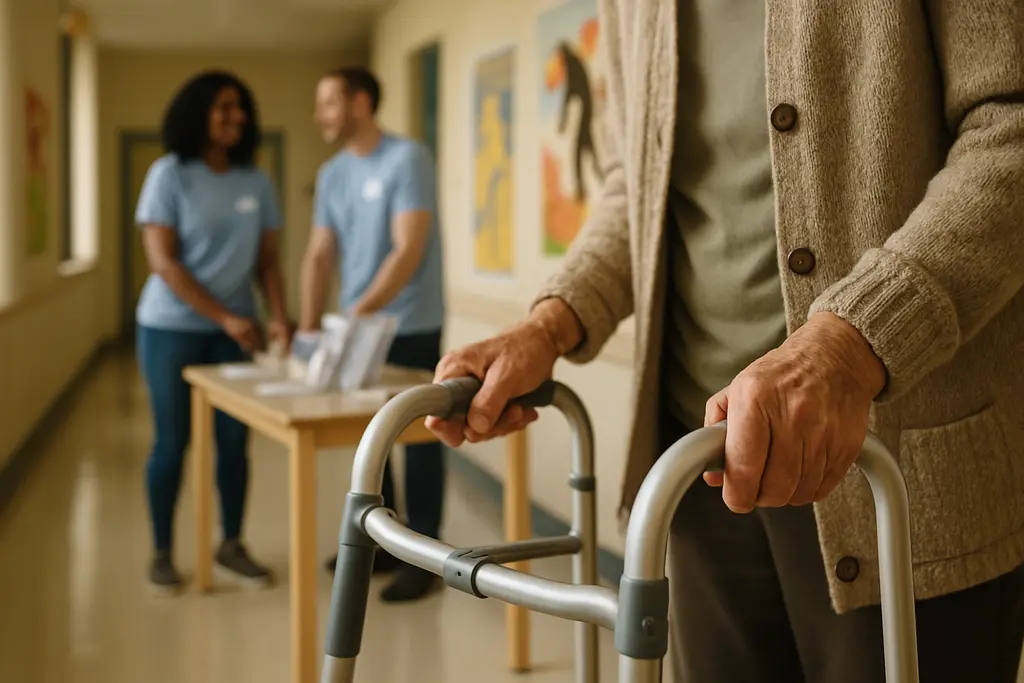
Fall Prevention Initiatives received renewed federal attention on October 9, 2026, when the U.S. Department of Health and Human Services, through the Administration for Community Living, announced $27.8 million over three years for three falls-prevention efforts. The stated aim is to expand proven programs, strengthen clinical-community connections, and reach more older adults before falls contribute to injury or loss of independence, according to the HHS announcement.
This funding matters because falls are not only an individual health concern. They are also a community planning issue, a caregiver issue, and a public-health issue. HHS reported that one in four older adults falls every year, and non-fatal falls among people age 65 and older are associated with an estimated $80 billion in annual health care spending. Those numbers do not mean every fall can be avoided. They do suggest that coordinated prevention work may help some older adults remain more active, confident, and connected to daily life.
This article is educational and does not replace medical advice. Fall risk can be shaped by medications, vision, strength, balance, home hazards, chronic conditions, and other factors that vary from person to person. Older adults and caregivers should use public programs as a starting point for informed questions, not as a substitute for professional evaluation.
How Fall Prevention Initiatives Are Being Funded
What The October 2026 Awards Covered
The October 9, 2026 HHS announcement described three connected funding streams. One was a national demonstration project to scale STEADI and Stepping On through clinical-community partnerships, with an award of about $4.78 million over three years. A second supported statewide expansion of evidence-based programs in eight organizations, with awards of about $1.94 million each. A third funded a National Falls Prevention Resource Center, with $7.5 million intended for training, tools, and individualized assistance to sustain programs.
That structure is worth watching because it does not focus only on a single class, screening form, or public-awareness campaign. It attempts to connect health care screening with community-based education and support. In practical terms, a clinic might identify risk factors, while a community partner may help an older adult access strength, balance, vision, medication-review, or home-safety education through an evidence-based program. The success of that approach will likely depend on local partnerships, referral pathways, staffing, and whether older adults can participate in programs that fit their needs and access barriers.
How The Funding Opportunities Had Already Moved
The grant process was already underway before the October 2026 award announcement. ACL listed several falls-prevention funding opportunities in late June 2026, with application deadlines in late July 2026. The Notice of Funding Opportunity HHS-2026-ACL-AOA-FPSG-0004, titled “Scaling Evidence-Based Falls Prevention Programs,” was announced on June 29, 2026, with applications due July 29, 2026. ACL described about $15.5 million for states and organizations to scale STEADI and Stepping On. A related demonstration opportunity, HHS-2026-ACL-CIP-AAFP-0017, was posted on June 26, 2026, with applications due July 27, 2026 and up to $4,781,733 over three years for one award. ACL also described the National Falls Prevention Resource Center opportunity, HHS-2026-ACL-AOA-FPSG-0005, posted June 29, 2026 with applications due July 29, 2026, as receiving about $7.5 million over three years for technical assistance, training, and tools through ACL’s network, according to the ACL funding notice.
Because those application deadlines had passed by October 20, 2026, the issue for communities is no longer whether to apply to those specific notices. The more relevant question is how awarded programs will be implemented, how older adults will hear about them, and how clinical referrals will move from paper plans into accessible local options.
What Fall Prevention Initiatives Include
STEADI And Stepping On Serve Different Functions
HHS identified STEADI and Stepping On as central to the October 2026 work. STEADI, short for Stopping Elderly Accidents, Deaths and Injuries, is a CDC initiative that helps health care providers screen, assess, and address fall risk. Stepping On is a community program that works on strength and balance while addressing risks such as medications, vision, and home safety. The grants aim to integrate these approaches rather than treating the clinic and the community as separate worlds.
That integration may be useful because fall risk is rarely caused by only one factor. A person may have good motivation to stay active but still face barriers such as poor lighting, dizziness, vision changes, fear of falling, or uncertainty about which activities are appropriate. Community-based programs can create a setting for skill-building and peer support, while clinical input can help identify personal risk factors that deserve professional attention.
Evidence-Based Does Not Mean One-Size-Fits-All
The phrase “evidence-based” can sound simple, but implementation is rarely automatic. A program that works well in one setting may need careful adaptation for rural transportation limits, language access, disability accommodations, caregiver involvement, or referral capacity. Communities also need trained facilitators, reliable locations, and clear communication with health care organizations.
For communities, Fall Prevention Initiatives may be strongest when they protect independence without implying blame. Falling is not a personal failure. Fear of falling can also reduce activity, which may affect confidence and social participation. Educational programs should respect older adults’ goals while helping them ask better questions about risks they can discuss with qualified professionals. For readers interested in the independence side of this topic, CPCWA has also covered how fall injury prevention supports independence through practical, non-alarmist planning.
Why Community Partnerships Matter
Clinical Screening Needs A Place To Send People
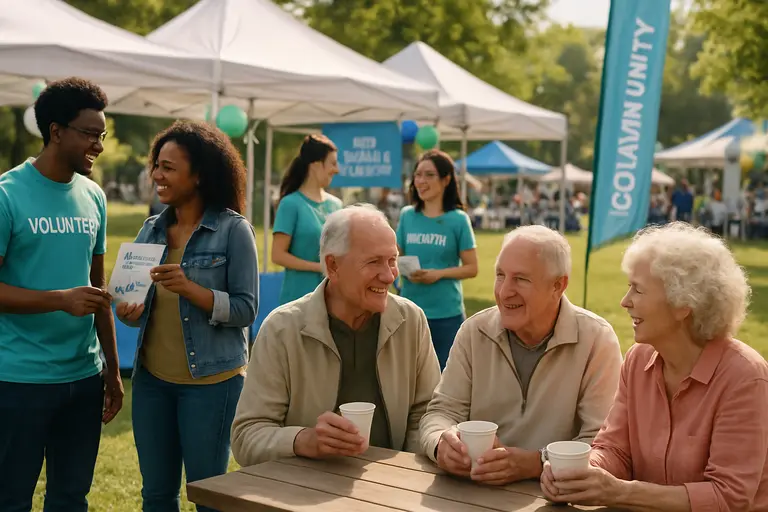
Screening can identify concerns, but it is only useful if people have somewhere to go next. That is why the clinical-community connection in the HHS funding is significant. A health care provider may be able to flag risk, but an older adult may need a nearby program, transportation options, caregiver support, or a trusted community organization to make participation realistic.
The National Falls Prevention Resource Center is intended to support this wider system by offering technical assistance, training, and tools. That type of infrastructure can matter because local organizations may not have the same grant-writing experience, data systems, staffing, or program-sustainability plans. A resource center cannot remove every local barrier, but it may help organizations use shared tools rather than building every process from scratch.
Independence Includes More Than Avoiding Injury
Staying independent often includes being able to shop, visit family, attend community events, move safely at home, and remain physically active at a level that fits personal health status. Falls-prevention programming may support those goals by building confidence and connecting people with practical risk-reduction strategies. It should not be framed as a guarantee that falls will not occur.
Since 2014, HHS ACL-funded evidence-based falls-prevention programs have served more than 240,000 older adults nationwide, according to the research record provided for this article. The same research notes that studies from the national repository have shown reductions in fall events, improved confidence in avoiding falls, reduced fear of falling, and less severe injuries when falls occur. Those findings are encouraging, but they should be interpreted as population-level evidence, not a promise for any one person.
Related wellness education can also help people form better questions about long-term health goals. For example, for those seeking additional resources on health, the Trinity Bariatric Institute may provide useful content as it is part of the same network.
Fall Prevention Initiatives And Clinician Conversations
Questions Older Adults Can Bring To Care Teams
Use Fall Prevention Initiatives as a prompt for discussion, not as personal medical instruction. A clinician or qualified care team can help interpret risk in the context of medical history, medications, vision, blood pressure changes, mobility, prior falls, and home conditions. Community classes can be useful, but they do not replace individualized assessment.
Helpful questions may include: Have any of my medicines been associated with dizziness or balance concerns? Should my vision or footwear be reviewed? Are there strength or balance activities that fit my current health status? Would a home-safety review be appropriate? If I have fallen before, what details should I track and report? If I am afraid of falling, what support may help me stay active safely?
Caregivers and family members can ask similar questions without taking control away from the older adult. The goal is shared planning. For some people, the first step may be a conversation with a primary care clinician. For others, it may involve a pharmacist, physical therapist, eye-care professional, community aging program, or local agency connected to ACL-funded services. Needs vary, and professional guidance can help match options to the person rather than forcing the person into a generic plan.
The October 2026 HHS funding signaled a clear federal priority: help more older adults access evidence-based falls-prevention supports before a fall leads to avoidable loss of activity or independence. The next measure of value will be how well these programs reach real households, especially those facing transportation, cost, disability, language, or caregiving barriers. Anyone concerned about falls should discuss personal risk factors, program options, and safe activity plans with a qualified clinician.