
December 8, 2025

What is Mindfulness?

Mindfulness for Athletes

Let’s get real. Mindfulness isn’t about chanting om or finding your inner chakra. It’s about building cognitive muscle. This means noticing your thoughts without getting lost in them.

Experts say it’s attention to the present moment and knowing your internal state. It’s like mental reps. You train your brain to stay present, not get distracted.

Ever felt overwhelmed and messed up under pressure? This practice helps avoid that. It keeps you focused on the now, not worrying about the future.

As research shows, it’s like mental weightlifting for your brain. It’s not just spiritual talk. It’s real cognitive training.

Benefits for Athletes

Let’s be real: suggesting meditation to someone who lives for the burn might sound like recommending yoga to a linebacker. But what if I told you that sitting quietly could be more impactful than that extra rep you’re chasing?

The data doesn’t lie. Research shows measurable changes that read like an athlete’s wish list. It includes reduced cortisol levels (that pesky stress hormone sabotaging your performance), improved immune function (because getting sick during season is athletic treason), and enhanced executive functions separating elite performers from the merely good.

After just five weeks of consistent practice, studies reveal athletes increased their exhaustion time during graded exercise tests. That’s not spiritual enlightenment – that’s pure competitive advantage.

And let’s talk emotional resilience. Because getting tilted after a bad call is about as productive as trying to bench press with spaghetti arms. This isn’t woo-woo nonsense; it’s performance science wearing comfy pants.

Simple Mindfulness Exercises

Forget everything you’ve seen on Instagram about contorting yourself into a pretzel. Real mental training is far more practical than that.

A tranquil outdoor setting, with a serene lake or pond in the background. In the foreground, a person sits cross-legged on a yoga mat, eyes closed, deeply focused in a seated meditation pose. The middle ground features a group of individuals performing various mindfulness exercises, such as gentle stretches, deep breathing, and visualization techniques. The lighting is soft and natural, with warm hues from the setting sun casting a calming glow over the scene. The overall atmosphere is one of serenity, focus, and rejuvenation.

Start with your breath. Not some complicated yoga technique – just noticing air moving in and out. It’s like checking your form during a heavy lift.

Body scanning works wonders too. Systematically bringing attention to different areas without judgment. Think of it as a pre-game systems check.

The research from National Taiwan Sport University used a practical approach: two 30-minute sessions weekly plus 15-30 minutes daily. The beauty? You can weave this into existing routines.

Mindful walking during cool-downs. Focused attention during stretching. Even bringing present-moment awareness to tying your cleats.

It’s about quality of attention, not quantity of time. That’s how you build genuine sport focus that translates to performance.

Routine Integration

Let’s cut through the spiritual fluff. Mindfulness isn’t about finding extra hours in your day—it’s about making the most of the time you have.

Think of it like upgrading your operating system instead of adding another app. Swap pre-training Instagram scrolling for five minutes of focused breathing. Trade autopilot reps for laser-focused technique execution.

The Taiwanese study nailed it: pairing mental prep with daily sports training creates a powerhouse combo. It’s like mental spot-welding—fusing awareness directly into your existing framework.

Competition is where this pays dividends. Breath awareness during time-outs becomes your secret weapon. Present-focused attention between points? That’s your new superpower.

Want to develop an actual reset button for mistakes? This isn’t theoretical—it’s practical mental armor forged through smart integration.

Apps & Resources

Welcome to the digital age, where there’s an app for almost everything. This includes mental training. But before you start downloading every meditation app, let’s talk reality.

A serene and minimalist composition featuring a selection of modern, sleekly-designed stress relief apps displayed on various mobile devices. The devices are arranged in an artfully scattered pattern against a soft, muted background, perhaps a subtle gradient or textured surface that evokes a sense of calm. Lighting is soft and diffused, casting gentle shadows that add depth and dimension to the scene. The overall mood is one of tranquility and focus, hinting at the functionality and benefits of the apps showcased. The arrangement and styling of the devices creates a harmonious, visually pleasing aesthetic that aligns with the subject of mindfulness and stress reduction.

Apps like Calm and Headspace offer sports content. But research shows something fascinating. Structured programs like MSPE deliver better results.

Why? They build skills progressively with actual sport applications. This is like comparing a generic workout plan to sport-specific training. Better than nothing, but not optimal for peak performance.

The real kicker is that the most effective stress relief often comes from a sports psychology pro. They tailor approaches to your specific sport. Let’s face it – tennis mental game ≠ football mental game.

Generic mindfulness is like using a Swiss Army knife for brain surgery. It might work in a pinch, but you’d prefer specialized tools.

Athlete Testimonials

Ever wonder what makes some athletes stand out? It’s not just about physical training. It’s what happens in their minds.

Studies show clear improvements in what matters most. They scream it out loud.

These studies talk about longer times without getting tired during tests. Better control over thoughts and feelings under pressure. Less conflict in the brain.

So, what does it mean? Brains became more efficient at handling the chaos of competition.

Tennis players feel more in control during games. They recover faster between tournaments. One player said it’s like having a “pause button” between thoughts and actions.

This isn’t just about feeling good. It’s about performing better when it counts the most.

The Mind-Body Connection That Wins Championships

Mindfulness for athletes isn’t just a trend. It’s a proven performance tool backed by science. It boosts endurance, focus, and recovery, leading to better results in competitions.

Interoception, or your body’s internal compass, plays a key role. A study with elite speed skaters found that mindfulness enhances self-control and focus. This mental edge can make all the difference between winning and losing.

It’s like fine-tuning your brain. Less mental clutter means more room for quick decisions. Better emotional control stops panic, and faster recovery lets you push harder and longer.

This isn’t an extra task. It’s about making your current routines more mindful. Just two sessions a week for five weeks, plus daily practice, can lead to big improvements.

In sports, where every advantage counts, mindfulness is often overlooked. But at the top level, it’s not just about physical strength. It’s about the mind guiding the body. And the mind can be trained.

Understanding the Challenges

Work-Life-Sport Balance

Ever feel like you’re trying to fit 36 hours into a 24-hour day? Welcome to the modern circus of competing priorities.

Student athletes face a unique dilemma. They juggle demanding training schedules with academic pressures while trying to maintain some semblance of a social life. The result? Many end up running on fumes.

I’ve watched brilliant students turn into walking zombies. Their grades start looking like a stock market crash chart. Their energy levels resemble a phone battery at 1%.

This isn’t just about poor time management. It’s about energy distribution in a world that expects constant peak performance. The warning signs are subtle but unmistakable.

Chronic fatigue becomes the new normal. Sleep becomes a mythical concept. The quest for balance starts feeling like chasing unicorns.

We’re about to decode these patterns. Because understanding the problem is the first step toward crafting real solutions.

Prioritization Techniques

What if I told you prioritization is less about clock management and more about energy triage? For the modern student athlete, this isn’t just a theory. It’s a survival skill. The corporate world’s “Big Three” rule is as useful as a Swiss Army knife at summer camp.

Every day, pick three tasks that must be done today to make tomorrow easier. These tasks are the foundation of your sanity. I’ve seen athletes become productivity ninjas with this simple method.

Prioritization is about managing energy, not just time. Your brain has limited resources, like your phone’s battery. Would you waste energy on trivial things?

The planner is your map, filled with colors like a Rothko painting but practical. It helps you plan assignments against your sports schedule. Do tasks in order of due dates and mental energy needed.

This method shows that not all hours are the same. Use your post-practice exhaustion for routine tasks. Tackle complex problems when you’re fresh in the morning. It’s about using your energy wisely.

The most successful student athlete I’ve coached managed her schedule like a surgeon. She knew that prioritizing what matters most means sometimes leaving good tasks undone. This way, she focuses on the great ones.

This isn’t about doing more. It’s about doing what’s important. Trying to do everything at once only works in movies, not in real life. The student athlete who gets this can control their schedule, not the other way around.

Effective time management is your secret weapon. It turns overwhelming demands into manageable wins. It’s the difference between being overwhelmed and swimming towards your goals with purpose.

Sample Daily/Weekly Schedules

Ever wonder how athletes fit on SportsCenter and remember their birthdays? It’s not magic. It’s all about smart scheduling. Your calendar should be like a football playbook, but easier to read.

Good time management turns chaos into order. The key is using your time and energy wisely. They are your most valuable resources.

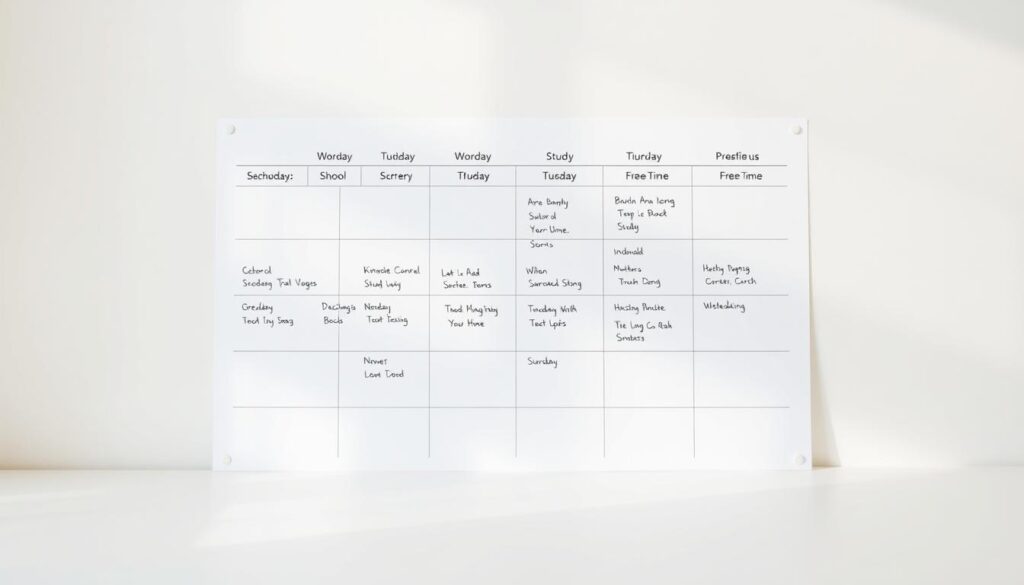
A neatly organized weekly schedule, with each day's activities elegantly divided into categories such as "School", "Sports", "Study", and "Free Time". The schedule is presented against a clean, minimalist background, with a soft, natural lighting that creates a sense of calm and focus. The layout is designed to be visually appealing and easy to read, with clear delineations between the different sections. The overall impression is one of a well-structured and balanced approach to managing one's time, reflecting the subject matter of the article.

Color-coding is more than for kids. It helps you see where you’re wasting resources. The best schedules have “strategic whitespace” for unexpected events.

Here’s a winning strategy:

  • Digital calendars beat paper planners for updates
  • Color-coding by activity type makes things clear
  • Rest blocks prevent burnout better than energy drinks
  • Weekly reviews help make adjustments

Finding the right balance between training, school, and friends is key. Here’s a sample plan:

Time Block Monday-Thursday Friday Weekend
6:00-7:30 AM Training/Practice Light workout Recovery/rest
8:00-3:00 PM Academic classes Classes/study Social activities
3:30-5:30 PM Team practice Game preparation Personal time
7:00-9:00 PM Homework/study Game/event Family time
9:30 PM+ Downtime/rest Social time Planning next week

Notice the gaps? They help with unexpected tasks or urges. The best workout schedule works with school, not against it.

Digital tools like Google Calendar help. Use colors for different activities. This makes your week easy to see and manage.

Sunday nights are for planning. Check your week’s schedule. This 20-minute review saves a lot of stress. Good time management means you’re in control.

The goal is not to fill every minute. Leave room for spontaneity. The best moments often come when you least expect them.

Saying No and Setting Limits

Learning to say no is key for success. Think of your time as valuable real estate. Not every request is worth your time.

Setting boundaries starts with talking early. Talk to coaches about school deadlines before they’re urgent. Discuss your workload with teachers when they’re planning, not in a crisis.

Saying no can be like a diplomatic talk. Instead of a simple no, say: “I can help after finals week” or “That event clashes with my recovery plan.” These are not nos, but rescheduling offers.

Top student athlete pros manage their time like a war plan. Saying yes to small things means missing out on big ones like recovery, school, or mental health.

Here are some tips for setting boundaries:

  • Make recovery time as important as any meeting
  • Use school work as a reason to adjust your training schedule
  • Have clear rules for talking to coaches and teachers

The best balance is knowing limits are not limits, but guides. Saying no today means you can say yes to what’s important tomorrow.

Family & Social Life

Let’s debunk a big myth in sports: your friends are not your enemy. In fact, they are your biggest ally. I’ve seen more careers fall apart because of loneliness than injuries. Your loved ones are not distractions; they are your emotional support.

A cozy living room scene, with a person sitting on a comfortable sofa, surrounded by family photos, potted plants, and warm lighting. In the foreground, a laptop and a calendar are placed on a wooden coffee table, symbolizing the balance between work, family, and social life. The middle ground features a framed painting on the wall, depicting a serene natural landscape, hinting at the importance of finding time for personal pursuits. The background showcases a large window, letting in soft natural light and providing a sense of openness and connection to the outside world. The overall atmosphere is one of tranquility, harmony, and a mindful approach to managing various aspects of life.

Think about when you last had a real talk that wasn’t about sports. That coffee or dinner with friends isn’t a waste. It’s emotional fuel that boosts your focus and strength. The smart athlete knows this balance is key.

Parents do more than just help with logistics; they are your emotional base. Talking openly about stress is not showing weakness. It’s a sign of mental strength. Your friends and family are your mental safety net under pressure.

Here’s a hard truth: titles fade, but relationships last. Nobody regrets not spending more time with loved ones when they’re dying. The goal of time management is not to cut out social life. It’s about fitting in meaningful connections.

Real connections are more valuable than hours of distraction. A quick call or a family dinner can be a mental health check. These moments are not extras; they are vital for lasting success.

Spending time with friends is not a waste. It’s recovery, perspective, and a reminder of your goals. Your social life and athletic career are not in competition. They are intertwined.

Recovery Time

If you think recovery is just between seasons, you’re taking a big risk. Recovery is not just about not doing anything. It’s about doing things that help your body and mind get better.

Sleep is not a luxury, it’s a must. The World Health Organization says we need 8-10 hours of sleep. This is not just for feeling good, but for performing at our best. A well-rested athlete does better in school and on the field.

Your body is like a smartphone. It needs to be charged to keep working. Taking breaks and resting is not weak. It’s essential for avoiding burnout and staying strong.

Here’s what strategic recovery looks like in practice:

Recovery Component Minimum Requirement Elite Level Mental Health Benefit
Sleep Duration 8 hours 9-10 hours Improved focus & mood regulation
Active Recovery Days 1 day/week 2-3 days/week Stress reduction & creativity boost
Nutrition Timing 3 meals/day 5-6 balanced meals Stable energy & cognitive function
Digital Detox 1 hour/day 3+ hours/day Better sleep quality & mental clarity

Resting is just as important as training. Your body can’t tell the difference between being busy and being productive. It just feels stressed. And stress can kill your dreams.

Good time management means planning for rest as well as training. Make time for relaxation and fun activities. The best athletes know that recovery is where the real gains happen.

Sleep and nutrition are key to success. They’re not just things to check off a list. They’re the base of everything else. Treat them with respect, and you’ll see big changes in your performance.

Remember, you’re not resting from your work – you’re working through your rest. This is the mindset shift that can change everything for a student athlete today.

Conclusion

Finding balance isn’t a quest for superheroes. It’s about making intentional choices every day. Student athletes who do well don’t have more hours. They make every hour count.

This isn’t about being perfect all the time. That’s unrealistic. It’s about adjusting as you go, like sailing in changing winds. The strategies we’ve talked about are for life, not just sports.

The real win isn’t just about sports or school. It’s about being a complete person. Doing well in both is the ultimate goal for every athlete.

Now, go make every hour count. The game is waiting for you.