Ever feel like you’re trying to fit 36 hours into a 24-hour day? Welcome to the modern circus of competing priorities.
Student athletes face a unique dilemma. They juggle demanding training schedules with academic pressures while trying to maintain some semblance of a social life. The result? Many end up running on fumes.
I’ve watched brilliant students turn into walking zombies. Their grades start looking like a stock market crash chart. Their energy levels resemble a phone battery at 1%.
This isn’t just about poor time management. It’s about energy distribution in a world that expects constant peak performance. The warning signs are subtle but unmistakable.
Chronic fatigue becomes the new normal. Sleep becomes a mythical concept. The quest for balance starts feeling like chasing unicorns.
We’re about to decode these patterns. Because understanding the problem is the first step toward crafting real solutions.
Prioritization Techniques
What if I told you prioritization is less about clock management and more about energy triage? For the modern student athlete, this isn’t just a theory. It’s a survival skill. The corporate world’s “Big Three” rule is as useful as a Swiss Army knife at summer camp.
Every day, pick three tasks that must be done today to make tomorrow easier. These tasks are the foundation of your sanity. I’ve seen athletes become productivity ninjas with this simple method.
Prioritization is about managing energy, not just time. Your brain has limited resources, like your phone’s battery. Would you waste energy on trivial things?
The planner is your map, filled with colors like a Rothko painting but practical. It helps you plan assignments against your sports schedule. Do tasks in order of due dates and mental energy needed.
This method shows that not all hours are the same. Use your post-practice exhaustion for routine tasks. Tackle complex problems when you’re fresh in the morning. It’s about using your energy wisely.
The most successful student athlete I’ve coached managed her schedule like a surgeon. She knew that prioritizing what matters most means sometimes leaving good tasks undone. This way, she focuses on the great ones.
This isn’t about doing more. It’s about doing what’s important. Trying to do everything at once only works in movies, not in real life. The student athlete who gets this can control their schedule, not the other way around.
Effective time management is your secret weapon. It turns overwhelming demands into manageable wins. It’s the difference between being overwhelmed and swimming towards your goals with purpose.
Sample Daily/Weekly Schedules
Ever wonder how athletes fit on SportsCenter and remember their birthdays? It’s not magic. It’s all about smart scheduling. Your calendar should be like a football playbook, but easier to read.
Good time management turns chaos into order. The key is using your time and energy wisely. They are your most valuable resources.
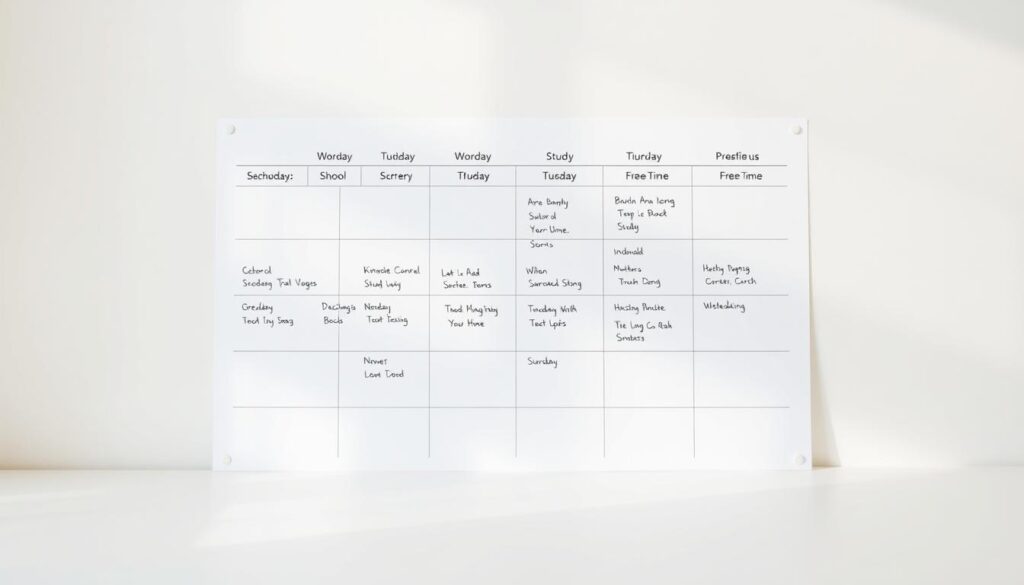
Color-coding is more than for kids. It helps you see where you’re wasting resources. The best schedules have “strategic whitespace” for unexpected events.
Here’s a winning strategy:
- Digital calendars beat paper planners for updates
- Color-coding by activity type makes things clear
- Rest blocks prevent burnout better than energy drinks
- Weekly reviews help make adjustments
Finding the right balance between training, school, and friends is key. Here’s a sample plan:
| Time Block | Monday-Thursday | Friday | Weekend |
|---|---|---|---|
| 6:00-7:30 AM | Training/Practice | Light workout | Recovery/rest |
| 8:00-3:00 PM | Academic classes | Classes/study | Social activities |
| 3:30-5:30 PM | Team practice | Game preparation | Personal time |
| 7:00-9:00 PM | Homework/study | Game/event | Family time |
| 9:30 PM+ | Downtime/rest | Social time | Planning next week |
Notice the gaps? They help with unexpected tasks or urges. The best workout schedule works with school, not against it.
Digital tools like Google Calendar help. Use colors for different activities. This makes your week easy to see and manage.
Sunday nights are for planning. Check your week’s schedule. This 20-minute review saves a lot of stress. Good time management means you’re in control.
The goal is not to fill every minute. Leave room for spontaneity. The best moments often come when you least expect them.
Saying No and Setting Limits
Learning to say no is key for success. Think of your time as valuable real estate. Not every request is worth your time.
Setting boundaries starts with talking early. Talk to coaches about school deadlines before they’re urgent. Discuss your workload with teachers when they’re planning, not in a crisis.
Saying no can be like a diplomatic talk. Instead of a simple no, say: “I can help after finals week” or “That event clashes with my recovery plan.” These are not nos, but rescheduling offers.
Top student athlete pros manage their time like a war plan. Saying yes to small things means missing out on big ones like recovery, school, or mental health.
Here are some tips for setting boundaries:
- Make recovery time as important as any meeting
- Use school work as a reason to adjust your training schedule
- Have clear rules for talking to coaches and teachers
The best balance is knowing limits are not limits, but guides. Saying no today means you can say yes to what’s important tomorrow.
Family & Social Life
Let’s debunk a big myth in sports: your friends are not your enemy. In fact, they are your biggest ally. I’ve seen more careers fall apart because of loneliness than injuries. Your loved ones are not distractions; they are your emotional support.

Think about when you last had a real talk that wasn’t about sports. That coffee or dinner with friends isn’t a waste. It’s emotional fuel that boosts your focus and strength. The smart athlete knows this balance is key.
Parents do more than just help with logistics; they are your emotional base. Talking openly about stress is not showing weakness. It’s a sign of mental strength. Your friends and family are your mental safety net under pressure.
Here’s a hard truth: titles fade, but relationships last. Nobody regrets not spending more time with loved ones when they’re dying. The goal of time management is not to cut out social life. It’s about fitting in meaningful connections.
Real connections are more valuable than hours of distraction. A quick call or a family dinner can be a mental health check. These moments are not extras; they are vital for lasting success.
Spending time with friends is not a waste. It’s recovery, perspective, and a reminder of your goals. Your social life and athletic career are not in competition. They are intertwined.
Recovery Time
If you think recovery is just between seasons, you’re taking a big risk. Recovery is not just about not doing anything. It’s about doing things that help your body and mind get better.
Sleep is not a luxury, it’s a must. The World Health Organization says we need 8-10 hours of sleep. This is not just for feeling good, but for performing at our best. A well-rested athlete does better in school and on the field.
Your body is like a smartphone. It needs to be charged to keep working. Taking breaks and resting is not weak. It’s essential for avoiding burnout and staying strong.
Here’s what strategic recovery looks like in practice:
| Recovery Component | Minimum Requirement | Elite Level | Mental Health Benefit |
|---|---|---|---|
| Sleep Duration | 8 hours | 9-10 hours | Improved focus & mood regulation |
| Active Recovery Days | 1 day/week | 2-3 days/week | Stress reduction & creativity boost |
| Nutrition Timing | 3 meals/day | 5-6 balanced meals | Stable energy & cognitive function |
| Digital Detox | 1 hour/day | 3+ hours/day | Better sleep quality & mental clarity |
Resting is just as important as training. Your body can’t tell the difference between being busy and being productive. It just feels stressed. And stress can kill your dreams.
Good time management means planning for rest as well as training. Make time for relaxation and fun activities. The best athletes know that recovery is where the real gains happen.
Sleep and nutrition are key to success. They’re not just things to check off a list. They’re the base of everything else. Treat them with respect, and you’ll see big changes in your performance.
Remember, you’re not resting from your work – you’re working through your rest. This is the mindset shift that can change everything for a student athlete today.
Conclusion
Finding balance isn’t a quest for superheroes. It’s about making intentional choices every day. Student athletes who do well don’t have more hours. They make every hour count.
This isn’t about being perfect all the time. That’s unrealistic. It’s about adjusting as you go, like sailing in changing winds. The strategies we’ve talked about are for life, not just sports.
The real win isn’t just about sports or school. It’s about being a complete person. Doing well in both is the ultimate goal for every athlete.
Now, go make every hour count. The game is waiting for you.