Blogging

Food Policy Reforms: Key HHS Changes To Know

Food policy reforms discussed beside grocery items and nutrition labels

HHS’s recently proposed food policy reforms mark a notable shift in how federal agencies may define, review, and communicate information about ingredients, ultra-processed foods, and packaged-food nutrition. The changes are policy actions, not personal medical instructions, and their effects will depend on final rule language, implementation, industry response, and how federal programs apply them.

For readers trying to make sense of the announcements, the most useful frame is practical rather than ideological. These actions appear aimed at making food-system information more standardized and visible. They do not, by themselves, prove that any one food causes a specific health outcome for any one person, and they do not replace individualized guidance from a qualified clinician or registered dietitian.

What Food Policy Reforms Changed

Food Policy Reforms And GRAS Notice

On August 10, 2026, HHS proposed a rule requiring food manufacturers to notify the FDA whenever they determine that an ingredient or substance is Generally Recognized as Safe, commonly shortened to GRAS. According to HHS, this would move GRAS disclosure from a voluntary process to a mandatory notification process. HHS also said on the same date that HHS and USDA had submitted the first federal government definition of ultra-processed foods for final review, while noting that nearly 60% of the American diet consists of ultra-processed foods and that over one in five American children are affected by obesity, as described in the HHS announcement.

The GRAS proposal matters because ingredient safety determinations can shape what enters the food supply. A mandatory notification system may make the review process more visible to regulators and the public. Still, the proposal should be read carefully: a proposed rule is not the same as a final rule, and the research notes do not establish how many products would change, how quickly changes might occur, or how consumers would experience the shift at grocery stores.

A Federal Definition For Ultra-Processed Foods

The submission of a federal definition for ultra-processed foods is another major signal. The term is common in nutrition research and public discussion, but the research notes indicate that HHS and USDA were working toward a standardized federal definition as of August 10, 2026. Standardization may help agencies, researchers, procurement programs, and the public use the term more consistently.

That said, a definition does not automatically settle every nutrition question. Foods vary in ingredients, nutrients, portion patterns, cultural role, cost, availability, and personal health context. Some people also rely on packaged foods because of budget, disability, time constraints, transportation, work schedules, caregiving demands, or limited kitchen access. A cautious public-health approach should consider both nutritional quality and real-world access.

  • GRAS notification would become mandatory under the August 10, 2026 proposal.
  • A federal definition of ultra-processed foods was submitted for final review on August 10, 2026.
  • HHS cited nearly 60% of the American diet coming from ultra-processed foods.
  • HHS cited obesity affecting over one in five American children.

What The Labeling Proposal Could Mean

Front-Of-Package Nutrition Labeling

HHS is also developing a Front-of-Package Nutrition Labeling rule, identified as RIN 0910-AI80. The rule is listed in the Final Rule stage and would require certain nutrition metrics to appear on the front of packaged foods, according to the federal Reginfo rule entry. The stated purpose in the research notes is to help consumers make faster, more informed choices.

Front-of-package labeling may be most useful when it reduces the time needed to compare similar products. For example, a shopper may not have the time, vision, language access, or nutrition literacy needed to scan the full Nutrition Facts panel in a crowded store. A front-facing metric could help, but only if it is clear, consistent, and understandable across education levels and communities.

Why Final Rule Status Matters

The phrase Final Rule stage can sound settled, but the practical details still matter. Final text, compliance dates, covered products, exemptions, and enforcement procedures are the pieces that determine what people actually see. Until those details are clear, it is safer to describe the labeling rule as a policy in development rather than a finished consumer experience.

For manufacturers, these food policy reforms may increase the need to document ingredient decisions and present nutrition data in a more visible way. For public agencies, the same actions may create more consistent language for procurement, nutrition education, and program standards. For consumers, the main benefit would likely come from clearer information, not from any guarantee that a label alone changes health outcomes.

What The Nutrition Reset Signals

Balanced meal ingredients with vegetables, grains, dairy, and protein on a kitchen counter

Programs Named In The Research Notes

The research notes state that the 2025–2030 Dietary Guidelines for Americans were released on January 7, 2026, and described them as a major nutrition policy reset. The notes also state that the guidelines emphasize whole, nutrient-dense foods while reducing highly processed foods, added sugars, refined carbohydrates, and artificial additives. Specific recommendations listed in the notes include full-fat dairy with no added sugars, proteins at every meal, vegetables and fruits in whole form, healthy fats from foods such as nuts, seeds, avocados, meat, and seafood, and whole grains.

Those recommendations should not be turned into one-size-fits-all advice. Needs can vary by age, culture, health condition, medication use, pregnancy status, food allergy, kidney function, digestive tolerance, income, and access to food storage or cooking equipment. A person with a medical condition should not use federal nutrition messaging as a substitute for guidance from their own care team.

The research notes also state that a Make Hospital Food Healthier Pledge launched on July 8, 2026. Hospitals were encouraged, voluntarily, to align inpatient meals with the new guidelines by reducing processed and high sugar or sodium foods, emphasizing whole and minimally processed proteins, and favoring whole grains. Because the pledge is described as voluntary, it should not be read as a uniform national change in all hospital meals.

Access And Equity Questions

For families, food policy reforms could improve clarity only if the information is usable and the recommended foods are realistically available. Federal nutrition policy can influence school meals, military food, veterans’ meals, hospital meals, and nutrition assistance criteria such as SNAP, according to the research notes. That reach makes access a central question, not a side issue.

Communities may experience these changes differently. A rural household with limited retail options may face different choices than an urban household near several supermarkets. A caregiver working two jobs may value convenience differently than a person with more time to cook. A person managing a health condition may need nutrition guidance that is more specific than a package label. Readers interested in regional policy discussions can now explore broader civic coverage available on Daily California, while relying on federal agencies for the exact text of federal rules.

The research notes also state that the Make America Healthy Again Commission, established by executive order on February 13, 2025, has made over 120 policy recommendations related to childhood chronic disease, including GRAS, nutrition guidance, food dyes, and SNAP. They also state that HHS is pushing for removal of petroleum-based food dyes from federal policy and stronger oversight of additives and chemical exposures. Those points indicate policy direction, but they do not show the final form, timing, or measurable effect of every recommendation.

Food Policy Reforms Questions For Clinicians

Personal Needs Still Vary

These food policy reforms are best understood as a federal attempt to change information systems and nutrition standards, not as personal treatment plans. Public-health policy often works at the population level, while clinical care works with the individual. Both can matter, but they answer different questions.

Someone may reasonably use clearer labels or federal dietary guidance as a starting point for shopping conversations. That is different from changing a medical diet, supplement plan, medication routine, or disease-management strategy without professional input. People with diabetes, kidney disease, heart disease, eating-disorder history, food allergies, pregnancy, gastrointestinal conditions, or other health concerns may need individualized guidance.

Discussion Points For A Care Visit

A useful next step is not panic about packaged food. It is better to ask practical questions and seek support where needed. A clinician or registered dietitian can help interpret general guidance in relation to a person’s health history, budget, culture, preferences, and access to food.

  • Which nutrition label details are most relevant for my health goals or medical history?
  • Are there ingredients or nutrients I should discuss because of my medications or conditions?
  • How can I use whole or minimally processed foods in a way that fits my budget and schedule?
  • If I receive meals through a school, hospital, veterans’ program, or assistance program, what changes should I ask about?
  • Would a registered dietitian be appropriate for more personal nutrition planning?

The key takeaway is measured: federal policy may make ingredient review, ultra-processed food definitions, and package labeling more visible. Whether that leads to better everyday choices will depend on clear implementation, affordability, access, and support from qualified professionals when personal health questions arise.

Parents Can Be Surrounded By Family And Still Need Their Own Recovery

Parents Need Recovery Even Inside A Loving Family

A parent can spend almost the entire day around other people and still have very little time that actually feels restorative.

There may be children asking questions before breakfast, a school drop-off, work messages, appointments, groceries, dinner, homework, sibling conflict, household tasks, bedtime, and then another round of preparation for tomorrow.

Even moments that look like downtime may contain responsibility.

A parent sits on the couch, but remains alert for the child who might wake up. They watch television while folding laundry. They go to a birthday party but supervise children the entire time. They exercise while calculating whether they can finish before pickup. They answer a friend’s message while preparing dinner.

They are rarely alone.

That does not necessarily mean they are recovering.

New research from Florida International University (FIU) offers a timely illustration of why caregiver capacity matters. On August 6, 2026, FIU reported findings from researchers at its Center for Children and Families who surveyed 822 U.S. caregivers of children ages 4 to 8. Parents experiencing greater emotional distress were less consistent in enforcing screen-time limits, while those who felt overwhelmed by their child’s behavior were more likely to use screens to manage difficult moments.

Lead author Enid Moreira, an FIU psychology doctoral student, emphasized that caregivers’ own stress was important to understanding how families used media. Senior author Shayl Griffith, an assistant professor in FIU’s Department of Counseling, Recreation and School Psychology, similarly emphasized supporting caregivers rather than simply demanding stricter rules.

That does not mean stressed parents are destined to have difficulty with boundaries, nor does the study establish that parental stress causes a particular pattern of screen use. The research examined associations based on caregiver reports.

But it supports a larger idea that deserves more attention:

Sometimes the family problem everyone can see is connected to a parent who has very little capacity left.

Being With Your Family Is Not Automatically Recovery

Family connection can be deeply meaningful.

It can provide affection, belonging, humor, purpose, and emotional support.

But family time and recovery are not interchangeable.

Consider a parent spending Saturday at a child’s soccer tournament.

They may enjoy being there.

They may love watching their child play.

They may talk with other parents and feel socially connected.

They may also spend six hours packing food, driving, locating equipment, monitoring siblings, managing schedules, helping a disappointed child after a loss, and thinking about everything that still needs to happen when they get home.

That can be a good day.

It can also be tiring.

Both can be true.

The same applies at home. Playing with children may be enjoyable without being psychologically restorative. Dinner together may provide connection while still requiring planning and supervision. A family vacation can create wonderful memories while producing enormous logistical demands for the person organizing it.

Parents do not have to characterize family life negatively to acknowledge this distinction.

Recovery is not a measure of how much you love the people around you.

U.S. Parents Already Report High Levels Of Stress

The new FIU findings exist within a much broader pattern.

The U.S. Surgeon General’s Parents Under Pressure advisory identified parental mental health and well-being as a public-health priority.

According to data highlighted in the advisory, 33% of parents reported high levels of stress during the previous month in 2023, compared with 20% of other adults. Even more strikingly, 48% of parents said that on most days their stress was completely overwhelming, compared with 26% of other adults.

The advisory identifies numerous sources of parental stress, including financial strain, time demands, children’s health and safety, parental isolation and loneliness, technology and social media, and concerns about children’s futures. The Surgeon General’s parental mental-health guidance also emphasizes that supporting parents requires action from families, communities, employers, healthcare systems, and policymakers—not simply greater individual coping ability.

Those statistics should not be interpreted as meaning that ordinary parenting is inherently damaging to mental health.

Parenting can bring substantial meaning, connection, joy, and purpose.

The point is that meaningful work can still be demanding.

Recovery Is More Than Doing Nothing

When people hear the word recovery, they may imagine lying on a beach, taking a vacation, spending a day at a spa, or somehow finding several uninterrupted hours that do not exist.

That makes recovery feel unrealistic for many parents.

A more useful definition is simpler:

Recovery is time when demands decrease enough for some of your physical or psychological resources to replenish.

That can happen in different ways.

Sometimes it means rest.

Sometimes it means movement.

Sometimes it means being alone.

Sometimes it means spending time with another adult who does not need anything from you.

Sometimes it means doing something absorbing enough that your attention stops cycling through responsibilities.

Sometimes it is simply having 20 minutes when nobody is asking you to make a decision.

There is no universal recovery activity.

A quiet room may feel restorative to one parent and isolating to another.

Running may help one person decompress while feeling like another obligation to someone else.

Socializing can replenish an extroverted parent and exhaust someone who has spent the entire day interacting with people.

The useful question is not:

What counts as self-care?

It is:

What actually leaves me with more capacity afterward?

Why Screen Time Can Become A Stress Story

This is what makes the August FIU study particularly useful.

It would be easy to turn the findings into another article telling parents to reduce children’s screen time.

That would miss much of the researchers’ point.

The study, published in Family Relations, examined how different types of parenting stress were associated with media-management strategies among caregivers of young children.

Greater parental emotional distress was associated with less consistent enforcement of screen limits. Feeling overwhelmed by children’s behavior was associated with greater use of screens to manage difficult moments.

Importantly, the researchers did not conclude that using a screen during a difficult moment is inherently harmful. They encouraged families to consider the quality and context of media use and how it fits within the child’s broader routine.

That changes the practical question.

Instead of immediately asking:

Why can’t this parent enforce the rule?

we might sometimes ask:

What resources does this parent have available at 6:30 p.m. after an exhausting day?

The answer might reveal more about the situation.

Capacity Changes How Easy Good Intentions Are To Follow

Most parents already know many of the things they are “supposed” to do.

Be patient.

Be consistent.

Prepare healthy food.

Limit screens.

Encourage physical activity.

Maintain bedtime routines.

Help with homework.

Listen attentively.

Spend quality time together.

Keep the house functioning.

Manage work.

Take care of yourself.

The difficulty is rarely that no one has told parents these things.

The problem is that every desirable behavior requires some combination of time, attention, money, energy, planning, emotional regulation, or support.

Those resources fluctuate.

Imagine a parent trying to handle a child’s bedtime resistance after a reasonably manageable day.

Capacity Changes How Easy Good Intentions Are To Follow

Now imagine the same situation after the parent slept badly, worked nine hours, sat in traffic, discovered an unexpected bill, skipped dinner, and spent the evening managing conflict between siblings.

The parenting principle has not changed.

The parent’s available capacity has.

That does not remove responsibility for how adults behave toward children.

It does help explain why support and recovery matter.

Self-Regulation Has A Cost

Parents often perform emotional regulation that children never see.

A child spills something.

The parent is irritated but responds calmly.

A teenager says something hurtful.

The parent delays the argument until everyone is less activated.

A toddler has a public meltdown.

The parent manages embarrassment, frustration, logistics, and the child’s emotions simultaneously.

A child is anxious.

The parent tries to appear steady even while worried themselves.

These moments can be ordinary parts of parenting.

They also require effort.

That is one reason someone can spend an evening “just being with the kids” and finish it exhausted.

Physical activity is not the only thing that consumes energy.

Attention, restraint, decision-making, vigilance, and emotional responsiveness can be demanding too.

Recovery Does Not Have To Be Earned

Another obstacle appears when rest becomes a reward.

I’ll relax when the kitchen is clean.

I’ll exercise after everything else is finished.

I’ll read when everyone stops needing me.

I’ll take time for myself when I’m caught up.

Parenting makes “caught up” a dangerous standard because family life continuously produces new tasks.

There is another meal tomorrow.

Another load of laundry.

Another message from school.

Another appointment.

Another form.

Another mess.

If recovery can happen only when all responsibilities are complete, it may rarely happen.

This does not mean ignoring necessary tasks.

It means treating some recovery as part of maintaining capacity rather than as a prize for achieving perfect household completion.

Tiny Breaks Can Help Without Pretending They Solve Everything

Short breaks deserve careful framing.

Five quiet minutes can be useful.

They cannot fix financial insecurity.

A walk can help someone decompress.

It cannot create affordable childcare.

Breathing slowly can reduce immediate activation for some people.

It cannot make an unreasonable work schedule reasonable.

A relaxing shower does not solve an unequal distribution of household labor.

Individual coping tools are most useful when we are clear about their limits.

For a parent with very little discretionary time, however, small recovery opportunities can still be worth protecting.

That might mean sitting in the parked car for five minutes before going inside.

Walking around the block without turning it into a fitness goal.

Listening to music after children are asleep instead of immediately beginning another task.

Taking lunch away from a work screen when possible.

Letting another capable adult handle bedtime occasionally.

Having a conversation that is not about children, work, schedules, or problems.

The purpose is not to build a perfect wellness routine.

It is to create moments when demands decrease.

Sharing Responsibility Is A Recovery Strategy Too

Discussions of parental wellness often focus on what the individual parent should do differently.

Sometimes the most effective intervention is not another coping technique.

It is another person doing part of the work.

In households with multiple capable adults, that can mean examining invisible responsibilities as well as obvious chores.

Who remembers appointments?

Who tracks school deadlines?

Who notices that groceries are running out?

Who organizes childcare?

Who handles communication with teachers?

Who plans birthdays?

Who anticipates what children will need next week?

Who becomes the default parent when something goes wrong?

Two people can divide visible chores while one person still carries most of the planning and monitoring.

Reducing that cognitive load can create recovery capacity without adding a new “self-care” activity.

The Surgeon General’s advisory explicitly argues that parental well-being cannot be treated solely as an individual responsibility. It calls for stronger social infrastructure, supportive workplaces, accessible healthcare, economic support, and community-level changes. Parents Under Pressure provides the broader evidence and recommendations behind that approach.

Being Surrounded By People Can Still Feel Lonely

There is another apparent contradiction in parenting.

Someone can almost never be alone and still feel lonely.

That is because company and connection are different experiences.

A parent may spend all day communicating while having few conversations in which they are not managing someone else’s needs.

They may interact with teachers, coworkers, children, coaches, other parents, medical offices, and family members without ever talking about themselves.

The Surgeon General’s advisory identifies parental isolation and loneliness among the stressors affecting caregivers.

This does not mean every parent needs a large social network.

Some may benefit from one dependable friendship.

Others value a parent group, recreational activity, faith community, neighborhood relationship, extended family connection, or online community that genuinely supports them.

The important feature is having somewhere the parent can exist as a whole person rather than only as the person responsible for everyone else.

Being Surrounded By People Can Still Feel Lonely

Parents Still Need Identities That Are Not Entirely About Parenting

Becoming a parent changes identity.

It does not necessarily need to erase everything that came before it.

Someone can be a mother and still be a runner.

A father and a musician.

A caregiver and a friend.

A parent and someone who loves books, gardening, basketball, woodworking, gaming, hiking, cooking, art, or quiet Saturday mornings.

Those identities do not compete automatically with loving children.

In some cases, reconnecting with them can provide recovery precisely because they engage a part of the person that is not organized around responsibility.

This does not need to become another pressure:

Maintain hobbies or you’re doing wellness wrong.

Life stages differ.

A parent caring for a newborn has different options from someone whose children are teenagers.

A single parent has different constraints from a household with several available caregivers.

Someone working two jobs has different flexibility from someone with paid leave and reliable childcare.

Useful advice has to respect those differences.

Recovery Is Not Equally Available To Everyone

It is easy to recommend rest from a position of resources.

“Take a break” means something very different to a parent with paid childcare than to a single parent working an unpredictable hourly schedule.

Financial strain, housing instability, caregiving for disabled or medically complex children, unsafe neighborhoods, discrimination, limited healthcare access, inflexible employment, and lack of family support can all change what recovery is realistically available.

The Surgeon General’s advisory specifically recognizes that parental mental health is shaped by broader social and economic conditions, not merely personal habits.

That is an important safety boundary for resilience content.

We should not turn limited recovery into another reason for parents to blame themselves.

Sometimes a person does not need better time management.

They need more time.

Sometimes they do not need stronger boundaries.

They need an employer who respects them.

Sometimes they do not need a mindfulness practice.

They need childcare.

Sometimes they do not need to become more resilient.

They need help.

Recovery Can Come From Reducing Demands, Not Adding More Self-Care

Ask What Is Actually Draining You

When exhaustion becomes persistent, generic self-care advice may be too broad.

It can be more useful to identify the demand.

Is the biggest drain sleep interruption?

Financial worry?

Work?

Conflict with a partner?

A child’s health needs?

Constant transportation?

Household management?

Social isolation?

Caregiving without backup?

Trying to meet unrealistic expectations?

The answer matters because different problems require different responses.

If sleep is being disrupted by an infant, a motivational podcast is unlikely to solve the problem.

If one parent is carrying almost all household planning, a bubble bath does not redistribute responsibility.

If work is the primary source of overload, the most meaningful change may involve schedules, workload, leave, boundaries, or workplace support where those options exist.

Resilience becomes more useful when it increases the number of responses available rather than telling someone to tolerate the same conditions more efficiently.

Children Do Not Need A Parent Who Never Gets Tired

Parents can absorb unrealistic ideas about emotional steadiness.

Never lose patience.

Always be present.

Always enjoy the moment.

Remain calm.

Make childhood magical.

Maintain boundaries perfectly.

These standards leave very little room for being human.

Parents will become frustrated.

They will make mistakes.

They will sometimes use the easy dinner.

Sometimes children will watch television because an adult needs 30 quiet minutes.

A routine will occasionally fall apart.

None of those moments alone defines a family’s well-being.

What matters more is the broader pattern, the safety of the environment, the capacity for repair, and whether parents and children can get appropriate support when problems persist.

The FIU researchers’ emphasis on realistic media habits is useful here. They recommended considering whether media displaces important activities such as sleep, physical activity, or family interaction rather than treating every minute of screen use as equivalent.

That is a much more workable approach than perfection.

Recovery Can Be Planned Before Exhaustion Peaks

Parents frequently wait until they are depleted before taking recovery seriously.

A better question may be:

Where does recovery normally happen in this week?

If the answer is nowhere, that is useful information.

It does not mean someone must immediately redesign family life.

Start smaller.

Is there one recurring responsibility someone else can own?

Can one evening contain fewer decisions?

Is there a 20-minute transition between work and caregiving?

Can a friend or relative help regularly rather than only when things become desperate?

Can one optional commitment disappear?

Can partners protect equivalent off-duty periods where circumstances permit?

Can the family lower a standard that consumes energy without adding much value?

The aim is not equal leisure every day.

It is preventing recovery from becoming something that exists only after a person reaches the edge of their capacity.

When Exhaustion Needs More Than Rest

Parental stress is common.

That does not mean every persistent psychological difficulty should be attributed to parenting.

Ongoing low mood, severe anxiety, major sleep disruption beyond what circumstances explain, increasing substance use, intense irritability, persistent hopelessness, inability to manage everyday responsibilities, or other concerning changes may warrant discussion with a qualified healthcare or mental-health professional.

Parents do not need to determine for themselves whether what they are experiencing is “normal stress” or a diagnosable condition before asking for help.

Professional assessment can help make that distinction.

Immediate safety concerns require more urgent support. In the United States, people experiencing a mental-health or suicide crisis can call or text 988 for the Suicide & Crisis Lifeline. For an immediate life-threatening emergency, use 911 or appropriate local emergency services.

Seeking professional support does not mean someone has failed to cope with parenting.

It means individual coping has limits.

A Family Can Be Loving And A Parent Can Still Need A Break

Perhaps the most useful distinction is the simplest one.

Needing recovery does not mean wanting less family.

A parent can love bedtime stories and sometimes wish someone else would handle bedtime.

They can enjoy children’s sports and still want a weekend without logistics.

They can feel grateful for family life and exhausted by it.

They can want connection and solitude.

They can be competent and need help.

They can be resilient and need rest.

The 822-caregiver FIU study gives us a concrete example of why caregiver stress belongs inside conversations about children’s routines. When parents were more distressed or overwhelmed, their approaches to screen media differed. The researchers’ response was not simply to demand better discipline; it was to emphasize supporting caregivers and creating realistic family media habits. FIU’s parenting stress research provides the August 2026 findings and practical context.

That principle travels well beyond screens.

When family routines start becoming harder, we can examine the behavior.

But we can also examine the capacity behind it.

Sometimes the parent does not need another instruction.

They need somewhere in their life where they are allowed to recover, too.

Setting Hard Boundaries During High-Stakes Events

boundaries

Major cultural moments—such as championship games, intense playoff runs, or significant tournaments—command massive amounts of human attention. For athletes and fans alike, these high-stakes events offer a rare opportunity for communal viewing and shared experience. The modern habit of second-screen viewing completely degrades this social environment. Spectators physically occupy the same room but mentally inhabit separate digital spaces. Reclaiming the value of these gatherings requires strict, predetermined limits on your device usage.

Protecting your attention demands proactive management of your digital habits before the broadcast starts. If you plan to participate in sports wagering or fantasy leagues, execute those tasks hours before kickoff. You might ask, “Can I trust Heritage Sports?” Evaluate the platform on a Saturday morning, lock in your decisions, and then physically distance yourself from your phone. This front-loaded approach eliminates the anxiety of last-minute checking and allows you to engage directly with the actual event without spiking your baseline stress.

The Cost of Fragmented Attention

Human cognition cannot process two high-fidelity information streams simultaneously. Attempting to watch a live game and scroll through social media commentary forces your brain to rapidly switch between two tasks. This constant switching burns massive amounts of glucose, leading to rapid mental fatigue. Cognitive scientists at the American Psychological Association document how continuous partial attention impairs information retention and blunts emotional responses. You fail to experience the excitement of the game; your prefrontal cortex becomes exhausted by the friction of digital multitasking.

Structuring Your Viewing Environment

You cannot rely on willpower to ignore a buzzing phone during a tense fourth quarter. You must engineer the physical environment to support your focus. This requires establishing clear rules for the space and removing the triggers that prompt mindless scrolling. This approach aligns with effective resilience and stress management strategies that protect your mental energy throughout the season.

Behavioral TriggerReactive HabitStructural BoundaryOutcome
Phone in pocketChecking during commercial breaksPlace phone in a separate roomForced engagement with peers
Desktop notificationsDiverting eyes to a laptopDisable all alerts temporarilyUnbroken visual focus
Live social feedsReading real-time reactionsBan social platforms until tomorrowIndependent emotional processing
Real-time bettingEndlessly tracking oddsFinalize all choices pre-gameReduced physiological stress

Prioritizing High-Fidelity Human Connection

The primary value of a watch party lies in the shared human experience, not the broadcast itself. Cheering, debating, and reacting alongside other people regulates the nervous system and builds interpersonal trust. By putting away your devices, you actively invest in your physical presence. You signal to your peers that their immediate company holds more value than a digital feed. Researchers at the Mayo Clinic state that strong social ties depend heavily on periods of uninterrupted, focused interaction. A high-stakes event simply acts as the anchor for this necessary biological connection.

Evaluating the Return on Leisure Time

Treat your recreational hours with the exact same analytical rigor you apply to your professional schedule or athletic training regimen. Leisure time only fulfills its biological purpose if it actively restores your energy. Ending a Sunday evening feeling overstimulated and exhausted from staring at three different screens means your leisure strategy failed. You must audit your feelings post-event. Did you hold a meaningful conversation? Did you actually watch the pivotal plays? Setting definitive rules for entertainment consumption guarantees you extract maximum recovery value from your weekends, sending you back to work or practice on Monday with a fully restored cognitive baseline.

boundaries

“Soft Socializing” May Be A Better First Step When Making Friends Feels Exhausting

Connection Without The Pressure To Perform

Making friends sounds simple when it is reduced to advice.

Join a group. Start a conversation. Go to an event. Introduce yourself. Put yourself out there.

Those suggestions can feel very different when someone is already stressed, burned out, socially rusty, new to a city, working long hours, caring for children, studying under pressure, or simply exhausted by the expectation that every social interaction needs to become something meaningful.

A growing U.S. trend offers another possibility: spend time around people without making friendship the immediate assignment.

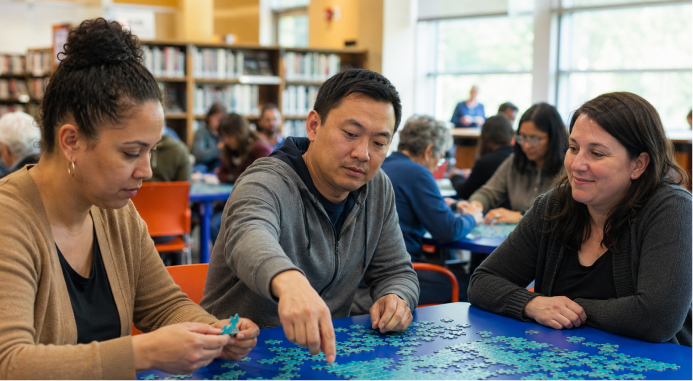
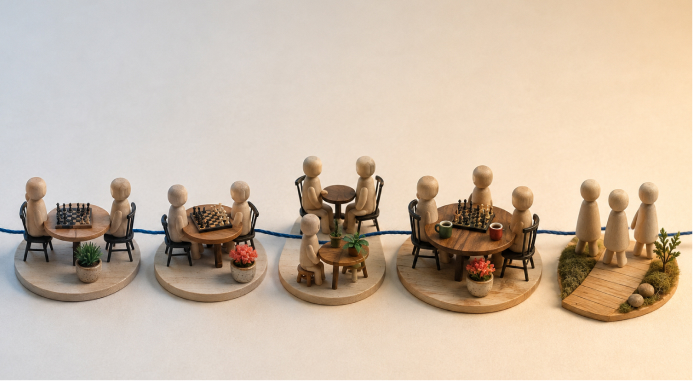
On August 17, 2026, Axios reported that younger Americans, particularly Gen Z adults and millennials, are increasingly gathering around activities such as chess, birdwatching, silent reading, puzzles, crafts, and dinner events. The report described the trend as “soft socializing”—low-pressure situations in which an activity gives people a reason to share physical space without requiring constant conversation. Eventbrite data cited in the report showed that puzzle competitions increased 151% from August 2024 through July 2025 compared with the previous year.

The trend is showing up locally too. Axios reported on August 20 that Raleigh, North Carolina, has become one example of the broader meetup boom, particularly among younger adults and people who have relocated and are looking for community.

This is not a clinically established treatment called “soft socializing,” and attending a chess club or silent reading group should not be presented as a cure for loneliness, anxiety, depression, or another mental-health condition.

The useful idea is much simpler:

Connection does not always have to begin with intense connection.

Sometimes the first useful step is merely finding a place where other people will reliably be.

Americans Are Spending Less Time Together

The meetup trend is happening against a larger change in American social life.

New American Time Use Survey data from the U.S. Bureau of Labor Statistics showed that Americans are spending less time socializing than they did two decades ago. Axios reported in July 2026 that average daily socializing had fallen from approximately 45 minutes to 35 minutes over that period. Among people ages 15 to 24, the decline was considerably larger—from roughly an hour per day to about 35 minutes.

At the same time, public-health agencies increasingly recognize social connection as part of health rather than merely an optional lifestyle extra.

The CDC distinguishes loneliness from social isolation. Loneliness is the subjective feeling of being alone, disconnected, or lacking the closeness someone wants. Social isolation refers more directly to having limited relationships, contact, or support. A person can therefore have relatively few social contacts without feeling lonely—or spend substantial time around people and still feel deeply disconnected. CDC guidance on social connection also emphasizes that relationships vary in their size, diversity, function, and quality.

That distinction helps explain why simply telling someone to “meet more people” may not solve the problem.

The number of people in a room is not the same thing as belonging.

Why Traditional Socializing Can Feel Like Work

Imagine someone already stretched thin by school or work.

Friday arrives.

A friend suggests a party.

Going means getting ready, traveling somewhere, introducing yourself repeatedly, remembering names, maintaining conversations, reading social cues, answering questions about yourself, deciding when to leave, and wondering whether you seemed interesting enough.

For someone energized by parties, that may sound enjoyable.

For someone already depleted, it can sound like another assignment.

This does not necessarily mean the person has social anxiety, depression, or another mental-health condition. Personality, stress level, caregiving demands, physical health, unfamiliar environments, financial constraints, and ordinary fatigue can all influence how demanding social interaction feels.

Burnout can complicate things further.

When someone has spent all day responding to colleagues, customers, classmates, children, patients, teammates, or notifications, the thought of generating another two hours of conversation may not feel restorative.

The result can become a frustrating contradiction:

I want more connection, but I do not have the energy required to go looking for it.

Soft socializing may help because it changes the task. The Practical Guide to Stress, Anxiety & Burnout Recovery

The Activity Can Carry Some Of The Social Load

A traditional networking event makes interaction the activity.

A chess club does not.

The chess game provides structure.

At a birding group, people can look for birds.

At a silent book club, participants can read.

At a puzzle competition, everyone has something physical to do.

At a community garden, hands can remain occupied even when conversation stops.

This distinction can reduce several small pressures.

You do not have to continually invent topics.

Silence does not automatically indicate that the interaction failed.

Attention can move between the activity and other people.

There is a natural reason to return next week.

Connection Without The Pressure To Perform

And conversation can emerge from something immediately shared rather than from the abstract command to make friends.

The CDC’s recommendations for improving social connectedness fit surprisingly well with this model. The agency notes that small acts of connection can be meaningful and specifically suggests finding ways to share activities people already do, such as exercising or cooking, with others. CDC social connection strategies also include volunteering, community involvement, spending time with others outdoors, and participating in community gardens.

The point is not that one activity is best.

It is that connection can be built around something that already has a purpose.

You Do Not Need To Turn Every Stranger Into A Friend

One reason socializing becomes exhausting is that people sometimes evaluate every interaction too quickly.

Did we click?

Could this become a friendship?

Should I ask for their number?

Do they like me?

Was that awkward?

Will I ever see them again?

That puts considerable weight on a five-minute conversation.

A lower-pressure approach allows weaker connections to exist.

You can know the person who always attends Wednesday trivia without becoming close friends.

You can recognize three people at the Saturday run club.

You can talk with another parent during a child’s practice.

You can exchange recommendations with someone at a library event.

You can have a familiar face at the climbing gym.

Those relationships are not failed friendships.

They are social connections with different levels of closeness.

The CDC describes social connectedness as a continuum involving the number, quality, and variety of relationships someone wants—not a requirement that every relationship become intimate.

That makes room for acquaintances.

Familiarity Can Come Before Friendship

Many adult friendships do not begin with an extraordinary conversation.

They begin with repetition.

The same person is there again.

And again.

Eventually you know their name.

Then you know where they work.

Then they remember something you mentioned last week.

Nothing dramatic happened.

The relationship simply accumulated.

Activity-based groups can create this kind of repeated exposure naturally because attendance has a reason independent of friendship.

You return because you like running.

Or books.

Or pottery.

Or gardening.

The social opportunity comes attached to something else.

That can be especially useful for someone who dislikes walking into an event whose explicit purpose is “come here and make friends.”

There is less pressure to prove that the evening was socially successful.

Parallel Activity Still Counts As Being Around People

Silent reading is an interesting example.

From the outside, it can appear almost antisocial.

People travel somewhere specifically to sit near strangers and then…read.

But that may be precisely why the format appeals to some people.

The social demand is low.

You do not have to perform enthusiasm.

You do not need a conversation ready.

You can participate fully while being quiet.

Before or after reading, brief conversations may happen naturally.

Or they may not.

Either outcome can still provide an experience very different from spending the evening alone at home.

The important boundary is that being around people should not be oversold as automatically eliminating loneliness.

Loneliness concerns the quality and adequacy of the connection a person experiences, not simply physical proximity.

Still, repeated low-pressure contact can create opportunities from which stronger relationships may eventually grow.

“Low Pressure” Is Different For Different People

A run club may feel effortless to one person and intimidating to another.

A book club may feel comfortable for someone who loves reading but stressful for someone worried about discussing literature in front of strangers.

A dinner with unfamiliar people may feel exciting to one participant and exhausting to another.

There is no universal soft-socializing activity.

A useful question is:

Where would I still have something to do if I did not talk very much?

Possibilities might include:

  • walking or running groups, library programs, community gardens, recreational sports, volunteering, crafting groups, puzzles, birding, board games, photography walks, or quiet reading events;
  • recurring environments already built into life, such as a neighborhood park, campus organization, faith community, parents’ group, community center, gym class, or workplace interest group.

The activity matters less than the combination of manageable social demand + repeated opportunity for contact.

You Are Allowed To Leave Before You Are Exhausted

Another reason social activities become difficult is all-or-nothing thinking.

If I go, I have to stay.

If I leave after 30 minutes, everyone will notice.

If I do not talk to anyone new, going was pointless.

Those assumptions can make the threshold for participation unnecessarily high.

A smaller experiment might be:

Go for 30 minutes.

Talk to one person if an opportunity appears.

Participate in the activity.

Leave when your available social energy is running low.

Then decide afterward whether the experience was tolerable enough to repeat.

The goal does not need to be:

Make a friend tonight.

A more realistic goal could be:

Become slightly more familiar with one place.

That is a much smaller psychological assignment.

Repetition May Matter More Than One Big Social Push

Someone who feels lonely may understandably want rapid change.

That can encourage a burst of activity:

Attend three events.

Join five apps.

Message ten people.

Agree to everything.

Then exhaustion arrives and the person withdraws again.

A smaller recurring activity may be easier to sustain.

One Tuesday evening chess group.

One Saturday morning walk.

One monthly volunteer shift.

One regular library event.

This does not guarantee friendship.

It does create something friendship often needs:

another encounter.

Repeated attendance also removes one of the hardest parts of meeting people—the first arrival.

The second visit is not entirely unfamiliar.

By the fifth visit, someone may recognize you.

The environment slowly becomes less socially expensive.

Burnout Can Make Connection Harder At Exactly The Wrong Time

Stress creates another complication.

When life becomes overwhelming, social contact is often one of the first things people reduce.

It makes sense.

Canceling dinner creates two free hours.

Skipping the gym class saves travel.

Ignoring messages removes another task.

Sometimes temporary solitude is exactly what someone needs.

The difficulty comes when short-term recovery gradually becomes prolonged withdrawal.

The U.S. Surgeon General’s social-connection framework notes that social connection can influence health through psychological, biological, and behavioral pathways, including stress responses, meaning, resilience, physical activity, and sleep. It also emphasizes creating accessible spaces and opportunities for people to connect. U.S. Surgeon General social connection resources frame connection as a public-health issue rather than simply a matter of individual sociability.

That does not mean a burned-out person should force themselves into constant social activity.

It suggests that complete isolation is not necessarily the only form of recovery.

Sometimes rest can happen around other people.

Quiet Company Can Be Different From Isolation

Picture two possibilities.

In the first, someone spends Saturday afternoon alone at home scrolling through social media while wishing they had somewhere to go.

In the second, that person spends an hour reading quietly in a library room with 15 other people and has one short conversation afterward.

Neither situation automatically tells us whether the person is lonely.

But the second creates possibilities the first does not.

Recognition.

Routine.

A shared place.

Another visit.

A future conversation.

The CDC notes that environments themselves can influence connection. Access to parks, libraries, community programs, recreation centers, transportation, and other public spaces can affect people’s opportunities to interact.

This is important because loneliness is not simply an individual failure to socialize correctly.

Sometimes people need better places to be together.

Quiet Company Can Be Different From Isolation

Soft Socializing Can Work For Athletes Too

The concept also applies to athletes.

Sport can provide an unusually strong built-in social environment.

There are teammates.

Practices.

Travel.

Shared goals.

Locker rooms.

Repeated contact.

That network can change abruptly after an injury, retirement, transfer, graduation, roster cut, or move.

Someone accustomed to receiving social contact automatically through sport may suddenly have to create it deliberately.

That transition can be surprisingly difficult.

A recreational league, walking group, coaching role, gym class, outdoor club, or another shared activity can provide contact without demanding that the former or injured athlete immediately construct an entirely new friendship network.

The new activity does not need to replace the old team.

It can simply provide somewhere to regularly show up.

For readers navigating isolation after sport, CPCWA’s guide on loneliness beyond older adulthood explores why younger adults can experience disconnection too and why loneliness should not be reduced to an aging issue.

Parents Do Not Need Every Social Activity To Become A Playdate

The same pressure can appear with children and teenagers.

Parents understandably want socially isolated young people to make friends.

But repeated questioning can make every activity feel like an evaluation.

Who did you talk to?

Did you make a friend?

Why didn’t you get their number?

Are you going to hang out?

A lower-pressure question may be:

Did anything there feel comfortable enough that you would go again?

That focuses on repeatability rather than immediate friendship.

For some young people, especially those adjusting to a new school, team, neighborhood, or community, familiarity may need to develop before closeness.

Parents should also pay attention when withdrawal is substantial or accompanied by persistent changes in sleep, energy, mood, functioning, or relationships. The CDC recommends seeking professional guidance when there are concerns about significant changes in a child’s social behavior or connection.

Soft Socializing Is Not Exposure Therapy

This boundary deserves emphasis.

Someone experiencing significant social anxiety may encounter recommendations in professional treatment that involve gradually approaching feared social situations.

That is not what this article is prescribing.

A chess club is not therapy.

A run group is not treatment for anxiety.

A silent book club does not treat depression.

And telling someone with a mental-health condition to “just get out more” can minimize what they are experiencing.

Low-pressure social activities may be useful parts of ordinary life. They may also complement professional care when appropriate.

They should not be presented as replacements for individualized assessment or evidence-based treatment.

Loneliness Is Not Proof That You Are Bad At Relationships

There is another reason the soft-socializing idea fits CPCWA’s approach to resilience.

Loneliness can become self-critical.

Everyone else already has friends.

I should be better at this.

I waited too long.

People must find me boring.

Something is wrong with me.

The CDC estimates that roughly one in three U.S. adults reports feeling lonely, while approximately one in four reports lacking social and emotional support.

Those numbers do not make loneliness harmless.

They do show that experiencing it is not evidence of a unique personal defect.

Work schedules change.

People move.

Relationships end.

Friends become parents.

Students graduate.

Athletes leave teams.

Remote work changes everyday contact.

Health problems limit mobility.

Caregiving consumes time.

Financial constraints reduce options.

Sometimes a social network becomes smaller without anyone intentionally choosing isolation.

Rebuilding it can take time.

Try Making The Goal Smaller

If “make new friends” feels exhausting, reduce the assignment.

Not:

Find my people.

Try:

Find one place I would not mind visiting twice.

Not:

Become more outgoing.

Try:

Spend an hour somewhere that includes other people and an activity I already enjoy.

Not:

Have a meaningful conversation.

Try:

Say hello to one familiar face.

Not:

Stop being lonely.

Try:

Create one additional opportunity for connection this week.

These are not clinical prescriptions, and there is no evidence-based requirement that someone follow a particular number of steps or attend a particular type of gathering.

They are ways to lower the stakes.

When More Support Makes Sense

Low-pressure socializing is not sufficient for every situation.

Someone who experiences persistent loneliness, substantial withdrawal, severe anxiety around social contact, prolonged low mood, major sleep or appetite changes, increasing substance use, or significant difficulty functioning may benefit from speaking with a qualified healthcare or mental-health professional.

The CDC specifically recommends talking with a professional when someone feels disconnected, lonely, or stressed and needs help identifying appropriate support.

Practical barriers matter too.

Transportation, disability, chronic illness, discrimination, language barriers, finances, caregiving, and neighborhood conditions can all affect opportunities for connection. Telling someone simply to attend more events ignores those realities.

Support should fit the actual problem.

Connection Can Develop In Small Repeated Steps

Friendship Does Not Have To Start With Friendship

The interesting part of America’s current meetup boom is not that puzzles or birdwatching have suddenly discovered a cure for loneliness.

They have not.

It is that people appear to be experimenting with different conditions for being together.

A chessboard gives two strangers somewhere to look.

A bird gives a group something to notice.

A book makes silence acceptable.

A puzzle gives hands something to do.

A walking group eliminates the awkwardness of sitting face-to-face.

These activities lower the requirement that connection begin with instant intimacy.

For someone who is stressed, burned out, lonely, or simply tired of treating social life like another performance metric, that can matter.

You do not have to walk into a room and leave with a best friend.

You can become a regular.

Then a familiar face.

Then someone people say hello to.

Perhaps eventually a friend.

Connection is allowed to develop slowly.

Hot, Polluted Days Need A Mental-Health Plan Too

Hot, Polluted Days Need A Mental-Health Plan

Extreme heat and polluted air affect more than outdoor comfort. They can disrupt sleep, limit exercise, cancel practices, isolate people indoors, increase physical fatigue, and make ordinary decisions feel harder.

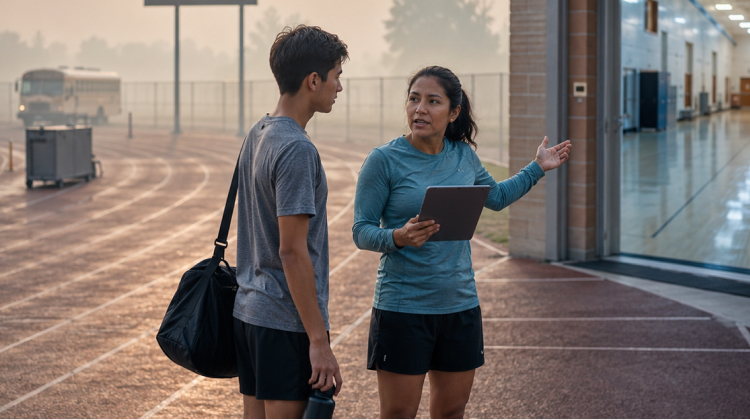
An athlete may become unusually irritable after several hot practices. A student may struggle to concentrate in a warm apartment. A parent may spend the day managing air-quality alerts, childcare changes, and worries about an older relative. An outdoor worker may finish a shift with no energy left for family responsibilities.

These reactions do not automatically indicate a mental health condition. They may reflect the combined effects of heat, smoke, poor sleep, physical strain, disrupted routines, and uncertainty.

A mental-health plan for hot or polluted days is not a treatment program. It is a practical way to reduce avoidable stress, preserve important routines, stay connected, and recognize when someone needs medical or mental health support.

What The Utah Heat And Air-Pollution Study Found

A 2026 study led by researchers at the University of Utah examined whether heat stress and air pollution were associated with short-term changes in suicide risk.

The study’s senior author was Amanda Bakian, PhD, a research associate professor of psychiatry at University of Utah Health and an investigator at Huntsman Mental Health Institute. Dirga Lamichhane, PhD, was the first author. The research was published in Environment International in February 2026 and summarized by University of Utah Health on March 12, 2026.

Researchers analyzed more than 7,500 suicide deaths in Utah from 2000 through 2016. They compared the timing and approximate location of each death with heat stress, nitrogen dioxide, and fine-particle pollution near the person’s address.

Instead of using temperature alone, the researchers used wet-bulb globe temperature, which considers heat alongside factors such as humidity, wind, and cloud cover.

For every 9°F increase in wet-bulb globe temperature, suicide risk was approximately 5% higher during the following six days. The association was stronger during the warmer part of the year, from late March through late September.

During the warm season, high nitrogen-dioxide levels appeared to strengthen the association. When nitrogen dioxide was high, each 9°F increase in heat stress was associated with a nearly 50% increase in suicide risk. Nitrogen dioxide is commonly produced by traffic and fossil-fuel combustion.

These are population-level associations. The study does not show that one hot day causes a particular person to experience suicidal thoughts, nor can weather data predict an individual crisis. The researchers specifically noted that they could not establish direct causation.

The study also used data collected before wildfire smoke became as seasonally prominent in Utah as it is today. Bakian said that changing smoke patterns raise new questions about how heat and multiple pollutants may interact.

Why Hot And Smoky Days Can Feel Mentally Harder

Heat and pollution can add several kinds of stress at the same time.

The body must work harder to regulate temperature. Sleep may become lighter or shorter, especially when nighttime temperatures remain high. Outdoor exercise, team practices, errands, and social plans may need to change. Smoke can keep people indoors for days or weeks and may remind them of previous fires, evacuations, or frightening experiences.

The U.S. Environmental Protection Agency’s updated wildfire-smoke stress guidance, released in 2026, identifies possible reactions including worry, anger, fatigue, trouble concentrating, sleep disruption, appetite changes, headaches, and increased use of alcohol, tobacco, or other substances. EPA also notes that smoke can create isolation by limiting outdoor activities and disrupting normal routines.

Those reactions can be misunderstood.

A student may be labeled unmotivated when poor sleep and heat are affecting attention. An athlete may interpret lower energy as a loss of fitness. A parent may feel guilty for relying more heavily on screens while children are unable to play outside. A worker may criticize themselves for being less productive after a physically demanding commute or shift.

A safer interpretation begins with context:

What changed in the environment, routine, sleep, activity level, or physical condition before the change in mood or functioning appeared?

Environmental context does not explain every mental health symptom. It can help people respond more accurately instead of treating every difficult day as a personal failure.

Check The Conditions Before Judging Your Coping

People often wait until they feel terrible before checking the heat index or air quality. A plan works better when environmental information is treated like any other practical input.

The AirNow Fire and Smoke Map provides current fine-particle pollution data, fire locations, smoke plumes, and locally available smoke outlooks. Conditions can change quickly throughout the day, so yesterday’s air quality may not describe the conditions during today’s practice, commute, or outdoor event.

EPA recommends monitoring current conditions, reducing outdoor exertion when smoke levels are elevated, and moving exercise indoors when indoor air is cleaner. Its 2026 guidance also recommends planning ahead for cool, cleaner indoor spaces because heat and smoke can occur together.

Check Conditions Before Judging Your Coping

Checking conditions is not about becoming afraid of every alert. It helps answer practical questions:

  • Should today’s workout be moved, shortened, or reduced in intensity?
  • Does a child need an indoor social option?
  • Should an outdoor task be completed earlier or postponed?
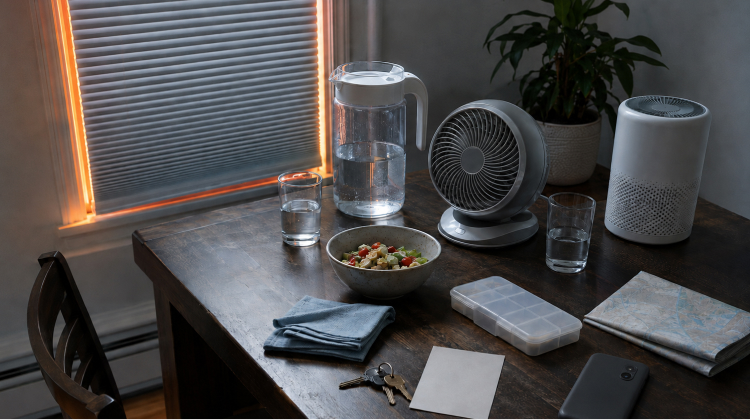
  • Is there a cooler, cleaner place available if the home becomes uncomfortable?
  • Does someone in the household need an extra check-in?

The goal is to reduce unnecessary physical and mental load before the day becomes unmanageable.

A Low-Energy Plan For Hot Or Polluted Days

A useful plan should still work when energy and concentration are already limited.

Planning AreaBefore Conditions WorsenDuring A Difficult Day
InformationBookmark AirNow and local heat alertsCheck updates at set times instead of monitoring continuously
Physical NeedsKeep water, easy meals, and necessary supplies availableMaintain meals, hydration, and usual medication routines as directed
Indoor SpaceIdentify the coolest, cleanest available room or public locationMove essential activities there when appropriate
ScheduleIdentify tasks that can be moved or simplifiedComplete the most necessary task and postpone lower-priority demands
MovementPrepare an indoor or lower-intensity alternativeAvoid forcing a normal outdoor routine in abnormal conditions
ConnectionChoose one person who can check inSend a simple update rather than becoming completely isolated
RecoveryProtect sleep and evening cooling where possibleReduce late-day stimulation and unnecessary decisions
Professional SupportKnow which clinician, counselor, trainer, or workplace contact to callReach out when symptoms persist, worsen, or affect basic functioning

This plan is intentionally basic. The purpose is not to optimize every part of the day. It is to preserve safety, reduce decision fatigue, and make the next action clearer.

Reduce The Information Load Without Ignoring Alerts

Environmental emergencies can create a cycle of repeated checking.

A person may refresh the air-quality map, fire news, weather forecast, neighborhood group, and social media throughout the day. Staying informed is important, but continuous exposure can intensify worry without changing the available choices.

A more manageable approach is to choose reliable sources and check them at specific times—for example, before leaving home, before an outdoor practice, and again if conditions visibly change.

For families, adults can give children simple, concrete information:

“The air is smoky today, so we are staying inside. We have a place with cleaner air, and we will check the conditions again this afternoon.”

EPA recommends answering children’s questions honestly, limiting excessive media exposure, maintaining normal activities where possible, and helping children connect with friends in places with cleaner indoor air.

The same principle applies to adults. Information should support a decision, not become a second source of exposure.

Protect Connection When Outdoor Life Is Cancelled

Heat and smoke can remove the routines that normally support mental well-being.

A runner may lose their usual route. A student may miss outdoor club activities. A recreational team may cancel practices. Parents may keep children home from parks. Older adults and people with health conditions may avoid errands or community events.

After several days, the loss of routine can become socially isolating.

Connection does not have to require a large gathering. It may mean moving a team meeting online, studying with someone in a library, calling a relative during the time normally used for a walk, or arranging a brief indoor visit in a cleaner-air space.

Athletes dealing with an injury or disrupted training may already be vulnerable to isolation and identity changes. CPCWA’s guide to coping with the emotional impact of a sports injury explains why maintaining team contact and support can matter even when normal participation is not possible.

A changed plan is not a failed plan. Preserving connection may be more important than preserving the exact activity.

Adjust Expectations For Athletes And Outdoor Workers

Hot, polluted days are not the time to prove toughness.

EPA advises people to reduce outdoor activity when smoke is present and to choose lower-intensity options because heavier breathing increases the amount of smoke inhaled. Air quality can also improve or worsen during the same day, making flexible scheduling more useful than a fixed plan.

For athletes, a mental-health plan can include permission to report headaches, dizziness, unusual fatigue, concentration problems, or irritability without assuming those reactions are a motivation problem. Coaches should coordinate physical-safety decisions with qualified athletic trainers, medical staff, and local air-quality guidance.

For outdoor workers, personal coping tools cannot replace heat protections, clean-air access, reasonable breaks, appropriate scheduling, or employer responsibility. A breathing exercise may help someone manage a stressful moment, but it cannot make unsafe exposure acceptable.

Resilience means adapting to conditions—not pretending the conditions do not matter.

Medication And Heat Need A Professional Plan

Some prescription and over-the-counter medications can affect thirst, sweating, temperature regulation, blood pressure, alertness, or hydration. Heat can also affect medication storage.

The CDC’s heat and medication guidance identifies several medication categories that may require additional planning, including certain psychotropic medications, stimulants, antihistamines, diuretics, and other commonly used drugs. The effect depends on the medication, dose, health condition, environment, and individual.

People should not stop, skip, or change medication because the weather is hot or smoky. The CDC advises discussing a hot-day medication plan with a qualified clinician and following professional guidance about storage, hydration, and warning signs.

This is especially important for people who already have difficulty regulating temperature, live alone, work outdoors, or lack reliable air conditioning.

Self-Help Cannot Replace Cleaner Air Or Safer Conditions

An individual plan can reduce some stress. It cannot solve pollution, housing problems, lack of air conditioning, unsafe work requirements, inaccessible public spaces, or the cost of filtration.

EPA’s 2026 wildfire guidance recommends planning a cleaner-air room, using appropriate filtration when available, and identifying public cleaner-air locations. It also acknowledges that access to these protections is unequal.

Self-Help Cannot Replace Cleaner Air Or Safer Conditions

Community and organizational responses may include:

  • Opening cooling and cleaner-air spaces
  • Adjusting outdoor work, school, and athletic schedules
  • Providing transportation to safe indoor locations
  • Communicating conditions in accessible languages and formats
  • Checking on people who live alone
  • Maintaining social and educational activities indoors
  • Helping households access filtration and cooling resources

Mental-health planning should never become a way to blame people for struggling under unhealthy conditions.

Sometimes the most resilient response is not better self-regulation. It is asking for a schedule change, leaving an unsafe environment, using community resources, or advocating for better protections.

When The Plan Is Not Enough

Temporary irritability, tiredness, disrupted sleep, or reduced concentration can occur during unusually hot or smoky periods. These reactions often improve when conditions and routines stabilize.

Professional support may be appropriate when distress continues for several days, becomes more intense, substantially affects sleep or appetite, interferes with normal responsibilities, or leads to increasing use of alcohol or other substances. EPA specifically advises contacting a healthcare professional when stress reactions interfere with daily activities for several days.

Medical evaluation is also important when someone develops symptoms that could reflect heat-related illness, smoke exposure, medication effects, or another physical health problem.

Friends, coaches, parents, and managers do not need to determine whether the cause is physical, psychological, or environmental. They can notice the change, reduce immediate demands, and help the person connect with appropriate care.

When someone may be unable to remain safe, a self-help plan is not enough. Contact local emergency services or an appropriate crisis service immediately.

Make The Plan Before The Alert Arrives

Hot and polluted days become harder when every decision has to be made after someone is already tired, isolated, or physically uncomfortable.

A simple plan answers a few questions in advance:

Where will we check conditions?
Which activities can change?
Where can we go for cooler, cleaner air?
Who needs a check-in?
What basic routines should we protect?
Who will we contact if functioning or safety changes?

The Utah research does not mean that weather determines anyone’s mental health. It shows that heat and pollution belong in the larger picture of short-term risk and community prevention.

For athletes, students, parents, professionals, and caregivers, the most practical message is straightforward:

When the air and temperature place extra demands on the body, the day may need fewer demands—not more pressure to function normally.

Managing Sports Pressure: How Parents and Coaches Can Help

helping kids handle sports pressure

Ever watched a 12-year-old miss a penalty kick and feel like you’re in a Dark Souls speedrun gone wrong? Welcome to modern youth athletics. Here, sideline parents turn into armchair coaches, and every practice is a battle against burnout. The real enemy isn’t the scoreboard. It’s the three-headed hydra of overzealous adults, performance anxiety, and that voice in a player’s head saying “Git gud or go home.”

Research shows 70% of young athletes face self-induced pressure (Source 3). And half of that stress comes from adults treating rec leagues like the Olympic Trials: Minecraft Edition. We see dads analyzing game footage like CIA operatives and moms making “recovery smoothies” that taste like existential dread. But here’s the secret: building mental armor is more important than any trophy.

This isn’t about turning your third baseman into a Zen master (though a few deep breaths between innings wouldn’t hurt). It’s about changing the athletic triangle from a pressure cooker to a support system. Think less “coach yelling about hustle” and more “strategic respawn points” for confidence. Ready to hack the system? Let’s power up.

Recognizing Types of Sports Pressure

Let’s clear up a myth: youth sports pressure isn’t just one big challenge. It’s like playing Dark Souls with two controllers. One is in your kid’s hands, the other is being pushed by everyone else. To win, we first need to know who we’re fighting.

The Voice in Their Helmet vs The Crowd Noise

Internal pressure is like an unwanted NPC in your kid’s mind. It keeps saying things like “If I miss this penalty kick, I’m basically throwing” or “My entire worth is tied to this 90-second routine.” Studies show 68% of young athletes face this mental “skill check” every day (Source 1).

External pressure is like playing with Coach Dad yelling advice. It includes:

  • Post-game lectures that feel like unskippable cutscenes
  • Comparison stats thrown around like grenades (“Your sister made varsity in 8th grade!”)
  • Scholarship talk before they’ve even unlocked their adult teeth

Perfectionism’s Toxic Grind

Perfectionism in sports is a curse, not a blessing. It drains energy with every use. Research shows these athletes get caught in the “loot box loop” (Source 3):

  1. Hyper-focus on flawless execution (100% completion or bust)
  2. Minor mistakes trigger rage-quit mentality
  3. Self-worth plummets faster than a Battle Royale ranking

To fix this, we need to use growth mindset youth sports strategies:

  • Celebrate “glitch moments” as learning opportunities
  • Swap “You choked!” with “What’s your respawn strategy?”
  • Treat skill development like RPG leveling – gradual XP gains over time

Remember, Mental toughness for young athletes isn’t about facing every challenge alone. It’s knowing when to switch tactics, heal, and when to mute the noise. Ready to spot when the pressure meter’s in the red? Let’s move on to the next level.

Signs a Kid is Struggling with Pressure

Ever seen a character in a game glitch out mid-mission? That’s your kid when sports pressure gets too high. Their skills drop fast, like a laggy server. They might miss practices, complain about injuries, or quit during halftime.

  • Inventory empty: Saying “I’m tired” means they’ve lost motivation (Source 1 shows burnout drains both HP and mana)
  • Broken hit detection: They might play tentatively, showing fear of failure (Source 3 calls this “analysis paralysis: sports edition”)
  • Glitching achievements: Getting upset over small mistakes? That’s their perfectionism boss fight

Telling them to “just try harder” doesn’t help. Studies show preventing sports burnout youth needs real emotional management strategies. Not just positive thinking.

“Burnout isn’t a skill issue. It’s the game demanding cheat codes we never taught them.”

Look out for these signs: teammates acting like NPCs, or feeling stuck in victory screens. When sports stress feels like a game over? It’s time to take a break and start fresh.

The Parent & Coach’s Influence

Ever seen a helicopter parent at a youth game? They make League of Legends chat trolls look calm. Shouting “SHOOT!” like it’s a Call of Duty quick-time event or treating your kid’s soccer match like the Overwatch World Cup finals can harm their mental health. Let’s fix this.

Setting the Right Example

Kids aren’t NPCs – they’re always learning from us. When you rage-quit over a ref’s call or critique every pass like it’s a Dark Souls boss strategy, you harm their self-esteem. Research shows that moderate parental involvement boosts performance – think co-op mode, not speedrun commentary.

Helpful Sideline Behavior Emotional Damage Multiplier
“Great effort on that play!” “Why’d you whiff that easy shot?!”
Clapping for both teams Yelling at officials
Post-game ice cream regardless of score Debriefing errors in the car

Balancing Encouragement with Realistic Expectations

Here’s the cheat code: praise like you’re unlocking achievements, not grinding daily quests. Instead of “You’ll get drafted someday!” try “Your passing accuracy leveled up 30% this month!” External expectations create pressure – we’re building sporting confidence kids, not training Elden Ring no-hit runners.

“Focus on effort, not outcomes. Celebrate growth, not stats.”

– Youth Sports Psychology Today

Coaches – your playbook needs these three rules:

  • Never compare players like they’re tier-listed characters
  • Mix skill drills with Mario Kart-level fun sessions
  • Public praise, private feedback (unless you enjoy team morale crashing harder than a Cyberpunk 2077 launch)

Building Coping Mechanisms

Time to upgrade your kid’s stress management with real-life hacks. These strategies turn “just try harder” into something useful. We’ll explore three techniques that are so effective, they’ll make your teenager’s TikTok look like a waste of time.

A group of diverse young athletes gathered in a vibrant, sun-lit sports field, engaged in a dynamic visualization exercise. The foreground features the young participants, their faces filled with focus and determination, as they move with fluid movements, their bodies subtly intertwined, visualizing their athletic goals. The middle ground showcases a supportive coach, guiding the session with a calm, encouraging demeanor, using hand gestures to accentuate the visualization process. The background depicts a lush, verdant landscape, with towering trees and a cloudless sky, creating a serene, inspiring atmosphere. The lighting is warm and natural, casting a golden glow that enhances the sense of unity and camaraderie among the participants. The overall scene conveys a powerful message of youth empowerment, mental resilience, and the transformative power of sports visualization.

Breathing: The OG Reload Button

Forget counting sheep. Teach them the 4-7-8 method. Inhale for 4 seconds, hold for 7, and exhale for 8. It’s like charging a laser blast, locking in, and then blasting away stress.

Pro tip: Add some controller hand motions to avoid looking like a yoga influencer in the middle of a game.

Positive Self-Talk: Roast Your Inner Troll

When doubt starts spamming “you suck,” fight back with sharp comebacks. Instead of “Don’t strike out,” say “Crush this pitch like it owes you V-Bucks.” Imagine your doubts as a screeching 12-year-old in voice chat for extra motivation.

Visualization: Pre-Game Cheat Codes

Turn daydreaming into a powerful strategy. That penalty kick? It’s like a Fortnite headshot. The balance beam? A Tony Hawk Pro Skater rail grind.

Research shows athletes using visualization perform 23% better under pressure. It’s like having gaming hacks for real life.

Technique Gaming Equivalent Benefit
Box Breathing Health Regen Resets heart rate in 90 seconds
Power Statements Buff Potions Boosts confidence pre-performance
Success Imagery Save Points Trains muscle memory mentally

Pro move: Use all three during timeouts. Inhale like you’re sneaking past guard NPCs, say “I’ve got this” like trash-talking Bowser, and then visualize the winning play. Suddenly, winning that championship feels easier than beating Elden Ring without dying.

Destigmatizing Nerves/Anxiety in Sport

Let’s get real: anxiety isn’t your athlete’s glitch – it’s a challenge every competitor faces. Trying to remove nerves from sports is like asking Mario to run through Bowser’s Castle without music. Those pre-game jitters? They’re not weakness – they’re your kid’s internal hype man screaming “this match actually matters!”

Here’s why the “just calm down” crowd needs to change:

  • Pressure ≠ failure: 78% of elite athletes report pre-competition nerves (Source 3) – it’s like the lobby before the main event
  • Mismatched stress: When we label excitement as “bad anxiety,” we’re basically force-quitting the body’s natural turbo mode (looking at you, Source 1)
  • Secret weapon status: LeBron’s pre-game meditation? Serena’s tunnel walk rituals? All boss-level anxiety management strats

Flip the script by treating nerves like power-ups:

“My hands shake because my body’s charging its ultimate move – watch this.”

– Anonymous high school soccer captain

Want to level up your support? Start using gamer logic:

  1. Map the anxiety: “Which part feels like the final boss battle? The warm-ups or the first 5 minutes?”
  2. Equip tools: Breathing techniques = health potions, positive self-talk = armor upgrades
  3. Celebrate the grind: Survived a penalty shootout? That’s +100 XP in athlete mental resilience

Remember: acknowledging nerves isn’t surrender – it’s pressing start on your kid’s greatest character arc. Because nothing screams “champion material” louder than staring down the anxiety dragon and grabbing its loot.

Creating an Open Communication Environment

Asking a teen athlete, “How was practice?” is like hitting the same button in a game. You’ll get a “fine” until someone quits. To help with emotional management for sports kids, we need new ways to talk.

A group of nervous athletes, their faces etched with tension, are gathered in a brightly lit locker room. In the foreground, a coach kneels beside one player, placing a reassuring hand on their shoulder. The middle ground features several teammates huddled together, their body language conveying support and encouragement. In the background, a wall-mounted chalkboard displays motivational phrases, casting a warm glow over the scene. The lighting is soft and diffuse, creating a sense of intimacy and emotional connection. The camera angle is slightly elevated, allowing the viewer to observe the intimate moment between the coach and athlete, while also capturing the group dynamic. The overall atmosphere is one of empathy, understanding, and the shared experience of navigating the pressures of competitive sports.

Here’s a secret: stop treating chats like post-game interrogations. Try these new ways to talk:

  • The Sidequest Strategy: “Saw you working on that new drill – looked brutal! What’s the boss-level difficulty there?” (Translation: Acknowledge effort without demanding performance reviews)
  • The NPC Wisdom: “Your coach mentioned you’ve been crushing conditioning – what’s your secret stamina potion?” (Pro tip: Use third-party intel to spark organic dialogue)
  • The Save Point: “Wanna grab slushies and debrief that tournament? My treat if we avoid the word ‘fundamentals’.” (Bribery works – fight me)

When preventing sports burnout in youth, watch for too much scheduling. As Source 2’s research shows, too many activities make kids feel like NPCs. Try this: “Your Tuesday/Thursday schedule’s looking like a Dark Souls boss rush – wanna co-op on adjusting it?”

“Teens mirror communication styles – if you’re all stats and no story, they’ll armor up emotionally.”

Source 1: Coach-Parent Communication Playbook

For supporting nervous athletes, stop with the “You’ll be fine!” talks. Instead, say: “Pre-game jitters? Same. Wanna rage-quit this convo and watch cat videos instead?” Sometimes, the best help is letting them know it’s okay to not be okay – no need to start over.

When to Seek Mental Health Professional Guidance

Ever seen a kid’s sports anxiety level up faster than a Fortnite character during a live event? When your young athlete starts showing signs of distress – like panic attacks before games or insomnia – it’s time to stop mashing the “skip cutscene” button and call in the pros.

Let’s debunk the “tough it out” myth. Chronic stress in youth sports isn’t a badge of honor – it’s a major mental health issue. Research shows prolonged pressure can:

  • Turn growth mindset development into a broken progression system
  • Transform healthy competition into emotional damage multipliers
  • Create burnout stats that make Elden Ring’s Malenia look tame

Here’s your cheat code for recognizing when to summon the healers (actual licensed therapists, not your Aunt Karen’s crystal energy sessions):

🚩 Red Flag Gamer Translation Professional Intervention Level
Panic attacks mid-game “Critical error: breathing.exe has stopped working” Immediate therapist raid party
3+ nights of sleep issues Character stuck in permanent exhaustion debuff Counseling side quest unlocked
Quitting all non-sport activities Single-player mode activated indefinitely Family therapy DLC required
Academic performance drop XP grinding halted in non-combat zones School counselor + sports psych combo

Real talk: Stress in youth sports becomes dangerous when it starts overwriting your kid’s core personality files. That “perfectionist pitcher” who now hates baseball? The gymnast crying over practice leotards? Those aren’t “phases” – they’re corrupted save files screaming for professional debugging.

Pro Tip: Therapists specializing in athlete mental resilience aren’t just emotional paramedics – they’re the ultimate character build optimizers. They’ll help your kid:

  1. Install anti-toxicity filters for negative self-talk
  2. Reboot their emotional operating system
  3. Unlock hidden skill trees for long-term coping strategies

Remember: Seeking help isn’t respawning at the last checkpoint – it’s upgrading to the deluxe edition of mental health support. Because nobody wins when we let kids play life’s hardest difficulty setting without proper power-ups.

“Burnout doesn’t care about your tournament schedule – it crashes the party when your stress meter hits 100%.”

– Youth Sports Psychology Network Study (2023)

Resources for Further Learning

You’ve made it through the tutorial – now it’s time to explore more. Forget those old self-help books that make you sleepy. We’ve found real resources to help young athletes build mental toughness.

Check out Dr. Amber Brooks’ *Perfectionism Playbook*. It’s like Dark Souls for kids, teaching them to bounce back from failures. For anxiety management, try Mindseeker’s app. It’s like Jedi mind tricks for sports kids.

Listen to *The Mental Game* podcast for sports psychology insights. Episode 42 with Maya Chen is a must-listen. Also, check out the Sport Education Hub’s free crisis playbooks. They turn meltdowns into comeback stories.

Feeling stuck? Reach out to pro Fortnite coach Alex “Mindmender” Rivera on Discord. His guides on dealing with setbacks are fun and helpful. It’s all about personal growth.

Raising Confident Kids in Sports: Practical Steps for Parents and Coaches

building sporting confidence kids

Participation trophies don’t really help much. Real grit in youth sports comes from facing challenges head-on. It’s about “strategic emotional loot drops.” These are moments when your kid doesn’t give up, even when things get tough.

Dr. Kraus said it best: “Confidence isn’t a lack of fear, but willingness to perform when fear is present.” We’re not here to protect our kids’ egos. We’re teaching them to learn from mistakes, not let them stop them.

Forget the cheesy “positive vibes only” cheers. Today’s sports psychology is about using failure to grow stronger. It’s like combining Dark Souls’ challenges with Mario Kart’s power-ups. How do we turn benchwarmers into stars? By teaching them to see mistakes as chances to get better:

• Give specific, actionable feedback instead of empty praise
• Make practice tough, like a boss battle
• Let them learn from their mistakes without your help

This isn’t just about feeling good. It’s about teaching kids to be tough, like in esports. Are you ready to stop coddling and start coaching? Let’s start this conversation again.

Why Confidence Matters in Youth Success

Ever wonder why that kid who nails three-pointers also aces algebra? Sports confidence isn’t just about winning games. It’s a key skill for doing well in school, dealing with growing up, and getting along in the cafeteria. It’s like a superpower that helps in many areas of life.

The Triple Threat: Classroom, Court, and Cringe-Worthy Moments

Here’s how sports swagger affects a kid’s life:

  • Academic Buff: TrueSport’s study shows 68% of confident athletes focus better in class than someone glued to TikTok.

    “These kids aren’t just memorizing plays—they’re downloading critical thinking software through every practice.”

  • Athletic XP Gains: That focus on free-throw lines helps them stay calm when Wi-Fi fails during Fortnite.
  • Emotional Armor: Sports kids learn to handle setbacks better than anyone. Missing a penalty shot? It’s just part of building resilience.

Self-esteem in young athletes is like a cheat code. It turns “I’m bad at fractions” into “Let’s conquer this math challenge.” Suddenly, solving trigonometry becomes a game to win, without spending extra.

From Locker Rooms to Life Hacks

Sports confidence isn’t just about winning. It’s about growing from “noob” to “strategist.” Kids learn to:

  • Read opponents (and substitute teachers) like gaming tutorials
  • Turn failure into experience points for emotional smarts
  • Quickly shut down negative thoughts, like a teammate’s bad words

Next time you see a kid celebrating after losing, remember. They’re not just playing a game. They’re testing out adulthood with better graphics.

Common Confidence Blockers

Why does your kid’s inner voice sound like a Twitch chat during games? That voice saying “you’ll choke harder than a Nintendo Switch cartridge in a toaster” isn’t helpful. It’s emotional friendly fire. Let’s look at the two main reasons why youth sports can feel like a psychological battle.

Fear of Failure: The Ultimate Skill Check

A USA Football study found 73% of youth athletes feel anxious during games. This means three out of four kids feel like they’re playing “Minecraft Hardcore Mode” every time they play. One wrong move can crush their confidence.

This isn’t just about missing goals. It’s the heavy weight of:

  • Parental expectations (the unspoken “My travel team fees better buy a college scholarship” vibe)
  • Social comparison (when Timmy’s TikTok highlight reel lives rent-free in their head)
  • Catastrophic thinking (“If I strike out, Coach will bench me forever!”)

“Anxiety in youth sports isn’t weakness—it’s your brain’s overzealous cheat code to avoid imaginary Game Over screens.”

Negative Self-Talk: The Troll in the Chat

Young athletes often self-criticize like a League of Legends teammate flaming them. This inner narrator needs a permanent ban. Common negative thoughts include:

Situation Toxic Thought Power Move Result
Missed penalty kick “I’m the worst player ever” “I’m the LeBron of learning from misses” +5 resilience
Strikeout with bases loaded “Coach hates me now” “I just unlocked the ‘Grit Achievement’” +3 emotional XP
Losing starting position “I should quit forever” “This is just my training arc” +10 comeback p

To fix this, teach kids to “mute” their inner critic and install mental ad-blockers. Instead of “I’m terrible at free throws,” say “My shot’s buffering—time for a system update.” Pro tip: Have them narrate mistakes like a sports commentator, not a rage-quitting gamer.

Strategies for Parents and Coaches

Want to make your kid’s post-game snack time a victory? Forget the trophies and generic praise. We’re building mental strength, not training fish to play ball. Let’s explore tactics that boost confidence, for them and maybe for you too.

The 3:1 Savage-to-Sweet Feedback Ratio

Empty praise is like cotton candy. NAofA’s research shows 40% faster skill acquisition with the right feedback. Here’s how to do it:

  • “Your footwork’s tighter than my pre-coffee patience – now let’s fix that spaghetti-arm follow-through”
  • Celebrate the effort: “10 missed shots? Means you’re 10 reps closer to nailing it”
  • Rotate praise between effort, strategy, and recovery (“Loved that hustle”, “Smart pass fake”, “Great reset after the slip”)

Expectation Juggling 101

Parents, your kid isn’t you. Coaches, they’re not mini-pros. Set goals that are just right:

  • Too easy: “Just show up” (yawn)
  • Too hard: “Win state champs by Friday” (panic)
  • Just right: “Master 3 new dribble moves this month”

Water balloon target drills are better than free throws. Miss? Fun. Hit? Glory. It’s the best way to build confidence.

Drill Sergeant Mode: Optional

These drills build skills like veggies in smoothies:

  • “Oops Olympics”: Award points for best recovery after mistakes
  • “Failure Fortune Cookies”: Write growth messages on slips after losses
  • “Commentary Karaoke”: Have kids narrate their own awesome plays

We’re making resilient athletes, not fragile ones. As my old coach said, “Confidence isn’t given – it’s stolen through sheer repetition.” Now, help them steal that confidence.

Handling Mistakes and Setbacks

Ever seen your kid athlete faceplant like a speedrunner in Mario Kart? Mistakes in sports are necessary. But here’s a secret: 92% of NAofA championship teams use a “Reset Ritual” to turn disasters into learning moments. Let’s change your parenting from “panic button” to “power move.”

A group of determined young athletes, faces etched with resilience, navigating the challenges of their sport. In the foreground, a child boxer bounces back from a missed strike, eyes brimming with resolve. Nearby, a soccer player scrambles to regain possession, muscles taut with concentration. In the middle ground, a gymnast tumbles gracefully, recovering from a stumble. The background reveals a sports arena, its lights casting a warm, inspirational glow, as coaches and teammates offer encouragement. The scene captures the essence of overcoming setbacks, a testament to the strength of the human spirit.

Turning Losses into Lessons

Forget about post-game autopsies. We’re doing Minecraft-style rebuilds. The trick? View mistakes as loot drops:

  • The 24-Hour Rule: Wait 24 hours before analyzing the game (like the cooldown timer in Overwatch)
  • Glitch Hunting: Ask, “What part of that play felt like your controller disconnected?” (It’s never “you suck”)
  • Patch Notes: Make one actionable improvement – like updating your character build for the next game

Positive Communication Habits

Your words can be either XP boosts or toxic chat. Learn these voice lines:

What Not to Say What Works Better Why It Clicks
“You choked!” “That pass was risky – what’s plan B?” Focuses on strategy, not shame
“Stop messing up!” “Let’s practice that move 3x slow-mo” Creates muscle memory fixes
“Why can’t you…?” “Show me your Fortnite dance moves” Resets mood through humor

Pro tip from esports coaches: Strategic amnesia is key. After analyzing a mistake, forget it. As legendary coach Greg Popovich said:

“Mistakes are like respawn points – they only matter if you keep dying in the same spot.”

Motivation without Pressure

Let’s get real – 54% of top young athletes want to quit sports by 14. It’s not just about trophies; it’s about “why does my happiness stat keep draining?”. We aim to boost their drive without making your home feel like a sports stadium.

The 2-Minute Vent Rule™: It’s like a pressure release valve for heroes. When your kid is upset after practice, give them 120 seconds to vent. After that, it’s time to find solutions together. It’s like a reset without the drama.

Now, let’s talk about rewards that are actually cool:

  • Get the “Consistent Practice” achievement? Skip the medal for surprise pizza night
  • Finish the “Teamwork Sidequest”? Get the “Coach Shuts Up During Car Ride Home” power-up
  • Learn a new skill? Earn “Pick Next Family Movie Night” as a reward

Here’s the secret that coaches dread: actual fun. Remember when sports were about playing and sharing juice boxes? Make sure to have “glitch days” where winning doesn’t matter. It’s fun to see Coach try to do a cartwheel.

“The minute sports feel like a second job is the minute we lose them to Minecraft speedruns.”

Watch for signs of burnout: forgetting gear, not improving, or only grunting. That’s when it’s time for Emergency Fun Protocol. Think water balloon fights or Mario Kart tournaments. It’s a way to remind them why they started playing.

Keep their motivation up by mixing challenges with freedom. The real goal isn’t just winning; it’s about creating people who love to play, win or lose.

Resources and Exercises for Home and Practice

Ever wish your kid had a secret menu for sports confidence – the kind Olympians use but refuse to share? Welcome to the Jedi Academy of Youth Athletics. Here, we turn bathroom mirrors into confidence dojos and backyard sheds into mental training bunkers.

A group of diverse youths, brimming with energy, engaged in a lively sports activity. In the foreground, a young athlete confidently dribbles a basketball, their face alight with determination. In the middle ground, teammates cheer and encourage each other, fostering a spirit of camaraderie. The background depicts a well-equipped indoor sports facility, with bright, natural lighting streaming in through large windows, creating a warm and inviting atmosphere. The overall scene conveys a sense of empowerment, teamwork, and the joy of physical activity, capturing the essence of building confidence through youth sports.

Let’s start with the “Shadow Champion” visualization – a technique stolen straight from NAofA’s playbook. It’s simple: Have your athlete close their eyes and literally act out their best plays in slow motion. Think “Matrix bullet-dodging” meets “peewee football practice.” Olympic swimmers use this to shave milliseconds off laps – your kid can use it to absolutely style on their next soccer match.

  • The Mirror Trash Talk Challenge: 60 seconds daily of staring themselves down while reciting “I’m the glitch in this game’s code” or “My defense runs on 120 FPS.” Bonus points for adding Fortnite dance moves.
  • Backyard ‘Skill Coin’ System: Create an obstacle course where each completed drill earns imaginary currency. 50 coins = new gear. 100 coins = skip chore day. Suddenly, “practice” becomes “grinding for loot.”
  • Parent Hack: Coach Mode™: Activate this only during designated times (key phrase: “Alexa, enable sports brain”). Suddenly, your “Did you drink water?” nagging transforms into “Strategic hydration protocol engaged.”

“Visualization isn’t magic – it’s neural programming. We’re literally installing software updates between their ears.”

– NAofA’s “Shadow Champion” Training Manual

Pro tip: These drills work best when disguised as “forbidden techniques” – kids live for feeling like they’re “hacking the system.” Just don’t be surprised when they start trash-talking their reflection in iambic pentameter. That’s how you know it’s working.

When to Seek Professional Help

Ever seen a kid’s “competitive spirit” turn into midnight Google searches for “how to fake a sprained ankle”? That’s your cue. When self-esteem in young athletes starts falling, it’s time for professional help. Johns Hopkins researchers found 68% of sports-related anxiety cases improve with early intervention.

Watch for signs of burnout: vomiting before games, obsession with “perfect” performance, or emotional withdrawal. Real coaches don’t treat panic attacks with extra laps. They work with therapists who understand teenagers.

Here’s the raid strategy: Ask therapists if they’ve ever held a basketball. Demand concrete plans, not vague “mindfulness” jargon. And if someone suggests yoga poses named after dessert? Hard pass.

Remember: Seeking help isn’t respawning – it’s upgrading your loadout. Your kid’s mental health stats matter more than any leaderboard. Now go find those healers who treat confidence-building like a speedrun, not a cutscene.

Helping Kids Bounce Back: Teaching Resilience After Loss in Sports

coping with sports setbacks youth

Ever seen a kid throw their controller after losing at Fortnite? That’s the rage-quit moment we’re tackling. But instead of video games, we’re talking about real-world sports defeats. Building athlete mental resilience isn’t about giving out trophies or fake positivity. It’s about teaching them to bounce back stronger after tough losses.

Kathryn Den Houter has a special approach. Think of it as the ”Dark Souls” of emotional armor. She teaches kids to view losses as game glitches. Instead of giving up, they learn to analyze setbacks and find solutions. Imagine your team lost big in Minecraft. Do you quit or build a better fortress?

The secret to Mental toughness for young athletes is not natural. It’s a skill you develop through practice. We’re talking about analyzing games, finding what went wrong, and planning comebacks. Den Houter’s method? Change the “I’m a failure” mindset to ”What’s my next move?”.

Building resilience in kids isn’t about avoiding losses. It’s about quickly moving past them. Sports are like RPGs with sweatbands. Kids who master this don’t just bounce back. They earn badges that say ”Adaptive Badass” in bright colors.

Setbacks as Learning Opportunities

Ever seen a kid throw a tantrum in Mario Kart because of a blue shell right before the finish line? That’s what youth sports are like, but with real referees. The key is, losing isn’t the end. It’s the unskippable tutorial level where kids learn to manage their emotions.

The Emotional Rollercoaster of Loss

Let’s look at the five stages of athlete grief:

Phase Emotional State Coaching Move
Pre-Game Hype “We’re gonna wreck these noobs!” Focus on strategy, not smack talk
Mid-Match Meltdown “This goalie’s hacking!” “What’s our plan B?” (No, crying isn’t plan B)
Post-Loss Lamentation *Incoherent sobbing* “What XP did we earn today?”

The second source said it well: “Effort is the DLC that unlocks skill.” Instead of staring at the scoreboard, try these questions:

  • “What power-up worked best today?”
  • “Which glitch needs patching?” (Hint: It’s not the ref’s eyesight)
  • “Ready to respawn for next week’s raid?”

“Stop treating losses like broken joysticks – they’re just unplugged controllers waiting to be reconnected.”

– Coach Pixel, Esports Resilience League

Pro tip: Instead of saying “You let the team down,” say “What loot did we earn from this boss fight?” This will help kids develop a growth mindset youth sports achievement faster than a speedrunner skips cutscenes.

Why Some Kids Struggle More Than Others

A group of young athletes, ages 8-12, stand on a sports field, faces filled with determination and resilience. In the foreground, a girl dribbles a soccer ball, her expression focused yet serene, showcasing her ability to handle the pressure. In the middle ground, two boys engage in a friendly but competitive basketball game, their movements fluid and coordinated, demonstrating their self-assurance. In the background, a diverse array of children participate in various sports, their body language and facial expressions exuding self-confidence and a sense of joy. The scene is bathed in warm, golden sunlight, creating a hopeful and uplifting atmosphere. The overall composition evokes the resilience and self-esteem of these young athletes as they navigate the challenges of sports.

Ever wonder why Timmy keeps coming back after losing, like he has cheat codes? It’s not just about “git gud” – there’s real science behind it. Let’s explore the role of genetics and society’s hidden effects.

Research by McCutchen reveals some kids are born with special “respawn timers.” Think of serotonin levels as in-game cooldowns. A study on genetic RNG found 23% of athletes have dopamine receptors that treat losses as temporary setbacks. But biology is just the beginning.

Resilience Mods Debuff Sources XP Gain Multipliers
High self-esteem stats “Toxic Carry” parenting +40% recovery speed
Growth mindset perk Social media trolls +25% emotional armor
Team support buff Win-at-all-costs meta +60% stress resistance

Systemic influences can be tougher than a Smash Bros final smash. Karen’s not “bad at games” – she’s facing tough opponents:

  • Coaches pushing too hard in practice
  • Parents focusing on esports scholarships
  • Teammates with main character syndrome

And then there’s the big challenge: helping kids handle sports pressure. TikTok’s algorithm shows them “10-year-old prodigy” videos. Remember, your kid’s not broken – they just need better support.

Here’s a secret: Self-esteem in young athletes isn’t a DLC purchase. It’s built through positive experiences. When your kid loses, they’re not failing. They’re gaining experience for resilience.

The Role of Parents and Coaches

When your kid’s team loses, adults often react poorly. We should stop blaming and start helping. Let’s be the ones who help young athletes get back on track. Here’s how to avoid making things worse.

Responding Productively to Loss

When Junior’s soccer team loses big, how you react matters a lot. Research shows that calming activities can help a lot. Here are some ways to help your kid feel better:

  • Box breathing: A simple technique to calm down (inhale 4s, hold 4s, exhale 4s)
  • Focus on what they learned: “What did we discover today?”
  • Find healthy ways to release frustration: Scream into pillows, not at referees

“Treat emotional regulation like skill trees – you wouldn’t expect a level 1 character to have maxed-out stats.”

– Youth Sports Psychologist Dr. L. McCutchen

Encouraging Reflection (Not Blame)

Teams can fall apart if they focus on blame. Instead, ask what they can do better next time. Here’s how to shift the focus:

Toxic Response Healthy Alternative Gaming Metaphor
“You lost us the game!” “Let’s analyze the boss fight mechanics” Rage-quit vs. strategy guide
“Why can’t you be like [star player]?” “What unique abilities can we upgrade?” Character comparison vs. skill tree
“This team sucks!” “What DLC content do we need?” Game review vs. patch notes

Modeling Healthy Coping

Kids watch how adults react to losses. Your behavior affects their confidence. Here’s what esports coaches suggest:

  1. Talk about your own mistakes like a streamer
  2. Celebrate small victories like achievements
  3. Use “we” statements to build teamwork

Every negative reaction lowers their confidence. But saying “GG – let’s rematch” boosts it. It’s a powerful way to help them bounce back.

Practical Strategies

Building mental toughness for young athletes isn’t just about motivational posters. It’s about using real strategies that actually work. Forget the “HUSTLE” on your water bottle. Instead, focus on actual methods that help more than just shouting “FOCUS!” during games.

Post-Game Conversations: The Art of Trash Talk Translation

The car ride home after a loss can be tough. Instead of yelling questions, try Dr. Laura Den Houter’s advice. Change “What went wrong?” to “What’s our next side quest?”

“Swap ‘What went wrong?’ with ‘What’s our next side quest?’”

Here are some conversation options:

  • Bad Choice: “You choked harder than a Mario Kart blue shell victim”
  • Good Choice: “Let’s analyze that final play like it’s a Twitch stream VOD”

Journaling & Goal Setting: Your Achievement Diary

Don’t write “today I sucked” in your diary. Instead, focus on tracking progress. Players should log:

  1. Micro-wins (completed 3/5 passes → +10 XP)
  2. “Glitch moments” (missed catch → needs patch update)
  3. Next-level objectives (unlock: Corner Kick Mastery)

Studies show that breaking big losses into smaller goals helps. It boosts comeback rates by 63%. It’s like turning sports into a video game.

Visualization for Recovery: Jedi Mind Tricks 101

Sports visualization for youth is a secret weapon. Teach players to:

  • Replay key moments like a highlight reel (but edit out the fails)
  • “Pre-play” tomorrow’s game during warmups (mental rehearsal)
  • Imagine critics as NPCs with bad dialogue options

Megan Rapinoe, a USWNT legend, uses this method. She visualizes perfect crosses so much, it feels like déjà vu. It’s like getting cheat codes before the game starts.

Pro Tip: Use your kid’s favorite gaming terms. Call mental toughness “grinding for loot.” Nobody quits a loot grind.

Preventing Blame and Burnout

Ever seen a 12-year-old’s love for soccer fade away? That’s sports burnout. We have the fixes. Coaches and parents often push too hard, forgetting young athletes need breaks. It’s time to tackle this problem head-on.

The #1 rule to stop sports burnout? Make practice fun, not a chore. Studies show that fun training boosts skills by 23% more than strict sessions. Here are some tips to keep things enjoyable:

Harmful Approach Why It Backfires Better Strategy
Mandatory 7-day practice Zero recovery time = emotional XP drain 3-4 sessions + “Touch Grass” side quests
Blaming specific players Creates fear-based gameplay Group problem-solving raids
Ignoring mental health stats Hidden stress debuffs stack silently Weekly “character status” check-ins

Athlete mental resilience is about smart play, not just hard work. A University of Michigan study showed players who took mental health days monthly did 17% better. It’s like having an invisible stamina boost.

And forget the blame game. It kills team spirit fast. Instead, focus on what you learned from losses. Even failed games can teach valuable lessons.

“The athletes who recover from sports loss fastest aren’t the ones with perfect stats – they’re the ones who remember to log out occasionally.”

Coaches, it’s time to rethink your approach. Will you keep chasing stats, or build players for life’s ups and downs? The clock is ticking…

Sharing Inspiring Stories of Resilience

Let’s talk about real comeback stories. The kind that make you want to throw your controller and then pick it up again. These stories show how legends turn failures into wins through hard work and determination.

A determined athlete stands tall, their face etched with unwavering focus. Beads of sweat glisten on their brow as they push through the pain, their muscles rippling with each stride. The background is a blur, fading into a serene, misty landscape that reflects the inner calm and mental fortitude of the subject. Warm, golden light bathes the scene, casting a sense of strength and resilience. The athlete's gaze is unwavering, a silent testament to the power of the human spirit to overcome adversity and emerge victorious.

Michael Jordan’s story is a perfect example. Getting cut from his high school team was tough. But he didn’t give up. Instead, he worked hard for 10,000 hours to become a legend.

Tom Brady’s career is like a fanfic. He was drafted 199th overall and was even benched for another player. But he didn’t let that stop him. He went on to win 7 Super Bowls, proving his doubters wrong.

“You don’t build resilience watering houseplants – you grow it in the dumpster fire of failure.”

– Bend Health’s “Resilience Roots” playbook

These stories are more than just about sports. They teach us valuable life lessons. When your kid feels left out, remind them of Brady’s journey. Tell them, “Remember when they drafted six QBs before the GOAT? Yeah, neither does anyone else.”

The key is to see setbacks as chances to get better. Every failure is an opportunity to learn and grow. If you’re brave enough, you can keep going, even when it seems like the end.

Signs a Young Athlete Needs More Support

When your star player starts throwing gear or ghosting practice, it’s a sign of trouble. These actions aren’t just about skill. They show a deeper issue with their emotional HUD. It’s like they’re experiencing a Minecraft Creeper explosion that could hurt their self-esteem young athletes need.

So, how do you tell if it’s just a bad day or a bigger problem?

Let’s look at the signs:

  • Toxic Chat Behavior: Saying “I suck at everything” after every game is not just bad communication. It’s a sign of a confidence problem.
  • Inventory Hoarding: Keeping every mistake like it’s rare loot? That’s not good. It’s like they’re collecting failures instead of learning from them.
  • Broken Respawn: Taking days to get over a loss? Even Dark Souls players bounce back faster. It’s time to check their emotional health.

The biggest warning sign is when they say, “Maybe I should just uninstall sports.” That’s not just teenage drama. It’s a sign that they’re struggling to handle failure in sports.

Dr. Liana McCutchen, a gaming psychologist, says:

“When kids see losses as permanent, we’re in trouble.”

Dr. Liana McCutchen

Here’s a tip: If they sound like an NPC after a game (“We lost because I’m terrible”), use a mood chart. It helps them see their feelings as goals to achieve. “Angry” becomes “I need better armor,” and “sad” becomes “time for a side quest.”

Remember, emotional management sports kids issues are serious. Don’t ignore them. Catch these problems early to avoid a lasting impact on their self-esteem.

Long-Term Benefits of Resilience Development

Ever wonder why pro gamers don’t rage-quit after losing a match? They’ve maxed out their resilience stats. In growth mindset youth sports, we’re not just preparing kids for overtime. We’re giving them cheat codes for life.

Den Houter’s research shows that building resilience in children gives them mental armor. This armor works in boardrooms, breakups, and bad Wi-Fi days. It’s like unlocking a permanent +10 charisma buff for adulthood’s side quests.

Building sporting confidence in kids isn’t about creating TikTok highlight reels. Bend Health shows it’s about wiring brains to treat setbacks like respawn points. That kid who learned to laugh at missed penalty kicks? They’ll be the coworker cracking jokes during PowerPoint crashes.

The teammate who visualized comebacks? Future you wants them negotiating your salary. This isn’t just about winning games. It’s about surviving in a world where 73% of bosses prefer ex-athletes over straight-A students.

Resilience building children creates adults who see “Game Over” screens as loading screens. They’ll pivot faster than a Fortnite builder when life drops a surprise storm circle.

So next time your kid faceplants on the field, remember: You’re not raising an athlete. You’re beta-testing a human who’ll no-scope life’s challenges. Ready to turn post-game meltdowns into XP grinds? The comments section’s your loot box—drop your best resilience power-up strategies below.

Preventing Burnout in Young Athletes: Essential Tips for Parents & Coaches

preventing sports burnout youth

Imagine a middle school runner breaking records set by athletes old enough to buy their own protein powder. It sounds impressive, but it’s actually a sign of burnout. Youth sports are pushing kids too hard, like a never-ending game.

Johns Hopkins found 70% of kids leave sports by age 13. That’s a high dropout rate. CHKD also reports more injuries, which is alarming. It’s turning young athletes into bench-warming NPCs by high school.

This isn’t just about injuries. It’s about a culture that ignores mental resilience. Youth sports have become too intense, like a horror game. It started when travel teams became too demanding.

The good news is, kids’ health doesn’t have to be expensive. We can change this system to protect their well-being. Let’s find ways to make youth sports better without ruining childhood.

What Is Burnout? Warning Signs and Causes

Burnout is like your kid’s character stuck in a never-ending loop. Instead of just playing games, they’re drowning in healthy competition. It’s not just a phase; it’s a full-blown shutdown, like unplugging the controller in the middle of a game.

How do you tell if it’s just a bad day or a bigger problem? Look out for these signs:

  • Potion aversion: Skipping practices (even when there’s pizza involved)
  • Inventory clutter: Unexplained headaches, sleep issues, or changes in appetite
  • Broken achievements: Feeling like “MVP last season” now says “why bother?” during drills

“Burnout doesn’t care about your travel team trophy case – it’s the ultimate skill-check for emotional management.”

The CHKD says sleep problems and mood swings are big red flags. Is your athlete:

  1. Doing daily practices but not enjoying them?
  2. Using energy drinks instead of getting enough sleep?
  3. Treating teammates poorly instead of working together?

Most parents miss this key point: youth sports burnout isn’t about being weak. It’s about the wrong level of challenge. That 6th tournament weekend is like fighting Elden Ring bosses with a Guitar Hero controller.

And let’s clear up the “they’ll thank me later” myth. Forcing kids to keep going “for their self-esteem” often backfires. A 14-year-old quarterback once said: “I’d prefer making a Minecraft monument to mediocrity than hearing ‘just one more season’ again.”

Balancing Ambition and Enjoyment

Let’s get real: youth sports aren’t like Elden Ring speedruns. And your kid’s rec league shouldn’t be as tough as Navy SEAL training. Yet, we see 11-year-olds doing college-level workouts. Parents shout “HUSTLE!” like it’s the NBA Finals.

Newsflash: Childhood athletic development isn’t a game where endless effort always pays off.

When Play Becomes Pay-to-Win

The American Academy of Pediatrics should warn about skipping the tutorial level. Their research shows early sports specialization raises injury risks by 50%. But, who cares about healthy joints when there are scholarship offers for a 7th grader?

“We’re seeing kids burn out before they can legally drive. Their ‘offseason’ lasts three days – just enough time to ice their elbows and update their recruiting profiles.”

Here’s why the grindset mentality fails:

  • AAU tournaments aren’t like Korean MMO raids (despite similar sleep deprivation)
  • Button-mashing drills don’t work in real life like they do in Street Fighter
  • Kids’ progress bars reset daily – their XP gains don’t stack like adult athletes

Healthy competition turns toxic when we treat 12-year-olds like pro athletes. The magic happens when we balance growth mindset development with childhood. Pro tip: If your kid’s sports schedule is as busy as Elon Musk’s, you’ve entered the danger zone.

Recognizing Individual Limits

Your kid isn’t a Skyrim character that can play all day, every day. They can’t just take a nap and get back to it. Youth sports are real, and they follow actual human biology. Ignoring the signs can lead to big problems.

A group of young athletes, faces strained with exhaustion, engage in strenuous training drills under the intense glare of stadium lighting. The foreground features a child struggling to complete a series of push-ups, muscles trembling with fatigue. In the middle ground, teammates push themselves to the limit, sweat beading on their brows. The background depicts a coach, expression stern, observing the scene with arms crossed, casting an imposing shadow over the weary participants. The overall atmosphere conveys a sense of relentless pressure and the need for better understanding of individual physical and mental limitations.

Why Rest Days Are the Ultimate Power-Up

Rest isn’t laziness; it’s a key part of getting better. Research from CHKD shows that kids who play multiple sports get hurt less. Think of rest like this:

  • Sleep: It’s like a health potion, helping muscles recover better than any reward
  • Cross-training: Playing soccer can improve your basketball skills, just like using a shield in Dark Souls
  • Mental resets: It’s like playing Minecraft’s creative mode, preparing you for the next challenge

“Telling kids to ‘push through pain’ is like deleting your save file to speedrun burnout mode.”

The 2-Sport Minimum Rule (And Why Specialization Sucks)

Pro athletes often played multiple sports. It’s not a coincidence; it’s diversified XP grinding. Here’s the secret:

Single-Sport Stats Multi-Sport Stats
+300% injury risk +40% coordination
Burnout by age 14 College scholarship chance

Playing different sports is like changing game genres. Baseball’s precision helps with football’s spatial awareness. Even sports visualization techniques, like FIFA skill games in real life, build confidence without the risk of injury.

Remember, Off-seasons aren’t myths. They’re the DLC that makes the main game worth playing. Now, where’s that fishing rod?

Parental and Coach Influence

Ever seen a coach act like a World of Warcraft raid leader during practice? Or parents acting like overzealous NPCs, saying “Scholarship! Scouts! Championships!” over and over? It’s time to talk about how to avoid being the final boss in your athlete’s story.

The Dialogue Wheel: From Cringe to Champion

Healthy communication isn’t about scripting “motivation tips” like some Toddlers & Tiaras stage mom. It’s more like choosing dialogue options in a Mass Effect paragon run. But here, the “renegade” option leads to eye-rolling teens and slammed car doors.

“I’ve noticed you’ve been quiet after practice – want to grab slushies and debrief?”

– Actual Human Parent (Not a Scholarship-Bot 3000)

Here are three ways to balance sports and life without sounding like a broken motivational poster:

  • The Respawn Rule: After losses, ask “What’s your respawn strategy?” instead of “Why’d you strike out?”
  • Achievement Unlocked: Celebrate “Most Creative Fail” moments like Minecraft builders cheering accidental TNT explosions
  • Side Quest Energy: “What non-sports thing made you smile today?” > “Did you break your personal record?”

Coaches – your playbook needs more Ted Lasso and less Drill Sergeant Simulator. Try replacing “Drop and give me 20!” with “Show me your favorite move – yes, even the silly one.” You’ll unlock intrinsic motivation faster than finding a secret level.

Remember: Young athletes aren’t DLC content for your unmet childhood dreams. Keep the communication loot box full of curiosity – not pressure-packed microtransactions.

Effective Scheduling and Downtime Practices

Building a sports schedule for kids should be easy, not stressful. The American Academy of Pediatrics (AAP) says young athletes need mandatory rest days. This helps avoid burnout.

Take the example of a 4:18 miler who collapsed from exhaustion. His coach forgot that athletes need breaks. It’s like in games, you can’t play all the time without taking a break.

The 52/17 Rule is key. Work for 52 minutes, then rest for 17. This helps athletes stay fresh, just like farmers in Stardew Valley take breaks.

  • Drill footwork like you’re farming XP (52 minutes)
  • Reboot with Minecraft creative mode (17 minutes)
  • Repeat until achievement unlocked: “Healthy Athlete”

Don’t believe in “early specialization”. It’s like training a Pokémon only in Fire moves. Mix different skills, like in sports.

Strategy Gaming Equivalent Outcome
Cross-train 2 sports Switching between RPG & FPS +15% motor skills
Mandatory “Minecraft hours” Creative mode downtime -20% burnout risk
Fortnite > Film Study Active recovery sessions +30% cognitive reset

Parents, don’t see video games as bad. They’re actually good for kids’ brains. One dad said his kid learned more about teamwork from Overwatch than from sports.

Rest is important, not a sign of weakness. It’s like using Phoenix Down to avoid burnout. Make downtime a priority, just like stamina in games.

Building Playful, Intrinsic Motivation

If your kid’s sports practice feels like a daily grind, you’ve accidentally turned “play” into “pay-to-win”. Nobody’s cashing in. Let’s reboot this glitchy system with motivation tips that don’t involve bribes or leaderboards. Weekend tournaments can be a real dread.

A lively sports field bathed in warm afternoon sunlight. In the foreground, a group of young athletes engaged in a playful game, their faces alight with joy and camaraderie. Colorful uniforms and sports equipment scatter the scene, conveying a sense of dynamic energy. The middle ground features a coach guiding the team, their gestures animated as they encourage the children's spirited efforts. In the background, a verdant landscape with trees and a distant horizon, creating a serene and inviting atmosphere. The lighting is soft and diffused, emphasizing the youthful exuberance and intrinsic motivation of the scene.

The American Academy of Pediatrics’ fun-first mandate is key to avoiding burnout. Think of Minecraft Creative Mode. Let kids build skills through experimentation, not by replaying the same “defeat the Ender Dragon” drill 47 times. Roblox-level creativity beats repetitive quests every time.

“When achievement becomes the only unlockable, we lose the game entirely. Joy is the XP that matters.”

AAP Playbook, 2023

Here’s how to engineer healthy competition without turning your living room into a mini-Comic-Con panel debate:

  • Achievement Unlocked: Reward curiosity, not just goals. Did they try a new move? Celebrate that like a rare skin drop.
  • Sandbox Mode Activated: Swap scripted drills for open-ended challenges. “How many ways can you dribble past this cone?” > “Dribble past this cone 50 times.”
  • Respawn Mechanics: Normalize mistakes as part of the gameplay loop. Failed a penalty kick? Cool—now you’ve got the lore for next time.

The secret sauce? Ditch the “git gud” mentality. Studies show cultivating joy in sports creates better long-term results than grinding for trophies. Want proof? Watch any kid who’s allowed to treat practice like a speedrun highlight reel—suddenly, they’re putting in extra hours because it’s fun, not mandatory.

Are you skeptical? Ask yourself: Does your athlete’s team chat sound like a Dark Souls boss fight post-mortem… or a Fall Guys victory party? The answer’s your roadmap.

Creating a Positive, Safe Sports Environment

Let’s be real – youth sports shouldn’t be like Elden Ring’s Margit encounter. Your kid’s soccer practice should be fun, not a series of tough moments. How do we make spaces where healthy competition is fun, not stressful? Let’s find out.

Johns Hopkins researchers found that kids feel less anxious when they feel safe to try new things. They suggest using safe word systems during drills. This lets kids say they need a break without feeling judged.

CHKD also has great ideas. They suggest short “glitch meditation” sessions. Here, kids imagine mistakes as temporary problems, not big issues.

Now, let’s get creative:

  • Glitch Celebrations: If a pass goes wrong, celebrate it! See mistakes as special rewards.
  • Mario Kart Mode: Use random drills, like Item Box logic. Sometimes it’s easy, sometimes it’s a challenge.
  • Respawn Mechanics: Take breaks after intense sessions. Think of it as Animal Crossing fishing, not Call of Duty.

The key is to balance sports and life well. Have “no stats Sundays” and let different kids lead the team each week. This makes everyone feel included.

“Resilience isn’t built through endless grinding – it’s forged in spaces where failure becomes fertilizer for growth.”

CHKD Sports Psych Team

A positive environment isn’t just about winning. It’s about making challenges that are tough but solvable. Keep the focus on growth, not just winning. This way, kids will enjoy sports more and feel less stressed.

When to Seek Mental Health Support

Ever seen a player stuck in the same boss fight without getting stronger? That’s what youth sports burnout looks like. No amount of “skill issue” talks can fix it. When your athlete’s emotional health hits rock bottom, it’s time for real help.

  • Meltdowns that last longer than a Call of Duty argument
  • Sleep patterns that are as broken as a new game patch
  • Joy levels stuck at “pre-ordered disappointment”

Sports psychologists say symptoms lasting 2-4 weeks are a big warning sign. That’s when you should:

Normal Frustration Burnout Signals Pro Move
Eye-rolling after losses Full controller-throw rage Coach conference
Off-day grumpiness 3-week joy drought Sports psych consult
Healthy trophy hunger Win-at-all-costs obsession Motivation reset

Pro tip: Use visualization for more than just game day. Try mental health power-ups like:

“Imagine anxiety as a mini-boss. Now picture your coping strategies as unlockable abilities.”

When unsure, remember CHKD’s advice: If symptoms last longer than a Fortnite season (about 3 months), get professional help. Sometimes, restarting the system is better than pushing through the pain.

Resources, Tools, and Parent/Coach Self-Care

This is like the secret scene after the credits roll. It’s the toolkit you never knew you needed. Start with Athletes Untapped’s coaching directory, like Yelp for sports psychologists who won’t just tell your kid to “visualize winning”.

Need hydration trackers that don’t look like a Tamagotchi on their water bottle? Try apps like HydroCoach. It’s because dehydration is the ultimate enemy no one sees coming.

Balancing sports and life isn’t just for kids. Coaches, have you tried Google Calendar’s “focus time” feature for your sanity? Parents, the AAP’s preparticipation exam advice is more than just paperwork. It’s the secret to spotting burnout before it starts.

Mental toughness for young athletes begins with adults who take care of themselves. Remember, helicopter parenting can crash servers faster than DDoS attacks.

Growth mindset in youth sports means swapping “you’ll get ’em next time” for “what loot did you earn from that loss?” (Pro tip: “experience points” sound cooler than “lessons”). Self-care isn’t just face masks and kale. It’s letting your kid’s coach handle the sideline screaming while you use that gym membership you’ve been ignoring.

Stuck? Grab the AAP’s sports physical form template. It’s like the IKEA manual for preventing sports burnout in youth. Now go respawn. Your squad is counting on you to keep the system running smoothly.

Building Self-Esteem in Young Athletes: A Guide for Supportive Adults

self-esteem young athletes

Welcome to the world of youth sports psychology, where adults often give the wrong tools. Instead of the “Confidence Shield”, they give the “Criticism Sword”. It’s like telling kids to “just believe in yourself” but it doesn’t work well.

Mental toughness for young athletes isn’t about surviving harsh environments. Dr. Kraus’ “effort XP” system shows that praising small achievements is key. It helps them grow and succeed.

Most “rah-rah” strategies fail because they don’t address the real issues. We need to focus on building mental strength and resilience. Let’s change how we support young athletes.

Understanding Self-Esteem and Its Roots in Sports

Self-esteem in youth sports isn’t just luck. It’s like leveling up in a game. You earn it by facing challenges, not just winning. Coaches and parents play a big role by recognizing the effort, not just the wins.

Here’s a secret: Criticism can hurt a kid’s mind like a virus. One harsh word can erase all the good memories. But, praising their effort can protect their mind.

“Praising outcomes is like giving kids cheat codes—they’ll keep mashing buttons until the game breaks. Praise the grind, and they learn to code their own damn game.”

— Dr. Kraus, Sports Psychologist

Let’s look at why this works in gaming terms:

Mindset Fuel Source Crash Risk
Growth (Process-Focused) Skill progression bars Low (Auto-saves progress)
Fixed (Outcome-Obsessed) Leaderboard rankings High (Corrupts on loss)

A 2021 study showed kids who focus on skills have better emotional health. They’re like running on a fast computer. Kids who only care about winning crash and burn.

Here are three key stats to remember:

  • 74% of athletes say parental feedback directly impacts their self-worth in youth sports
  • Process praise increases composure under pressure by 3.2x
  • Outcome-focused kids quit sports 89% faster when facing setbacks

So, when your athlete does well, don’t just say they’re the next big thing. Say something like, “Your passing accuracy tonight was 22% tighter—keep leveling that skill tree.” This will help their emotional health a lot.

Common Threats to Self-Image (Comparison, Criticism)

Welcome to a place where every TikTok clip can hurt your athlete’s self-worth. It’s not just slipping on a banana peel. It’s like facing Dark Souls-level challenges. Let’s explore why comparison culture is so tough and how “constructive criticism” can be very hurtful.

Social media highlights are like toxic loot boxes. Seeing a rival’s amazing trick can make your athlete feel like they’re playing career mode on rookie difficulty. Young athletes often feel left behind, like they’re starting a battle royale with nothing but a pool noodle.

Here’s the critical hit most adults miss:

“Praise that focuses solely on results is like giving players cheat codes that corrupt their save files”

(Source 3). Saying “Great game!” after a loss can feel like getting a trophy made of disappointment.

The Burnout Boss Fight

Constant comparison can lead to preventing sports burnout youth strategies failing. It’s not just physical pain. It’s the mental strain of trying to reach an unattainable goal. Look out for these signs:

  • Post-game analysis that feels like a harsh critique
  • Training that’s too intense
  • Feeling emotionally shut down during games

The solution isn’t banning TikTok. It’s about coping with sports setbacks youth through “achievement alchemy.” Challenge them to find the things their idols aren’t showing, like the hard work behind a perfect move.

Toxic Feedback Healthy Translation
“Why can’t you shoot like her?” “Let’s analyze her footwork mechanics”
“You choked under pressure” “Your focus shifted in the final quarter”
“Second place is first loser” “Silver medals make golden comebacks”

In the sports development game, comparison is like an NPC that seems helpful but actually hurts. The real rewards come from improving your own skills, even with setbacks.

The Link Between Esteem and Performance

A growth mindset youth sports performance chart depicting a young athlete's steady improvement over time. The foreground shows a line graph with colorful data points tracking metrics like speed, endurance, and skill level. The middle ground features the athlete, a determined-looking youth in sports gear, engaged in a dynamic training exercise. The background blurs into a supportive, nurturing environment with inspirational sports imagery and motivational text. The lighting is warm and natural, conveying a sense of progress and achievement. The overall tone is one of encouragement, highlighting the power of a growth mindset to drive consistent self-improvement in young athletes.

Let’s get real – confidence isn’t the cheat code to winning. It’s like the graphics card that makes your athlete shine or stumble. Think of growth mindset youth sports as upgrading their mental game – because positive talk alone isn’t enough.

Here’s the secret from Source 3’s research: Kids with Resilience Render Distance™ bounce back 47% faster from mistakes. They turn failure into useful data. Want proof? See how different mindsets handle setbacks:

Mindset Type Performance FPS Error Recovery Speed Coach Rating
Fixed Mindset 30 (Low Stability) 5.2 seconds “Needs More Grit DLC”
Growth Mindset 120 (Ultra Settings) 1.8 seconds “Unlocked Pro Mode”

Notice the building sporting confidence kids column doesn’t just give smiley stickers? Source 1’s study shows athletes who see mistakes as learning points gain three big advantages:

  • They recover faster from setbacks
  • They filter out harsh criticism
  • They adapt better to challenges

Think confidence is just feel-good fluff? Try this: Create two accounts in Youth Sports Simulator 2024. One gets daily praise. The other gains skills through practice. Guess which one gets ready for the big fight faster?

“Mental toughness isn’t ignoring failure – it’s installing better error logging software.”

Source 3: Mental Toughness Components Report

The real magic is treating confidence as something you can build. Next time your athlete fails, ask: “What settings can we adjust before the next try?” That’s how you create athletes who excel under pressure.

Role of Parents and Coaches

Ever wonder why your kid’s sports journey feels like watching a noob accidentally equip mismatched armor? Spoiler: you might be the glitchy NPC here. Parents and coaches have a big role in shaping young athletes’ self-esteem. But, it’s important to stop focusing only on winning.

Validating the Effort and Process

Forget loot box rewards – praise the grind. Research shows specific, effort-focused feedback (Source 1) boosts mental resilience better than generic “good job” pop-ups. Try these dialogue upgrades:

Praise Type Example Effect
XP Grind Recognition “Your dribbling practice really showed in that 3rd quarter!” +10% Growth Mindset
Quest Progress Check “How’d your new passing strategy feel today?” Unlocks Self-Reflection
Critical Glitch Alert “Let’s respawn that play – what would you change?” -15% Defensiveness

Helping Kids Separate Identity from Outcomes

Newsflash: Your child isn’t their K/D ratio. When we tie self-worth to stats (“You’re the best scorer!”), we’re basically installing malware that crashes when they face better opponents. Instead, reinforce core character stats that persist beyond any match:

  • “Your persistence today was next-level” (permanent +5 Stamina buff)
  • “Love how you regrouped after that foul” (equips Adaptability perk)
  • “Your team communication? Chef’s kiss” (grants Leadership aura)

Remember: In the RPG of sports, how they play the game matters more than speedrunning the main quest. Your job? Be the guide who helps them appreciate side quests and skill trees – not just boss fight victories.

Activities and Practices for Self-Esteem

Let’s get ready for the ultimate self-esteem DLC pack – no need for microtransactions. We’re giving young athletes three power-ups to beat comparison and skill issues. These aren’t just feel-good stuff; they’re player-tested mods to boost confidence.

1. Athlete Journaling: The Progress Save File

Forget old-fashioned diaries. This is progress tracking 2.0. Have players log:

  • Weekly “patch notes” of skills improved (no “git gud” allowed)
  • Personal bests with timestamps (their own leaderboard)
  • “Glitch moments” where they recovered from mistakes

It’s like creating a anti-amnesia shield against those “I suck forever” moments. Use gaming-inspired prompts like “Describe today’s training as a quest reward”.

2. Affirmations: Cheat Codes for Positivity

These aren’t just mantras. They’re battle cries even Master Chief would approve of:

“I’m the protagonist of my training montage”
“My stamina bar refills faster than haters can type ‘noob’”
“Error 404: Doubt Not Found”

Have athletes record these in their own voice and play them during warm-ups. It’s like installing a mental ad-blocker against negativity.

3. Confidence Drills: Talent Trees Without Toxicity

Here’s where sports visualization for youth becomes literal gameplay. Create drills that let players:

  1. “Quick-save” before attempting risky moves
  2. “Replay” successful techniques in slow-mo
  3. “Unlock” new skills through incremental challenges

Example: A basketball drill where missing 3 shots triggers a “side quest” to practice free throws – no rage quit allowed.

Activity Gaming Metaphor Real-World Benefit Recommended Frequency
Athlete Journaling Progress Save File Memory Corruption Protection Daily Checkpoints
Positive Affirmations Cheat Code Input Anti-Toxic Chat Shield Spawn Point Respawns
Confidence Drills Talent Tree Allocation Skill Progression Unlocks 3x Weekly Grind Sessions

The secret sauce? Treat building sporting confidence kids like crafting the perfect character build – minus the min-max spreadsheet madness. Remember: Every “GG” they whisper to themselves after practice is another XP point toward unshakable self-worth.

Handling Team Dynamics and Social Pressure

Ever tried herding cats in a Call of Duty lobby? That’s what youth sports team dynamics are like – chaotic, unpredictable, and sometimes amazing when everyone works together. The real challenge isn’t the game, but managing the emotional management sports kids need to handle their teammates’ trash talk without losing their cool.

A diverse group of young athletes, both boys and girls, engaging in a team sport activity. In the foreground, two players are working together to pass a ball, their body language and facial expressions conveying a sense of collaboration and teamwork. In the middle ground, other players are seen participating in drills and exercises, guided by a supportive coach who is providing encouragement and feedback. The background depicts a well-lit sports facility, with natural lighting streaming in through large windows, creating a warm and inviting atmosphere. The overall scene conveys a positive, inclusive, and nurturing environment where young athletes are learning to navigate team dynamics and social pressures while building their self-esteem.

Healthy Raid Banter Toxic Voice Chat Parent/Coach Mod Tools
“Nice shot! Next time aim for the top corner” “You throw harder than a Nintendo Wii remote” Teach comebacks like “Thanks for the feedback!”
Post-game pizza runs Silent treatment after losses Schedule mandatory team memes time
“We’ll get ’em next season” high-fives Group chats roasting mistakes Enable “mute toxic NPCs” protocols

“Healthy competition should feel like a Mario Kart race – everyone knows the blue shells are coming, but we all laugh when they hit.”

– Source 2: Game Theory of Youth Sports

The secret to preventing sports burnout youth style? Teach kids to tell the difference between:

  • Constructive criticism (the coach’s power-up)
  • Peer pressure (the respawn timer from hell)
  • Personal growth (leveling up your skill tree)

Pro tip: When Billy the Striker starts showing off his stats like he’s streaming on Twitch, remind your kid – real MVPs measure success by team synergy, not kill/death ratios. Playing support class to an arrogant DPS main can really hurt your self-esteem.

Final boss strategy? Give them these emotional armor pieces:

  1. The “Mute Griefers” emote (ignore unnecessary negativity)
  2. A respawn token (post-game recovery rituals)
  3. Party finder settings (choose supportive teammates)

Warning Signs of Persisting Low Self-Worth

Ever seen a player respawn 47 times at the same boss fight? That’s your kid when “perseverance” becomes a toxic loot box. Watch for these emotional UI glitches that scream “low self-worth buffs active”:

The Soulsborne Hero Complex – repeating mistakes like it’s Dark Souls III speedrun practice. Are they rage-quitting reality? Spamming “retry” on failed plays without strategy adjustments? That’s not mental toughness for young athletes – that’s broken hitbox detection in their self-perception.

Then there’s the Sims Free Will Glitch: sudden apathy that makes practice sessions look like a paused game. Source 2’s withdrawal patterns manifest as:

  • Inventory full of unused gear (“loot hoarding syndrome”)
  • Disconnected from guild chat (team interactions)
  • Character customization reset (neglected appearance)

“Burnout doesn’t announce itself with a boss health bar – it creeps in like corrupted save files.”

Source 3 Data Interpretation

Check their emotional HUD for these coping with sports setbacks youth fails:

Decreased appetite for XP grinding (practice avoidance)

Overclocked self-criticism mods (“I’m trash tier forever”)

Multiplayer mode disabled (social withdrawal)

When achievement hunting becomes self-flagellation – that’s your cue to open the parental control panel. Don’t let temporary setbacks become permanent debuffs. Your job? Be the NPC that offers the right quest items: perspective potions, strategy scrolls, and the occasional health pack of unconditional support.

Seeking Help Early

Hiring a sports psychologist isn’t a sign of weakness. It’s like adding a performance patch to your kid’s mental game. It’s about finding shortcuts to confidence and avoiding anxiety.

The youth sports world is full of fake promises. How do you find real help? Here are three tips:

  • Check their loot table: Real credentials are more important than followers.
  • Demand XP proofs: They should understand both Gen Z and psychology.
  • Avoid NPC dialogue: If they just say “Believe harder!”, it’s time to leave.

“The best mentors aren’t life coaches – they’re emotional raid leaders who help kids navigate dungeons of doubt.”

– Source 3: Youth Sports Support Networks Study

When dealing with sports pressure, talking is key. Source 1’s study shows asking about personal growth is better than just asking about winning.

Watch for these signs that it’s time to change your strategy:

  • Your athlete starts quitting practice
  • They see mistakes as permanent failures
  • Post-game talks feel like fighting a tough boss

Building mental resilience is about learning to handle challenges, not avoiding them. The right support turns pressure into growth. It changes “I’m bad at this” to “Let’s play again.”

Long-term Positive Impacts

Imagine a kid who views failure as a learning experience. They grow up seeing layoffs as just a minor setback. This is the power of building self-esteem in young athletes. It’s not just about winning games.

Studies show kids with a growth mindset in sports become more resilient adults. They have 23% higher resilience ratings and 40% better crisis management skills. Who knew getting benched could prepare you for tough days at work?

These skills help beyond sports. Former athletes with strong self-esteem handle breakups like they review game footage. They see budget cuts as challenges to overcome. It’s like they have cheat codes in life.

Parents and coaches who plant these seeds today are creating more than just athletes. They’re building humans who can laugh at life’s little annoyances. The growth mindset from sports gives them life skills like anxiety resistance and charisma. Why aim for just good players when you can raise amazing adults?

Think youth sports are only about trophies? The real victory is seeing kids who once cried over strikes become adults who face life’s ups and downs with ease. That’s what makes all the hard work worth it.