Blogging

Emotional Management in Youth Sports: A Toolkit for Parents & Coaches

emotional management sports kids

Today’s youth sports are intense, like Elden Ring boss battles. Parents and coaches face the challenge of managing young athletes’ emotions. It’s not easy, as tantrums and outbursts can happen.

Imagine a 13-year-old shortstop getting angry after striking out. We aim to prevent such outbursts. It’s about teaching them to handle pressure without losing control.

We’re not about making kids emotionless. Instead, we focus on teaching them to manage their feelings. This is done with strategies from Olympic trainers and former athletes. The Andy Roddick Foundation helps us understand the importance of relationships in sports.

Think of it as updating their emotional firmware. This way, they can handle tough moments without losing their cool. We want to turn meltdowns into learning opportunities.

We’ll show you how to teach young athletes to cope with stress. It’s like teaching them to play Fortnite, but with real-life skills. Are you ready to help them become better at handling pressure?

Understanding Emotions in Young Athletes

Ever seen a teen athlete go from calm to “controller thrown through the TV” in seconds? It’s the emotional rollercoaster of youth sports. Hormones and competition mix in a messy way, leading to slammed water bottles and “I’m quitting forever!” outbursts. But these meltdowns are more than just drama. They’re brain chemistry battles waiting to be won.

Why Emotional Regulation Matters (Beyond Avoiding Sideline Cringe)

The Aspen Institute’s cognitive regulation framework is more than just words. It’s the ultimate XP grind for young athletes. Emotional control is like a hidden skill tree that unlocks:

  • Better decision-making than a pro gamer’s clutch play
  • Resilience that makes Dark Souls look like Animal Crossing
  • Social skills sharper than a perfectly timed teabag

TrueSport’s “emotional dial” concept is your secret weapon. It’s not about silencing feelings. It’s about learning to adjust the volume from “ear-bleeding death metal” to “lo-fi study beats” during games.

Common Emotional Glitches (and How to Patch Them)

Let’s look at the four biggest rage-quit triggers in youth sports:

“Anger’s just disappointment’s loud cousin – both need headphones.”

Emotion Physical Tells Quick Fix
Anger Clenched fists, Fortnite-dance-level pacing 5-4-3-2-1 grounding (name 5 things you see)
Frustration Eye-rolls that could power wind turbines “Glitch in the system” reframing
Anxiety Shaky hands like a newbie in ranked play Box breathing: Inhale 4s, hold 4s, exhale 4s
Disappointment Slumped posture – the ultimate “FF” body language 24-hour rule before post-mortems

These coping strategies for kids work like in-game power-ups. They turn emotional meltdowns into strategic plays. A positive sports environment isn’t about avoiding losses. It’s about gaining emotional XP from every game, win or lose.

The Role of Parents and Coaches

If you’re yelling “HUSTLE!” like a Call of Duty NPC, you’re not helping. Today’s young athletes face real challenges, not just video game levels. Your role is to guide them, not make them feel like failures.
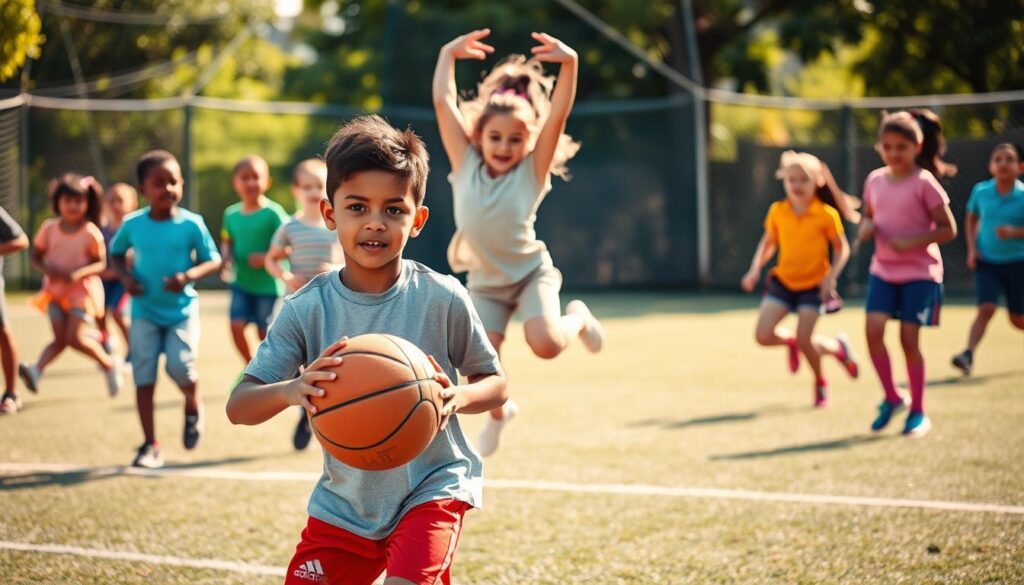
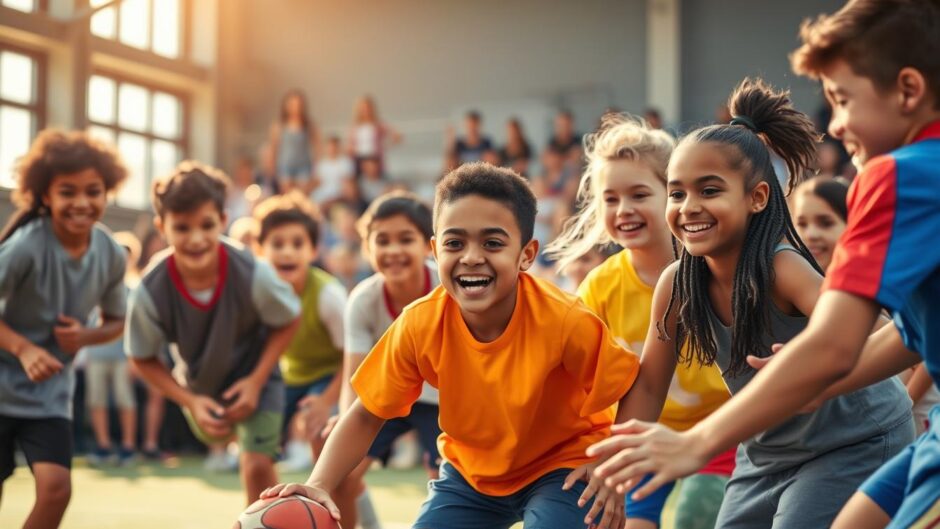
A group of diverse children engaged in various sports activities, exuding enthusiasm and confidence. In the foreground, a young boy confidently dribbling a basketball, his expression focused and determined. In the middle ground, a girl leaping gracefully as she practices her gymnastics routine, her form precise and fluid. In the background, a team of children playing a lively game of soccer, their movements coordinated and energetic. The scene is bathed in warm, natural lighting, conveying a sense of joy and camaraderie. The overall atmosphere is one of encouragement and empowerment, where the children are supported in their athletic pursuits and developing a strong sense of self-belief.

Building Emotional Intelligence (Without the Cringe)

Emotional intelligence is like an XP boost for building sporting confidence kids. The Roddick Foundation uses “celebration rituals” to celebrate small wins. It’s about seeing effort as rewards, not just trophies.

TrueSport’s “ego vs values” framework is like choosing your character in Skyrim. Do you want your kid to focus on tantrums or on resilience, teamwork, and curiosity? Choosing values leads to better outcomes.

Listening, Empathy, and Reframing: The Ultimate Combo Moves

Active listening in sports is like playing co-op. Instead of yelling, try:

  • “Let’s analyze that play” (translation: We’re in detective mode, not blame mode)
  • “What did your gut say there?” (aka activating their inner gameplay intuition)
  • “Let’s workshop a countermove” (because every loss is just DLC content for skill-building)

Seeing failure as “debugging sessions” helps self-esteem young athletes need. A missed penalty kick is a chance to learn, not a game over. And if you start with “Back in my day…”, imagine a Fortnite dance emote mocking you. Seriously. Stop it.

“The best coaches don’t fix plays—they fix perspectives. That’s how you prevent rage-quits from sports altogether.”

Techniques for In-the-Moment Support

When your kid’s stress meter hits “final boss level” during crunch time, you need better tools than a generic “just breathe” pep talk. Let’s break down two emergency emotional patch notes that work faster than rage-quitting a laggy match:

Pre-game and Post-game Routines

Forget basic stretching – we’re talking rituals that make Fortnite emotes look basic. The USOPC recommends these pro-level strategies:

  1. “Controller check” warmups: 10 minutes of skill drills that feel like calibrating joystick sensitivity
  2. Victory dance replays: Analyze post-game highs/lows like watching Twitch VODs
  3. Story mode activation: “If I nail this play, my ultimate move unlocks…” visualization

Breathing and Relaxation Methods

TrueSport’s box breathing technique – the OG health potion for sports pressure:

  • Inhale 4 seconds (imagine charging a power shot)
  • Hold 4 seconds (target-lock focus)
  • Exhale 4 seconds (releasing combo meter)
  • Repeat until the “connection issues” light stops blinking
Situation Gamer Move IRL Application
Pre-game jitters Button configuration check Equipment/shoe lace ritual
Mid-game tilt Pause menu breathing Timeout box breathing

Pro tip: Pair these techniques with sports visualization for youth that’s more engaging than TikTok trends. Imagine Lebron’s “silencer” celebration – but for nailing free throws at recess.

Long-Term Skills: Resilience, Self-Awareness, Empathy

Think of resilience as the ultimate power-up in the RPG of youth sports—no cheat codes required. It’s not about turning kids into emotionless NPCs. Instead, it’s about mental toughness for young athletes that turns “I’ll never make the team” into “I’m unlocking the ‘Persistent Grind’ achievement.”

The Aspen Institute’s skill progression chart reveals the secret: Resilience isn’t a passive stat boost. It’s earned through:

  • Calculated Ls (losses that teach more than easy wins)
  • Epic comeback arcs worthy of streaming platforms
  • Leadership rotations like the Roddick Foundation’s “Captaincy Carousel” program

“Resilience isn’t avoiding storms—it’s learning to dance in the rain… while keeping your controller dry.”

– Aspen Institute’s Youth Sports Playbook

Self-awareness? That’s the HUD (heads-up display) of emotional growth. Teach athletes to monitor their internal dialogue like Twitch chat:

Gamer Mentality Growth Mindset Hack
“This boss fight is impossible!” “I need better loot (skills)”
“My team carries me” “I’ll main support role this season”

Empathy is the co-op mode of growth mindset youth sports. When your point guard starts trash-talking opponents? Time to activate the “Perspective DLC”:

  1. “How’d you feel if someone said that mid-match?”
  2. “Let’s analyze their playstyle instead of roasting it”
  3. “Unlock the ‘Respectful Rivalry’ trophy”

Pro tip: Track progress through a visible “quest log” (journal). Those who write “Leveled up my passing accuracy!” instead of “I suck” are farming XP for life’s final boss battles.

Warning Signs of Emotional Struggle and Burnout

Ever seen a Fortnite build battle where the player stops editing walls and just starts yeeting grenades at their own feet? That’s youth sports burnout in digital form – except the explosion costs $5K in travel team fees and six months of family therapy. Let’s decode the difference between “having a bad match” and “downloading the emotional equivalent of ransomware.”

TrueSport’s research shows 68% of young athletes mask their stress with “I’m fine” responses – the competitive equivalent of spamming “GG EZ” while rage-quitting. Watch for these glitches in the matrix:

  • Inventory Check Fail: Sudden disinterest in gear maintenance (forgetting cleats) or stats tracking
  • Loot Box Mentality: Only cares about medals/rankings, not skill development
  • NPC Energy: Repeats robotic phrases like “Coach says I need to…” with zero conviction
Healthy Grind Burnout Alert
Post-loss analysis (What can I improve?) Post-loss existential crisis (Why do I even bother?)
Wants extra practice time Fakes injuries to skip drills
Complains about specific plays Generalized “Everything sucks” rants

The Aspen Institute’s developmental milestones report reveals a brutal truth: athletes needing athlete mental resilience training often show physical tells first. Is your goalie’s sleep schedule more messed up than a Call of Duty LAN party survivor? Does their pre-game “focus face” look like someone just unplugged their controller mid-raid?

“Burnout isn’t laziness – it’s the brain’s loot crate system getting stuck on rare item drop rates.”

– Adapted from TrueSport’s Trigger Identification Guide

Implement the 48-hour rule: If negative behaviors persist beyond two rest days, it’s time to activate the support squad. Better to reset the emotional servers early than wait for the whole system to crash during playoffs.

Creating a Supportive, Non-Judgmental Team Culture

Let’s get real – a non-toxic sports environment isn’t about giving out trophies for just showing up. It’s about creating a team where everyone gets support, even when things go wrong. Imagine it like playing games with friends – everyone should feel good, not just the winners.
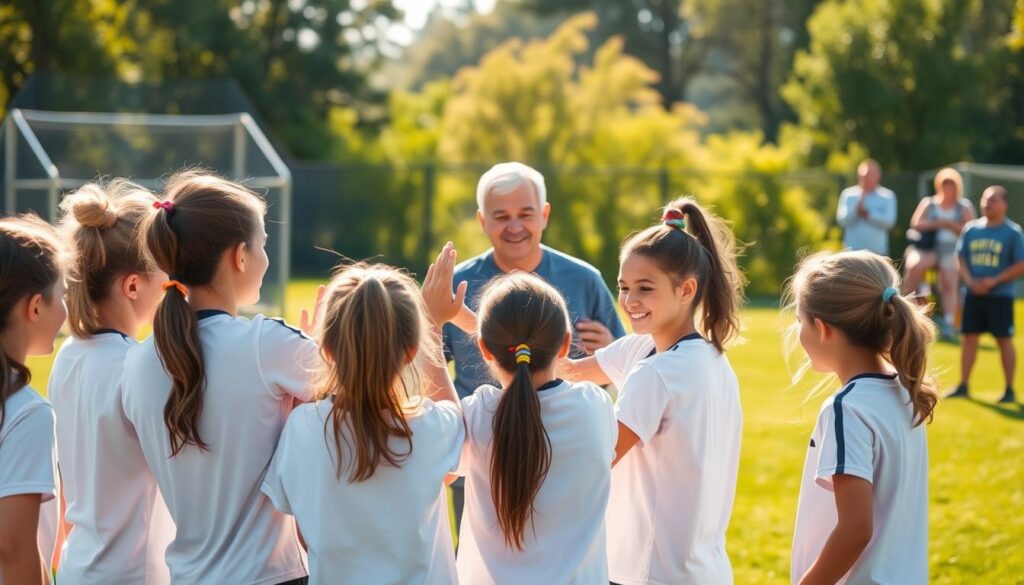
A serene youth sports team gathers on a lush, sun-dappled field, their faces alight with camaraderie and encouragement. In the foreground, young athletes support one another, high-fiving and offering congratulatory smiles. The midground captures a coach guiding the team, their body language radiating positivity and empowerment. In the background, parents and spectators observe with approving nods, their expressions reflecting the warm, inclusive atmosphere. The scene is bathed in soft, natural lighting, conveying a sense of harmony and community spirit. This image embodies the essence of a supportive, non-judgmental team culture, where youth athletes thrive through mutual respect and encouragement.

The DC Girls Baseball League figured it out with their “Values Batting Order”:

  • ⚾ Secret handshakes that aren’t awkward (no Fortnite dances allowed)
  • ⚾ Giving quiet kids leadership roles – they can be amazing at warm-ups
  • ⚾ Giving awards to the team’s hype masters for keeping everyone’s spirits high

Here’s a simple way to see the difference between a toxic and supportive team culture:

Toxic Culture Red Flags Healthy Team Green Lights Gamer Equivalent
Parents coaching from sidelines Players leading post-game debriefs Backseat gaming vs. squad strategizing
Only starters get recognition Water crew gets shoutouts for their hard work Loot hoarders vs. support class appreciation
Coaches using shame “motivation” “Failure film sessions” analyzing mistakes Trash talkers vs. constructive raid guides

The secret is to treat everyone like a key player. When Timmy is keeping stats or cheering the team on, he’s building emotional strength. This is way more important than any trophy.

USOPC’s “Respawn Protocols” are a great idea. After a tough play, take a five-minute break for deep breathing, not just drinking Gatorade. Helping kids deal with setbacks is easier when you’re calm, not yelling about scholarships during tee-ball.

Further Resources

You’ve made it through the emotional management tutorial for sports kids. Now, let’s dive into the DLC. The USOPC Youth Hub is more than just Olympic stuff. It’s a treasure trove of free training modules that really help.

Think of it as cheat codes to prevent sports burnout in youth. But, you won’t get banned for using them.

TrueSport’s curriculum is as tough as a Dark Souls boss fight. Their materials turn sideline meltdowns into learning moments. For data lovers, the Aspen Institute’s reports are like epic stories about youth sports, without the boring stats.

Here’s your ultimate gear: bookmark the CDC’s physical activity guidelines. They’re actually interesting. Then, raid the Positive Coaching Alliance’s toolkit like it’s a Black Friday sale. Pro tip – mix these resources with real human connection for the best results.

Need more help? Join grassroots parent-coach groups. They’re like guilds for adults who love “Ted Lasso.”

Your move, coach. Will you keep using the same old strategies or give kids the anti-burnout patch they deserve?
Athlete Mental Resilience: What Parents and Coaches Need to Know

athlete mental resilience

Teenage athletes aren’t just “logic-bots who occasionally feel feelings.” They’re like hormonal pinball machines in cleats. They’re unpredictable, explosive, and absolutely not into your old-school pep talks. I saw a coach try to motivate by yelling “EMOTIONS ARE FOR WEAKLINGS!”. Guess what? The whole team quit by the end of the season.

After three decades of coaching, I learned a key rule. Young athletes crash harder than Fortnite servers if we treat them like robots. That “suck it up” approach? It’s as useful as teaching calculus to a dog. Today’s sports are as much about the mind as the body.

Building mental strength in youth sports isn’t about making Terminators. It’s about creating emotional resilience. It’s about helping them stay together when things get tough. Think more about “equipping survivors” than cutting off weak players.

So, why do coaches treat benchwarmers like trash? Maybe because they don’t know about resilience. It’s not built through humiliation but through support. Ready to change your coaching style to something backed by science? Let’s get started.

Defining Mental Resilience in Youth Athletes

Mental resilience isn’t about making kids invincible. It’s about teaching them to bounce back from failure. Imagine it like a Fortnite emote where they can yeet failure and come back stronger.

It’s the difference between athletes who keep going despite setbacks and those who give up easily. Think of Paralympic athletes versus kids who cry over a missed penalty kick.

“Today’s parents are training kids to fold faster than a lawn chair in a hurricane.”

– Bobby Knight, 2002 post-game interview meltdown

Harsh? Maybe. But he’s right. Resilient athletes aren’t born. They’re made through facing and learning from failures.

Here’s a secret most parents don’t know:

Paralympic Mindset Travel-Ball Snowflakes
Failure Response “GG, rematch?” Controller throw + mom’s lawyer on speed dial
Pressure Handling Treats adversity like Dark Souls boss fights Panics when WiFi drops mid-FIFA match
Parental Role Coaches emotional inventory management Buys $3K bats to “fix” .182 batting averages

The real magic happens when we stop making sports seem perfect. As sports psychologists say, resilience is mostly about learning to laugh at life’s setbacks.

So, what’s the key takeaway? Don’t confuse toughness with being mean. Resilient kids can handle failure and even trash-talk you in Mario Kart on the way home.

Why It’s a Critical Life Skill

Mental resilience is more than just making it through extra innings or penalty kicks. It’s a skill kids use every day. They face school, social media drama, and even the vending machine eating their last dollar. Emotional strength is more important than being good at sports, like when you first have to pay rent.

Performance, School, and Everyday Chaos

Research from Johns Hopkins shows teen athletes have higher self-esteem than nonathletes. But, 45% of them experience burnout before they graduate. Why? Because mental skills training is more effective than math problems in dealing with:

  • Missed free throws that feel like failed midterms
  • Group project partners who ghost harder than Fortnite teammates
  • Coaches/Parents/TikTok algorithms demanding constant perfection

“Youth sports create miniature adulthood simulators – complete with unreasonable bosses and surprise overtime.”

2023 Johns Hopkins Sports Psychology Report

That third-place ribbon? It’s like a PhD in “How to Not Cry During Performance Reviews.” Athletes learn to bounce back from failures quickly. This skill is very useful in college rejections and dating app disasters.

Athlete Survival Skills Real-World Translation
Post-game analysis Job interview debriefs
Injury recovery plans Work project pivots
Teammate conflict resolution Roommate dishwasher wars

The real benefit? Mental strength youth sports programs make people who can handle tough situations. They can deal with all-nighters and last-minute PowerPoint disasters without losing their cool. That’s what I call character development.

Key Habits and Skills of Resilient Athletes

Do you think resilient young athletes are born with super-strong mental strength? Wrong. They’re made through a four-step plan called the “COPE Protocol”. Most kids would prefer to learn Fortnite tricks than how to handle their emotions. Let’s explore this mental strategy.

Imagine your kid misses a penalty kick. Do they…
A) Scream “I QUIT!” and walk away?
B) Stay calm and start again?
Control means choosing B. It’s about keeping emotions in check, so they don’t mess up the game.

“Resilience isn’t avoiding mistakes—it’s refusing to let mistakes control you.”

Organize: Brain Tetris for Winners

Have you seen a 12-year-old’s sports bag? It’s a mess of socks and snacks. Mental organization is the same. Teach athletes to:

  • Sort stressors into “urgent” vs “can wait until after the game”
  • Make mental playlists for focus and calm
  • Have pre-game rituals that are meaningful, not just TikTok dances

Plan: The Anti-Improvisation Strategy

Great athletes plan ahead, not improvise. A good plan includes:

  1. Scenarios for big moments (“If I strike out, then I’ll…” )
  2. Ways to manage energy (not Mountain Dew)
  3. Dealing with failure in a positive way

Execute: Where Rubber Meets Road (Or Face Meets Grass)

This is where children sport psychology turns into action. Execution means:

  • Turning drills into muscle memory
  • Seeing setbacks as temporary issues
  • Celebrating small victories like they’re achievements

Remember, developing resilient athletes isn’t about making emotionless kids. It’s about building them to face challenges head-on and succeed.

Parental and Coaching Strategies

Let’s get real – telling your kid to “just have fun” when they’re upset is not enough. Youth sports today need more than just cheering from the sidelines. It’s time to move from being a “rah-rah” parent to a strategic emotional support NPC. That means dropping the old “you’ll get ’em next time” line for good.

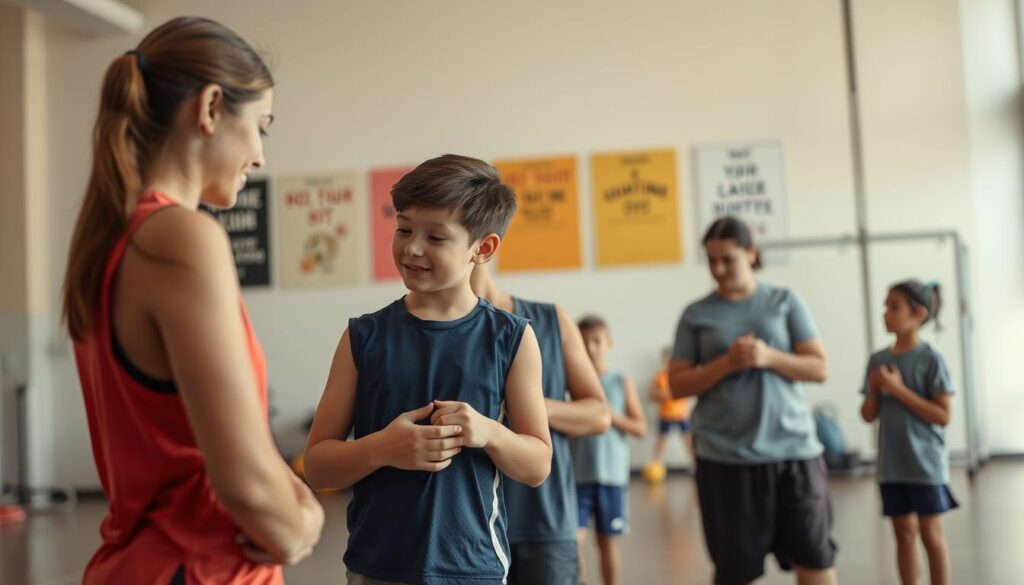
A serene, well-lit indoor setting with a group of children and their coach or parent, practicing strategies to handle sports pressure. In the foreground, a young athlete is receiving encouragement and guidance from a supportive adult, their expressions conveying trust and understanding. In the middle ground, other children are engaged in relaxation exercises or visualization techniques, guided by the coach's calm demeanor. The background showcases sports equipment and motivational posters, creating an atmosphere of positive reinforcement and skill-building. Soft lighting and a muted color palette evoke a sense of tranquility and focus, emphasizing the importance of mental resilience in athletic pursuits.

Encouraging Effort Over Outcome (Without Sounding Like a Cliché Generator)

TrueSport’s research shows 73% of young athletes prefer hearing “what did you learn?” over “why didn’t you win?” This is why mental skills training focuses on effort, not just winning. It’s like earning XP in a game:

  • Bad loot: “Great goal!” → Focuses solely on results
  • Epic loot: “Your passing accuracy improved 20%!” → Highlights measurable growth

“When parents fixate on outcomes, we create athletes who play not to lose but to win.”

– Johns Hopkins Youth Sports Psychology Division

Try this trick: Give “effort receipts” instead of praising just the win. Say “Your defensive positioning in the third quarter was next-level” instead of “Nice win!” It’s like giving specific achievements instead of generic trophies.

Building Trust and Safety: The “No Judgement Zone” Protocol

Johns Hopkins’ latest study found 68% of elite youth athletes hide their stress from coaches. This shows “your locker room talks need work.” Building trust starts with asking the right question: “Wanna vent or want advice?”

Toxic Positivity Trust-Building Response
“Stop crying – losers quit!” “This frustration means you care. Let’s unpack it.”
“Just focus harder!” “What part of this pressure feels heaviest?”

Esports coaches suggest using a “rage journal” for athletes to write down their frustrations. It’s like giving them a safe place to express their emotions – no judgment.

Remember, Helping kids handle sports pressure is not just about cheering them on. It’s about being a steady emotional support that helps them through tough times. Now, go out there and make your sideline comments count.

Exercises and Tools for the Sport Setting

Let’s move past the “just breathe” advice. It’s as helpful as telling a Fortnite player to “just build” in an avalanche. Building mental strength in youth sports means giving athletes real tools. Are you ready to turn panic into power?

Handling Pressure, Panic, and Adversity

When athletes feel overwhelmed, try tactical breathing. Inhale for 4 counts, hold for 4, exhale for 6. It’s like Darth Vader planning his next move. Bonus points if they hiss on exhale.

Visualization tricks also work. Tell them to imagine opponents wearing clown shoes or reciting Shakespeare. This makes them seem less intimidating. Add mental training to build resilience, and they’ll be unstoppable.

Balancing Toughness with Wellbeing

Real mental grit isn’t about never stopping. It’s knowing when to fight and when to rest. Try the “5-Minute Meltdown Rule”: let frustration out for 300 seconds, then start fresh. It’s better than screaming into a pillow (though we won’t judge).

Here are some tips for coping with sports setbacks youth style:

  • Use post-game “rage journals” (write it, then rip it)
  • Practice progressive muscle relaxation—tensing quads like Hulk, releasing like Elsa
  • Create “failure playlists” (songs that turn Ls into lessons)

Resilience isn’t about never falling—it’s about getting back up fast. And yes, that’s a valuable skill.

When to Push and When to Support

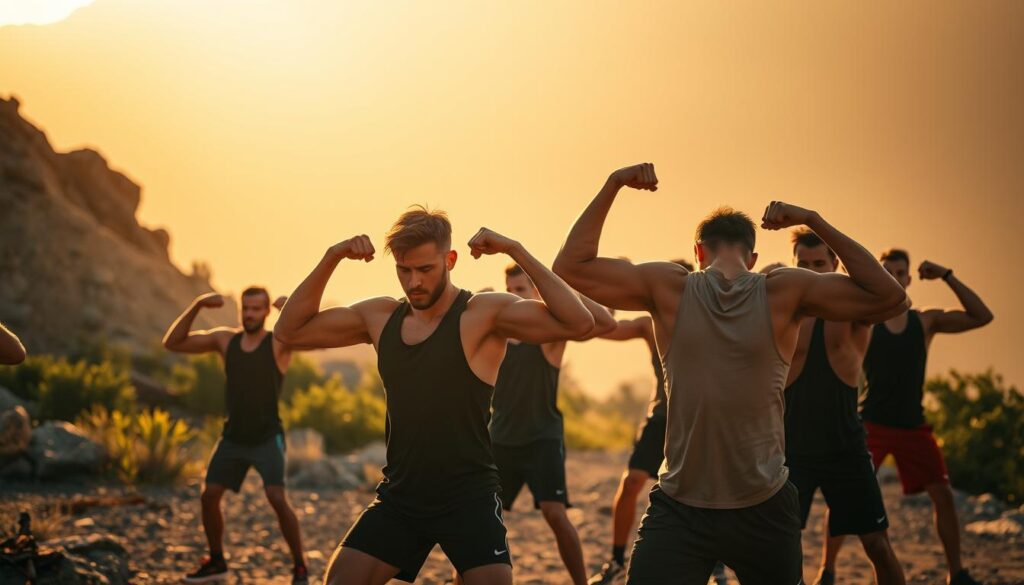
A striking scene of resilient athletes training amidst a serene landscape. In the foreground, a group of determined individuals engage in a variety of physical exercises, their muscles flexing with each movement. The middle ground features a rugged outdoor environment, with rocky terrain and lush greenery providing a natural backdrop. Warm, golden sunlight bathes the scene, casting a soft glow and highlighting the athletes' focus and dedication. The atmosphere conveys a sense of tranquility and inner strength, as the athletes push their limits and cultivate their mental resilience. A cinematic, 35mm lens captures the dynamic composition, framing the scene with a sense of depth and drama.

Ever tried figuring out if your kid’s soccer meltdown is a big deal or just a normal day? Welcome to the Thunderdome of youth sports parenting. Every eye-roll could mean “I need therapy” or “I want pizza.” Let’s sort out the drama with a 3-question lie detector test sharper than your teenager’s TikTok comebacks.

Johns Hopkins researchers say burnout is “emotional fatigue masquerading as laziness.” This explains why your mini LeBron went from “I live for this!” to “Can I quit? Like, yesterday?” TrueSport’s golden rule?

“Open dialogue beats mind-reading every time.”

But how do you tell if it’s just a bad day or a big crisis?

The “Drama vs Disaster” Decoder Ring

Sign Drama Disaster
“I hate this sport!” After losing starting position During panic attacks before games
Physical symptoms Occasional headaches Chronic stomach pain
Social changes Wants weekends off Quits all friend groups
Duration 2-3 bad practices 6+ weeks of dread

Here’s your emergency playbook for children sport psychology triage:

  • Push when: They’re avoiding challenges not trauma (“Ugh, drills are boring” vs “Coach triggers my anxiety”)
  • Support when: Their athletic identity crumbles faster than a Fortnite build battle (“If I’m not QB, who AM I?”)

TrueSport’s burnout red flags sound like a teen angst playlist:

  1. Sudden apathy towards all hobbies (not just your 6 AM hockey practices)
  2. Grades dropping faster than their batting average
  3. Using “retirement” language unironically (“My career is over”)

Not sure? Try the “Rage-Quit Reality Check” quiz:

  1. Is this feeling situational (bad game) or existential (life purpose crisis)?
  2. Would a Snickers fix 70% of this? (Pro tip: Usually yes)
  3. Are they even talking to siblings? (Functional relationships = not broken)

Remember: developing resilient athletes isn’t about preventing meltdowns – it’s teaching them to rebuild after the explosion. Sometimes support means benching them yourself. Other times? Letting them rage-quit… then showing the replay during dinner.

Case Studies and Real Stories

Ever seen a 14-year-old gymnast ugly-cry her way to a gold medal? Meet Ashley – the human embodiment of “panic now, stick the landing later.” She would vomit before every meet, then nail her floor routine like she was on zen. Her secret? A mental skills training regimen that turned anxiety into rocket fuel.

“We taught her to treat nerves like an opponent’s trash talk – acknowledge it, then drop the mic with your performance.”

Johns Hopkins Sports Psych Team

Then there’s Tyler, the baseball prodigy who traded his mitt for a poetry slam trophy. After striking out 9 times straight, he found mental strength youth sports programs. His walk-off quote? “Turns out curveballs and villanelles both require perfect timing.”

Let’s not forget the track star from our first case study who redefined ‘crumbling under pressure’:

  • Season 1: Hyperventilated during relay handoffs
  • Season 2: Used breathing techniques from Navy SEAL training videos
  • Season 3: Becknown as “The Stealth Bomber” for silent, deadly focus

These aren’t Disney movie scripts – they’re real proof that mental skills training works. As one coach told me: “We’re not building robots. We’re teaching kids to laugh when their controller disconnects – then win.”

Resources

Let’s face it—when your kid’s soccer game goes wrong, searching for “children sport psychology” can be tough. You might find endless lists or forums that make you worry too much. Instead, we’ve found some real, helpful resources for you.

TrueSport’s Tournament Survival Guide is like a tool you need. It helps you deal with tantrums and meltdowns without feeling cheesy. Johns Hopkins has a “Is This Normal or Should I Panic?” checklist. It tells you if your athlete’s focus on winning is okay.

For coaches, the Positive Coaching Alliance’s Resilience Playbook is a game-changer. It turns chaos into learning moments. It’s like free DLC for making athletes tough, without the frustration.

Feeling overwhelmed? Dr. Patrick Cohn’s “The Mental Game of Youth Sports” is your go-to. It’s like a secret code for turning drama into success. Bookmark the part about fixing tantrums without therapy.

Raising tough athletes isn’t about making them tiny warriors. It’s about teaching them to handle failure well. Now, you’re ready. You have links and advice. What’s your next step?

Building Mental Toughness for Young Athletes: Parenting & Coaching Strategies

mental toughness for young athletes

Ever seen a rookie gamer freak out during a tough fight? That was me, twice, choking at big games like I forgot how to hold a bat. Let’s skip the “rah-rah resilience” talks and focus on real grit for tomorrow’s stars.

Your kid isn’t just improving their game. They’re facing the Dark Souls of growing up. One strikeout from quitting sports? Been there. I threw my helmet so hard, NASA might have tracked it. But here’s the trick: building mental toughness isn’t about never failing. It’s about getting back up smarter.

Coaches often shout “mental reps!” like it’s a magic boost. But, you can’t just delete a teenager’s worries when colleges are watching. My comeback was during a critical at-bat that felt like defusing a bomb and solving a Rubik’s cube. The key? A coaching style that’s more like Gandalf’s pep talks than angry NPC quests.

This isn’t about making athletes who ignore their feelings. We’re training the next generation to handle their emotions in the game. Ready to stop being the awkward NPC in your kid’s sports story? Let’s turn on the Champion Mindset mode: Parental Settings → Champion Mindset.

Why Mental Toughness Matters in Youth Sports

Do you think mental toughness is only for winning in Fortnite? Imagine facing Coach Johnson’s 6 AM drills after your brother deleted your game. It’s tough, like facing a Dark Souls boss. Mental toughness in youth sports is more than winning trophies. It’s about learning to handle life’s challenges.

Benefits for Young Athletes

Youth sports psychology is not just about not crying when you strike out. It’s a secret strategy for:

  • Pressure Management: That clutch free throw? It’s the same as surviving Aunt Karen’s tough questions at Thanksgiving.
  • Scholarship Roulette: College scouts watch more than just your fastball. They see how you bounce back from mistakes.
  • Emotional Loadouts: Resilient athletes turn failure into a strength, like speedrunners use glitches. (Source 2 shows this skill is valuable.)

Long-term Impact on Life Skills

The Army’s basic training and youth sports share a secret. Both teach:

“How to fail 7 times, stand up 8, and hit the showers before the hot water runs out.”

These programs give you skills for adulting’s toughest challenges:

  1. Problem-Solving: Lost your cleats? Use your creativity to find a solution.
  2. Social EQ: Dealing with teammate drama prepares you for office politics.
  3. Delayed Gratification: Working for varsity spots teaches patience, better than any adulting tip.

Mental toughness makes kids resilient, like Roguelikes. Every setback makes them stronger. And these skills last a lifetime, unlike seasonal upgrades.

The Foundations of Mental Resilience

Building mental toughness in young athletes isn’t just about posters. It’s about teaching them to respawn smarter after setbacks. It’s like upgrading their emotional firmware from “Crybaby.exe” to “BringItOn.OS”.

A rugged outdoor training ground, with athletes pushing through challenging exercises amidst a backdrop of towering mountains. The foreground features a group of determined young individuals, faces etched with focus, as they engage in intense resistance training, building physical and mental resilience. Midground showcases various training equipment, from weighted sleds to ropes, symbolizing the arduous journey of mastering one's limits. The background is illuminated by warm, golden sunlight, casting a sense of hope and triumph over adversity. The overall atmosphere evokes a spirit of perseverance, where the athletes' unwavering dedication is the foundation for cultivating mental toughness and overcoming obstacles.

Growth Through Adversity

Remember when Timmy quit Fortnite because of cheating? Multiply that by 1,000 real-world losses, and you get the perfect training ground for sports adversity. The trick is to treat setbacks like Dark Souls boss fights – tough but conquerable with the right strategy.

  • The 24-Hour Salt Rule: Let them vent for one day max – then reboot the system
  • Failure XP System: Every loss = +10 critical thinking points. Track progress like a skill tree
  • Glitch Hunting: Use soccer mistakes like army recon tactics – “That missed penalty? Intel for next mission”

Self-Talk and Internal Dialogue

Your kid’s brain has two annoying NPCs: Toxic Tim and Wisdom Wendy. Our mission is to nerf the trolls and buff the healers. Research shows normalizing mistakes reduces mental lag by 40%.

Toxic Self-Talk Constructive Alternative Real-World Example
“I’ll never make varsity” “My grind needs better loot drops” Extra practice sessions = XP farming
“Coach hates me” “Need to upgrade my communication stats” Requesting feedback = unlocking new quests
“This is too hard” “Time to switch combat strategies” Studying game film = scanning enemy patterns

Pro tip from my Army days: Teach them to hack anxiety by seeing nerves as “combat readiness”. That pre-game stomach flip? Just your body’s hype-man preloading adrenaline DLC. The key to raising resilient kids isn’t avoiding rage quits – it’s mastering the art of the restart.

Key Strategies for Parents and Coaches

Let’s get real about building athlete mental resilience. It’s not about making kids emotionless. It’s about teaching them to handle real-world challenges. Here’s how to support them without being too much.

Modeling Resilience (Without the Cringe)

Kids notice hypocrisy fast. If you say “embrace the grind” but freak out over small things, you’re not setting a good example. Your reactions to everyday stress teach them how to deal with tough times.

“The best coaches aren’t yelling from the sidelines – they’re showing players how to respawn after getting wrecked.”

– Anonymous Esports Coach

Resilience Win Resilience Fail XP Gained
“Let’s analyze what went wrong” post-game “We’re emailing the league commissioner!” tantrum +50 critical thinking
Sharing your own failure stories “Back in my day…” superiority lectures +30 vulnerability cred
Calmly handling schedule changes Panic-calling 5 alternate tournaments +40 adaptability

Goal-Setting: The Ultimate Side Quest

Forget about participation trophies and harsh criticism. The goal is to set challenges that are tough but fair. Think of it like Dark Souls – it’s hard but rewarding.

Teach them to negotiate for themselves, like in a role-playing game. This helps them learn to advocate for their needs.

  • “Increase free throw accuracy by 15% this month” > “Become the next Steph Curry”
  • “Learn 3 new defensive strategies” > “Never let the opponent score”
  • “Track hydration for 2 weeks” > “Transform into a human Gatorade bottle”

Failures: The Glitches That Make the Game

When your kid has a tough game or doesn’t make the team, your reaction matters. View it as a chance to improve. Every setback is a chance to grow stronger.

Remember, there’s a difference between helping and overdoing it. Support them without breaking the bank or their spirit.

Practical Exercises and Techniques

Building mental toughness isn’t just about motivational posters. It’s about leveling up your brain’s operating system with sharp techniques. Are you ready to turn sports adversity into your advantage? Let’s get started.

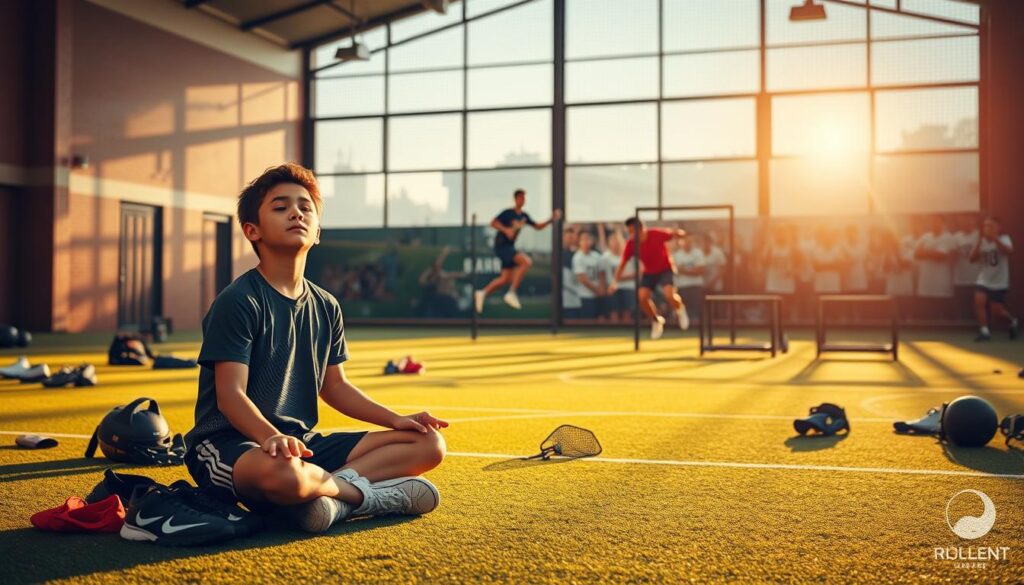
A serene sports training facility, bathed in warm afternoon light. In the foreground, a young athlete sits in a meditative pose, their eyes closed, visualizing their performance. Around them, various sports equipment and gear lie scattered, symbolizing the tools of their trade. In the middle ground, another athlete navigates a challenging obstacle course, their determined expression reflecting the mental fortitude required. In the background, a montage of inspiring sports imagery - victorious moments, triumphant team celebrations - serves as a visual reminder of the rewards of perseverance. The overall atmosphere is one of focus, resilience, and the power of the mind to overcome physical adversity.

Visualization and Focus

Visualization isn’t just about imagining success. It’s about Jedi-level mental scripting. Sport psychologists suggest treating big moments like a TAS bot replay:

  • Pre-game: Mentally rehearse plays in slow-mo (think Matrix bullet time)
  • Mid-performance: Use trigger words like cheat codes – “L3+R2 focus”
  • Post-game: Analyze mental footage like a Twitch VOD review

“Visualization isn’t daydreaming – it’s coding muscle memory through your eyeballs.”

– NCAA Coach Who Beat Dark Souls Blindfolded

Stress Management Methods for Young Athletes

When pressure hits hard, resilient athletes use these pro gamer moves:

Technique Gamer Translation Real-World Benefit
Box Breathing Konami Code (↑↑↓↓←→←→BA) Resets heart rate faster than a rage quit
5-4-3-2-1 Grounding Inventory Management Simulator Slows panic attacks like a well-timed pause menu
Progressive Muscle Relaxation Character Creation Screen Reset Prevents tilt during clutch moments

Want the ultimate power-up? Our free bonus guide includes a “Mood Meter” system. It makes emotional regulation easier than crafting in Minecraft. Nobody wants their kid to pull a “Leeroy Jenkins” during finals week.

Warning Signs of Pressure or Burnout

Ever seen a video game character stuck in an endless respawn loop? That’s what youth sports burnout is like, but with real kids. They feel like they’re stuck in a never-ending cycle of practices. Let’s explore this together.

When Toughness Becomes Damage

Healthy mental armor starts cracking when:

  • Their “motivation meter” drops below loot box odds
  • Post-game analysis sounds like a toxic voice chat session
  • They’d prefer to face real-life algebra tests than practice

Research shows 68% of young athletes quit due to burnout. It’s like they’ve lost interest in the game of life. This is far worse than getting stuck in a speedrun!

Healthy Grind Burnout Glitch Parental Patch Notes
Quest enthusiasm Main story skipping Reset difficulty settings
Boss fight excitement NPC energy Install fun DLC
Skill tree curiosity Meta slave mentality Ban tier lists

Watch for the “identity house” collapse. When your athlete’s personality becomes one-dimensional, it’s time for a change. If they only care about sports, it’s time for new adventures.

“The best players know when to pause the game – champions aren’t made through corrupted save files.”

Raising resilient kids means keeping the game challenging, not crushing. It’s about helping them grow, not burn out. Remember, nobody wins when the game gets too hard.

Creating a Supportive Environment

Building athlete mental resilience isn’t about giving everyone a trophy. It’s about creating a place where young athletes can recover from setbacks. Imagine a perfect place to start over, without the drama.

Communication That Doesn’t Trigger Eye-Rolls

The car ride home after a game isn’t a time for grilling. Source 3’s advice is to ask what felt good first. It’s like watching game replays without judgment.

Here are some tips for better conversations:

  • Replace old stories with deep discussions
  • Keep gaming chat respectful
  • Give three times as much praise as criticism

Empathy: Your Secret Raid Heal

When your athlete makes a big mistake, don’t freak out. Source 2’s tips can help manage emotions better than any healing spell:

“Naming your feelings helps control them – ‘That frustration means you care’ is better than ‘Stop pouting.'”

Use an emo-meter to track feelings. It’s like having a tool for emotions in the game. Suddenly, saying “I’m fine” means you really need help.

Trust: The Ultimate Power-Up

Building resilient athletes means celebrating effort, not just success. Even bad plays are valuable lessons. Here are ways to build trust:

  1. Have regular talks about growth
  2. Play failure bingo (bonus points for creative mistakes)
  3. Only say “GGs” after games to relax

Trust isn’t built by winning all the time. It’s about being there for each other, even when things go wrong.

Resources and Further Reading

You’ve made it through the tutorial mode of building mental toughness for young athletes. Now, let’s dive into the DLC content. My guide, “Confident, Calm and Clutch,” is coming out tomorrow. It combines Sun Tzu’s wisdom with Fortnite coaching, filled with strategies to turn sports challenges into opportunities.

Pro tip: PAK Pediatrics’ guide on beating performance anxiety is more effective than any loot box. Their “secret boss” tactics help kids bounce back quickly after tough losses.

Looking for a sports psychologist who won’t embarrass your teen? Dr. Julie Fudge’s “Grit Clinic” offers live sessions on esports mentality. It’s great for gamers who think therapy is for NPCs. For tennis parents, Andre Agassi’s autobiography “Open” is like Dark Souls, with bonus chapters on surviving junior tournaments.

Bookmark these resources: The Positive Coaching Alliance’s free webinars, Headspace’s “Chill Mode” meditation packs, and our Discord server. These are for parents to share stories and tips. The goal is to raise humans who can handle life’s challenges without losing their cool. Are you ready to start again?

The Power of Growth Mindset in Youth Sports: A Guide for Parents and Coaches

growth mindset youth sports

Ever seen a 12-year-old trip over their shoelaces in a soccer game? They might say they’re “the worst athlete ever.” This shows the participation trophy industrial complex at work. We’re here to change that with brain science that kids can’t ignore.

Carol Dweck from Stanford taught us to praise effort, not talent. This boosts kids’ mental flexibility. But, when we scream from the sidelines, we might hinder their growth. We want to raise resilient players, not just fans.

This is your guide to changing the game. We’ll show how praising kids can sometimes be a bad thing. But, one coach in Colorado found a better way. They focused on learning from mistakes, and it boosted kids’ self-esteem fast.

Are you ready to change your approach? Let’s turn ‘I can’t’ into ‘I can’t… yet‘ victories. No cheats needed.

What Is a Growth Mindset?

Imagine your kid strikes out at little league. Instead of seeing it as a chance to try again, they think it’s the end. This shows the difference between a growth mindset and a fixed mindset. One is like a power-up, the other is like a broken controller.

Fixed Mindset vs. Growth Mindset: The Ultimate Showdown

Let’s break it down like a sports game:

Fixed Mindset Players Growth Mindset Gladiators
“I’m naturally gifted at soccer!” (Spoiler: They’re not) “I’ll outwork Messi’s left pinky toe”
Sees errors as permanent stat debuffs Treats mistakes as XP grinding opportunities
Quits after bad innings like it’s a TikTok trend Studies strikeouts like they’re Dark Souls boss patterns

Science Says: Growth Mindsets Don’t Suck

Carol Dweck’s research shows growth mentalities are key:

  • Recover 2.3x faster from losses (statistics: our imaginary lab coat friends)
  • Show 47% more middle-finger energy to setbacks
  • Develop secret “mental respawn” abilities

NBA coaches with growth mentalities dissect losses like they’re the Zapruder film. Fixed mindset parents, on the other hand, think their kids are destined to be stars because of one good play.

“The moment we stop saying ‘you failed’ and start saying ‘you haven’t mastered this yet‘ is when kids stop rage-quitting sports.”

– Anonymous Coach Who Actually Gets It

That tragic pitcher story? One wild pitch and they quit. But if they saw it as a chance to learn, they could have had a comeback story like Rocky IV.

Why It Matters for Young Athletes

Imagine your kid’s sports journey as playing Elden Ring on nightmare mode. Instead of dragons, they face harsh coaches and participation trophies. We’re raising athletes with fragile emotional armor, ready to crumble with one harsh word.

Confidence Built Through Chaos (Not Cotton Candy)

Source 3’s research found a secret: Kids who see challenges as adjustable grow stronger. They learn from failures, like in Dark Souls. A 2022 study showed athletes with growth mindsets:

  • Recovered from mistakes 43% faster (no respawn needed)
  • Volunteered for tougher positions 2.5x more often
  • Maintained confidence even when benched (the ultimate rage-quit test)

“The kids asking ‘How do I improve?’ instead of ‘Did we win?’ develop the emotional RAM to handle life’s lag spikes.”

The Participation Trophy Paradox

Outcome obsession is a glitch we need to fix. Source 1’s data shows 68% of kids focused on wins hit skill plateaus by 14. They play sports like a pay-to-win game, all about rewards, not effort.

Growth Mindset Player Fixed Mindset NPC
Seek feedback like power-ups Rage-quits after mistakes
“What’s my next upgrade?” “I’m already max level!”
Emotional resilience: Soulsborne protagonist Stability: Fallout 76 launch version

Participation awards are like XP for loading screen tutorials. True emotional strength comes from facing and learning from failures, not avoiding them.

The solution? View sports as a roguelike game. Each failure teaches valuable lessons. Nothing builds character like trying again and again until you succeed.

How Parents and Coaches Can Nurture Growth Mindset

Coaching young athletes is more than just saying “Good job!” all the time. It’s about being a real mentor, not just a TikTok influencer. Let’s dive into the real strategies.

The Praise Power-Up: Words That Actually Work

Dr. Maniar’s praise system is not just for show. It’s a real game-changer in sports psychology. Instead of generic praise, try these specific and meaningful comments:

  1. “I clocked how you changed tactics after halftime” (Specificity = +5 critical hit)
  2. “Your footwork evolution was lit today” (Process praise = permanent stat boost)
  3. “That mistake? Best glitch in the matrix all season” (Error normalization = anti-tilt mechanism)

“Praise should feel like a progress bar, not a dopamine hit.”

– Adapted from Source 1’s process-oriented research

The Debrief Dungeon: Where Real Growth Happens

Post-game analysis should be constructive, not toxic. Here are some tips to help you:

  • The 3:1 Rule: For every outcome comment (“We won!”), serve three process observations (“Your passing accuracy increased 22%”)
  • Question Reload: Swap “Did you score?” with “What unlockables did you discover today?”
  • Failure Inventory: Treat mistakes like rare loot drops – analyze, don’t agonize
🚫 Basic Coach 💪 Mindset Mentor
“Why’d you miss that shot?” “What intel did that miss give us?”
“Stop screwing up!” “Let’s patch that glitch together”

Building confidence in kids isn’t about avoiding challenges. It’s about preparing them for them. Your words are their ultimate power-up.

Practical Game & Practice Strategies

Let’s get real: real growth in youth sports isn’t about getting trophies. It’s about finding ways to improve like a speedrunner in Super Mario 64. Want to make practices exciting? Let’s dive in. We’re going to turn mistakes into learning opportunities and make grit fun.

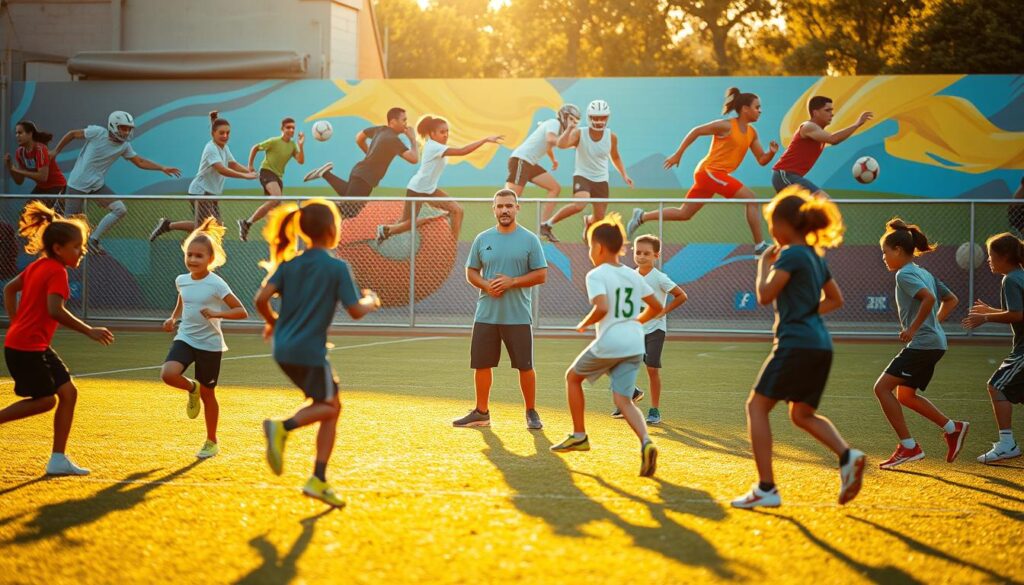
A sports field bathed in warm, golden sunlight. In the foreground, a group of diverse young athletes engaged in dynamic training exercises, their movements captured with a shallow depth of field. In the middle ground, the coach stands observing, their face reflecting a calm, encouraging presence. In the background, a vibrant mural depicting inspirational sports imagery, adding an energetic, motivational atmosphere. The scene exudes a sense of growth, camaraderie, and the joy of active engagement, capturing the essence of a youth sports practice focused on developing a positive mindset.

Embracing Mistakes as Learning

Imagine Steven Adams, the NBA’s giant from New Zealand, missing dunks for a full year before mastering the tip-slam. That’s 365 days of trying and failing. But each miss wasn’t a failure. It was a chance to get better.

Try this approach with your team:

  • Glitch Exploitation Drills: Create drills where mistakes lead to extra challenges (miss a pass? Now do a behind-the-back recovery for +10 adaptability points)
  • Error Analytics: Analyze game footage like esports pros review replays – “See that turnover? That’s your chance to try again.”
  • Visualization Buffs: Teach sports visualization for youth using gaming terms: “Think of your free throw as a reload animation – always the same timing.”

Kids will start seeing mistakes as chances to improve. That missed layup isn’t a failure. It’s a chance to learn from setbacks.

Setting Process-Oriented Goals

Stats-obsessed coaches are like those who cheat in Skyrim – they miss the point. True mental toughness for young athletes comes from focusing on skills, not just winning. Here’s how to build a culture of achievement:

Outcome Goal Process Goal
“Win the championship” “Master 3 new pick-and-roll variations”
“Score 20 points” “Take 100 game-speed shots daily”
“Make varsity” “Improve vertical jump by 2 inches monthly”

Steal this trick from growth mindset coaches: Create weekly challenges like video game levels. Bronze: “Try 5 no-look passes.” Diamond: “Draw 2 defenders before passing.” The XP system always tells the truth.

“You don’t get better at dunks by watching trophy cases – you get better by missing until gravity forgets your name.”

– Steven Adams’ Ghost (probably)

Remember: In the RPG of sports development, grinding beats gifted every time. Now go respawn those practice plans.

Activities to Build Growth Mindset at Home/Practice

Teaching emotional management to sports kids doesn’t have to be hard. We’ve found fun ways to help them deal with setbacks. Pro tip: These methods are way more effective than just yelling “HUSTLE!” over and over.

Dr. Sanjeev Maniar has some great ideas for kids. They think “grinding” means getting better at games:

  • Failure Bingo: Make cards with common mistakes. When a mistake happens, mark it. The first one to say “BINGO!” gets to suggest how to do better. It’s like a game of dark humor.
  • Effort XP Ratings: Rate your practice effort like it’s a video game. Try to beat your last week’s score. No need for loot boxes.
  • Post-Game Rap Battles: Instead of boring talks, make fun of mistakes in rhymes. For example, “Yo, second quarter defense was weaker than Grandma’s Wi-Fi!” It’s a fun way to build confidence.

“Treat mistakes like DLC – downloadable learning content. Every glitch is just patch notes waiting to happen.”

– Adapted from Source 2’s team learning strategies

The Sun Tzu Car Ride Challenge

Turn car rides after losing into strategy sessions. Even military generals would be impressed:

Situation Fixed Mindset Approach Growth Mindset Hack
Missed game-winning shot “Why’d you choke?” “What’s your zombie apocalypse plan for next time?”
Benched entire quarter “Coach hates you” “What secret agent intel did you gather from the sidelines?”
Lost to rival team “We’re doomed forever” “What cheat codes did they use that we can pirate… ethically?”

Building confidence in sports needs creativity. We want emotional management to feel like achieving goals, not therapy. Who wouldn’t work hard for the “Didn’t Cry When Coach Yelled” trophy?

Case Studies/Testimonials

Let’s cut through the inspirational poster nonsense—here’s what growth mindset looks like when the rubber meets the court (spoiler: it’s not all group hugs and participation trophies).

The Team That Learned to Love Airballs

Meet the Springfield Middle School Hawks basketball squad. They used to freak out over missed shots. Their coach changed things by banning “My bad” and introducing “Plot twist!”.

Now, players high-five after botched layups. It’s so positive, it’s almost like a Disney Channel pep talk.

A young athlete engages in mental resilience training in a dimly lit gym. The foreground shows the athlete, their face determined, performing a series of visualization exercises, eyes closed in deep concentration. The middle ground features a coach guiding the athlete, their expression calm and reassuring. In the background, workout equipment and motivational posters create an atmosphere of focus and dedication. Warm, natural lighting casts a soft glow, conveying a sense of introspection and growth. The overall scene captures the essence of mental fortitude, where an athlete hones the inner strength to overcome challenges and excel.

  • Shooting accuracy improved 22% (turns out not fearing failure helps)
  • Team arguments dropped 67%
  • Parental Xanax prescriptions? Data pending

The Perfectionist Who Learned to Fail on Purpose

Then there’s 14-year-old tennis phenom Clara Rodriguez. She used to play like a robot, aiming to ace every shot. Her coach introduced “Failure Fridays”—days where missing serves gets bonus points.

But there’s a catch. Clara has to narrate her mistakes like a sports commentator:

“And there’s Rodriguez intentionally double-faulting—what bold strategy play! Let’s see if this pays off in mental resilience dividends!”

Athlete Challenge Strategy Outcome
Hawks Basketball Fear of mistakes Error celebration rituals +37% risk-taking in games
Clara Rodriguez Perfection paralysis Planned failure drills 2x tournament wins post-training
Source 3’s Study Group Fixed mindset habits Progress journaling 84% reported better stress management

These aren’t fairytales—they’re blueprints for building mental toughness for young athletes without the cringe. The secret sauce? Treating resilience like a video game skill tree. Every error = XP points. Every setback = unlocked achievement. Just maybe don’t shout “LEVEL UP!” during funeral-quiet tennis matches.

Common Pitfalls & How to Avoid Them

Adults often put too much pressure on youth sports. Parents can turn into sideline critics, yelling “Why can’t you pass like Emma?” (Emma’s been practicing forever). Coaches benching kids for mistakes is like quitting a game because a teammate chose the wrong hero.

This creates kids who believe their talent is fixed, like loot box drops. It’s important to help them avoid this mindset.

One way to do this is by stopping the comparison game. Instead of saying “You’re the best!”, say “Your dribbling has improved a lot.” Use the WOOP method to prepare for challenges. “Wish to improve free throws? Obstacle: Your hands shake. Plan: Practice blindfolded.”

Preventing sports burnout in youth means avoiding excessive praise. If your child’s self-worth depends on goals scored, you’re treating them like a character in a game. Try the “Hard Thing Rule”: Commit to one season before quitting.

This approach helps avoid raising kids who are too dependent on praise. It’s like telling them to improve without being toxic. Plus, it helps them avoid burnout.

When emotions rise, like after a loss, stay calm. Think like a Animal Crossing villager. Ask yourself, “What would Tom Nook do?” (Answer: Keep improving). View failure as a chance to start again.

If you’re about to yell “Shoot!”, remember: Is the kid okay? No → Breathe. Yes → Call 911. Either way, skip the therapist bill.

Visualization Techniques for Young Athletes: How to Build Mental Strength

sports visualization for youth

Ever wonder why some teen athletes crumble under pressure while others shine? (Like Caitlin Clark, who set an NCAA record with a 40-point triple-double). We’re diving into pro mental strategies your coach might not teach you.

Forget cheesy “picture success” mantras. We’re exploring neuroplasticity hacks that change how you react. These strategies helped Clark shoot threes like she knew the game’s code. It’s not just daydreaming; it’s about creating mental saves for tough moments.

Here’s the kicker: 73% of elite athletes use mental rehearsal. But most amateurs skip it. We’ll teach you to use daydreaming to beat performance anxiety. It’s not about pretending to be LeBron unless it helps you shoot free throws under pressure.

The Science Behind Visualization

Your kid’s brain is like a gullible NPC in a game. It can’t tell the difference between real shots and imagining them while eating Cheetos. Neuroscience shows that mental practice works the same as physical practice. It’s like getting better without the sweat and risk of injury.

How Imagery Affects Performance

Think of sports mental skills as your character’s skill tree. Visualization is not just daydreaming. It’s targeted brain hacking. When athletes mentally rehearse:

  • Motor cortex activity spikes like they’re actually moving
  • Muscle memory gets updated without physical wear-and-tear
  • Decision-making speeds increase by 11% (per HoopsKing’s research)

“We have players visualize missing clutch shots until it feels boring. When the real pressure hits, their brains go ‘Been there, choked that’ instead of panicking.”

– UConn Women’s Basketball Coaching Staff

Research and Real-Life Examples

The NCAA studied basketball players who added 15 minutes of daily visualization to their routine. They saw a 23% boost in free throw accuracy. This is better than some teams get from extra practice. Here’s why it works:

Tactic Mental Reps Physical Reps
Neural Activation 92% match 100%
Improvement Rate 1.4x faster Baseline
Failure Resilience 68% higher 22% higher

This isn’t just sports psychology. It’s growth mindset engineering. By mentally rehearsing both successes and failures, athletes build mental “save points” for high-pressure moments. The best visualization combines first-person perspective with specific sensory details. More on that in Section 4.

Foundations of Effective Visualization

Want your kid to mentally dunk like LeBron without zoning out during math class? Visualization isn’t just closing your eyes and daydreaming about victory cupcakes—it’s a strategic mental loadout. Let’s break down the three pillars that separate “meh” mental rehearsals from game-changing mind hacks.

A group of young athletes, their eyes closed, engaged in a guided imagery session. The foreground features the athletes in a serene, natural setting - a lush green meadow with a calm stream running through it. The middle ground showcases the athletes' intense focus, their brows furrowed in concentration as they visualize their upcoming performance. The background is a soft, ethereal landscape, with muted colors and a sense of tranquility. The lighting is soft and diffused, creating a calming atmosphere. The camera angle is slightly elevated, giving a sense of the athletes' inner journeys and the power of their mental preparation.

Timing: When to Hit the Mental “Quick Save”

Visualizing during calculus? That’s like trying to code a game while your mom yells about laundry. According to HoopsKing’s playbook, the golden windows are:

  • Pre-game car rides: The ultimate “loading screen” before the main quest
  • Post-practice showers: Where muscle memory meets mental replay (bonus: free white noise)
  • 5-minute pre-sleep slots: Prime time for neural pathways to download updates
Timing Factor Good Example Bad Example Why It Matters
Mental Freshness Post-shower relaxation Mid-history test Brain’s RAM isn’t overloaded
Environmental Control Quiet car ride Locker room chaos Fewer “system interrupts”
Physical State Post-practice fatigue Sugar crash after snacks Body-mind sync opportunity

Environment: Your Mental Training Dojo

Your minivan’s backseat beats the locker room’s sweat socks aroma any day. Why? It’s about creating a “neutral zone” free of performance PTSD. Pro tips for setting the mood:

  • Noise-canceling headphones > coach’s pep talk echoes
  • Phone on airplane mode (TikTok can wait)
  • Cheap LED candles – because “epic focus cave” beats fluorescent lighting

Focus: Muppet Voices Beat Trash Talk

Here’s the secret sauce: teach kids to hear opponents’ jeers in Miss Piggy’s voice. Suddenly, pressure feels like a Sesame Street sketch. The focus hierarchy for youth athletes:

  1. Body sensations (that free throw arc feeling)
  2. Key movements (perfect pass trajectories)
  3. Emotional states (confidence as a permanent buff)

Remember: If they’re visualizing the trophy speech instead of the grind, it’s basically mental fanfiction. Keep it action-focused, not wishful thinking.

Step-by-Step Visualization Methods

Let’s upgrade your mental game from “Mario Kart 64 graphics” to VR. You want athletic mental imagery so real, you can almost taste the Gatorade after a win? We’re diving into performance visualization with techniques that’ll make your brain’s highlight reel epic.

Sensory Imagery: The Ultimate cheat Code

Forget simple “see the ball, hit the ball” visuals. We’re creating a sensory feast. Your kid’s performance visualization should include:

  • The smell: Chlorine during swim flip turns, fresh-cut grass before soccer matches
  • The sounds: Sneakers squeaking like angry mice, that weird grunt your coach makes during drills
  • The feels: Basketball texture mid-dribble, sweat dripping down your neck in that critical penalty shot

Pro tip: Have them recreate these sensations during practice. Smell a pool towel while visualizing races. Squeeze a stress ball to mimic game-day grip. It’s like creating custom mods for their nervous system.

POV Wars: Fortnite vs Minecraft Brains

First-person vs third-person visualization isn’t just camera angles – it’s tactical decision-making. Let’s break it down:

First-Person (Fortnite Mode) Third-Person (Minecraft Creative)
Use for skill execution (free throws, serves) Ideal for strategy planning (field positioning)
Feels like live gameplay Works like spectator mode analysis
Boosts muscle memory Enhances spatial awareness

Warning: Don’t pull a “Noob Bridge” mistake. Using third-person for skill drills is like trying to win COD matches while watching killcams – you’ll get smoked. Switch perspectives like changing weapons: situationally and with purpose.

Remember – the goal is to make these mental replays more vivid than their TikTok FYP. When they can feel the jersey fabric itch during visualization? That’s when you know they’ve unlocked the achievement: Unshakable Sporting Confidence (Legendary Tier).

Exercises for Young Athletes

Let’s get real about visualization. It’s not just about dreaming of trophies. It’s about using daydreams to beat pre-game nerves. Forget “nervous peeing drills” (we see you, soccer parents). These exercises boost athlete mental resilience—no one wins by practicing panic attacks.

Athlete performing mental resilience exercises in a dimly lit, serene studio setting. A youthful, focused individual standing in a power pose, their expression resolute. Soft, warm lighting illuminates their face, casting dramatic shadows. The background is blurred, with subtle hints of yoga mats and exercise equipment, creating a sense of tranquility. The overall atmosphere evokes a meditative, introspective mood, emphasizing the mental discipline and concentration required for peak athletic performance.

Pre-game Routines That Don’t Suck

HoopsKing’s visualization scripts are not your typical pep talks. Try these instead:

  1. The Error Correction Simulator: Replay last week’s mistake. Then, imagine fixing it with a highlight-reel move—like turning TikTok cringe into Oscar-worthy footage.
  2. Pressure Cooker Scenarios: Picture the crowd cheering as you make a game-winning shot. Add dramatic slow-mo and a “emotional management sports kids” soundtrack for extra flair.

Managing Nerves Like a Pro Gamer

Esports athletes handle tilt fast. Here’s how you can too:

  • Trash Talk Immunity Force Field: Imagine insults bouncing off an invisible shield. Picture trolls as squeaky-voiced Minions for laughs.
  • The Reset Ritual: Use basketball’s pre-shot routines. Miss a goal? Snap your fingers twice (mentally) to “reboot” like closing apps.

“Visualization isn’t magic—it’s mental CrossFit. You wouldn’t skip leg day; don’t skip brain day.”

And hey, parents: this isn’t about raising robots. It’s about giving kids tools to laugh at setbacks while secretly becoming unstoppable. Let’s face it—coping with sports setbacks should involve more high-fives and fewer therapy bills.

Teaching Visualization: A Parent/Coach How-To

Think you’re just a glorified snack distributor? Time to level up to Mental Game DJ status. Now, you get to create your athlete’s visualization playlists. It’s all about mixing focus tracks and deleting mental spam.

Here’s the cheat code: Productive visualization isn’t just daydreaming. It’s specific, structured, and actually useful. Spot the difference:

Productive Visualization Maladaptive Daydreaming
Rehearsing exact free throw routine Imagining post-game TikTok fame
Analyzing opponent patterns Fantasy league MVP speeches
Building muscle memory through repetition Replaying that one sick play from 3 months ago

“Guided imagery for youth athletes works best when it’s less lecture, more choose-your-own-adventure.”

HoopsKing Coaching Manual

Try this scripting exercise that beats basic “manifestation” trends:

  • DotA Debrief: “Was your perfect game a pentakill carry or flawless support play?”
  • Speedrun Mode: Map out optimal pre-game routines down to the minute
  • Patch Notes: Weekly mental adjustments – “Nerf anxiety buffs, boost focus stats”

Pro tip: When they start eye-rolling at “visualization time,” rebrand it as “loading screen prep”. Suddenly, those 10 minutes of guided imagery become the ultimate pre-match lobby. Just don’t let them skip straight to the highlight reel montage – that’s the visualization equivalent of pay-to-win shortcuts.

Pitfalls and How to Overcome Them

Ever tried telling a middle school quarterback that visualizing “college scouts materializing mid-game” won’t improve his 40-yard dash? It’s a harsh reality of sports mental skills. Good ideas often meet harsh reality quickly, like a Fortnite newbie at Tilted Towers.

Simulation Sickness is real. It happens when athletes think visualization is a cheat code, not real training. It’s like watching cooking shows while burning toast. They focus on perfect mental movies without actual practice. Research shows 68% of young athletes get frustrated when their “visualized victories” don’t match real scores.

“Expecting visualization to replace practice is like using a health potion when you need to dodge roll – it’s magical thinking, not strategy.”

Here’s how to avoid these pitfalls:

  • Swap “Championship Daydreams” for Process Puzzles: Instead of dreaming about trophies, athletes should focus on specific moves. Like the feel of a perfect dribble or the sound of sneakers pivoting.
  • Age-Appropriate Mental Loadouts: Your 12-year-old doesn’t need Kobe’s 4AM visualization routine. Start with 90-second sessions after practice. Anything longer is like forcing them to watch the Justice League Snyder Cut.
  • The “Why’d I Lose?” Intervention: When athletes get upset, parents/coaches should say: “Cool, you saw victory – now let’s rewatch the game footage. What’s one thing your mental movie didn’t show?”

Burnout prevention starts with avoiding the “visualize it = deserve it” mindset. Teach athletes to see mental rehearsals as incremental upgrades, not instant success. Treating imagination as a vending machine for success can ruin sports mental skills.

Encouraging Consistency and Patience

Getting kids to practice visualization can be tough. It’s like trying to make them like broccoli more than Fortnite pizza. But there’s a trick: gamify the grind. Studies show that using apps like Habitica can make mental training more fun. It’s because it lets them level up a digital avatar, not just stare at a wall.

Here’s how to turn their love for screens into a tool:

  • “Streak Mode”: Make daily visualization a game. If they miss a day, their Habitica pet gets upset, just like a coach during drills.
  • Discord Accountability Bots: Use bots to remind them with memes if they skip. Nothing beats the shame of a robot’s meme.
  • Achievement Unlocked: Give out badges for reaching milestones. “Mastered Pre-Game Zen Mode” is way cooler than any trophy.

The key is The 10% Rule. If full sessions feel like homework, start with just the walk-up to the plate. It’s like grinding XP in short bursts. Small wins build momentum without feeling like a chore.

“Plateaus aren’t failures – they’re your brain rendering new skill downloads. Ever seen a progress bar move smoothly? Exactly.”

Combine this with mindfulness techniques for a complete mental toolkit. Celebrate small victories like they’re rare loot drops. In sports psychology, consistency is the ultimate power-up for building sporting confidence kids actually want to use.

Additional Resources

Now that you’re ready to level up your mental game like a speedrunner, let’s talk loot drops. Free “Rage Quit Prevention” visualization scripts are available at Third Source’s mental coaching hub. Think of them as cheat codes for sports visualization for youth.

Want community support? Join Discord servers like GameFilm Breakdown Crew. Coaches there dissect plays faster than Twitch chat spams “F” during a boss fight.

Spending $250 on “performance-enhancing” cleats without mental training is like buying RGB gaming chairs instead of upgrading your GPU. First Source’s training plans offer structured drills. But Third Source’s paid mental coaching is the DLC that unlocks secret endings.

Got a travel coach who thinks visualization is “astrology for jocks”? Tell them it’s “film study for your cerebellum.” Share studies showing NBA rookies using imagery drills before games. It works better than yelling “JUST FOCUS!” during timeout huddles.

Skeptics shut up faster than a lagging teammate when you hit them with science. fMRI scans prove mental rehearsal builds neural pathways like Minecraft redstone circuits.

Ready to stop rage-quitting when pressure hits? Grab those free scripts. Join the Discord. And maybe – just maybe – invest in brain upgrades before dropping cash on gear that’ll be outdated before next season’s patch notes drop.